Vocabulary expansion Reading Worksheets for Ages 3-4 - Page 2
26 filtered results
-
From - To
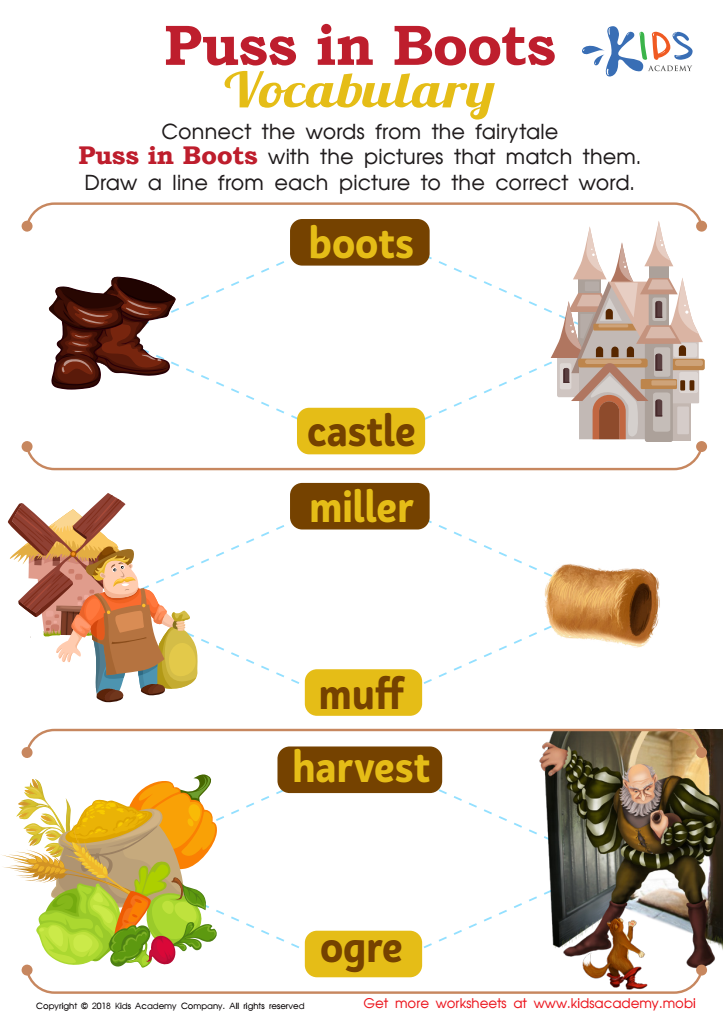
Puss in Boots Vocabulary Worksheet
 Assign to My Students
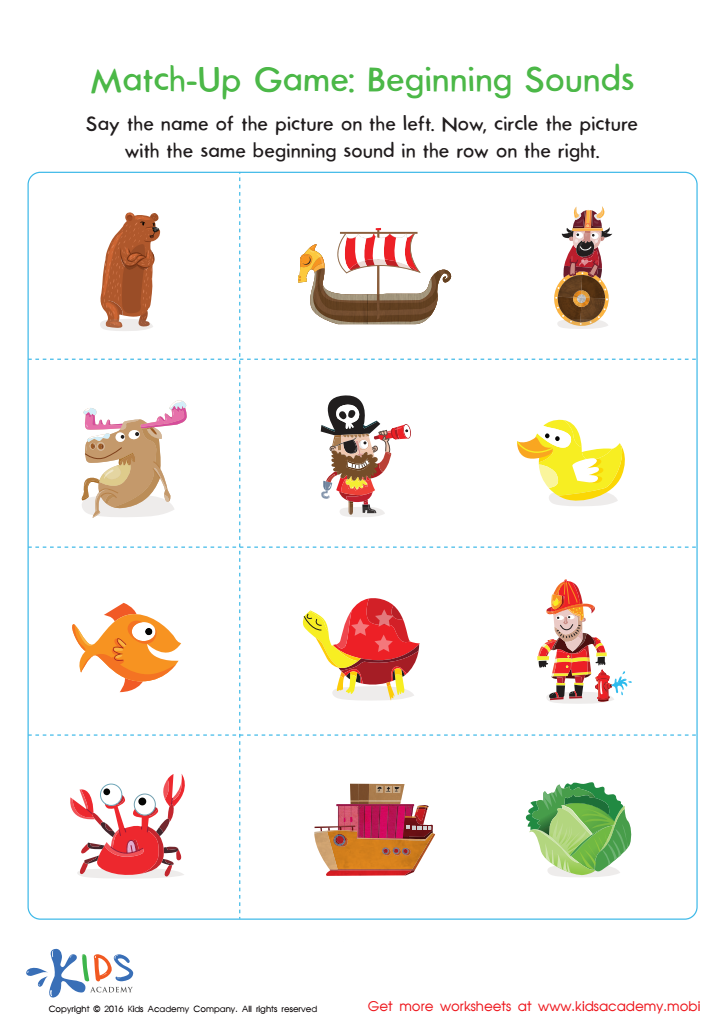
Match–Up Game: Beginning Sounds Worksheet


.jpg)





Vocabulary expansion is crucial for children aged 3-4 as it lays the foundation for their language development, comprehension skills, and academic success. During this formative stage, children are particularly receptive to new words, and expansive vocabulary enhances their ability to communicate effectively and express thoughts and feelings.
For parents and teachers, engaging children with rich, varied language during reading time opens doors to cognitive development. When children encounter diverse vocabulary in stories, they build connections between words and concepts, improving their understanding and memory retention. This early exposure sets the stage for later literacy skills, including reading fluency and writing proficiency.
Moreover, vocabulary development plays a significant role in social-emotional growth. A robust vocabulary helps children articulate their emotions and navigate social situations effectively, fostering better interpersonal relationships. Additionally, as children learn new words through stories, they also become more curious and engaged learners, which boosts their overall motivation and desire to explore the world around them.
In essence, fostering vocabulary expansion through reading enriches children's lives, providing them with essential tools for communication, learning, and emotional expression—an investment that ultimately benefits their overall development.








