Observational skills Science Worksheets for Ages 3-4
3 filtered results
-
From - To
Nurture curiosity and enhance early childhood education with our specially designed Observational Skills Science Worksheets for Ages 3-4. These engaging, age-appropriate activities help young learners develop key observational abilities by exploring the world around them. Through fun and interactive exercises, children will learn to notice details, recognize patterns, and make simple predictions, fostering a love for science from an early age. Perfect for parents and educators, our worksheets support foundational skills, preparing kids for future scientific learning. Explore our collection to inspire your little scientists and make learning an exciting adventure!
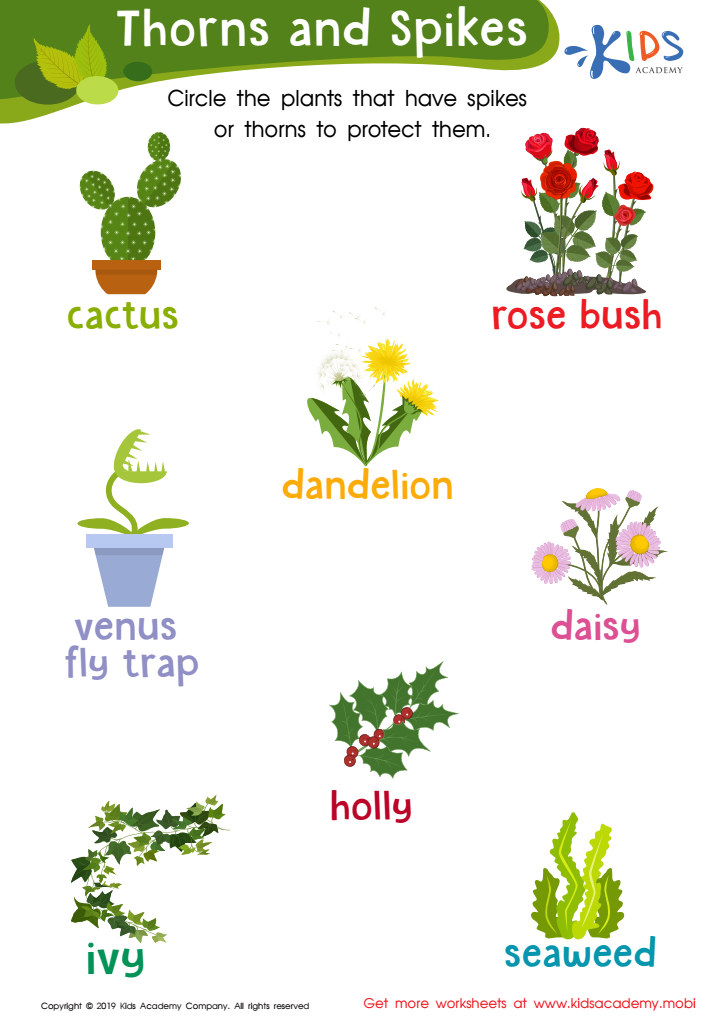
Thorns and Spikes Worksheet
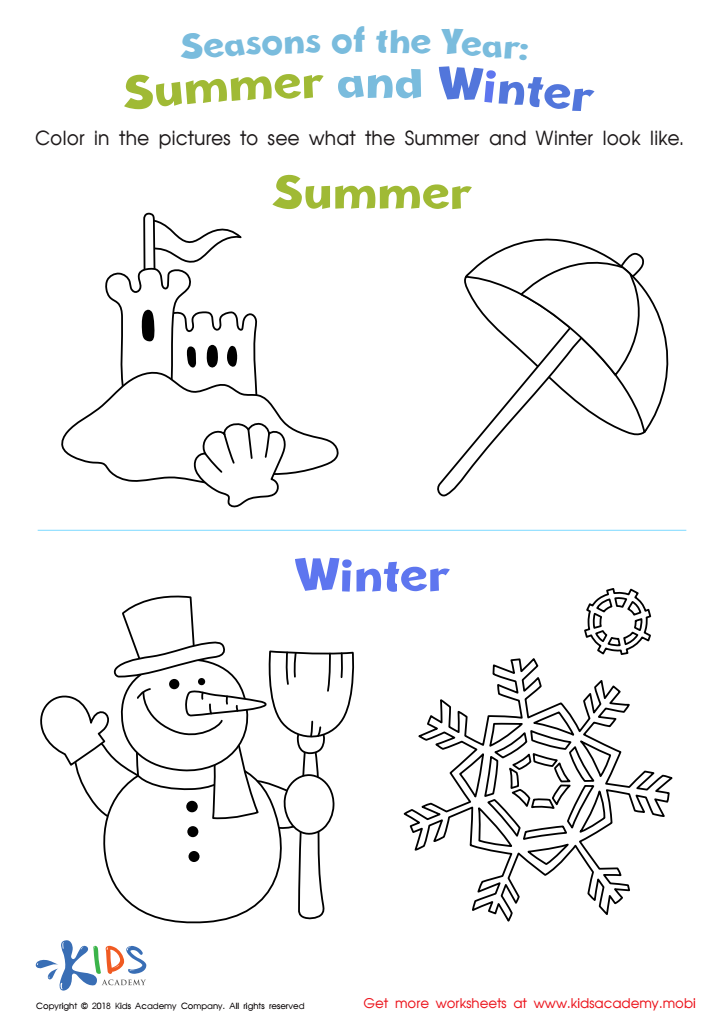
Summer and Winter Worksheet
 Assign to My Students
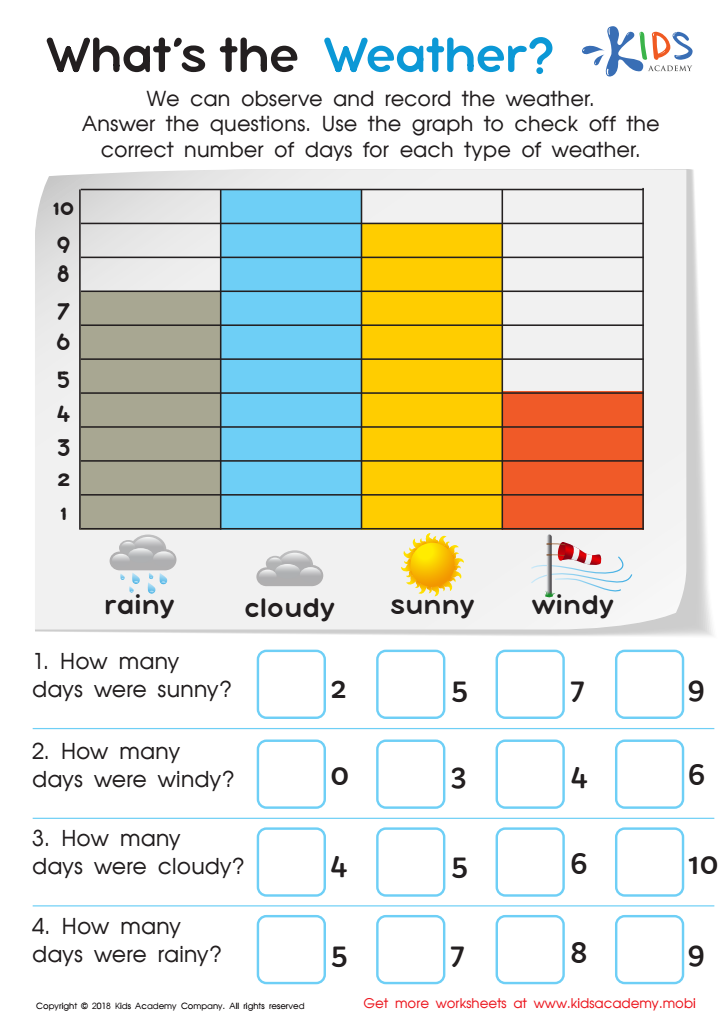
What's the Weather? Worksheet







Observational skills are a cornerstone of scientific inquiry and play a pivotal role in early childhood development, particularly for ages 3-4. At this stage, children are naturally curious and eager to explore the world around them. Encouraging observational skills in science not only nurtures this curiosity but also lays the foundation for critical thinking and learning.
When children engage in observational activities, they learn to pay attention to details, notice patterns, and make connections between different elements in their environment. These skills are essential for problem-solving and understanding complex concepts later in life. For instance, observing the growth of a plant helps children grasp basic biology and the life cycle, fostering a deeper appreciation for nature.
Furthermore, honing observational skills enhances language development. Describing what they see, whether it’s shapes, colors, or movements, allows children to expand their vocabulary and improve their communication skills. This, in turn, supports their overall cognitive development and academic readiness.
For parents and teachers, fostering these skills doesn’t require elaborate tools or settings—simple walks in the park, engaging with picture books, or hands-on activities like sorting objects by size and color can be immensely beneficial. By valuing and nurturing observational skills in science, we empower young children to become keen learners and inquisitive thinkers, setting a strong foundation for lifelong learning.







