Spatial awareness Science Worksheets for Ages 3-4
3 filtered results
-
From - To
Discover engaging Spatial Awareness Science Worksheets tailored for children ages 3-4! These printable activities are designed to cultivate essential spatial skills, enhancing your child's understanding of their environment and relationships between objects. Through fun and interactive exercises, children will learn to identify shapes, sizes, and positions, laying the groundwork for future math and science concepts. Our worksheets promote critical thinking and problem-solving while encouraging hands-on exploration. Perfect for both home and classroom use, these resources are a great way to spark curiosity and comprehension in early learning. Foster your child's spatial awareness and watch them thrive in their educational journey!
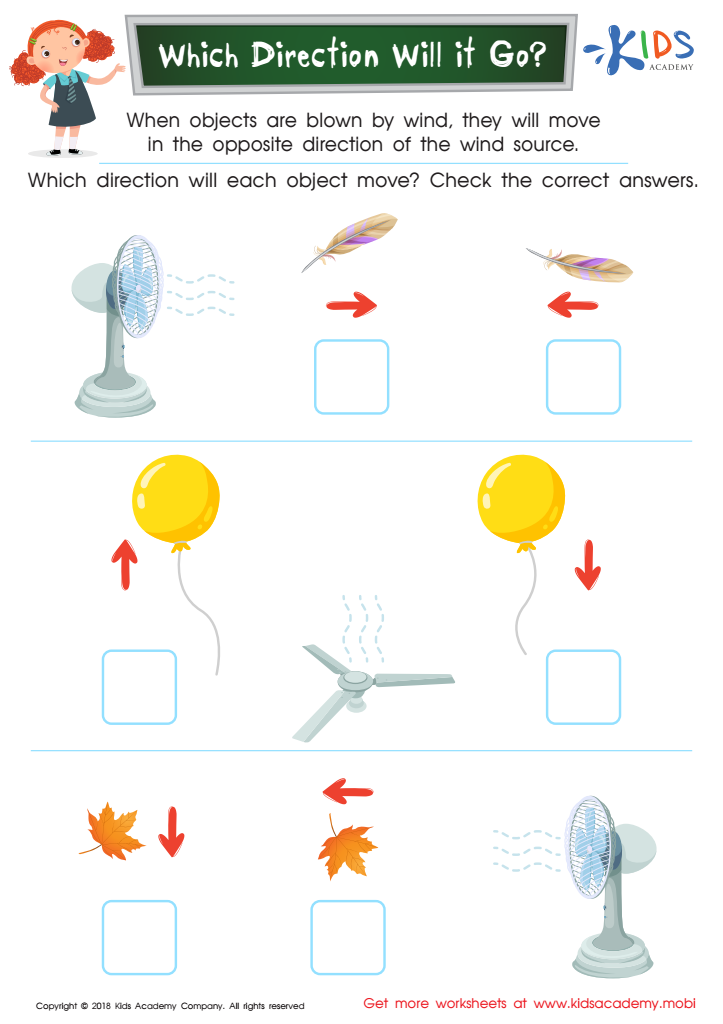
Which Direction Will it Go? Worksheet
 Assign to My Students
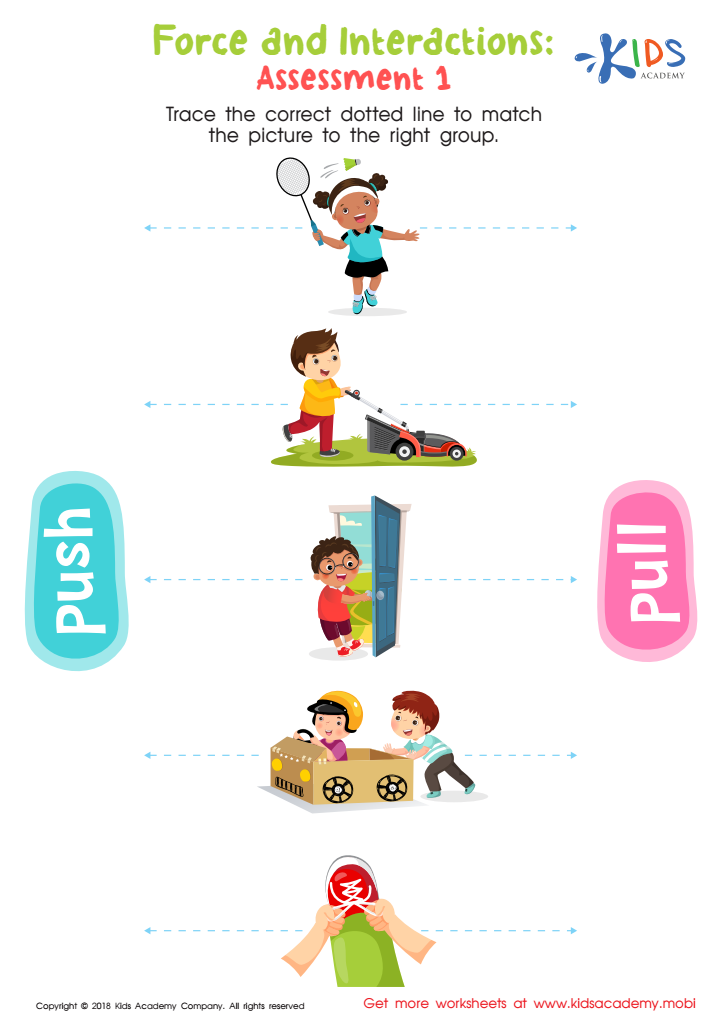
Force and Interactions: Assessment 2 Worksheet
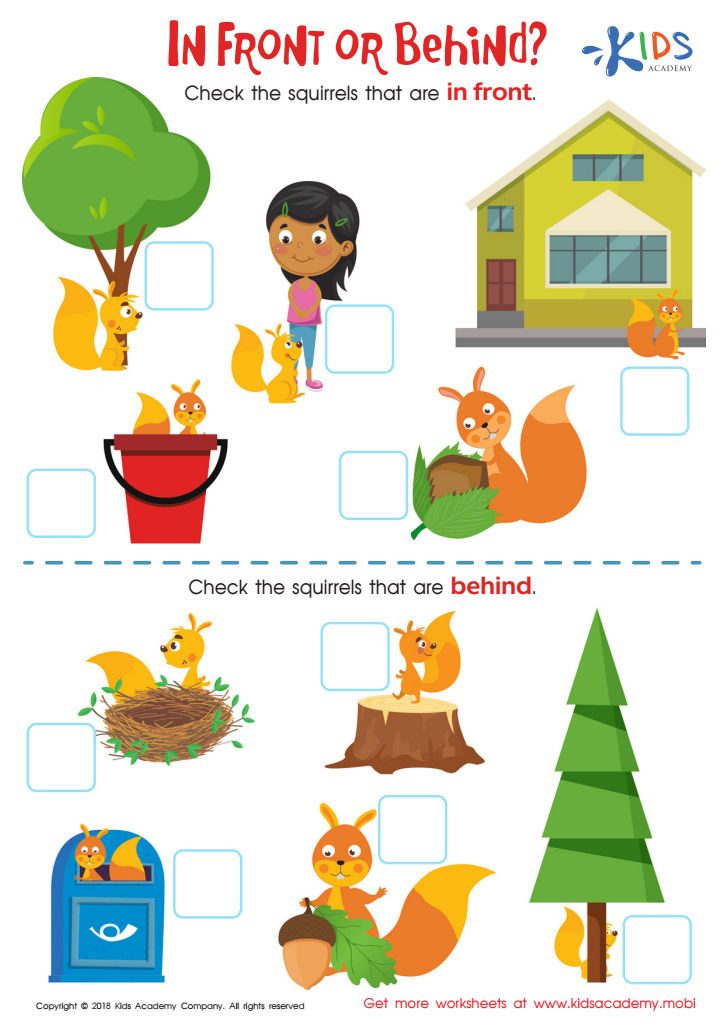
In Front or Behind: Part 2 Worksheet








Spatial awareness is a crucial developmental skill that helps children understand their position relative to objects and the environment around them. For parents and teachers of 3-4-year-olds, fostering spatial awareness lays the foundation for several key areas of learning and development.
First, spatial awareness enhances problem-solving abilities and logical thinking. Young children learn to navigate spaces, understand maps, and recognize shapes, which supports math and science skills foundational for later academic success. Engaging activities, such as building blocks or obstacle courses, promotes this understanding through hands-on experience.
Additionally, spatial awareness contributes to fine and gross motor skills. When children explore their environment, they develop coordination, balance, and body control, essential for physical development.
Furthermore, these skills support social interactions. Children learn to negotiate space while playing with peers, fostering collaboration, communication, and empathy.
Encouraging spatial awareness during these formative years not only enriches cognitive and physical abilities but also nurtures emotional and social growth. By integrating spatial awareness activities into daily routines, parents and teachers can provide children with valuable tools for engaging with the world around them, ultimately setting the stage for lifelong learning and social interaction.







