
Vocabulary Building Community Worksheets for Ages 3-4
3 filtered results
Difficulty Level
Grade
Age
-
From - To
Subject
Activity
Standards
Welcome to our Vocabulary Building Community Worksheets for Ages 3-4! Designed to spark curiosity and enhance language skills, these engaging worksheets introduce young learners to essential vocabulary related to their community. Each activity is thoughtfully crafted to be fun and interactive, encouraging children to explore everyday environments and familiar concepts. With vibrant illustrations and age-appropriate exercises, our worksheets promote not only word recognition but also comprehension and critical thinking. Perfect for use at home or in the classroom, these resources support early literacy development while fostering a sense of belonging and understanding in the world around them. Start building vocabulary today!
Favorites
With answer key
Interactive
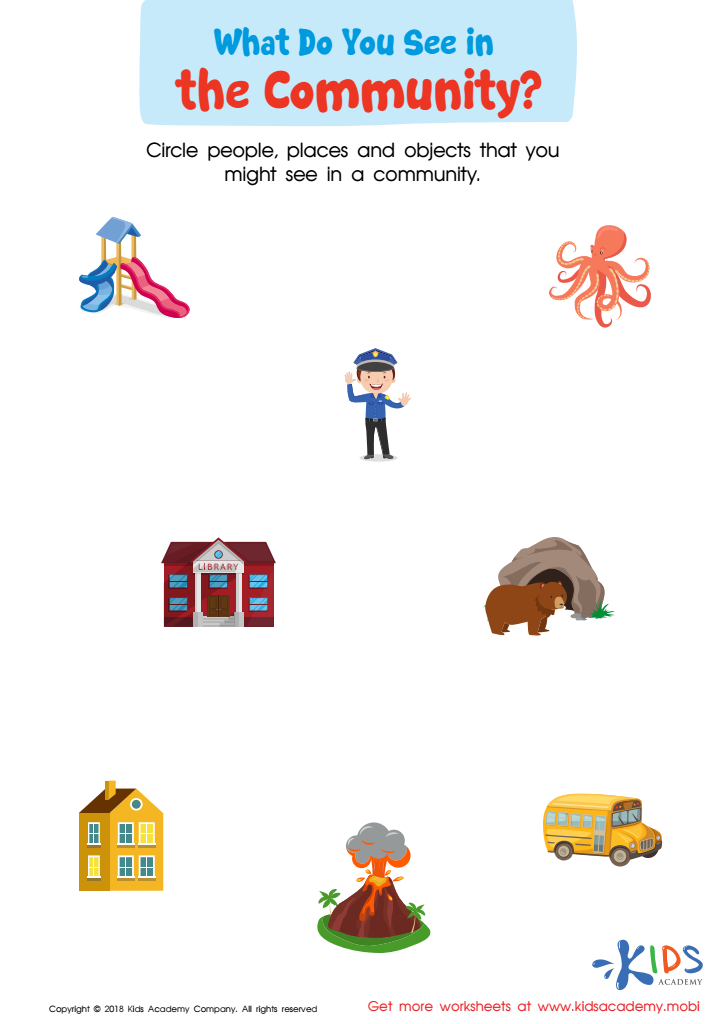
What Do You See in the Community Worksheet
This free social studies PDF can help your children learn about their local community. They'll identify its members, places and objects using engaging and recognizable pictures. As they trace circles around them, they'll also practice fine motor skills. It's a great way to introduce social science concepts and help them understand the importance of community.
 Assign to My Students
What Do You See in the Community Worksheet
Worksheet
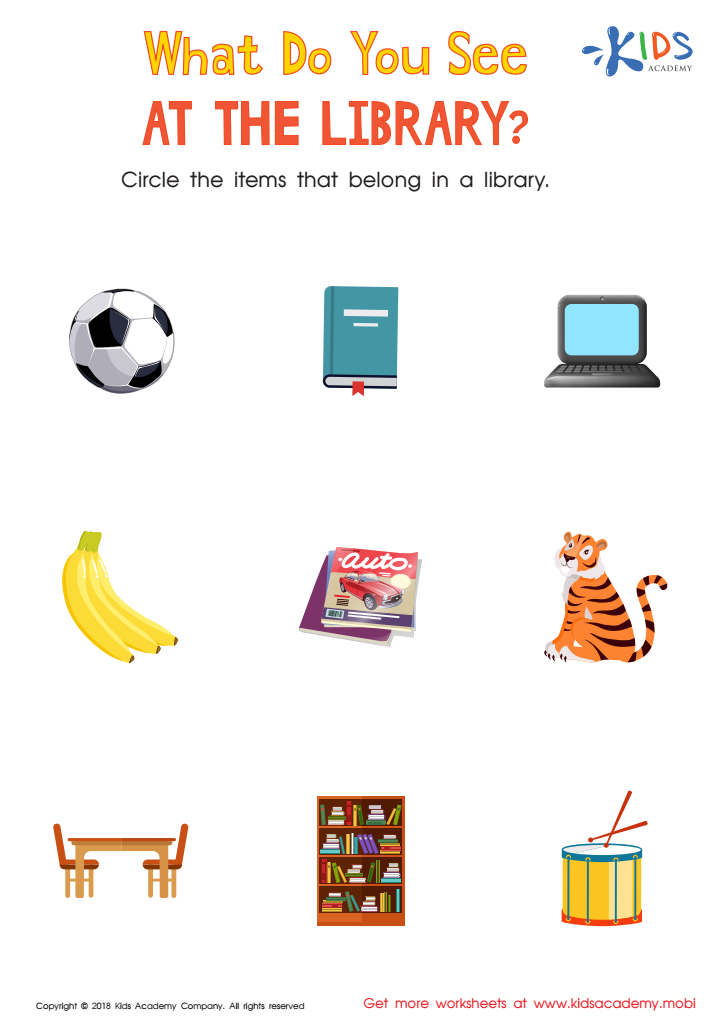
What Do you See at the Library? Worksheet
Let your kids look at the worksheet with pictures of objects found in libraries and those that don't. Ask them to list some, then circle the ones that belong in a library. Can they identify them? See if you can spot any they miss!
What Do you See at the Library? Worksheet
Worksheet
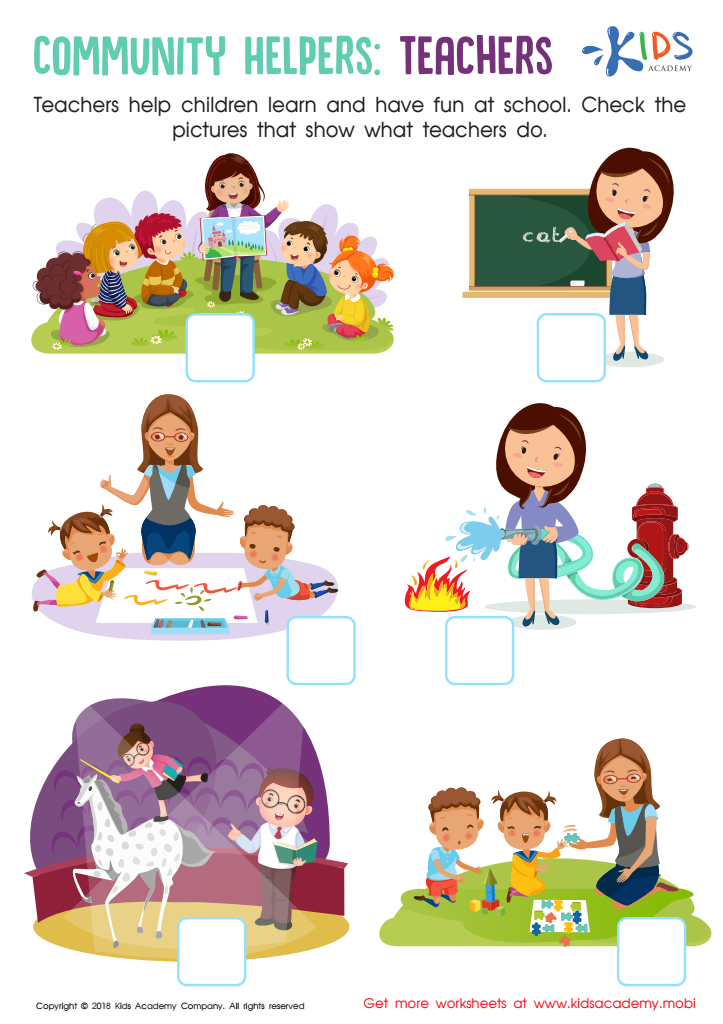
Teachers Community Helpers Worksheet
Ask your students to name some of the ways a teacher helps. Then, use this worksheet to show the right ways teachers can help. Have them check the boxes of the pictures that accurately depict what a teacher does. This is a great exercise to show your students how you help them learn and contribute to their community.
Teachers Community Helpers Worksheet
Worksheet
Join Kids Academy for Free
Who is primarily going to use this learning content?








Parents and teachers should prioritize vocabulary building for children ages 3-4 because this critical period is foundational for language development and cognitive growth. During these early years, children's brains are highly receptive to new words and concepts, making it an ideal time to enrich their vocabulary. Enhanced vocabulary skills boost comprehension, enabling children to grasp new ideas, follow instructions, and engage more fully with their environment.
Investing in a strong vocabulary at this age also lays the groundwork for future academic success. Research shows that a robust vocabulary correlates with improved reading and writing skills later on. Additionally, vocabulary building fosters social skills and emotional intelligence; children with a wider range of words can express themselves better, improving relationships with peers and adults.
Involvement in a community focused on vocabulary development—through storytimes, games, and interactive activities—encourages parents and educators to work collaboratively, creating consistent language-rich experiences. This cohesive approach enriches children’s understanding of words in varied contexts, enhancing their ability to communicate effectively. Ultimately, cultivating vocabulary at this young age not only supports language skills but also promotes confidence, curiosity, and a lifelong love of learning.








