Vocabulary Building Social Studies Worksheets for Ages 3-4
4 filtered results
-
From - To
Nurture your child's early language skills with our engaging Vocabulary Building Social Studies Worksheets for Ages 3-4. Designed specifically for young learners, these colorful and interactive worksheets introduce essential social studies concepts while expanding their vocabulary. From community roles to basic geography, each activity is thoughtfully crafted to make learning fun and effective. Boost your preschooler's confidence and knowledge as they explore new words and ideas in a playful, educational setting. Perfect for parents and educators, our printable worksheets provide the foundation for a lifetime of learning and curiosity in social studies. Start their journey today!
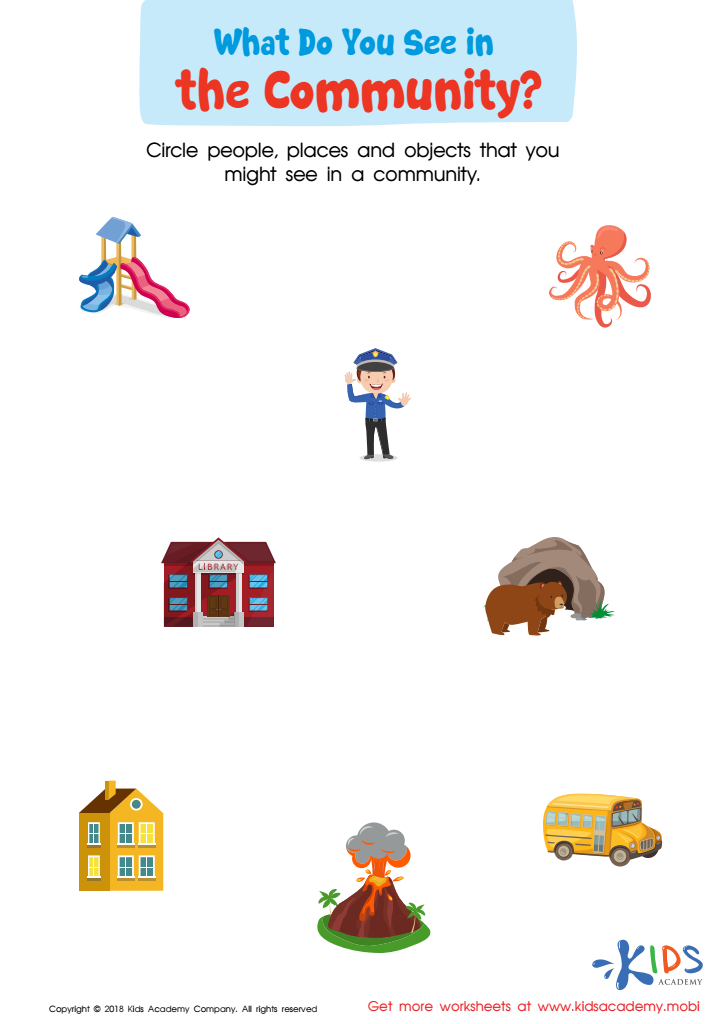
What Do You See in the Community Worksheet
 Assign to My Students

What Do you See at the Library? Worksheet
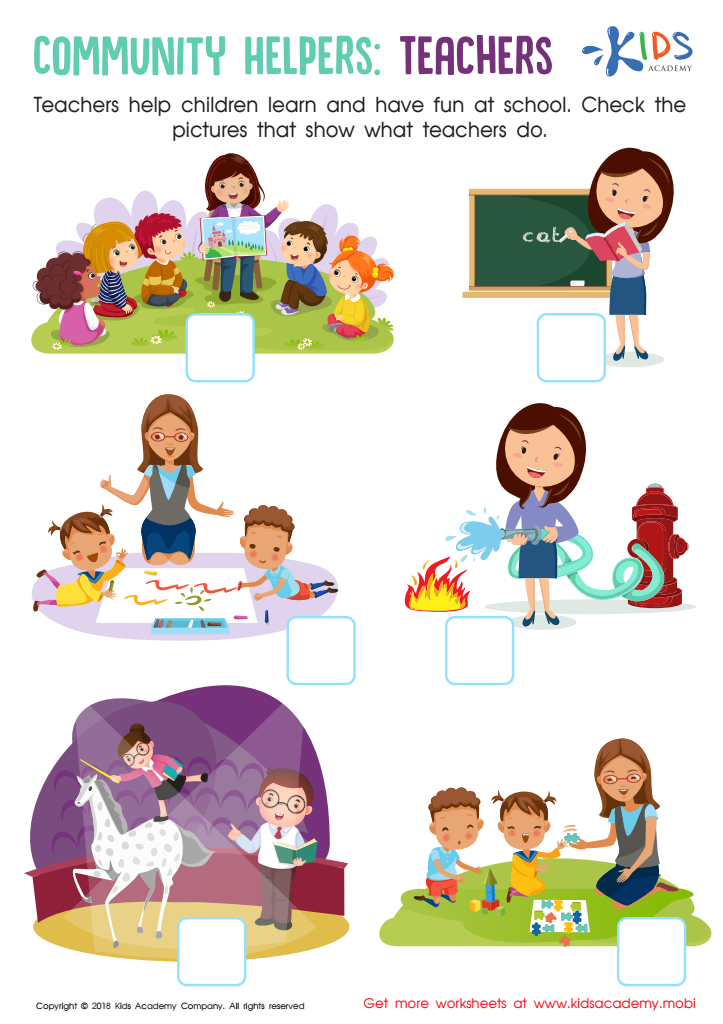
Teachers Community Helpers Worksheet
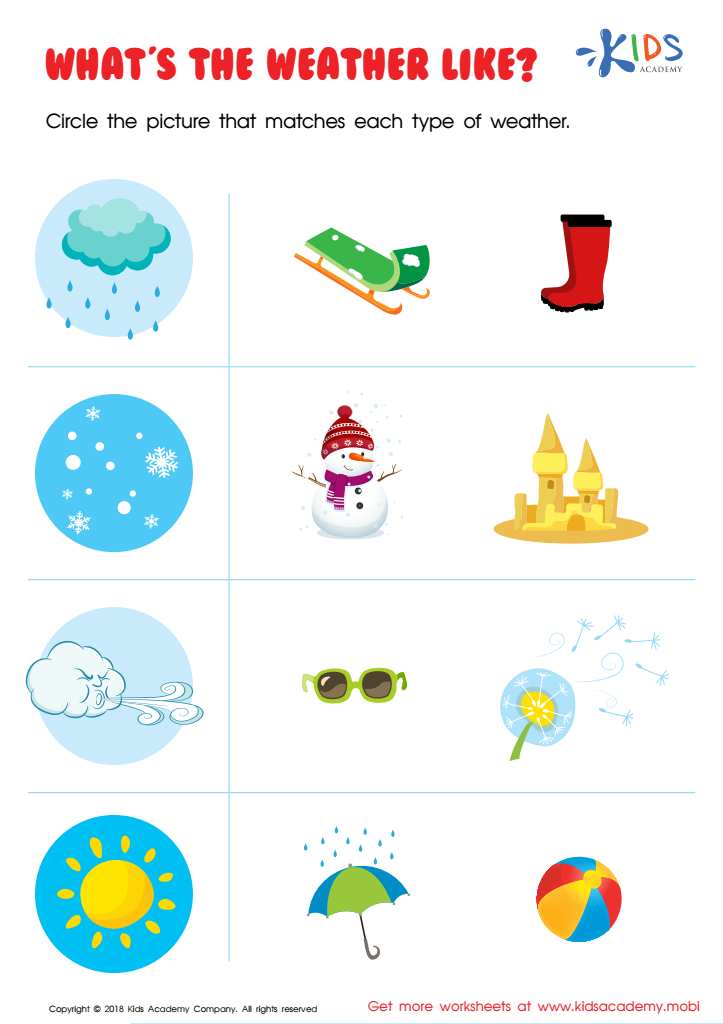
What's the Weather Like? Worksheet








Engaging preschoolers (ages 3-4) in vocabulary-building activities related to social studies is crucial for their early development for several reasons. First, expanding their vocabulary helps young children improve their communication skills. When children learn words associated with social studies like "community," "family," "jobs," and "neighborhood," they can more effectively express their thoughts, ideas, and observations about the world around them.
Second, introducing social studies concepts at an early age fosters a sense of curiosity and understanding about their own environment and broader societal structures. When children comprehend terms like "leader," "rules," or "sharing," they start to grasp how communities function and the importance of cooperation and respect.
Furthermore, vocabulary building aids cognitive development. As children encounter new words and ideas, they enhance their memory, problem-solving skills, and critical thinking. This is vital for their future academic success.
Lastly, discussing social studies topics enhances cultural awareness and empathy. By understanding different roles and norms, young children develop respect for diversity and a better understanding of social dynamics.
In summary, caring about vocabulary building in social studies for young children promotes robust language skills, cognitive growth, cultural awareness, and social understanding—foundational elements for well-rounded development.