Punctuation understanding Punctuation Worksheets for Ages 3-4
3 filtered results
-
From - To
Enhance your child's writing skills with our Punctuation Understanding Worksheets for ages 3-4! Perfect for early learners, these engaging, printable activities introduce the basic concepts of punctuation, such as periods, question marks, and exclamation points. Each worksheet is designed to make learning fun and interactive, ensuring young minds grasp the essential rules of writing and punctuating sentences. Tailored for preschoolers and kindergarteners, our resources help build a strong foundation for effective communication. Encourage your little one to start their journey towards mastering punctuation with our expertly-crafted worksheets today! Visit Kids Academy for more details and free printables.
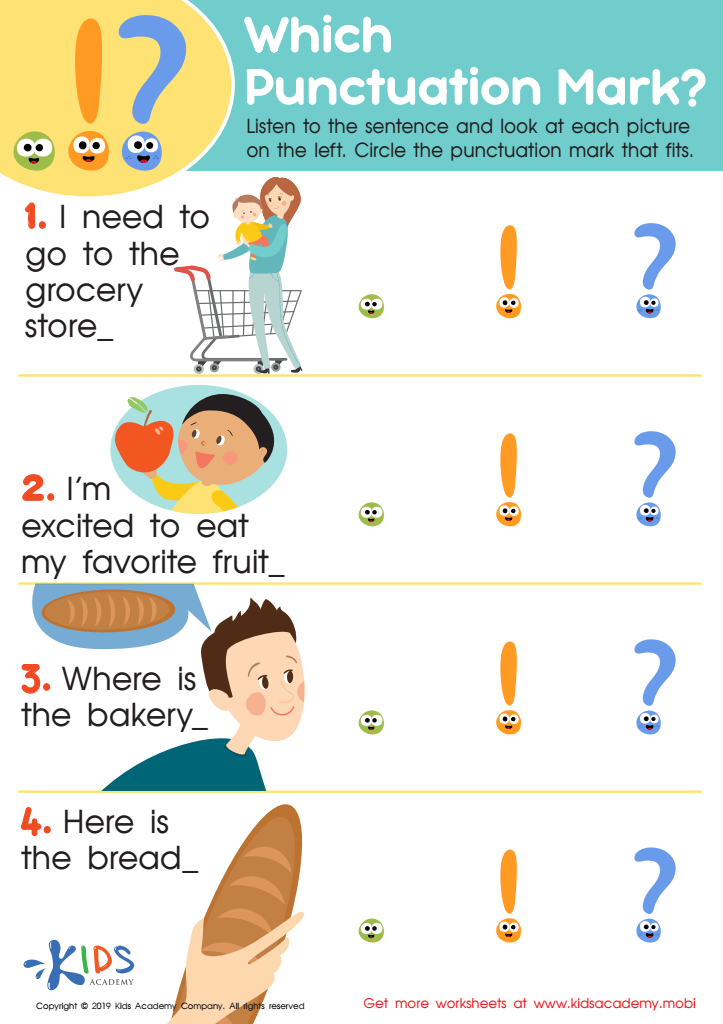
Which Punctuation Mark Worksheet
 Assign to My Students
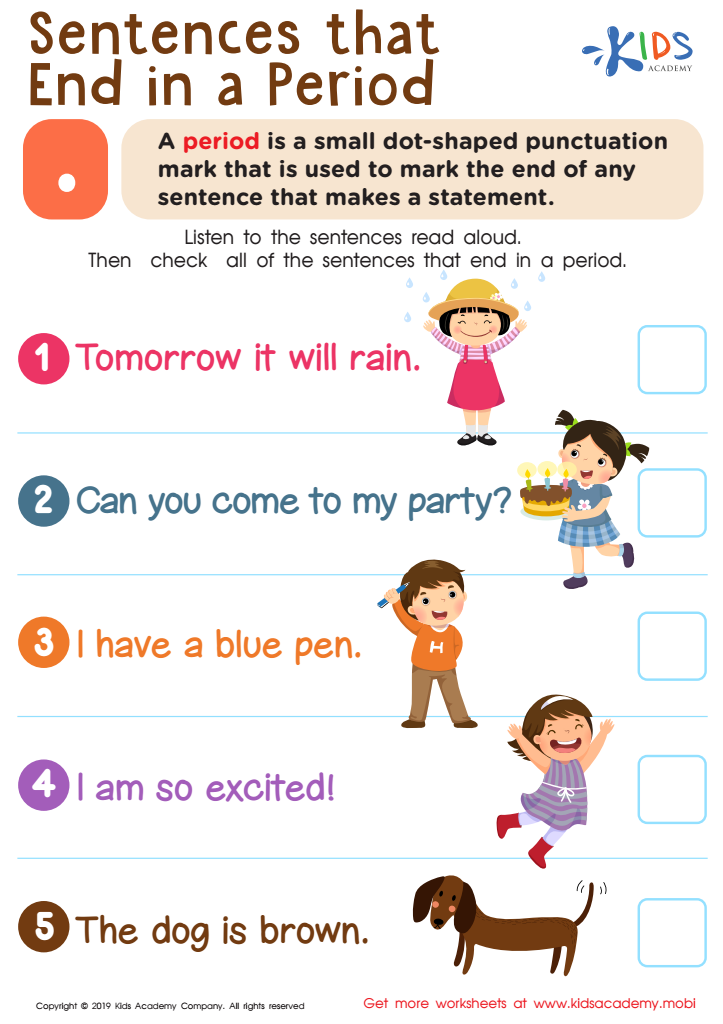
Sentences That End in a Period Worksheet
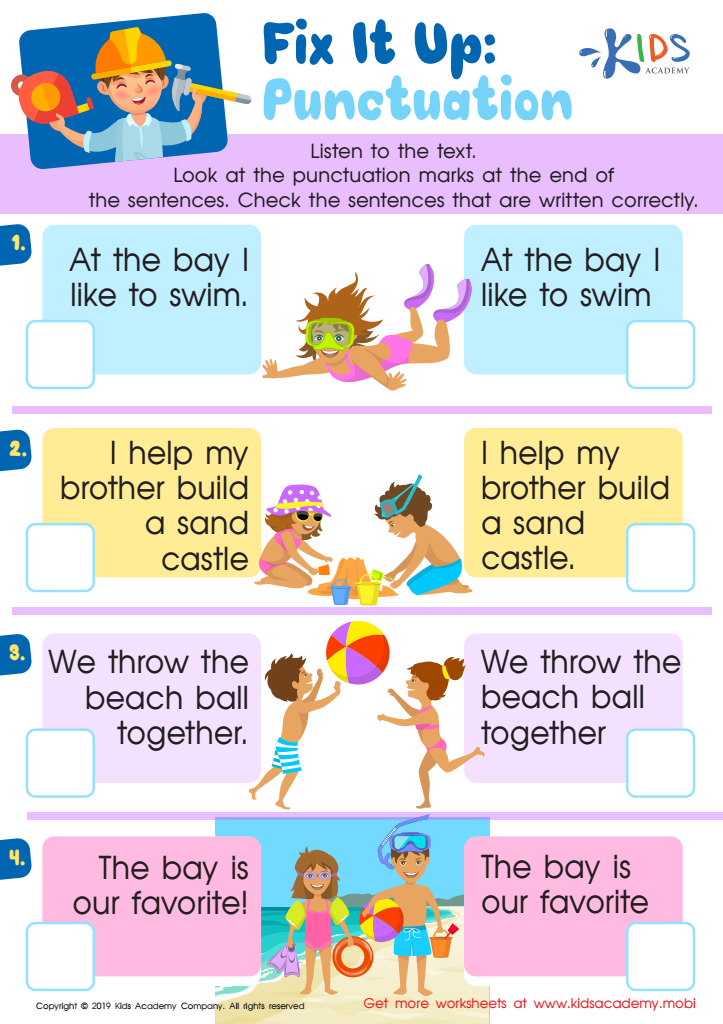
Fix Punctuation Worksheet




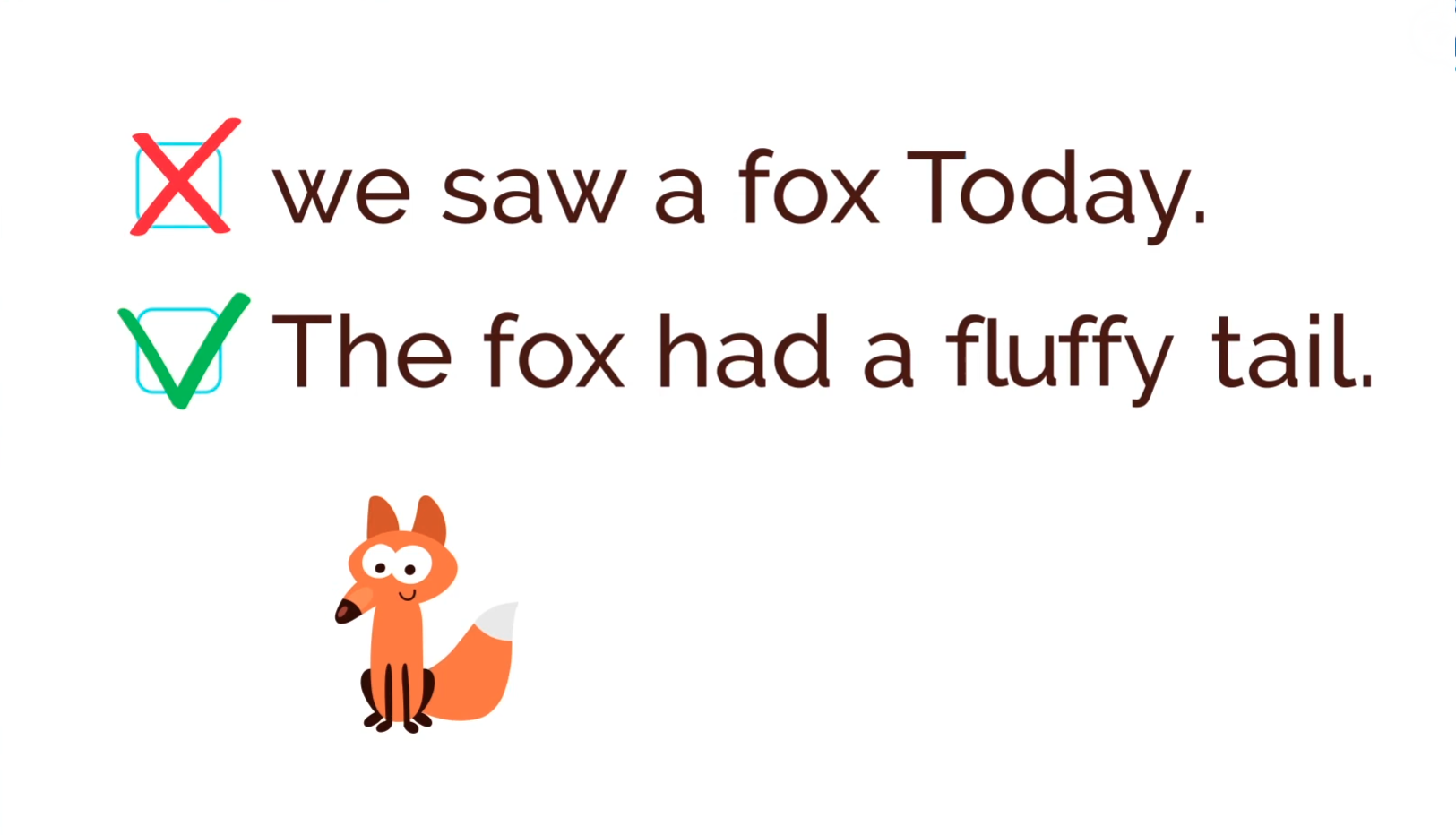


Understanding punctuation at an early age sets a strong foundation for effective communication and literacy skills. For children ages 3-4, the concept of punctuation might seem advanced, but introducing its basics in context-appropriate ways has significant benefits.
First, punctuation helps kids make sense of text. Periods, commas, and other marks are the traffic signals in sentences, guiding readers on when to pause, stop, or add emphasis. When children grasp these signals, they can better understand and enjoy the stories or instructions they're being read to.
Second, early exposure to punctuation aids in their language development. By learning the rhythms and structures of well-punctuated language, young children start to recognize and replicate these patterns in their speech. This enhances both their verbal and pre-reading skills, making the later transition to actual reading and writing smoother.
Lastly, teaching punctuation nurtures attention to detail. As children learn to identify the marks and their roles, they develop observational skills that benefit other learning areas. Parents and teachers can introduce punctuation through interactive and playful activities such as reading aloud, storytelling, or games.
Investing a bit of effort in punctuation awareness for ages 3-4 ensures that children will be better prepared for advanced literacy challenges, fostering strong communicators from an early age.








