
Spelling practice Elementary Phonics Worksheets for Ages 3-5
4 filtered results
Difficulty Level
Grade
Age
-
From - To
Subject
Activity
Standards
Enhance your child's reading and writing skills with our Spelling Practice Elementary Phonics Worksheets, tailored for ages 3-5. These engaging and interactive worksheets focus on phonics fundamentals, helping young learners build a strong literacy foundation. Each activity is designed to make learning fun, featuring colorful illustrations and easy-to-follow exercises that encourage spelling and word recognition. Children will explore letter sounds and simple words, fostering their confidence in reading and writing. Perfect for classroom use or at home, our worksheets support the early literacy development essential for future academic success. Give your child the tools they need to flourish in their educational journey!
Favorites
With answer key
Interactive
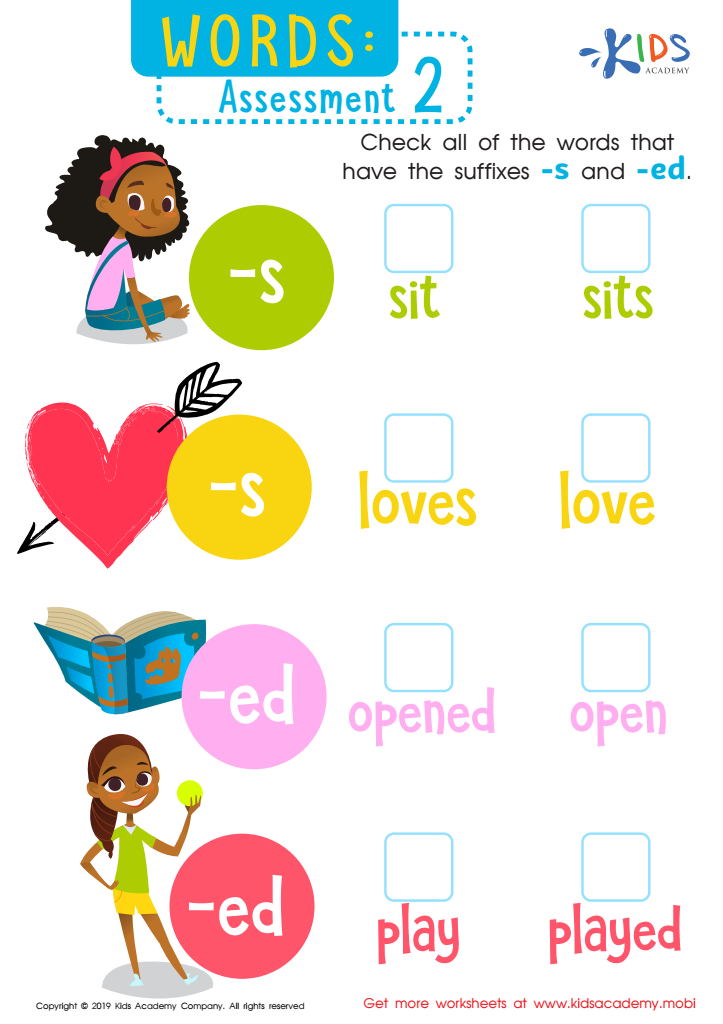
Words: Assessment 2 Worksheet
Test your child’s knowledge of -s and -ed word endings with this fun worksheet! They'll look at images and read the words, then choose the correct suffix to finish each one. Vivid illustrations make this an enjoyable learning experience!
 Assign to My Students
Words: Assessment 2 Worksheet
Worksheet
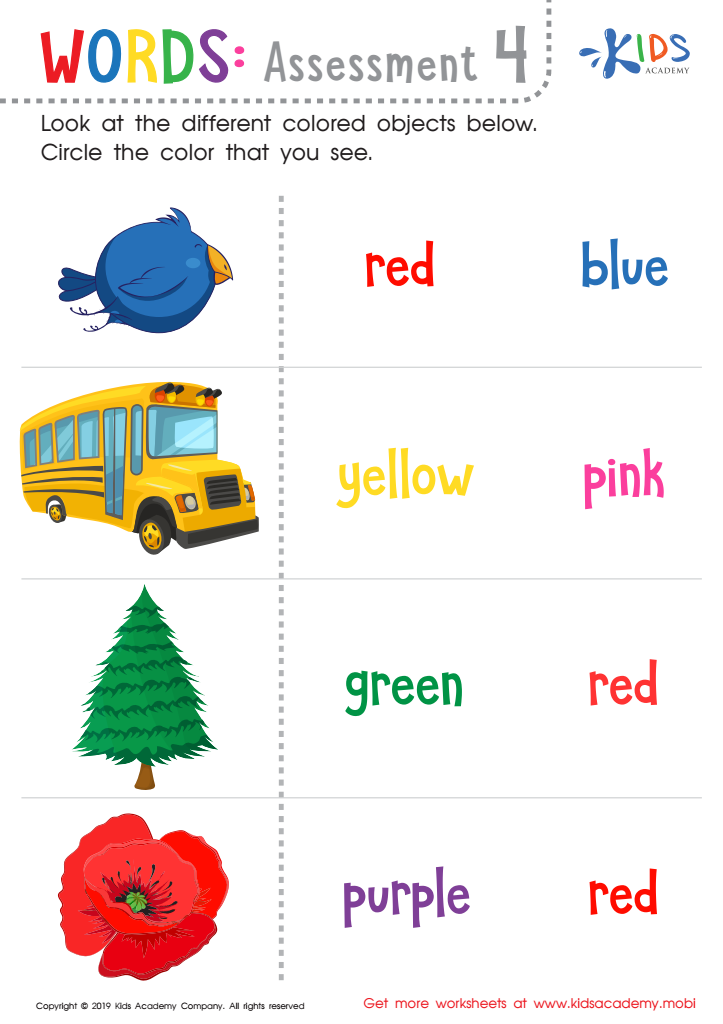
Words: Assessment 4 Worksheet
Look at the pictures and have your child circle the color they see. This free worksheet is great for assessing their knowledge of vocabulary words. It offers familiar images with words for kids to read and match with the colors. Help your child build their reading and understanding skills with this fun activity!
Words: Assessment 4 Worksheet
Worksheet
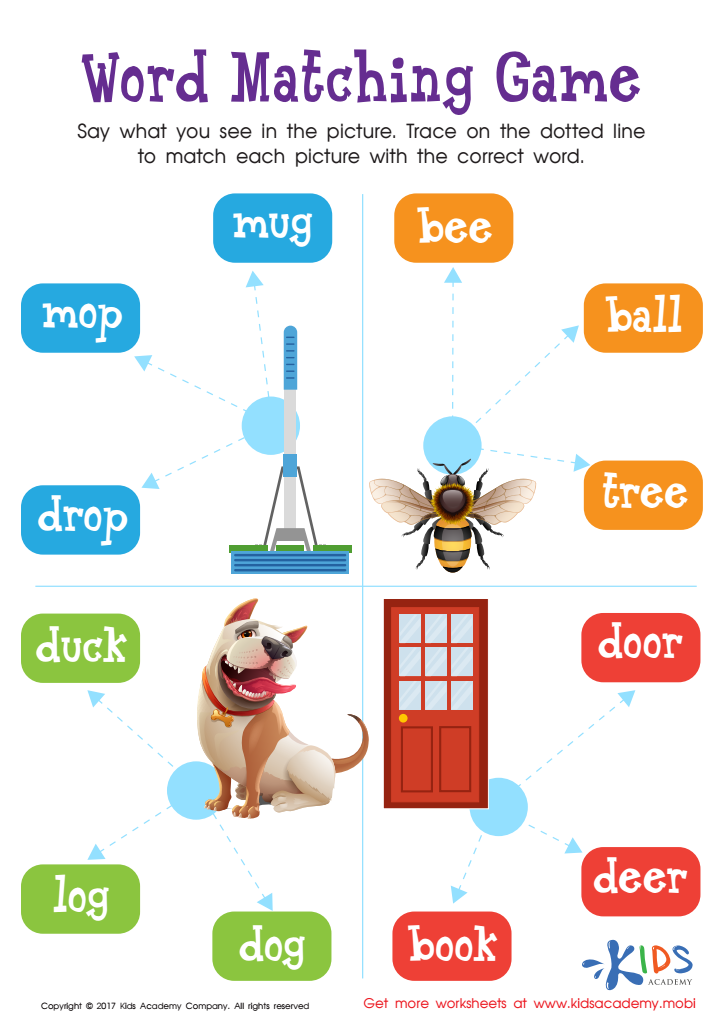
Word Matching Game Worksheet
Help your early reader develop prereading skills with this fun matching worksheet! Visual cues help them learn sight words, decode words in word families, and identify phonetic patterns. They'll practice discerning sounds past initial consonants while saying the name of the picture and finding the matching word - and reading at the same time!
Word Matching Game Worksheet
Worksheet
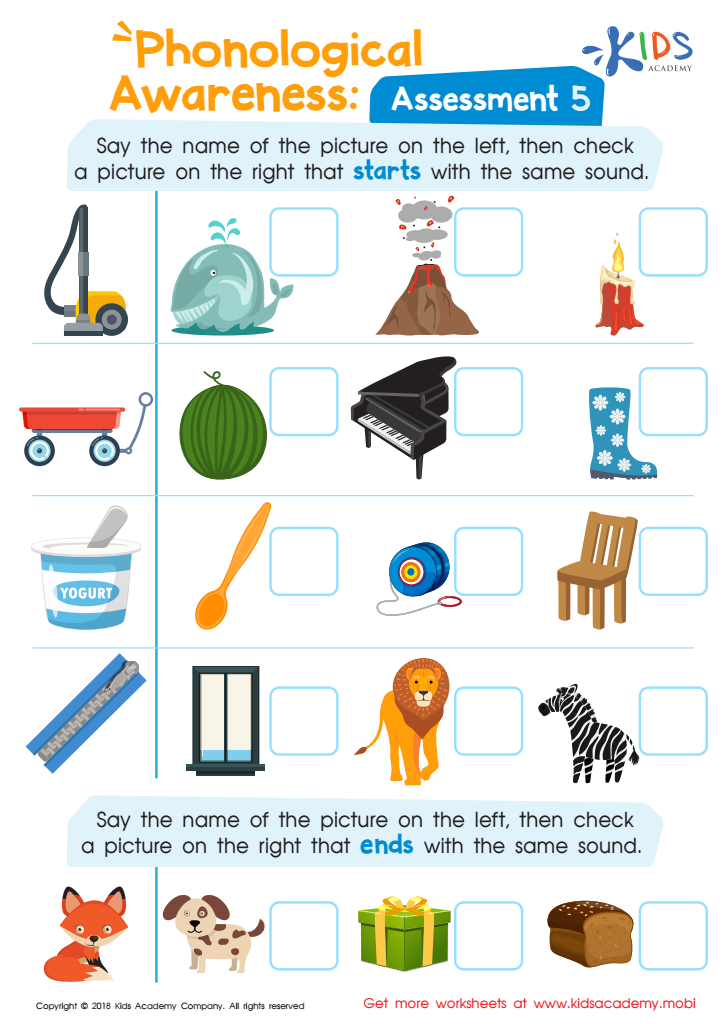
Phonological Awareness: Assessment 5 Worksheet
Repetition is key to success! This worksheet tests kids' ability to match beginning and ending sounds in words. Instruct them to say each word and listen closely to the sounds they make. Focus on the starting sounds for the first four pics, then the last one to hear ending sounds and find the right match!
Phonological Awareness: Assessment 5 Worksheet
Worksheet
Join Kids Academy for Free
Who is primarily going to use this learning content?




Spelling practice and phonics are vital for young children ages 3-5 as they lay the foundation for effective communication, literacy skills, and overall academic success. At this early age, children are developing their understanding of the sounds that make up words and how these sounds correspond to letters. Engaging in phonics activities helps enhance their ability to decode words, fostering confidence when they begin reading independently.
Parents and teachers play an essential role in guiding children through this learning process. Consistent spelling practice allows children to recognize patterns in language, which in turn supports their writing and reading abilities. By making phonics fun and interactive — through songs, games, and storytelling — caregivers can cultivate a positive attitude towards learning.
Moreover, mastering early phonics prepares children for more complex language skills in grade school, reducing frustration as they encounter more challenging texts. Furthermore, strong early literacy skills are closely linked to academic achievement later in life. By prioritizing spelling practice and phonics for this age group, parents and teachers contribute not only to immediate reading skills but also to the children’s long-term educational journey, empowering them to thrive in an increasingly literate world.







