Alphabetical order Alphabet Worksheets for Ages 3-5
3 filtered results
-
From - To
Discover our engaging Alphabetical Order Worksheets designed specifically for children aged 3-5! These fun and interactive activities will help young learners understand the concept of alphabetical order while developing essential literacy skills. Our worksheets feature colorful visuals and playful exercises that encourage early cognitive development. Kids will love sorting words, matching images, and practicing letter recognition as they learn to organize items alphabetically. Perfect for homeschooling parents and early educators, these resources make learning enjoyable and effective. Visit our page to find a variety of worksheets that will ignite your child's passion for reading and writing while building a strong foundation in language skills!
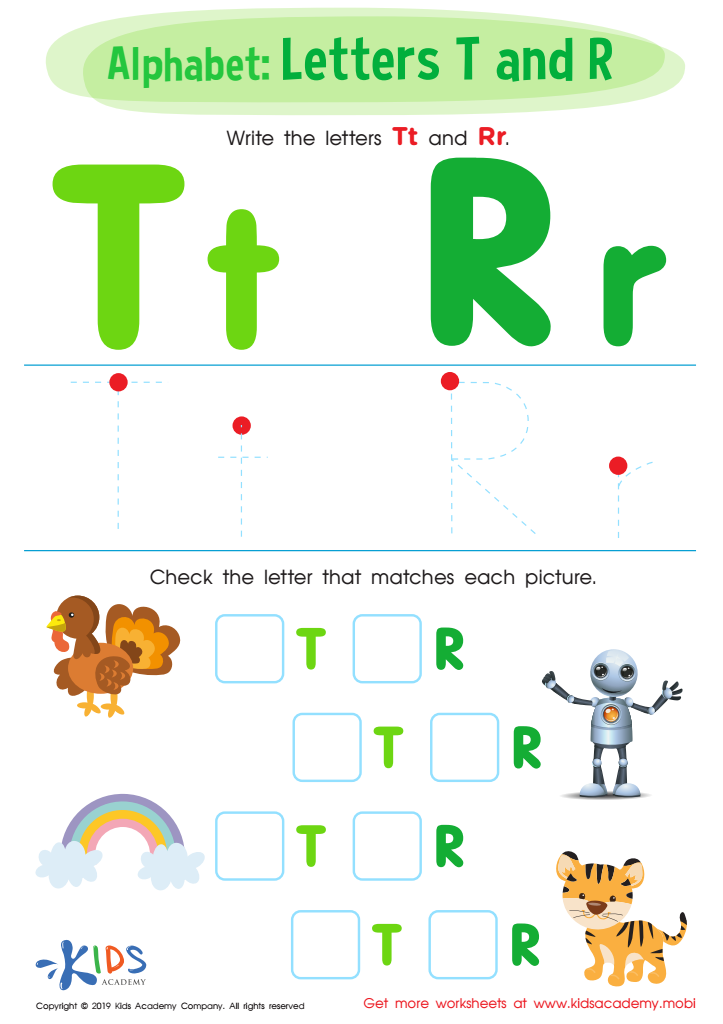
Letters T and R Worksheet
 Assign to My Students
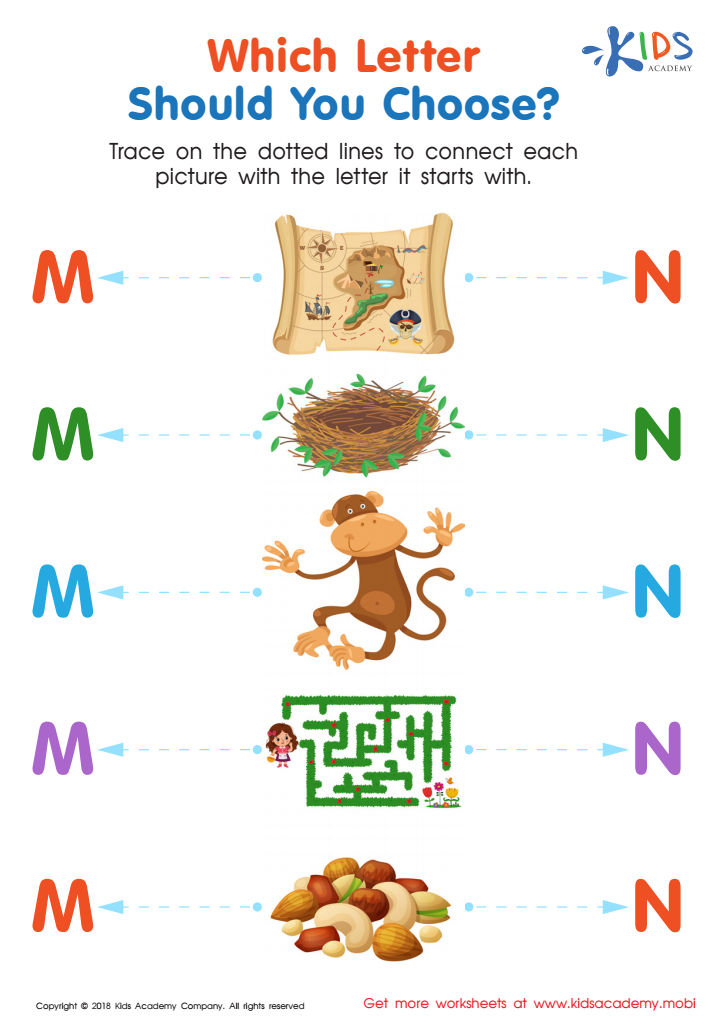
Which Letter Should you Choose? Worksheet
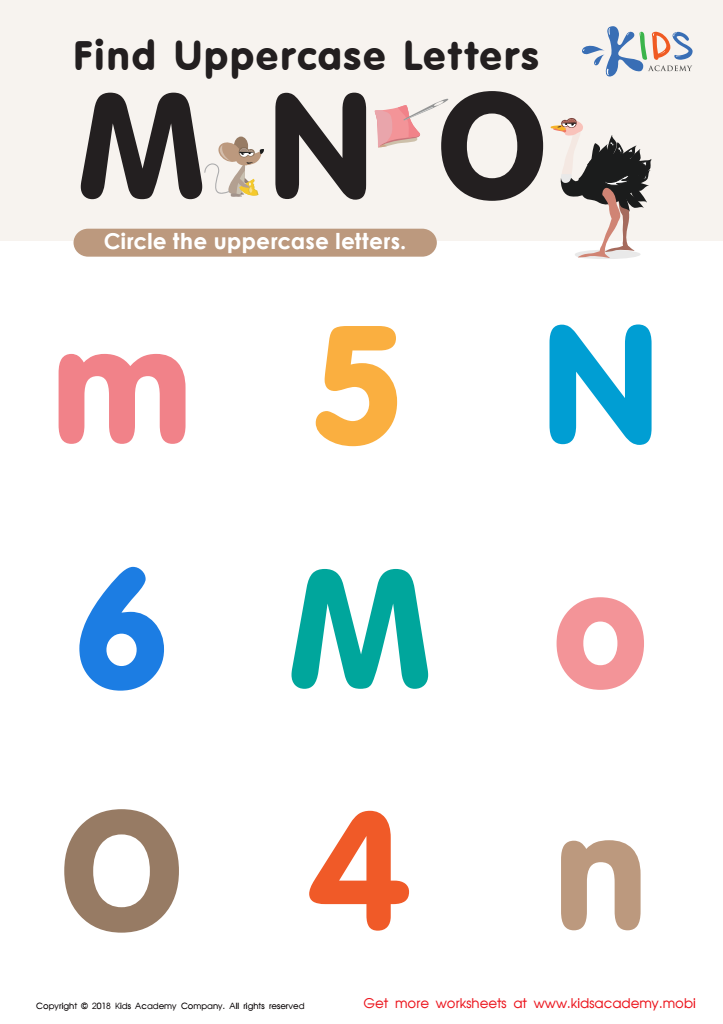
Find Uppercase Letters M, N, and O Worksheet








Teaching preschoolers the concept of alphabetical order is important for several reasons. First, it aids in language development and literacy skills. By familiarizing children with the alphabet and its sequence, they gain a foundational understanding that supports future reading and writing skills. Recognizing the order of letters enhances their ability to identify words, further enriching their vocabulary and comprehension.
Second, learning alphabetical order fosters organizational skills. Children grasp the concept of sorting and categorizing information, which is a skill they will utilize throughout their academic journey and beyond. For instance, when learning to alphabetize, children begin to develop logical thinking, promoting problem-solving abilities.
Moreover, incorporating alphabet learning is often fun and engaging. Activities like singing the alphabet song, playing alphabet games, or using colorful letter blocks can make learning enjoyable, ultimately strengthening the parent-child or teacher-student bond.
Additionally, this foundational knowledge is crucial as children enter more structured educational environments, where understanding how information is organized, such as in libraries or classrooms, becomes increasingly vital. Thus, by prioritizing alphabetical order in early education, we equip young learners with essential skills for lifelong learning and exploration.







