Sound identification Alphabet Worksheets for Ages 3-5
5 filtered results
-
From - To
Introduce your toddler to the exciting world of letters with our Sound Identification Alphabet Worksheets, specially designed for ages 3-5. These engaging, interactive worksheets help young learners recognize and associate sounds with their corresponding letters, laying a crucial foundation for reading and phonetic skills. Each worksheet features vibrant illustrations and fun activities that make learning enjoyable. Your child will develop essential literacy skills while exploring the alphabet in a playful way. Perfect for homeschooling, busy classrooms, or as delightful enrichment at home, our worksheets provide endless opportunities for auditory and visual learning. Start your child's alphabet journey today!
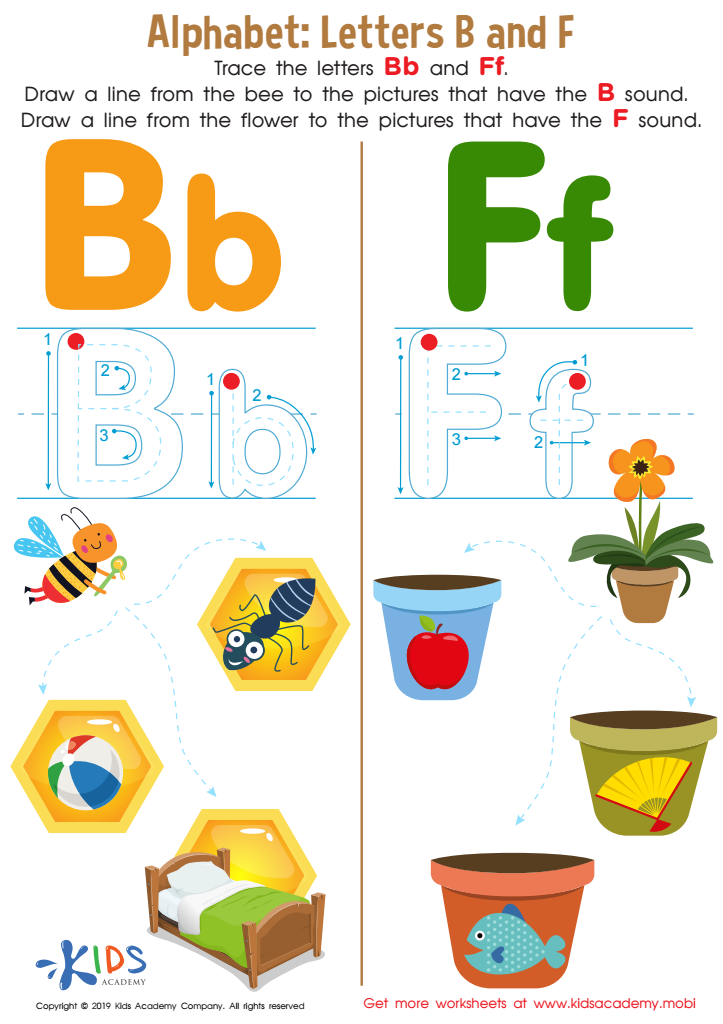
Letters B and F Tracing Worksheet
 Assign to My Students
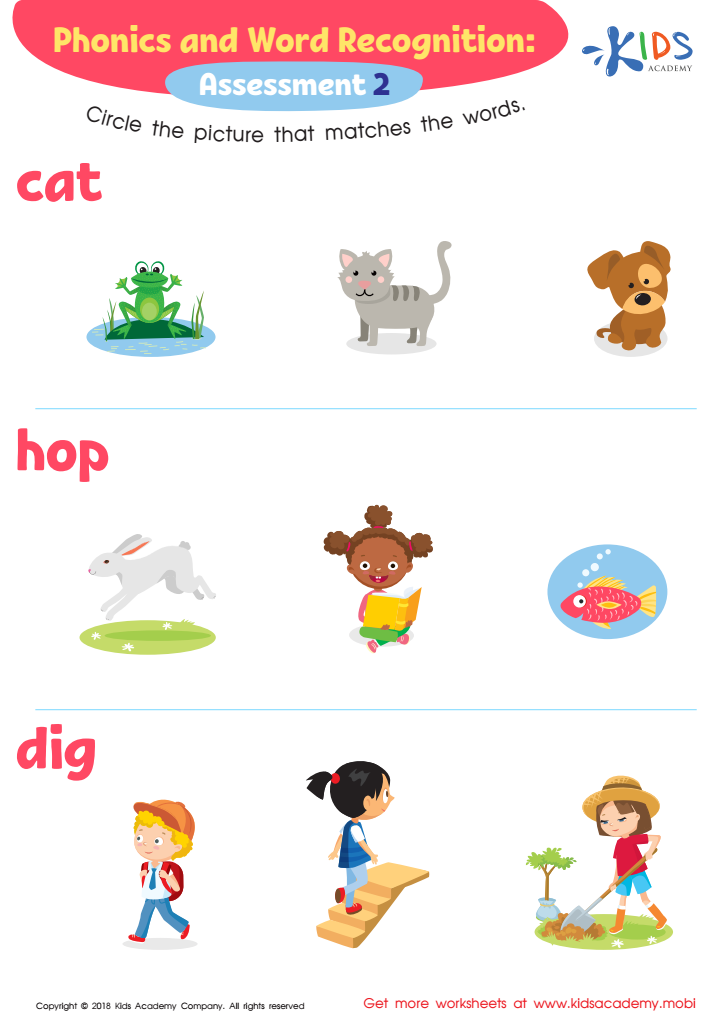
Phonological Awareness: Assessment 2 ELA Worksheet
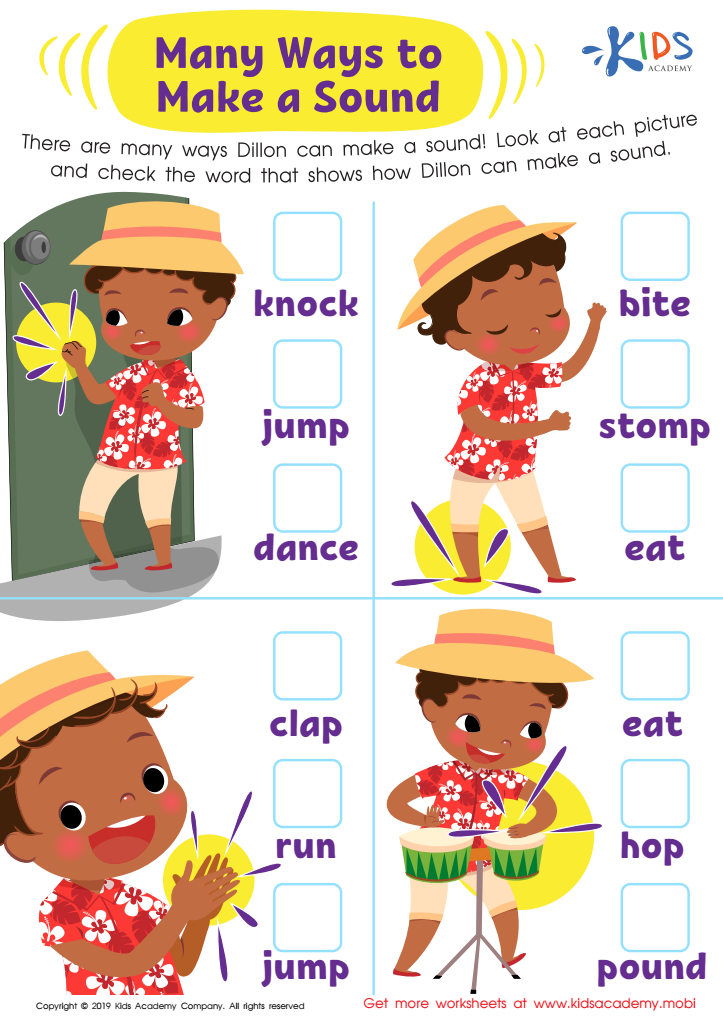
Many Ways to Make a Sound Worksheet
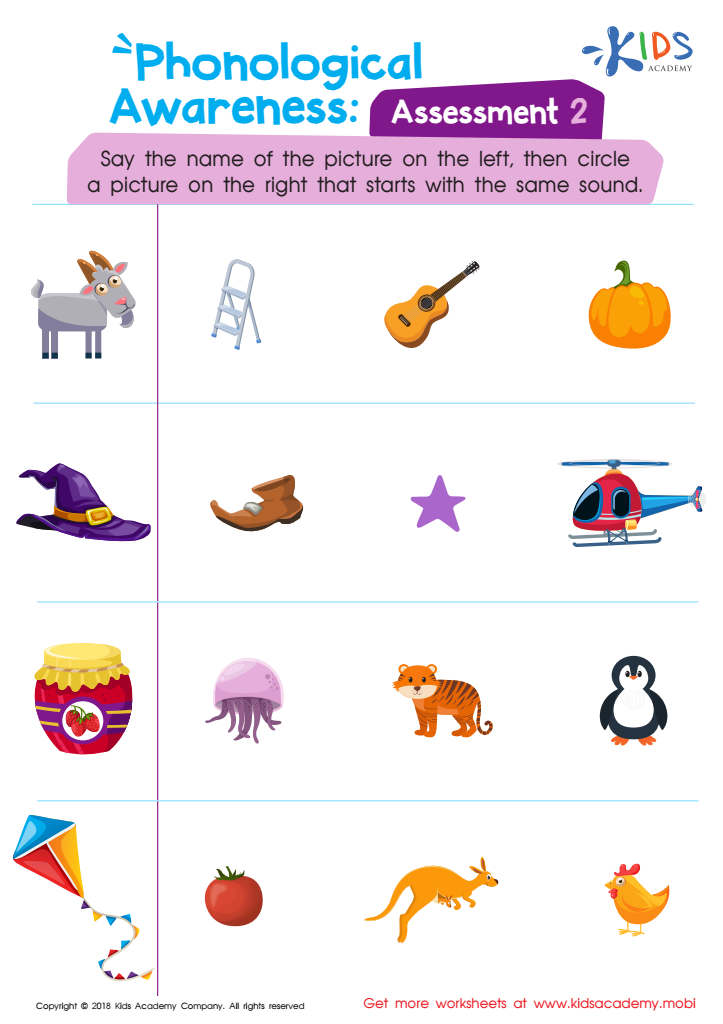
Phonological Awareness: Assessment 2 Worksheet
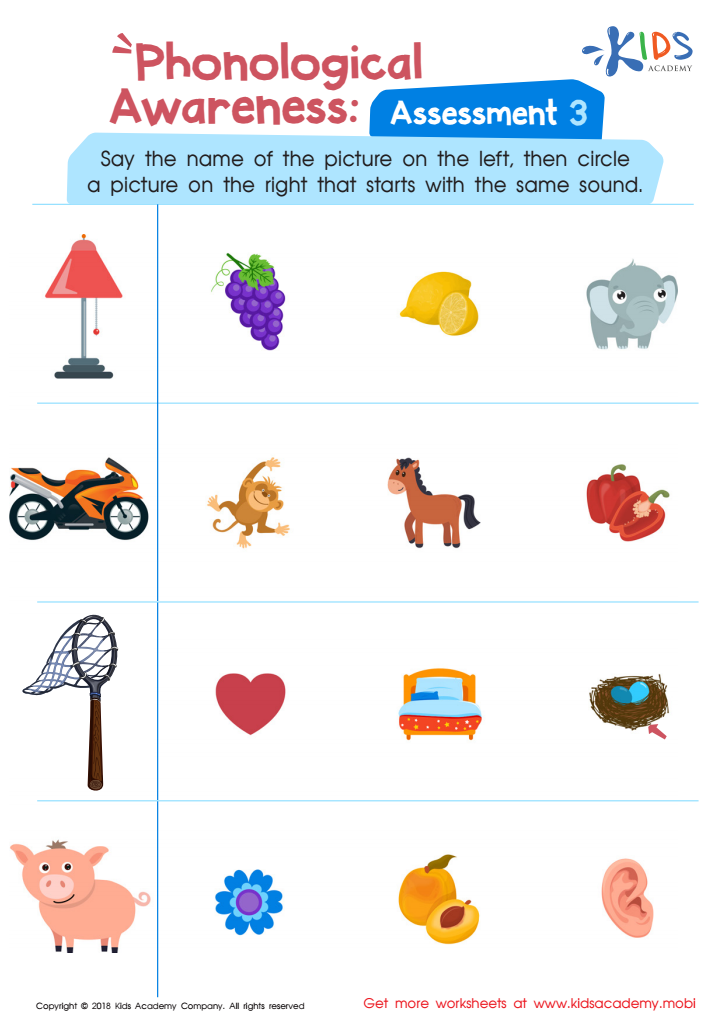
Phonological Awareness: Assessment 3 Worksheet








Sound identification, or phonemic awareness, is a foundational skill crucial for literacy development in children aged 3-5. Parents and teachers should prioritize this skill because it lays the groundwork for reading and writing. Understanding that words are made up of sounds enables children to blend, segment, and manipulate these sounds, which are essential skills for decoding words.
Additionally, early exposure to sound identification encourages vocabulary expansion, improved spelling, and overall cognitive development. Activities that focus on sound matching, rhyming, and syllable segmentation can spark children's interest in language and literacy, making learning enjoyable and engaging.
Furthermore, children who develop strong phonemic awareness tend to have greater success in school, as these skills directly contribute to their ability to read fluently and comprehend what they read. By investing time in sound identification activities, parents and teachers can help nurture a positive attitude towards reading, fostering a lifelong love for learning.
Moreover, being adept in phonemic awareness can bolster a child's confidence as they encounter written material and instill essential skills that will serve them throughout their educational journey. In summary, sound identification is a vital aspect of early education that warrants attention and care from parents and teachers.







