Letter recognition Letter G Worksheets for Ages 3-5
3 filtered results
-
From - To
Enhance your child's letter recognition skills with our "Letter G Worksheets" designed for ages 3-5. These engaging, educational printables are perfect for preschoolers, helping them identify and learn the letter G through fun tracing activities, coloring pages, and interactive games. Each worksheet is thoughtfully crafted to build a strong foundation in early literacy, encouraging young learners to recognize the letter G in various contexts. Perfect for parents and teachers, our Letter G Worksheets make learning an enjoyable experience, ensuring kids develop essential reading readiness skills in an entertaining and effective way. Download now and watch your child excel!
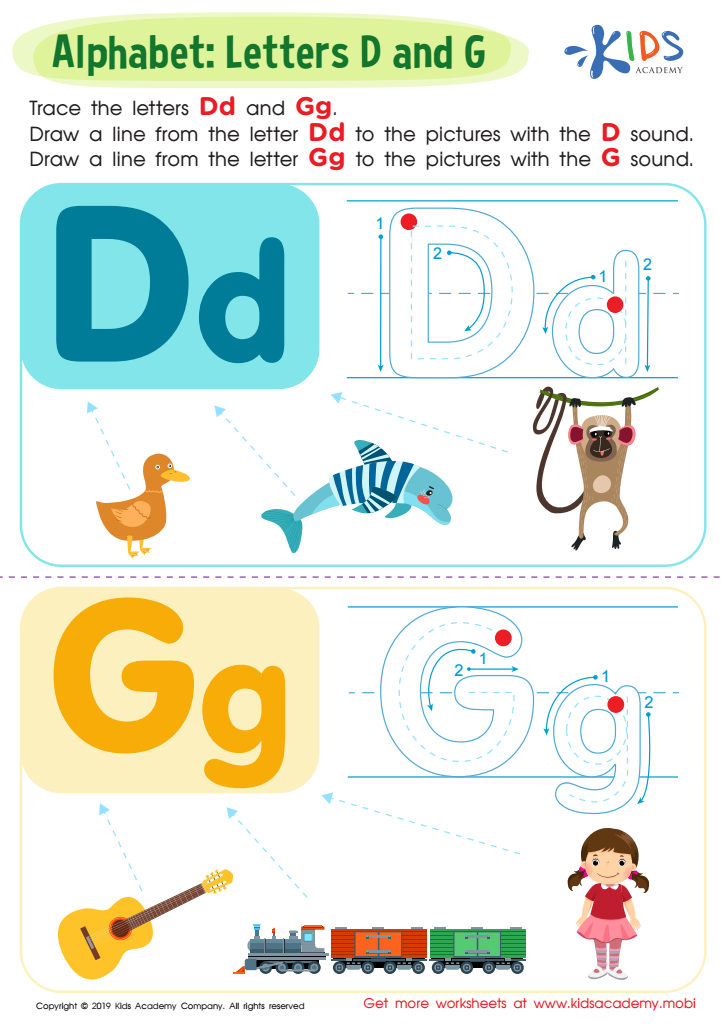
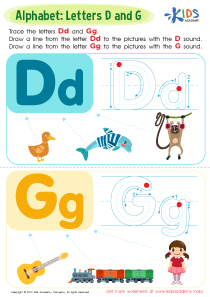
Letter D and G Tracing Worksheet
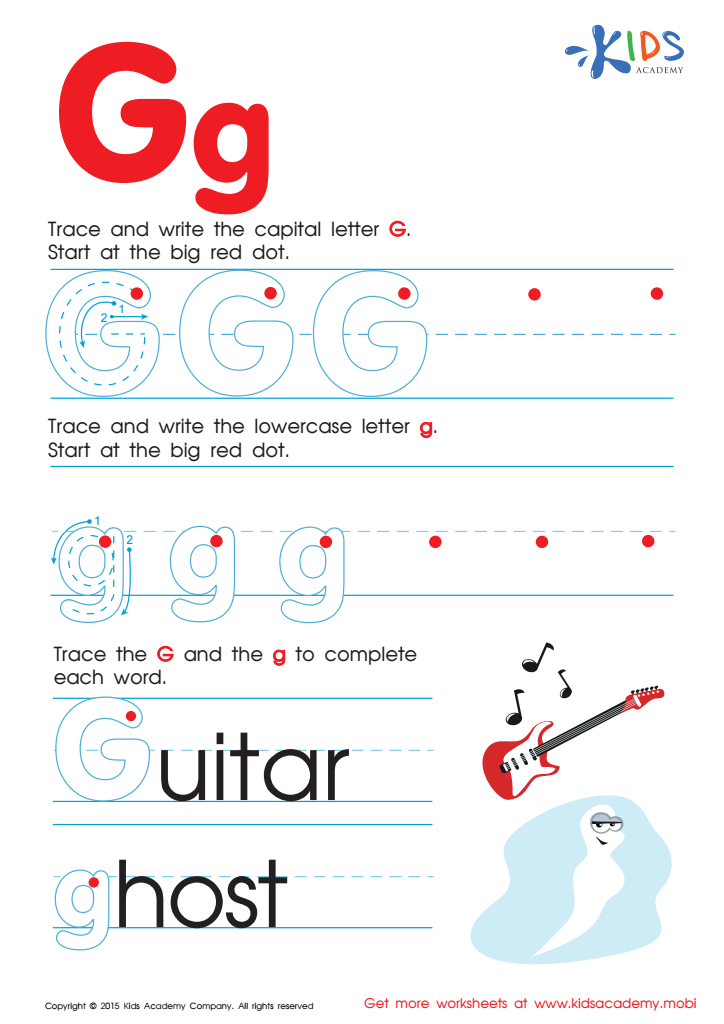
Letter G Tracing Page
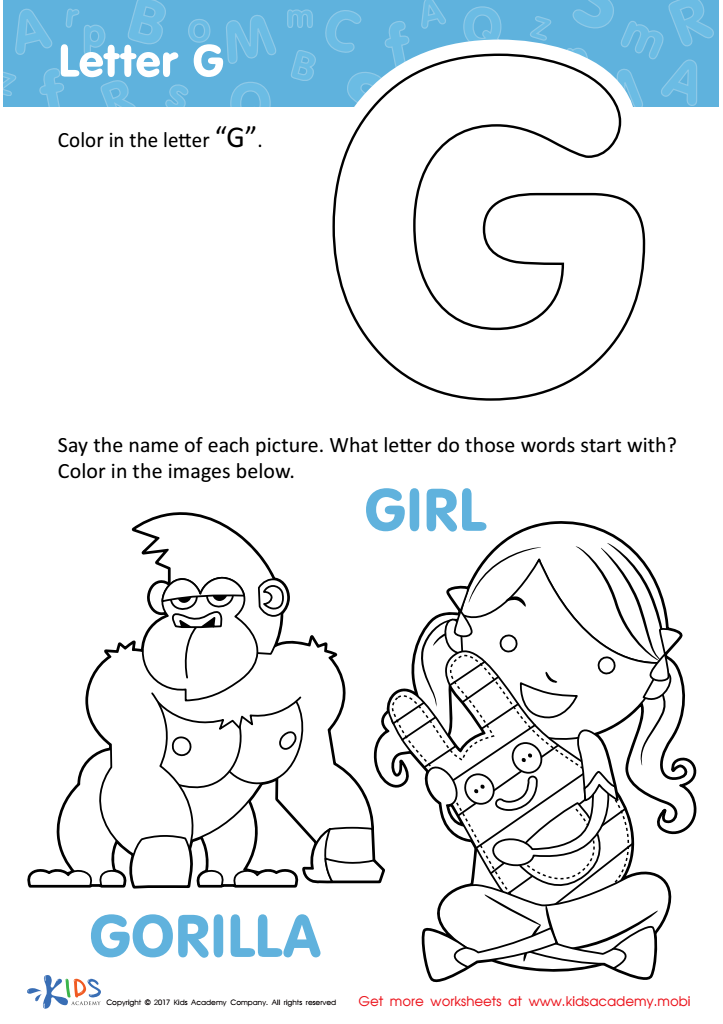
Letter G Coloring Sheet
 Assign to My Students






Letter recognition is a fundamental skill that sets the stage for early literacy and overall academic success in young children, specifically for ages 3-5. The letter "G" may seem like just another letter in the alphabet, but mastering it carries substantial benefits.
Firstly, recognizing the letter "G" aids in differentiating symbols, which is crucial for reading proficiency. When children can identify the letter "G," they are not only learning this individual letter but are also practicing the broader skill of recognizing letter shapes and sounds. This skill directly supports their ability to decode words, laying a strong foundation for reading and writing.
Moreover, familiarity with the letter "G" enhances a child's vocabulary. Words like "goat," "green," and "garden" become meaningful as children can link the letter with the sound and its corresponding words. This connection between letters and sounds is a key component in phonemic awareness, another pivotal literacy milestone.
Additionally, mastery of individual letters like "G" builds confidence. As children successfully identify more letters, their self-esteem grows, making them more eager to take on additional learning challenges.
In essence, caring about letter "G" recognition is about ensuring that children have a solid start in their educational journey, helping them become confident readers and effective communicators. Parents and teachers prioritizing this skill contribute to a child's lifelong learning and success.