Sound Association Letter Recognition Worksheets for Ages 3-5
5 filtered results
-
From - To
Boost your child’s literacy skills with our Sound Association Letter Recognition Worksheets designed for ages 3-5! These engaging worksheets help young learners connect sounds with corresponding letters, fostering phonemic awareness essential for reading success. Featuring interactive activities, colorful illustrations, and has been crafted to make learning fun, each worksheet encourages kids to identify letters and associate them with familiar words and sounds. Perfect for preschool and kindergarten classrooms, these resources enhance cognitive development while keeping children entertained. Download now to support your child's early literacy journey with our thoughtfully created, age-appropriate worksheets tailored for little learners!
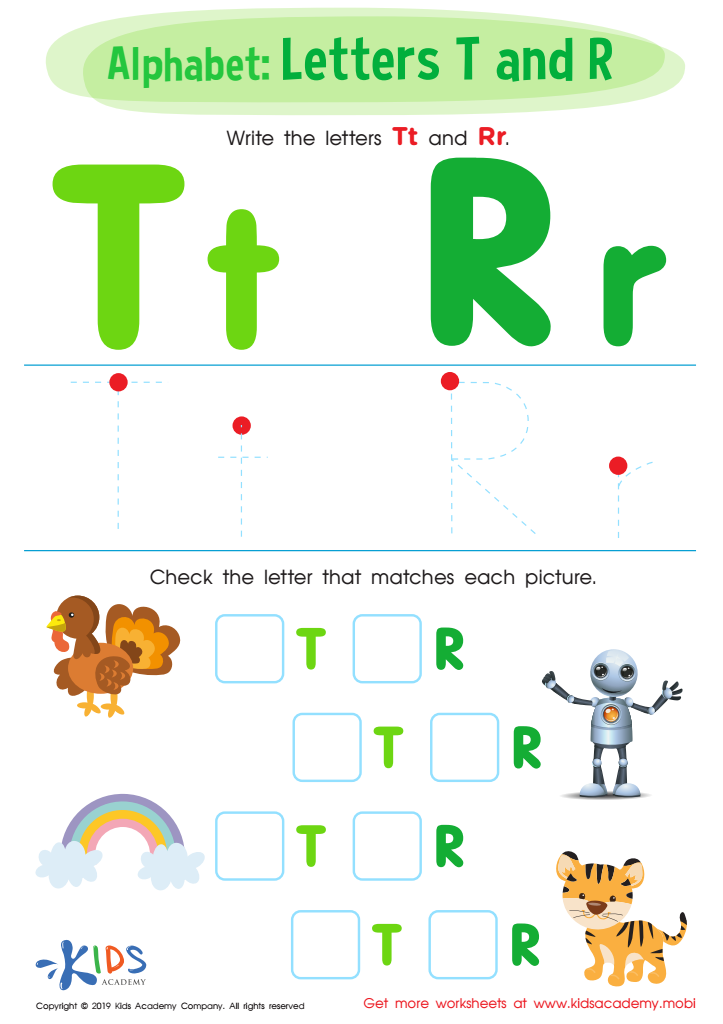
Letters T and R Worksheet
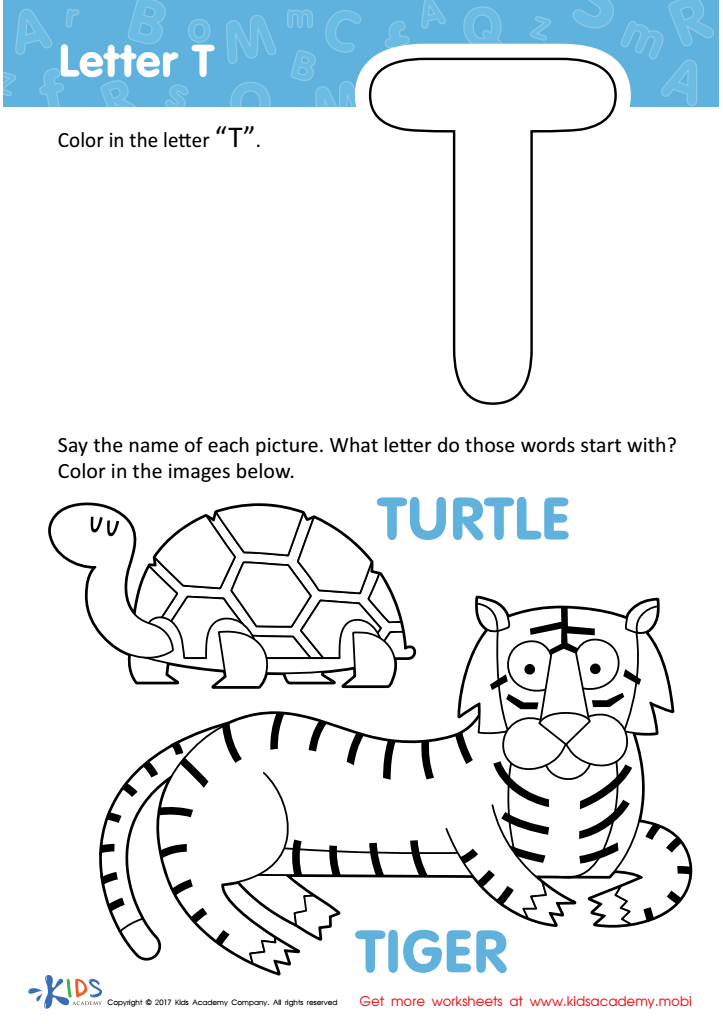
Letter T Coloring Sheet
 Assign to My Students
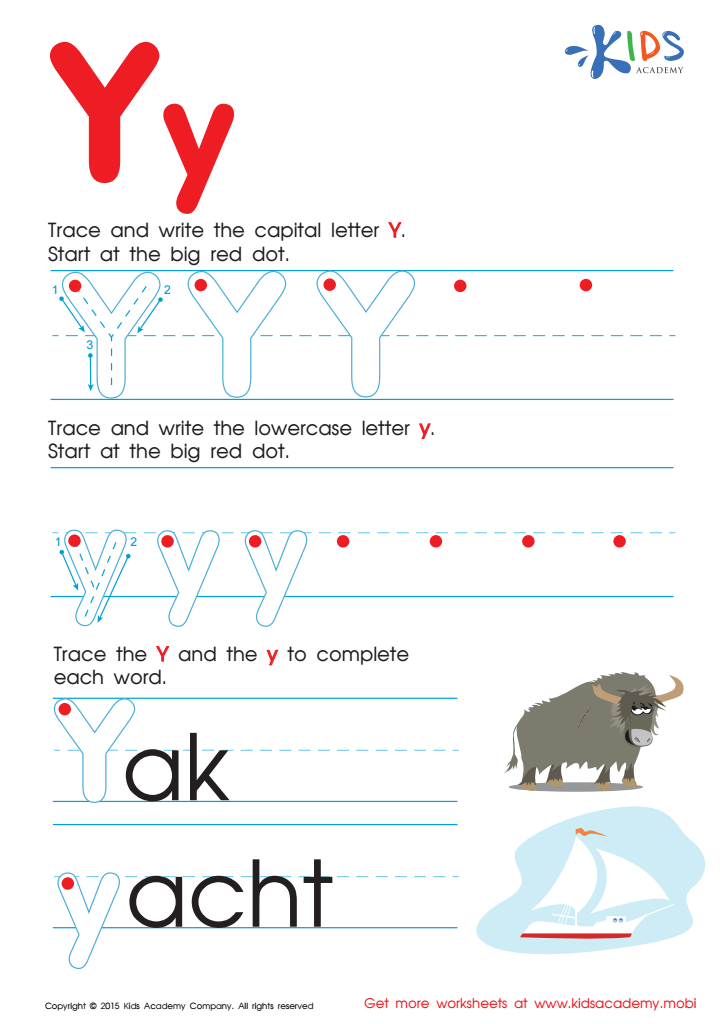
Letter Y Tracing Page
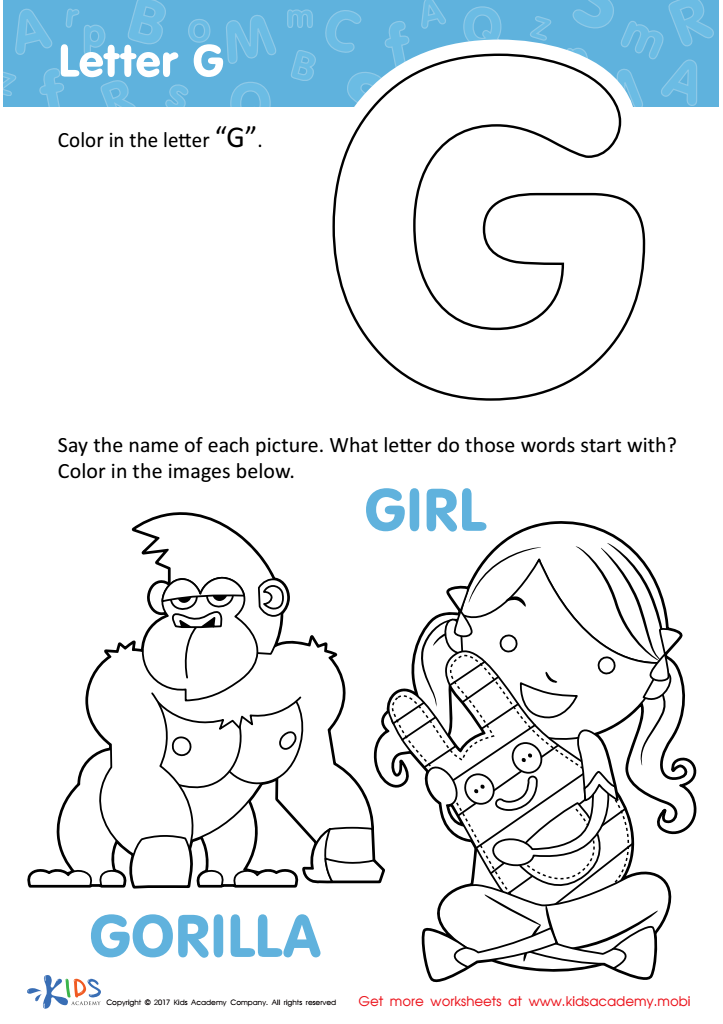
Letter G Coloring Sheet
Assign to My Students
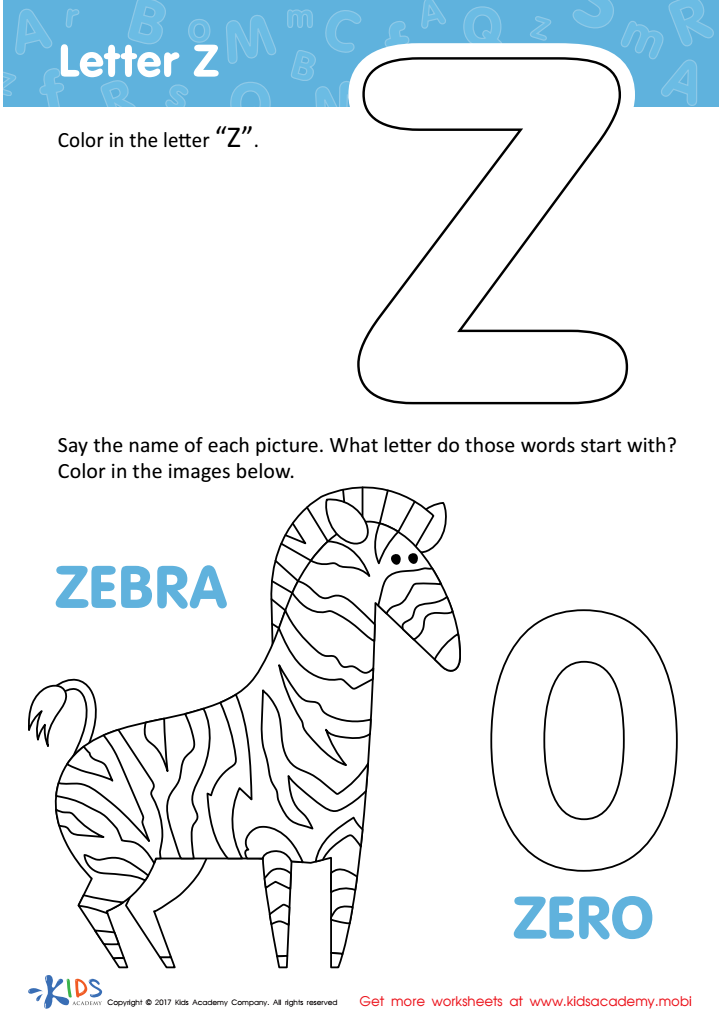
Letter Z Coloring Sheet
Assign to My Students








Sound Association Letter Recognition is crucial for early childhood development, particularly for children aged 3-5. During this formative age, children are laying the groundwork for essential literacy skills. When parents and teachers encourage sound-letter associations, they help children connect spoken language to written symbols. This connection is fundamental for reading and writing proficiency.
Understanding that letters correspond to specific sounds helps children decode words, fostering early reading skills and enhancing vocabulary. As children learn to recognize letters and their associated sounds, they gain confidence in their ability to engage with texts, which is vital for lifelong learning.
Additionally, activities that promote sound association are not just educational—they're engaging. They incorporate play and creativity, making the learning process enjoyable. Collaborative games, songs, and phonetic activities can lead to stronger bonds between parents, teachers, and children, enhancing the overall learning environment.
Moreover, this foundational skill acts as a predictor for later academic success. By supporting sound association and letter recognition, parents and teachers equip children with tools for communication and literacy, ensuring they are ready for the academic challenges ahead. In summary, fostering these skills in early childhood is crucial for a child's future endeavors in learning and literacy.







