Handwriting practice Letter W Worksheets for Ages 3-5
3 filtered results
-
From - To
Our "Handwriting Practice: Letter W Worksheets for Ages 3-5" are designed to make learning enjoyable and effective for young learners. These printable worksheets from Kids Academy help children master writing the letter W through engaging and fun activities. Each worksheet features step-by-step instructions and ample tracing and writing space, ensuring kids develop fine motor skills and proper letter formation. Perfect for preschoolers, these tools lay a strong foundation for future writing success. We make early education delightful and impactful, supporting both parents and teachers in nurturing young writers. Download now and watch your child’s handwriting skills flourish!
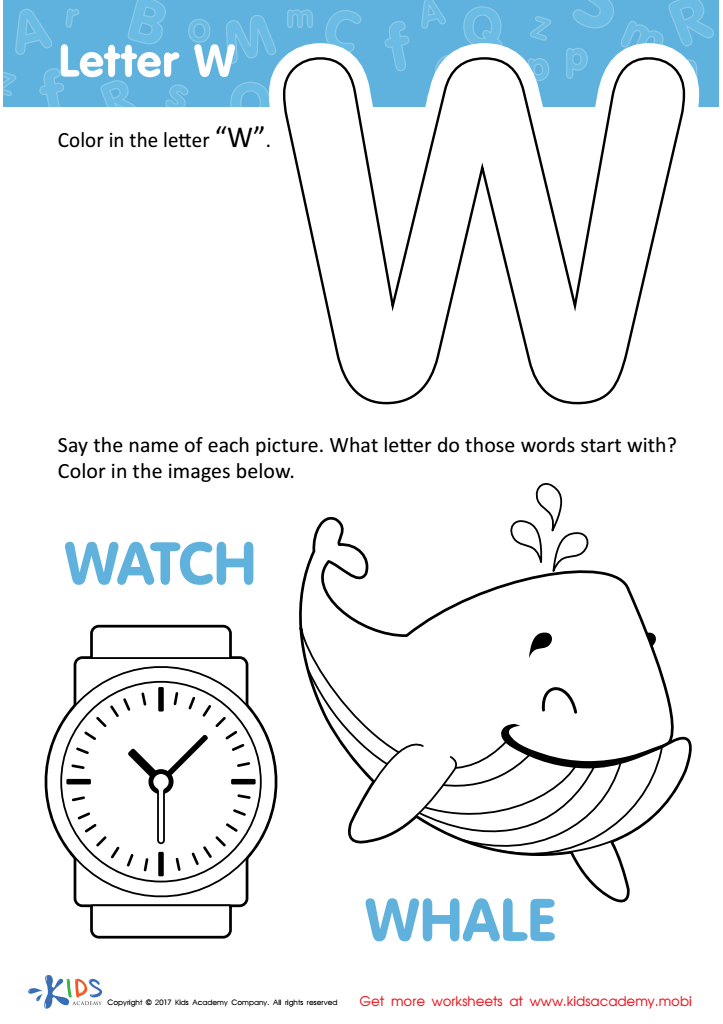
Letter W Coloring Sheet
 Assign to My Students
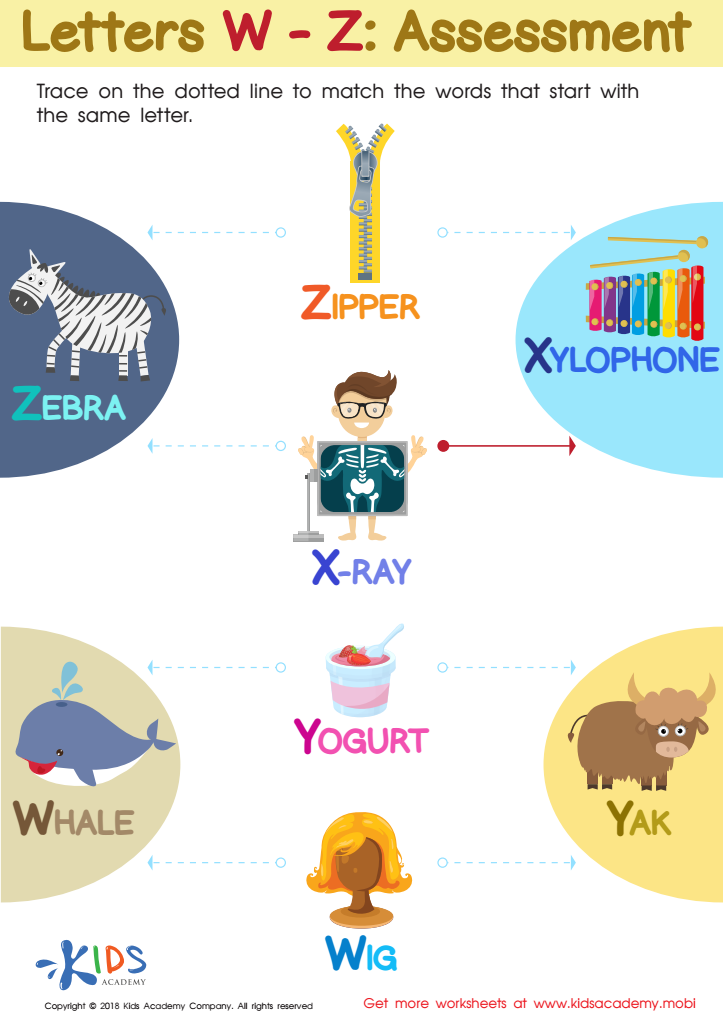
Letters W–Z Tracing Worksheet

Uppercase Letters V, W, and X Worksheet




Handwriting practice, especially for a letter like "W," is vitally important for young children aged 3-5 due to several pivotal reasons. First, at this early developmental stage, fine motor skills are rapidly evolving. Practicing the letter "W," with its specific up-and-down motion, helps strengthen the small muscles in the fingers and hands. This builds the foundational dexterity required for various tasks beyond writing, like buttoning a shirt or using scissors.
Additionally, learning to write the letter "W" enhances visual-motor integration, which is the ability to coordinate visual perception with body movements. This skill is crucial not only for writing but also for reading and solving puzzles later. The repetitive practice involved in forming the letter helps reinforce memory and supports early literacy by familiarizing children with uppercase and lowercase "W."
The process of learning to write involves more than just copying shapes; it also encourages concentration and patience. For parents and teachers, dedicating time to handwriting practice can be a calming routine that strengthens focus and encourages a sense of achievement in children.
Moreover, handwriting is a fundamental communication skill. As children master the formation of letters like "W," they are better equipped to express thoughts and stories, which boosts self-confidence and lays the groundwork for more complex writing tasks in school.
Therefore, handwriting practice offers comprehensive benefits that extend beyond mere letter formation—contributing to emotional, cognitive, and physical development important for early childhood growth.