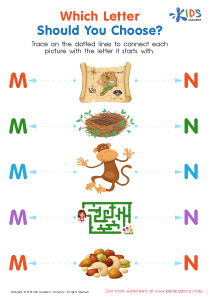
Alphabet familiarity Lowercase/Small Letters Worksheets for Ages 3-5
3 filtered results
-
From - To
Discover our engaging Alphabet Familiarity Lowercase/Small Letters Worksheets, designed specifically for children aged 3-5! These worksheets make learning fun and interactive, helping young learners become familiar with lowercase letters through playful activities. Each worksheet features vibrant illustrations and entertaining exercises that encourage kids to identify, trace, and color small letters, all while developing essential early literacy skills. Perfect for at-home learning or classroom use, these resources support letter recognition, fine motor skills, and cognitive development. Watch your child gain confidence in their alphabet knowledge as they embark on this exciting educational journey! Start their love for learning today!
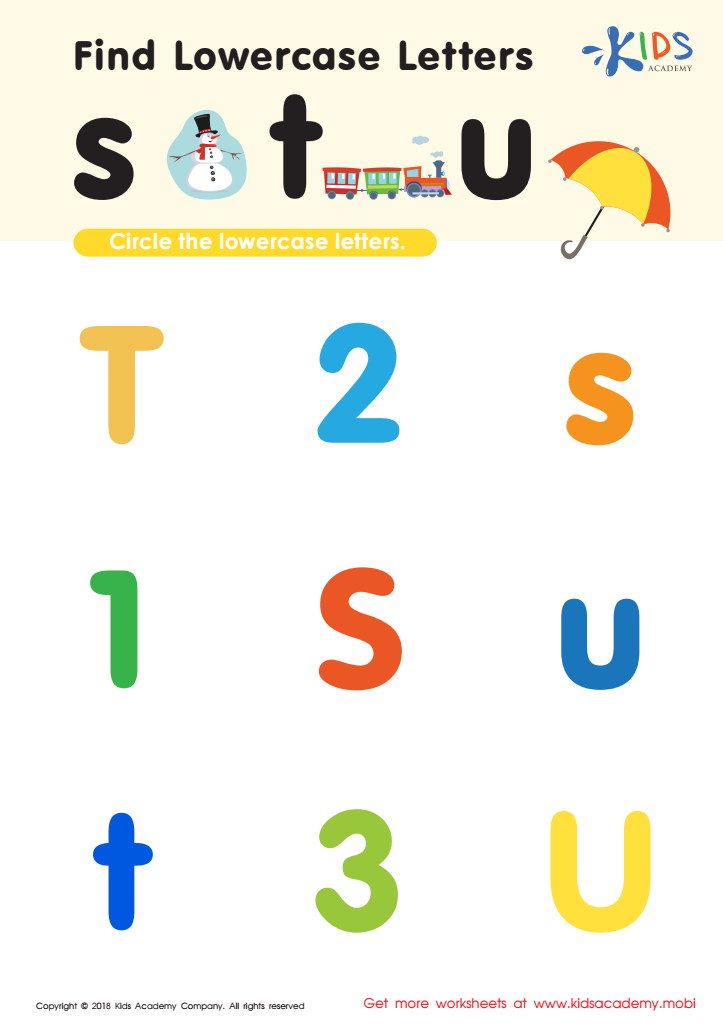
Find lowercase Letters s t u Worksheet
 Assign to My Students
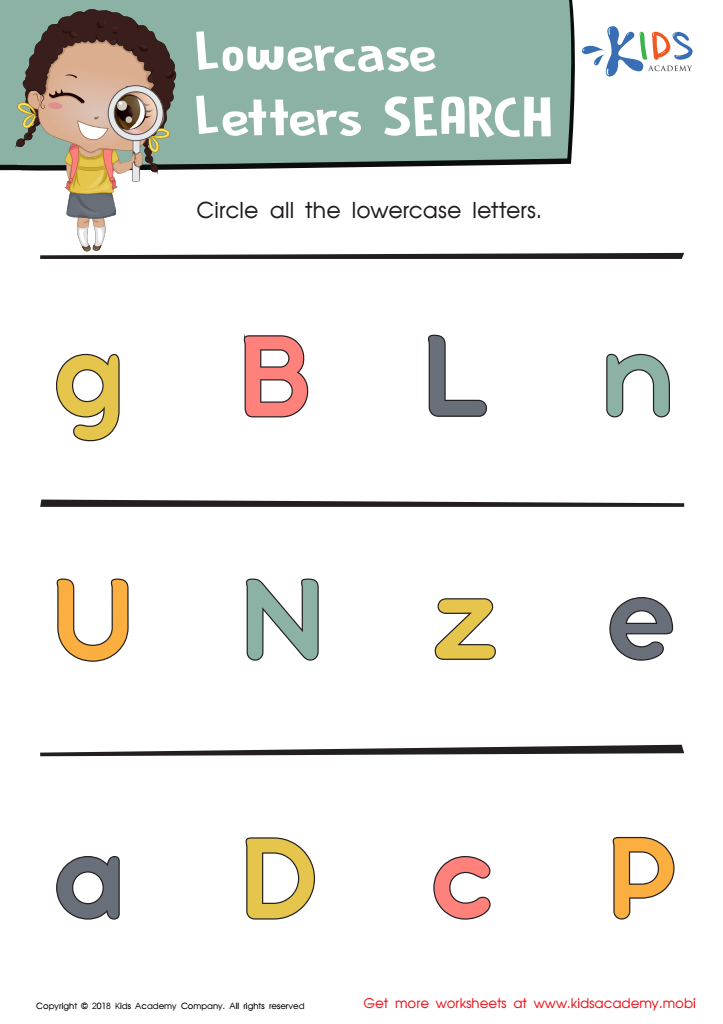
Lowercase Letters Search: Assessment Worksheet
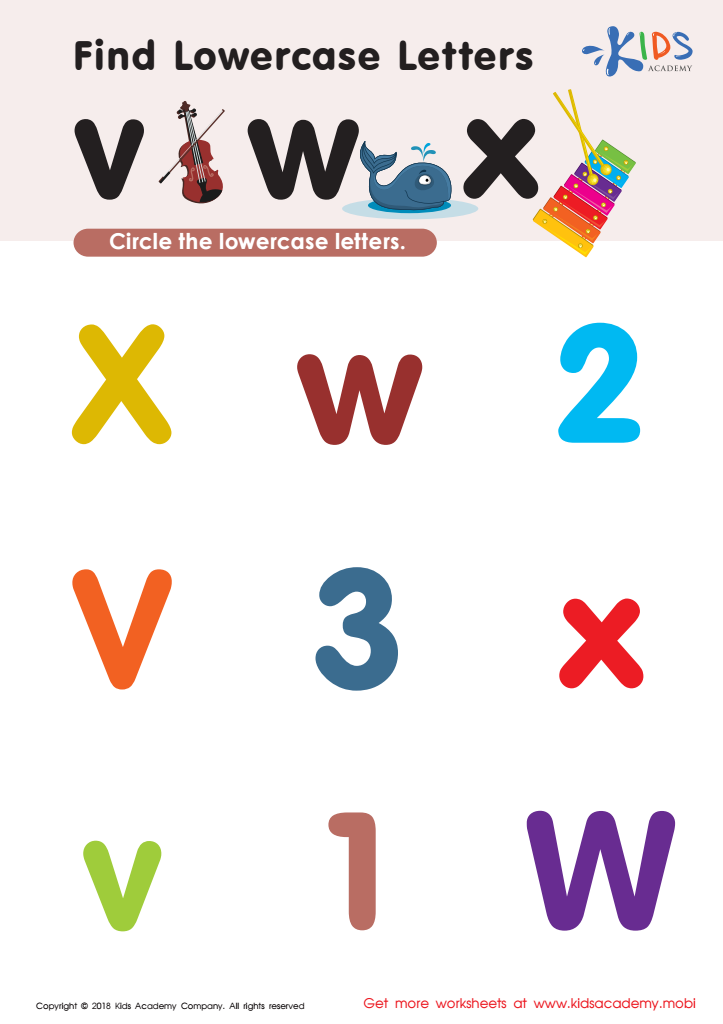
Find Lowercase Letters v w x Worksheet


Fostering familiarity with lowercase letters in children aged 3-5 is vital for their early literacy development. At this age, children begin to recognize letters as fundamental components of written language. Lowercase letters are more prevalent in everyday reading materials, such as storybooks and children's signs, making familiarity essential for comprehension as they start to read.
Understanding lowercase letters can significantly boost children’s confidence in their literacy skills. Recognizing these letters allows them to match sounds with symbols, a skill that lays the groundwork for phonics and spelling. Moreover, exposure to lowercase letters helps children differentiate between letter forms as they progress in their education, enhancing their overall reading and writing abilities.
For parents and teachers, investing time in activities that promote lowercase letter recognition—such as interactive games, storytelling, and artistic projects—supports literacy readiness and can create a supportive and engaging learning environment. Encouraging familiarity with lowercase letters contributes not only to language development but also fosters a joyful and purposeful approach to learning, engendering a lifelong love for reading. Thus, prioritizing lowercase letter familiarity at this formative stage provides essential tools for children’s future academic success.