Rhyme recognition Phonics Worksheets for Ages 3-5
3 filtered results
-
From - To
Our Rhyme Recognition Phonics Worksheets for Ages 3-5 offer engaging activities designed to nurture early literacy skills. Perfect for preschool and kindergarten, these worksheets help children identify rhyming words through fun and colorful exercises. By recognizing and matching rhyming pairs, young learners develop phonemic awareness that lays the foundation for reading success. These expertly crafted resources cater to various learning styles, ensuring that each child enjoys the process of discovering the magic of rhymes. Ideal for classroom or home use, our worksheets are an excellent tool to support your child's early reading journey. Explore and watch their confidence soar!
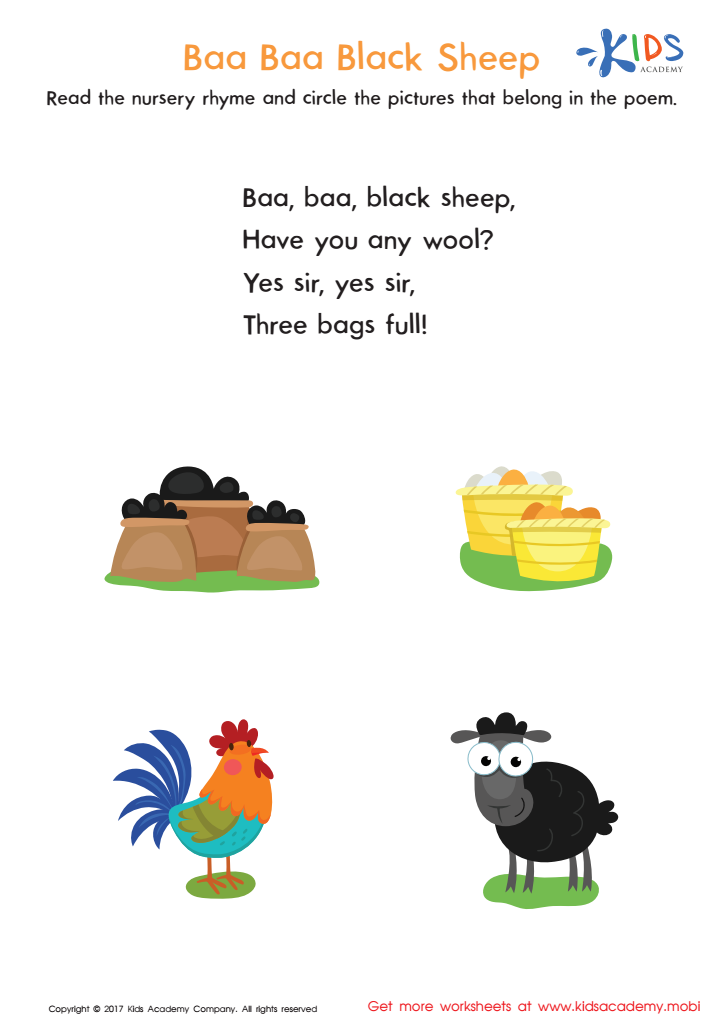
Baa Baa Black Sheep Printable
 Assign to My Students
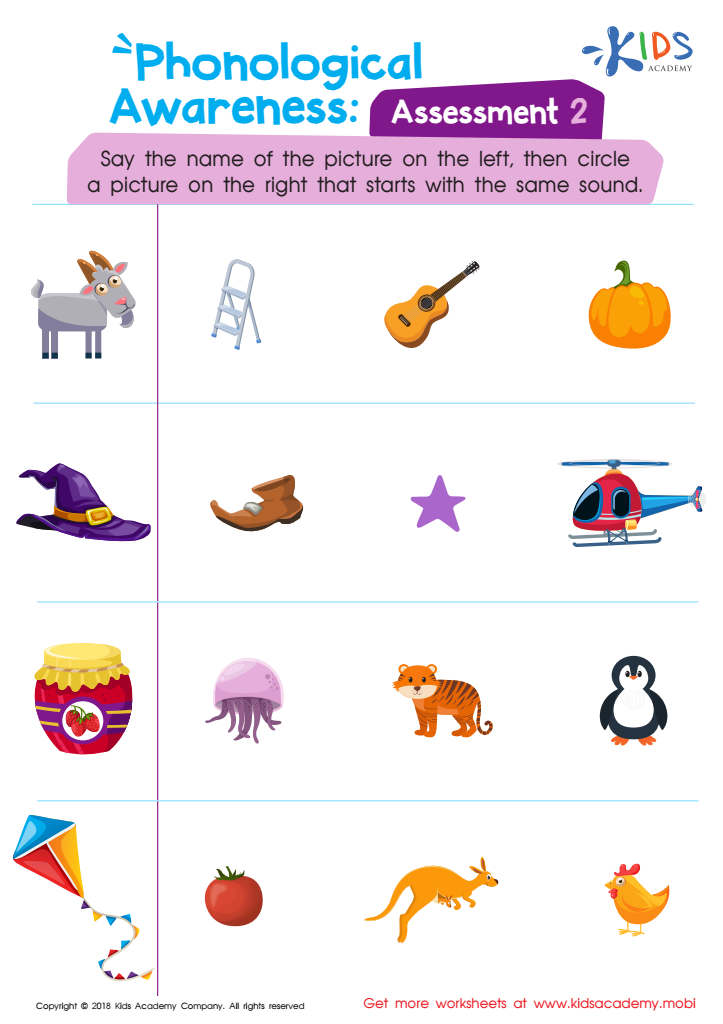
Phonological Awareness: Assessment 2 Worksheet
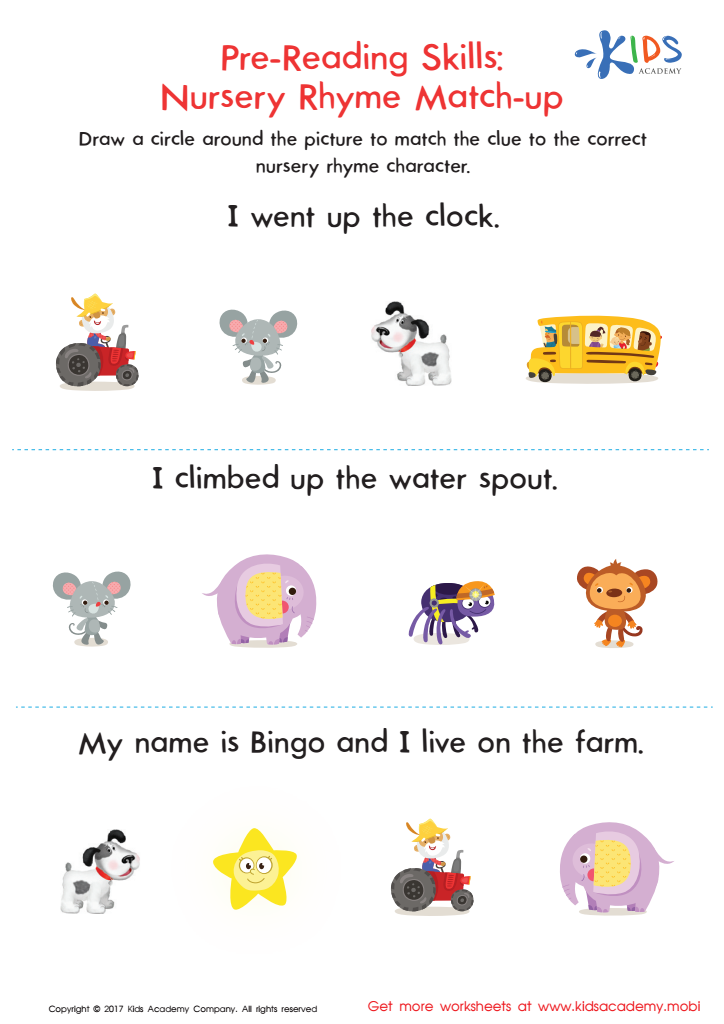
Nursery Rhyme Match–Up Worksheet








Rhyme recognition is a crucial early literacy skill essential for children's language development, particularly between the ages of 3-5. Through rhyme recognition, young learners become aware of sound patterns and word structures, which lays the foundation for reading and spelling. When children recognize rhymes, they begin to notice similarities and differences in sounds, enhancing their phonemic awareness, an essential prereading skill.
Teaching rhyme facilitates vocabulary growth, as children are exposed to new words within playful and memorable contexts. Engaging in nursery rhymes, songs, and simple poetic activities also fosters a love for language and literature at an early age. This early interest in books and reading creates positive associations with learning.
Furthermore, rhyme recognition strengthens a child’s auditory discrimination skills, allowing them to detect subtle differences in word sounds. This skill is significant for later success in decoding unfamiliar words when they start reading independently. By focusing on rhyme recognition, parents and teachers not only support the child's cognitive and linguistic development but also enhance their social and emotional growth. Sharing rhymes can be a bonding experience and promote creativity and expression.
In essence, investing time and effort in rhyme recognition phonics helps create confident, capable, and enthusiastic readers, setting a strong foundation for future academic success.







