
Spelling Skills Phonics Worksheets for Ages 3-5
5 filtered results
Difficulty Level
Grade
Age
-
From - To
Subject
Activity
Standards
Nurture early literacy with our "Spelling Skills Phonics Worksheets for Ages 3-5". Designed to make learning fun, these engaging and colorful worksheets help toddlers and preschoolers master essential phonics. Your child will develop foundational skills, exploring alphabet sounds, letter combinations, and simple word spellings through playful exercises. With a focus on interactive and hands-on learning, our worksheets promote confidence and a love for reading. Perfect for both classroom and at-home use, this resource sets the stage for future academic success. Unlock the magic of words and support your child’s educational journey with Kids Academy's expert-crafted worksheets.
Favorites
With answer key
Interactive
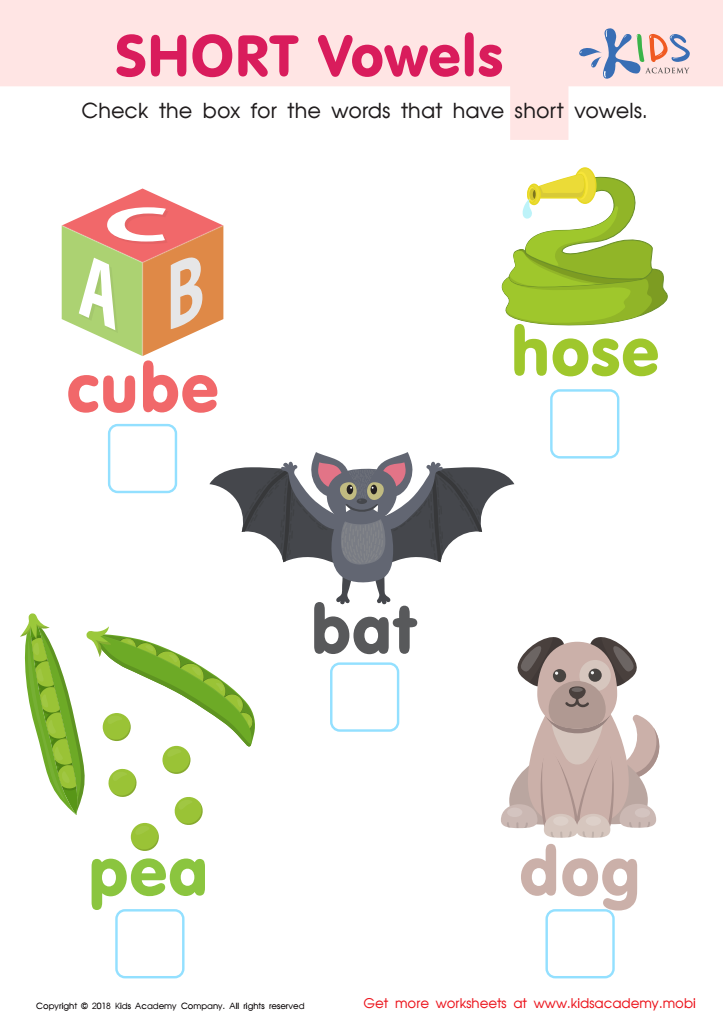
short vowels Worksheet
Say "dog" and notice how long it takes to pronounce the vowel. Is it short or long? Compare it to "pea" and use this worksheet to quickly assess your child's mastery. Have them name each picture and listen for the vowel sounds. Only check the boxes for words with short vowel sounds.
 Assign to My Students
short vowels Worksheet
Worksheet
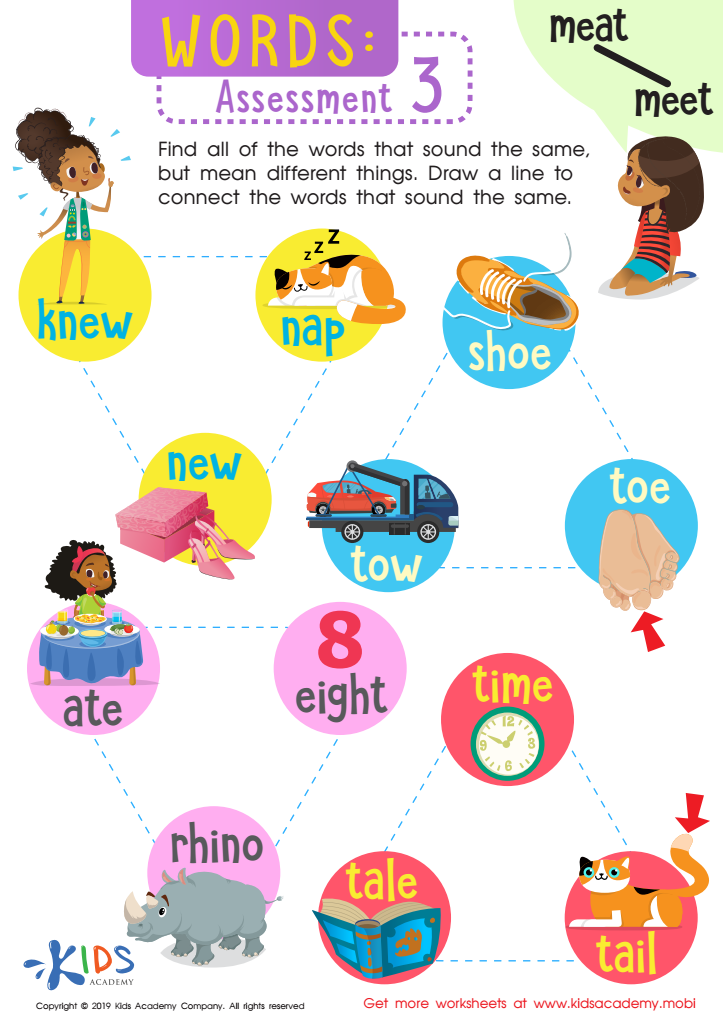
Words: Asessment 3 Worksheet
Assess your child's knowledge of homonyms with words like "toe" and "tow". This fun worksheet helps find words that sound the same but have different meanings and spellings. Use it to introduce homographs--words spelled the same with different meanings!
Words: Asessment 3 Worksheet
Worksheet
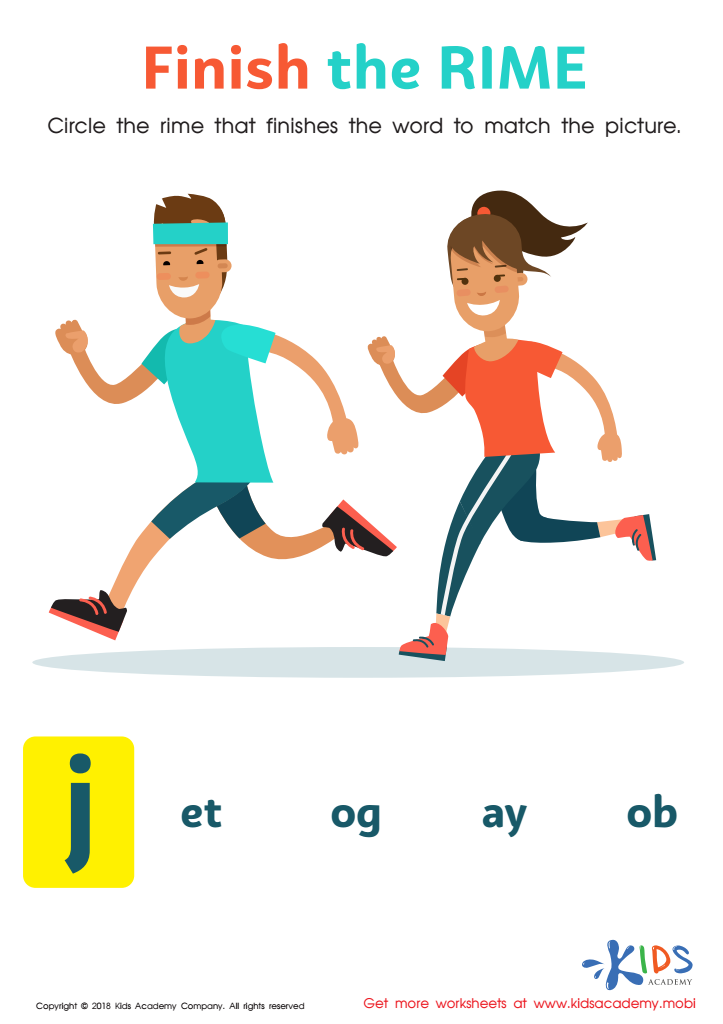
Finish the Rime Worksheet
Rimes help kids learn word families and spelling strategies. This PDF worksheet gives new readers practice with initial consonants, pictures, colors and motor skills. It's fun and cheery, and a great way to boost phonological awareness and rime identification.
Finish the Rime Worksheet
Worksheet
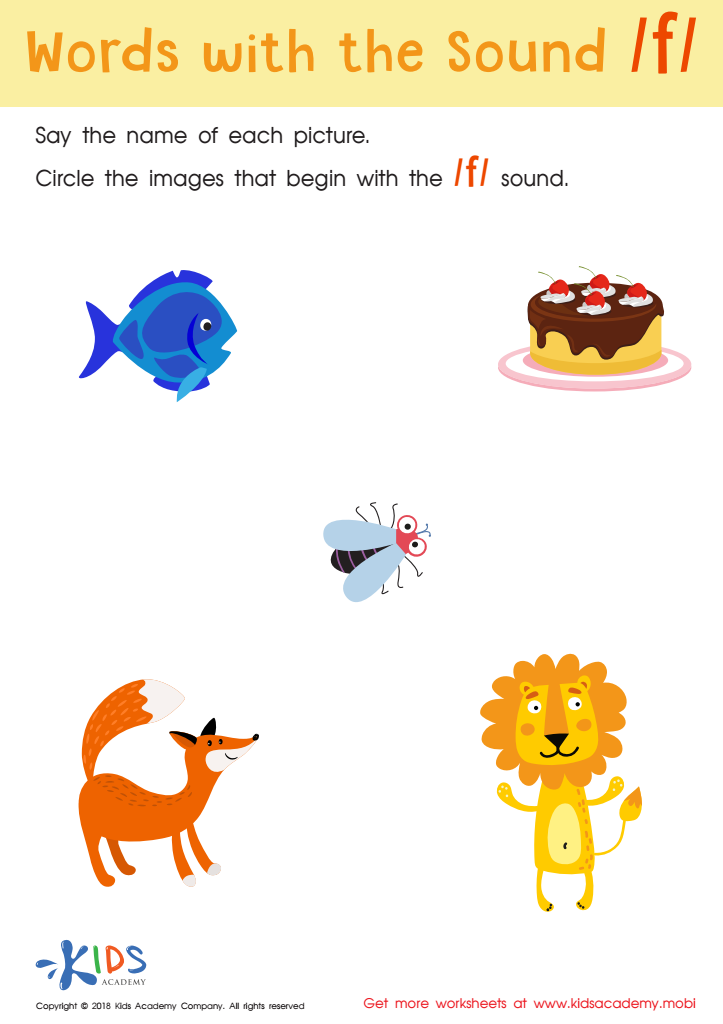
Words with sound f Reading Worksheet
This illustrated phonics worksheet is ideal for preschool or kindergarten. It helps boost learners' literacy skills with a focus on the letter "f". Ask your child to name all the pictures, listening for that sound. Examples are fish, fox, lion, bug. When they can identify which words start with "f", have them circle the images. Congratulate them on a job well done!
Words with sound f Reading Worksheet
Worksheet
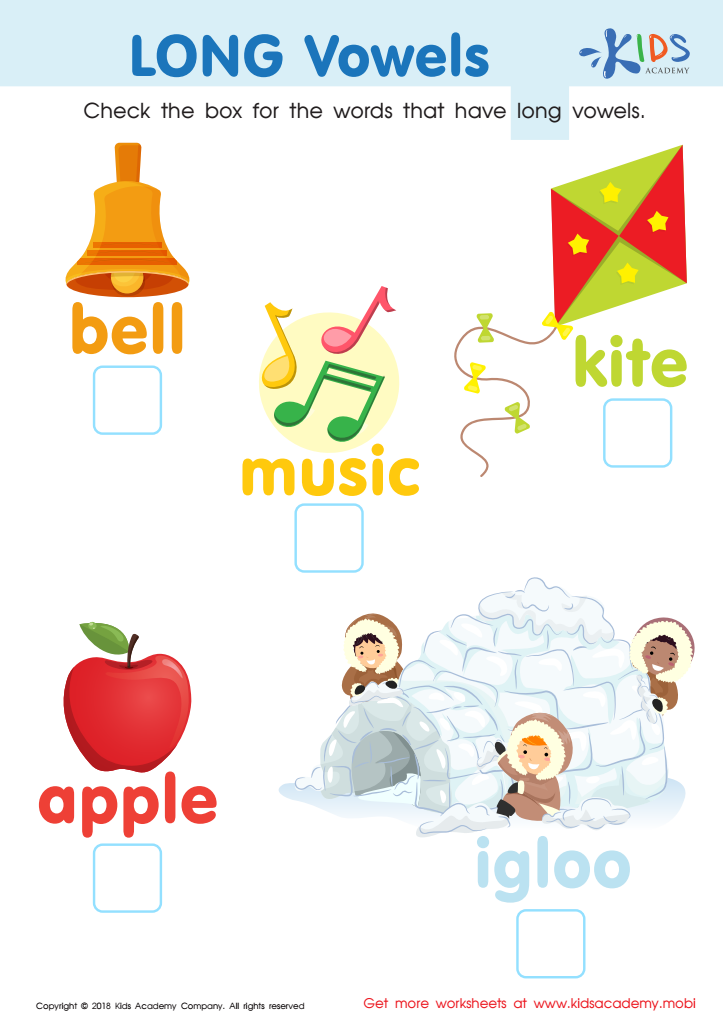
long vowels Worksheet
Have your early learner identify long vowels with this quick review. Ask them to name each picture aloud and listen out for the long vowel sounds to separate them from the shorter ones. Circle the ones that are long! Watch out for words with two vowels - they can be tricky!
long vowels Worksheet
Worksheet
Join Kids Academy for Free
Who is primarily going to use this learning content?








Spelling Skills Phonics for ages 3-5 is crucial as it lays the foundation for strong literacy development, which in turn impacts academic success and overall cognitive development. At this critical developmental stage, young children are especially receptive to learning new sounds and word patterns. Phonics instruction teaches the relationship between letters and sounds—a core component for decoding words, which is indispensable for reading fluency.
For parents and teachers, investing time in phonics-based spelling skills fosters a child’s confident start in early education. It helps children understand word construction, enhances their vocabulary, and boosts their ability to read aloud and comprehend text. These skills are instrumental in transforming daily reading into an engaging and enjoyable experience, rather than a daunting task.
Furthermore, phonics instruction helps in honing essential skills such as attention to detail, pattern recognition, and critical thinking. Such early skills also foster significant developmental progress such as better handwriting, improved listening, and a stronger command of language fundamentals. Support from parents and teachers in this phase can ease the transition to elementary education, ensuring that children do not feel left behind and maintaining their interest in learning.







