Letter recognition Tracing Letters Worksheets for Ages 3-5 - Page 2
26 filtered results
-
From - To
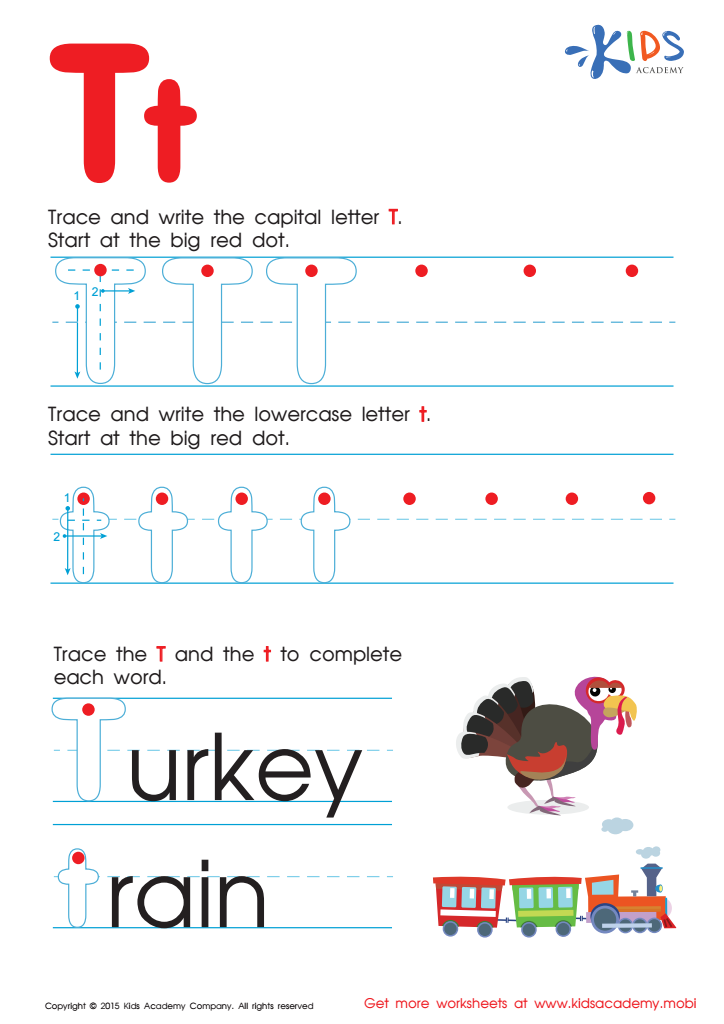
Letter T Tracing Page
 Assign to My Students

Letter D Tracing Page








Letter recognition and tracing letters are crucial developmental skills for children aged 3-5. During this pivotal stage, children are beginning to grasp the fundamental concepts of reading and writing. Recognizing letters helps them identify the building blocks of language, fostering early literacy development. As they trace letters, they not only build fine motor skills but also strengthen the connection between visual and tactile learning.
For parents and teachers, focusing on these skills can significantly enhance a child’s confidence and enthusiasm for learning. Engaging in letter recognition activities provides opportunities for interactive learning, which is essential at this age. It aids in vocabulary building as children start associating sounds with their corresponding letters.
Moreover, mastering letter recognition sets the foundation for future academic success. It enables smoother transitions into more complex reading and writing tasks. By investing time in these activities, parents and teachers can cultivate a love for literacy that promotes long-term educational benefits. Involving children in fun, playful activities like tracing letters not only makes learning enjoyable but also strengthens bonds as they explore the world of letters together. Overall, early engagement with these skills nurtures essential cognitive and social skills necessary for lifelong learning.








