Visual discrimination skills Upper & Lowercase Letters Worksheets for Ages 3-5
4 filtered results
-
From - To
Enhance your child's visual discrimination skills with our engaging Upper & Lowercase Letters Worksheets, designed for ages 3-5! These worksheets provide young learners with a fun and interactive way to differentiate between uppercase and lowercase letters. Ideal for preschool and kindergarten preparedness, each activity promotes letter recognition and helps children sharpen their focusing abilities. Colorful illustrations and engaging tasks keep kids motivated and excited about learning! Perfect for homeschooling or classroom settings, our worksheets encourage independent practice while building confidence and foundational literacy skills. Download now and watch your little ones thrive as they explore the world of letters!

Find Uppercase Letters A, B, and C Worksheet
 Assign to My Students










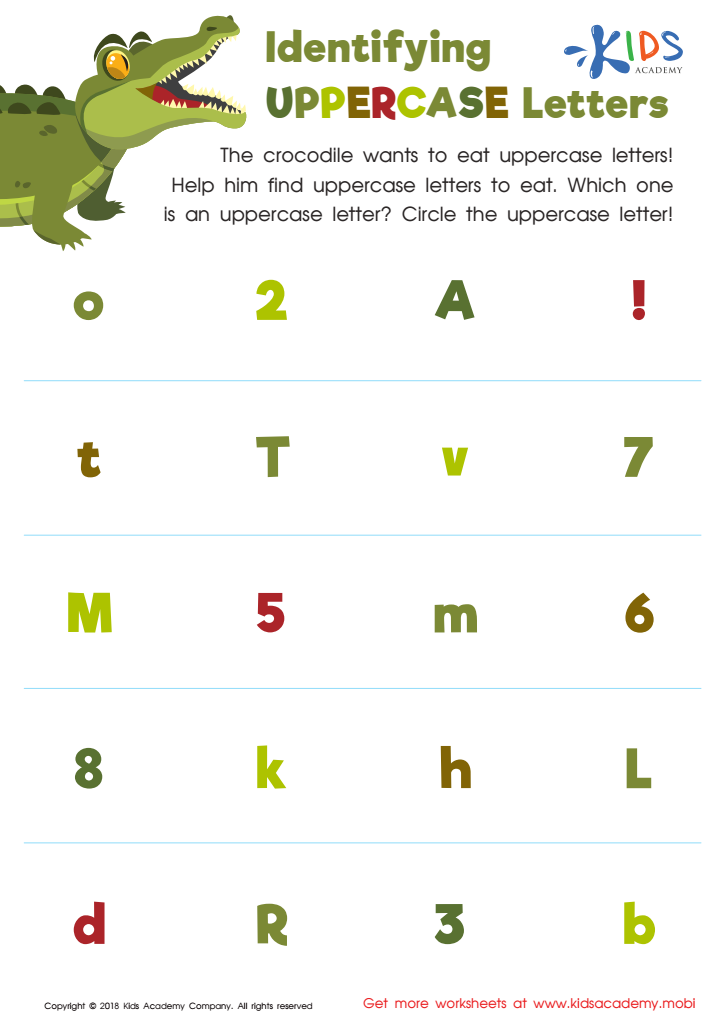
Identifying Uppercase Letters Worksheet
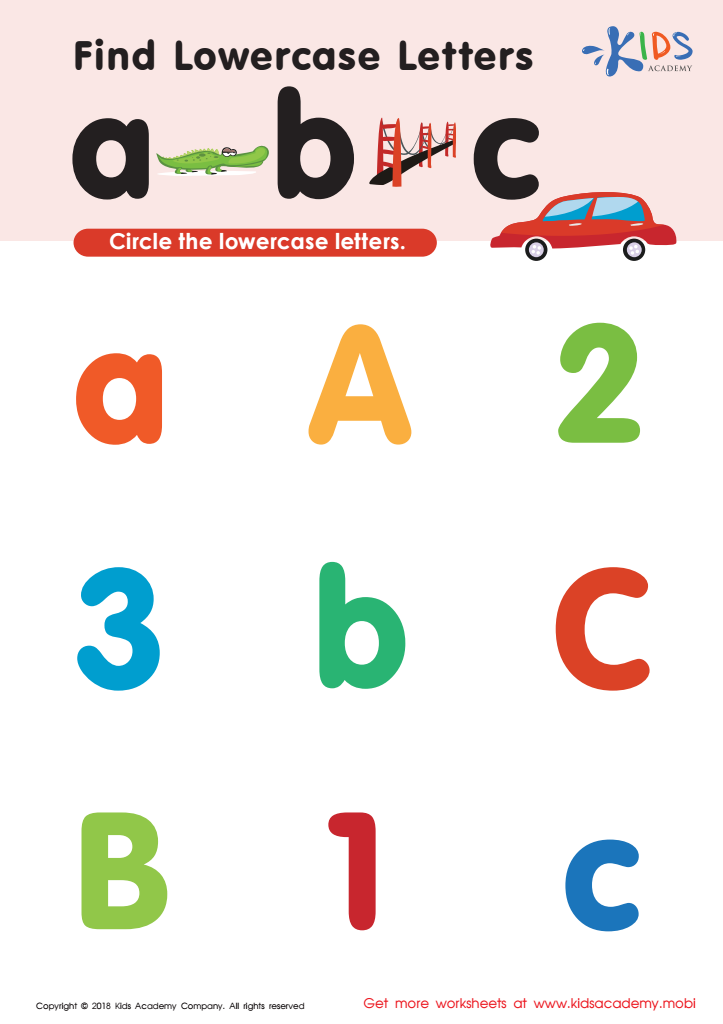
Find lowercase letters a b c Worksheet
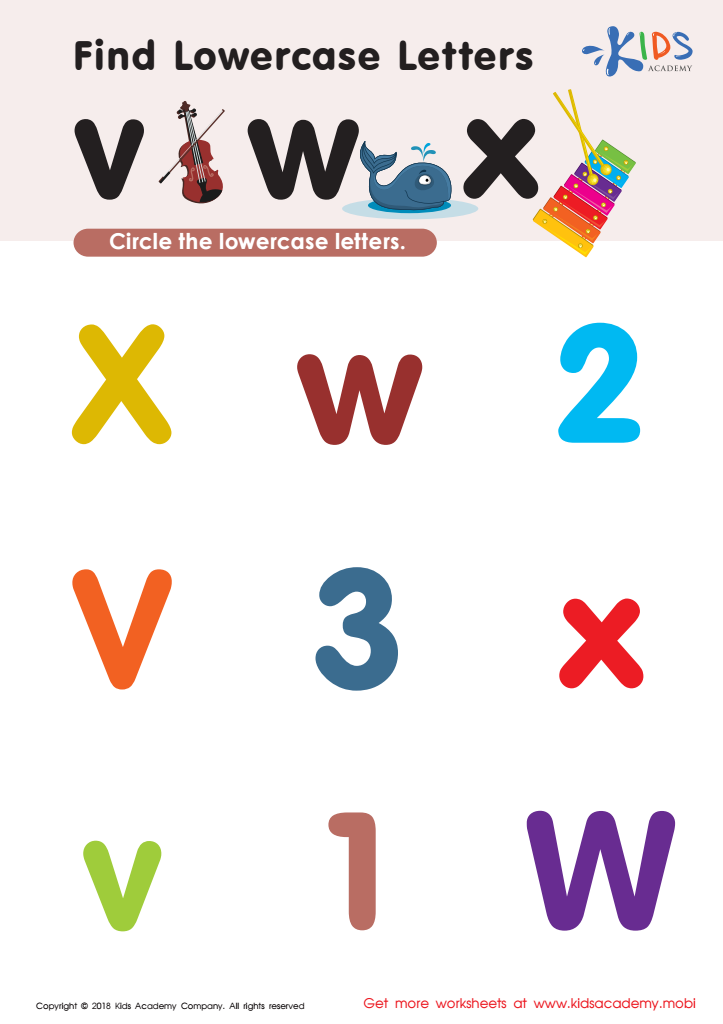
Find Lowercase Letters v w x Worksheet






Visual discrimination skills, particularly for recognizing uppercase and lowercase letters, are crucial for children aged 3-5 as they form the foundation for effective reading and writing. Parents and teachers should care about these skills because they directly impact literacy development during early childhood, a critical period for cognitive growth.
Children use visual discrimination to differentiate between similar looking letters (like “b” and “d”) and understand the nuances of uppercase and lowercase forms. Early mastery of these skills not only promotes letter recognition but also enhances vocabulary and reading comprehension as children progress. Furthermore, strengthening visual discrimination can improve fine motor skills essential for handwriting.
By engaging in activities that focus on these skills, such as letter matching games or sorting uppercase and lowercase letters, caregivers help to create a rich learning environment. This dynamic fosters confidence in young learners, setting the stage for academic success and nurturing a love for reading and writing.
In summary, enhancing visual discrimination skills for letters at ages 3-5 contributes significantly to early literacy, paving the way for future educational achievements. Parents and teachers play a crucial role in this developmental process, making it essential to prioritize these foundational skills.







