Word identification Vowels Worksheets for Ages 3-5
3 filtered results
-
From - To
Discover our engaging Word Identification Vowels Worksheets for Ages 3-5 at Kids Academy! Specially designed for young learners, these colorful and interactive printables focus on vowel recognition and usage, essential for early reading skills. Each worksheet combines fun activities with educational value, helping children identify, pronounce, and match vowels in various words. Perfect for preschool and kindergarten students, our worksheets will boost your child's confidence and phonemic awareness, setting a strong foundation for future literacy success. Download now and watch your child embark on an exciting phonics adventure!
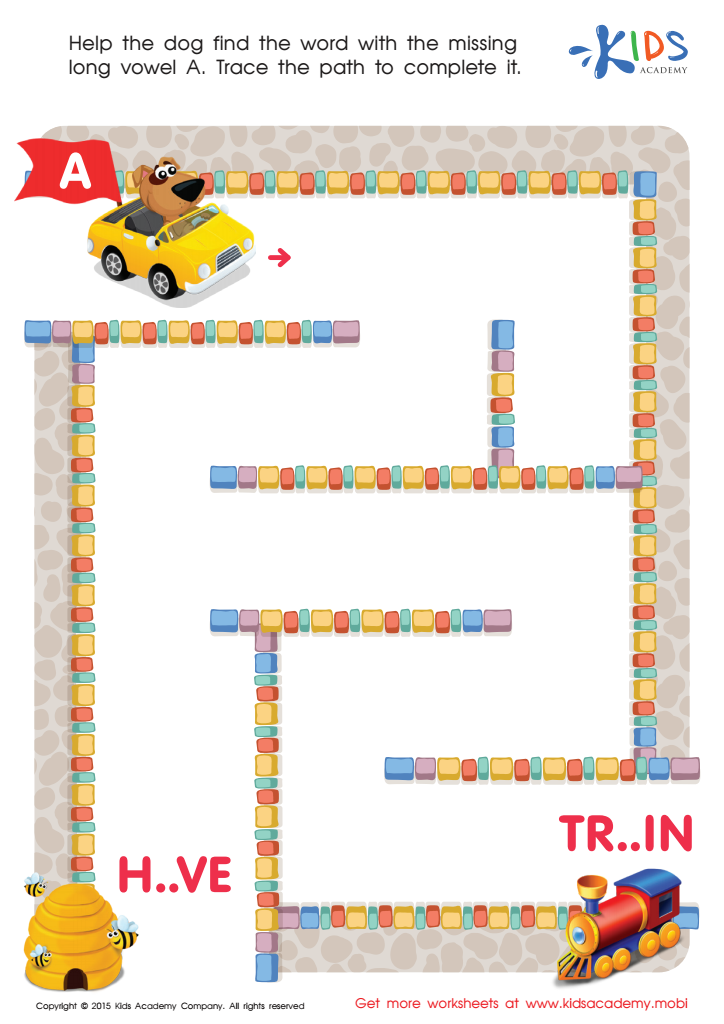
Long Vowel Sound A Worksheet
 Assign to My Students
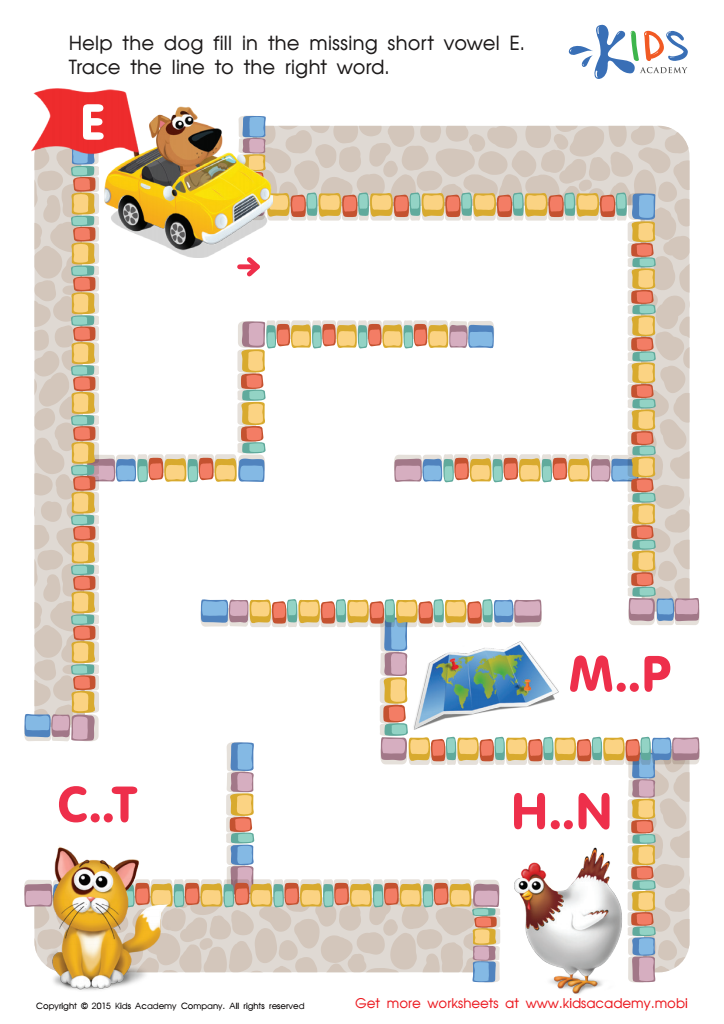
Short Vowel Sound E Worksheet
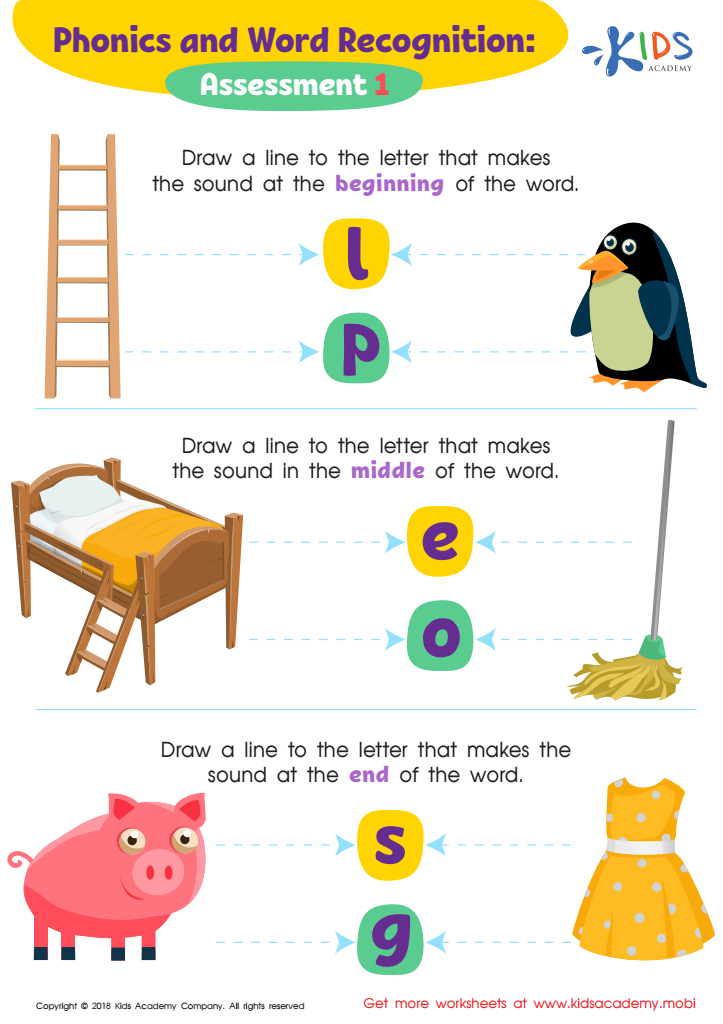
Phonics and Word Recognition: Assessment 1 ELA Worksheet





Understanding word identification and vowel recognition is crucial for young children, particularly those aged 3-5, as it lays the cornerstone for their future reading and language development. During these formative years, children are highly receptive to new information and are developing key cognitive and linguistic skills.
Teaching vowels and word identification helps children decode words, which is essential for reading fluency. Vowels play a pivotal role in word structure, and recognizing them aids children in sounding out words systematically. Familiarity with these sounds enhances phonemic awareness, the ability to hear and manipulate sounds, which is a critical predictor of reading success.
Moreover, early mastery of these skills boosts a child's confidence and fosters a love for reading, instilling a positive attitude towards learning. It empowers children to engage more deeply with books, stories, and eventually, written instructions and educational content.
Parents and teachers who prioritize vowel recognition and word identification give children a significant academic advantage. By making reading more accessible and less intimidating, they help young learners build a strong, foundational skill set that supports further academic achievement and lifelong learning.
Overall, dedicating time and effort to these early literacy skills prepares children for a smoother transition into more complex reading and writing tasks as they enter primary education.







