Letter Tracing Practice English for Beginners Worksheets for Ages 3-5
3 filtered results
-
From - To
Welcome to our "Letter Tracing Practice" worksheets designed specifically for beginner learners ages 3-5! These engaging worksheets help preschoolers develop essential handwriting skills while learning the English alphabet. Featuring colorful illustrations and fun activities, each worksheet encourages children to trace letters, reinforcing their recognition and familiarity with both uppercase and lowercase forms. Perfect for enhancing fine motor skills and letter formation, our resources cater to early childhood education needs. Suitable for home or classroom settings, these worksheets provide a playful and effective way for young learners to build confidence in their writing abilities. Start your child's literacy journey today!
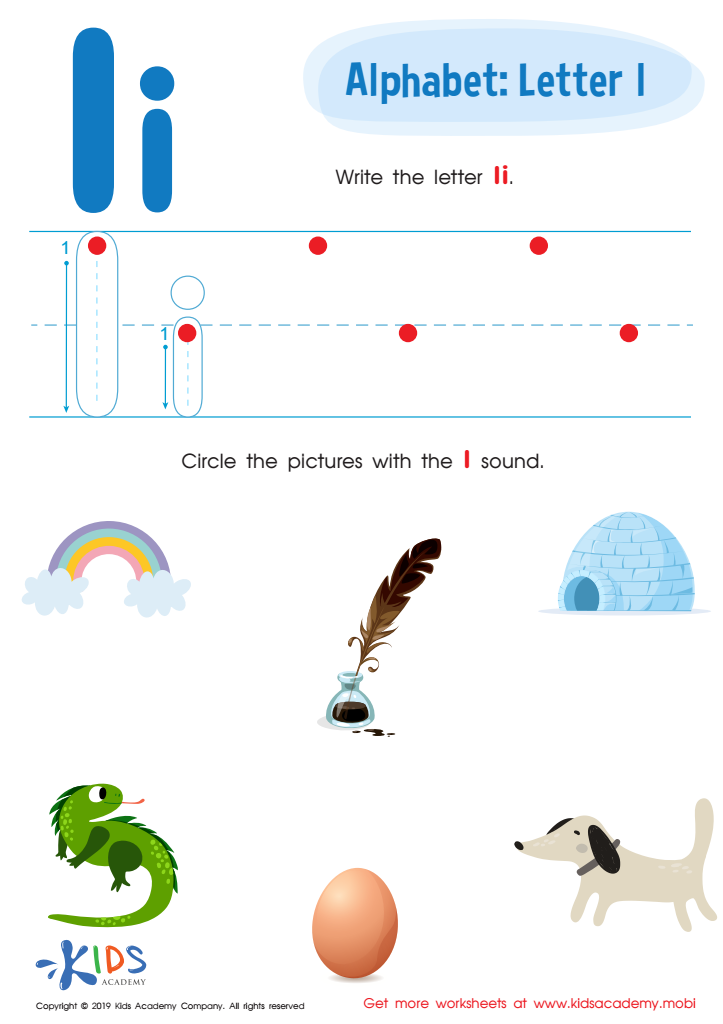
Letter I Tracing Worksheet

Letter F Coloring Sheet
 Assign to My Students
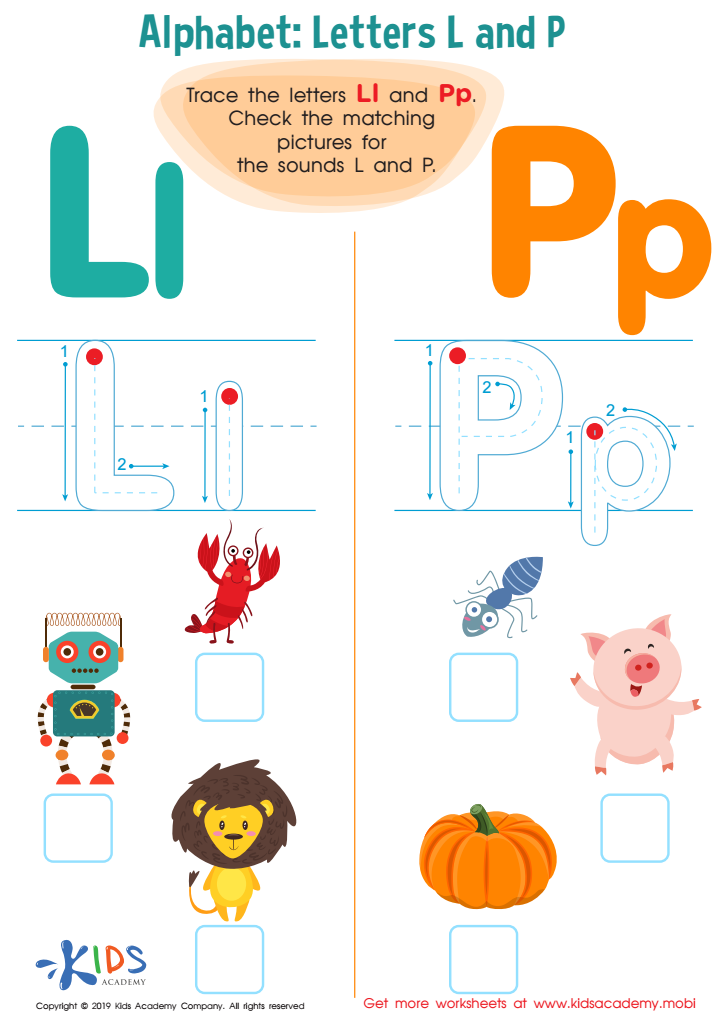
Letter L and P Tracing Worksheet





Letter tracing practice is crucial for young children aged 3-5 as it lays the foundation for their literacy skills. During this developmental stage, children are naturally curious about letters, sounds, and words, making it the perfect time to introduce them to basic writing concepts. Tracing letters helps enhance fine motor skills and hand-eye coordination, essential for writing readiness.
Moreover, this practice reinforces letter recognition, allowing children to visualize and understand the essential building blocks of reading and writing. As they trace, they experience sensory stimulation, which aids kinesthetic learning; they not only see the letters but also physically engage with them. This multi-sensory approach increases retention and makes learning enjoyable.
For parents and teachers, fostering early literacy is essential because it shapes a child's educational journey. Mastery of letter formation boosts confidence and fosters a love for learning, setting the stage for future literacy success. In addition, early engagement with writing can improve a child's communication skills and creativity.
Investing time in letter tracing provides an opportunity for meaningful interactions between children and adults, creating a positive learning environment where children can flourish. Overall, letter tracing practice is a vital step toward academic achievement and lifelong learning.