Data interpretation Worksheets for Ages 3-5
4 filtered results
-
From - To
Introduce your little learners to the exciting world of data with our Data Interpretation Worksheets for Ages 3-5. Designed to spark curiosity and develop critical thinking, these engaging activities help preschoolers and kindergarteners to understand basic concepts of data, such as sorting, comparing, and counting objects. Each worksheet incorporates fun visuals and simple tasks that make learning enjoyable and effective. With a focus on foundational skills, our printables ensure that young minds grasp the fundamentals of data interpretation in a playful yet educational manner. Perfect for enhancing early math skills at home or in the classroom.
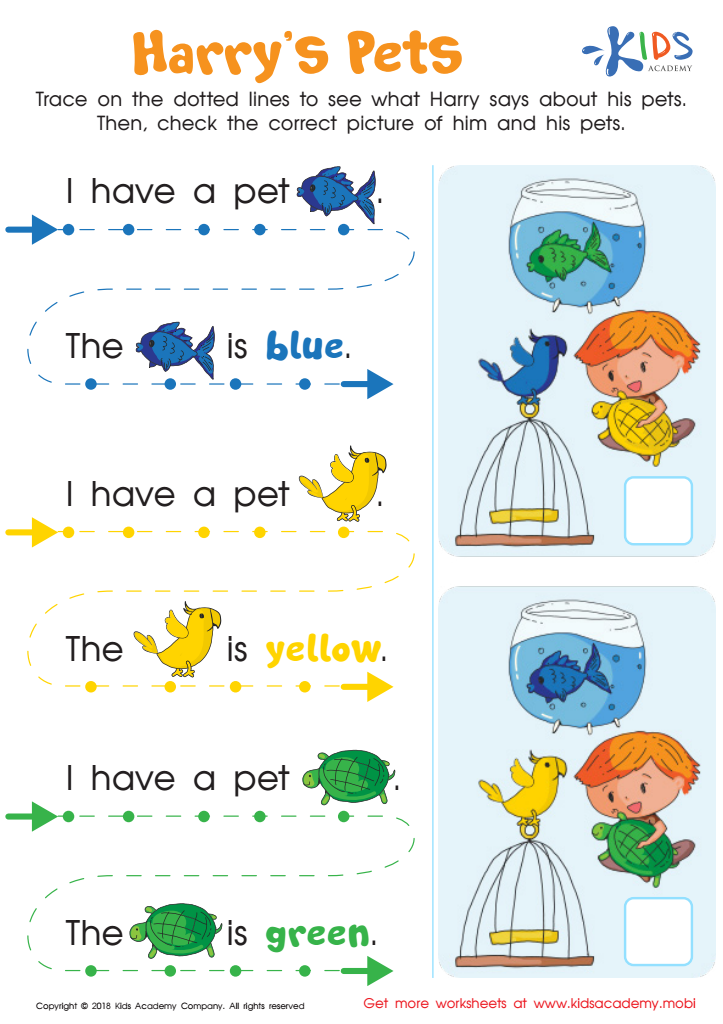
Read from Left to Right: Harry's Pets Worksheet
 Assign to My Students
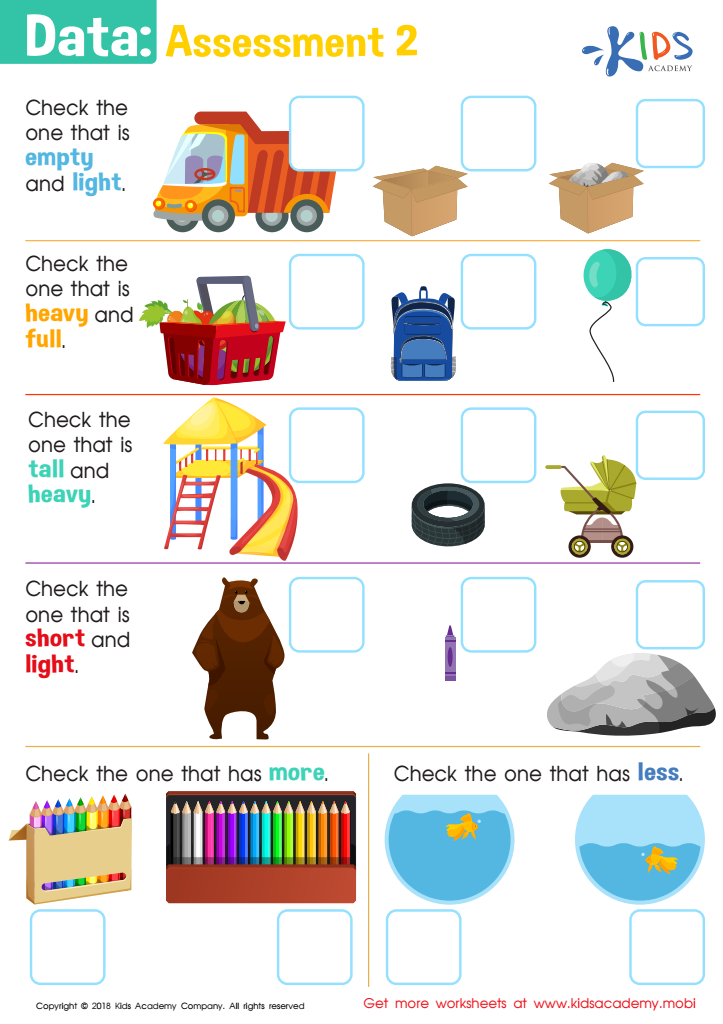
Data: Assessment 2 Worksheet
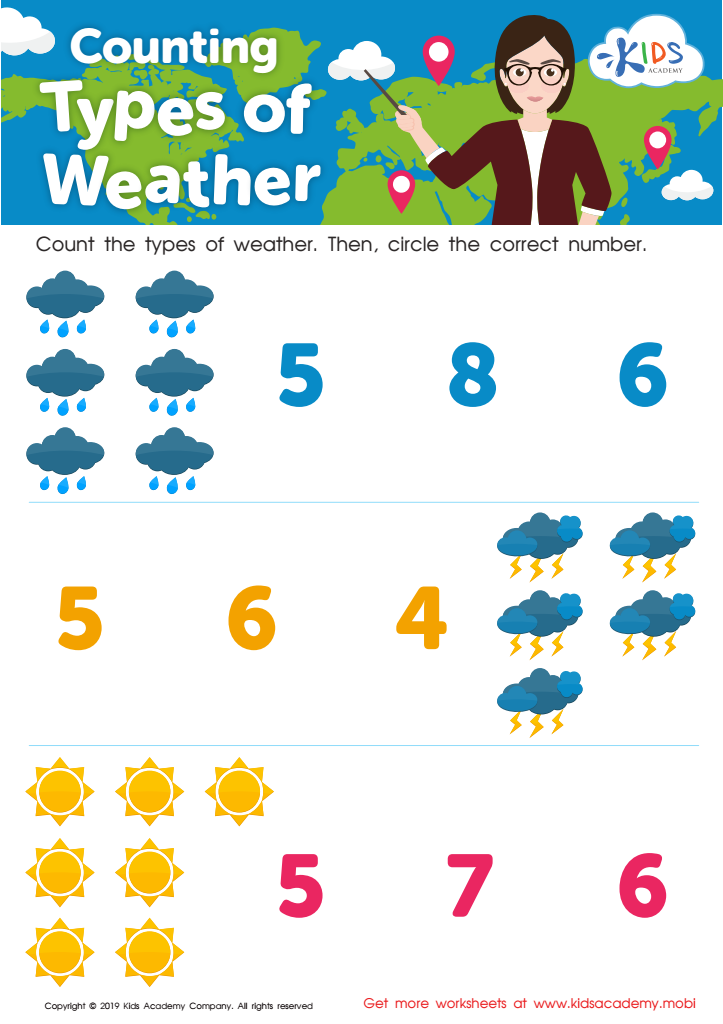
Counting Types of Weather Worksheet






Data interpretation is a critical skill that even young children between the ages of 3-5 can begin to develop with the right support from parents and teachers. Introducing these concepts early can lay a strong foundation for their overall cognitive development and future academic success. At this age, data interpretation can be as simple as recognizing patterns, sorting objects by size or color, or understanding basic charts pictorially, such as how many apples vs. oranges are in a basket.
Why does it matter? First, early data interpretation activities help young children develop their critical thinking and problem-solving skills. It encourages them to ask questions, seek out answers, and understand the world around them more logically. Second, it enhances both their mathematical skills and literacy simultaneously, marrying numerical data with textual information. This dual engagement supports a more rounded educational development.
Moreover, these skills foster independence and confidence, as children learn to make observations and draw conclusions, a valuable capability not just academically but in everyday decision-making. Instilling these skills in children at an early age makes them more comfortable and proficient with complex data interpretation as they grow, helping them excel in advanced mathematics and sciences later in their educational journey.
In sum, by caring about data interpretation at an early age, parents and teachers set children on a path of inquisitive learning, analytical thinking, and academic resilience.








