
Develop problem-solving abilities Worksheets for Ages 3-5
3 filtered results
Difficulty Level
Grade
Age
-
From - To
Subject
Activity
Standards
Unlock your child's potential with our engaging "Develop Problem-Solving Abilities" worksheets designed for ages 3-5! These thoughtfully crafted activities encourage critical thinking and creativity, helping young learners tackle challenges with confidence. Featuring colorful illustrations and interactive tasks, our worksheets make learning fun while promoting cognitive development. From puzzles to sorting games, each sheet fosters essential skills in a playful environment. Perfect for teachers and parents alike, these resources can be used at home or in the classroom to enhance problem-solving capabilities and prepare your child for future academic success. Explore our collection today and watch your child's skills thrive!
Favorites
With answer key
Interactive
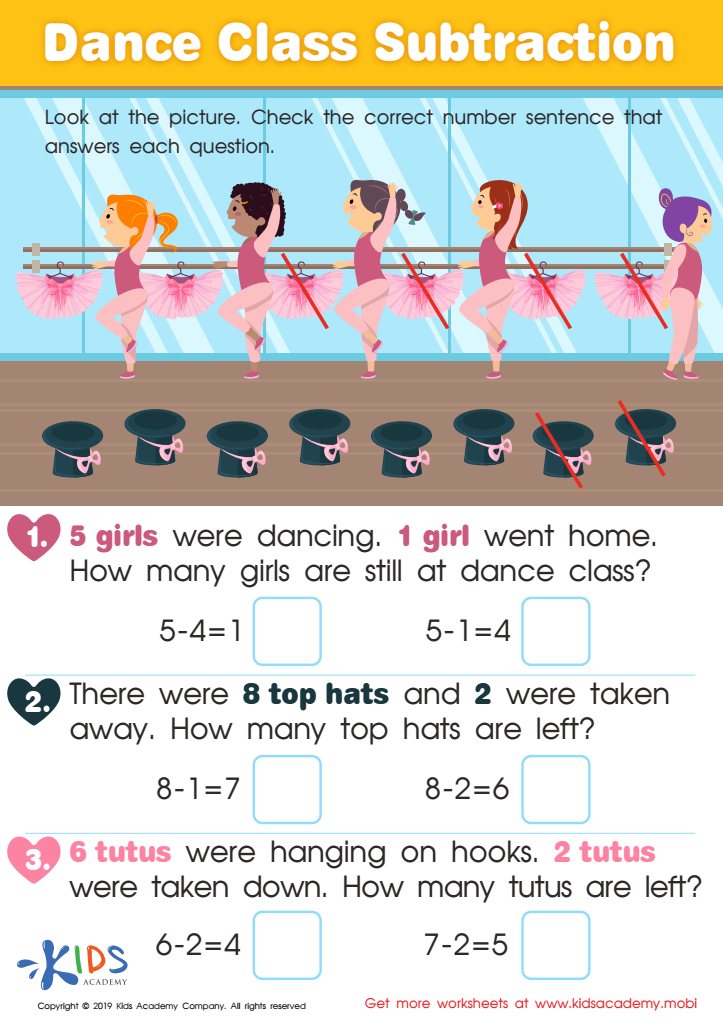
Dance Class Subtraction Worksheet
Dancing is an excellent form of exercise, and some people dance professionally, expressing their feelings through body movements. Help your kids identify the type of dance in the picture and answer the word problems in this worksheet. Encourage them to check the correct number sentence that answers the question.
 Assign to My Students
Dance Class Subtraction Worksheet
Worksheet
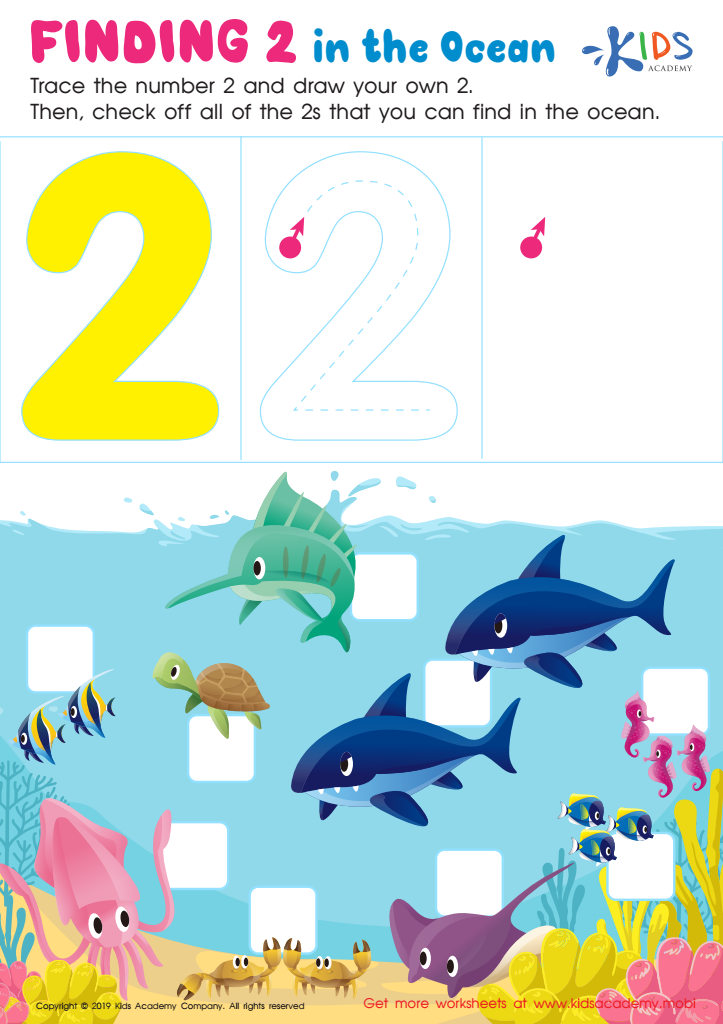
Finding 2: In the Ocean Worksheet
Kids start their math journey with basic numbers. Finger counting, number representation with pictures and this worksheet help build number sense. Kids trace lines and dots to write the number two and identify groups of two sea creatures for easy success and to feel proud of their math skills.
Finding 2: In the Ocean Worksheet
Worksheet
Join Kids Academy for Free
Who is primarily going to use this learning content?







.jpg)
Developing problem-solving abilities in children aged 3-5 is crucial for their cognitive and social-emotional development. At this stage, children are naturally curious and eager to explore their environment. Encouraging problem-solving helps nurture this curiosity and enhances critical thinking skills that will benefit them throughout their lives. As they engage in problem-solving activities, such as figuring out how to build a tower with blocks or navigate a simple puzzle, they learn to think creatively and evaluate different approaches.
Additionally, these skills promote resilience. When children encounter challenges, the ability to persevere and experiment with various solutions fosters a growth mindset. This mindset not only builds confidence but also equips them with coping strategies for future challenges.
Moreover, problem-solving promotes collaboration and communication. Whether working in pairs or groups, children learn to share ideas, listen to others, and negotiate different viewpoints. These social skills are fundamental for their interactions at school and beyond. As parents and teachers, fostering these skills ensures that children become not just independent thinkers but also empathetic collaborators, setting the foundation for a successful transition to later educational stages and life challenges.








