Mathematical problem-solving Worksheets for Ages 3-5
4 filtered results
-
From - To
Discover our engaging Mathematical Problem-solving Worksheets designed especially for ages 3-5! Our expertly crafted worksheets are perfect for guiding young learners through early math concepts using fun, interactive activities. Children will develop essential problem-solving skills while exploring numbers, shapes, patterns, and sorting exercises to enhance their logical thinking. These printable resources are excellent for parents and teachers seeking to foster a love for math in preschoolers and kindergarteners. Start building a strong mathematical foundation today with our colorful, thoughtfully designed worksheets that make learning delightfully effective and enjoyable for your little ones.
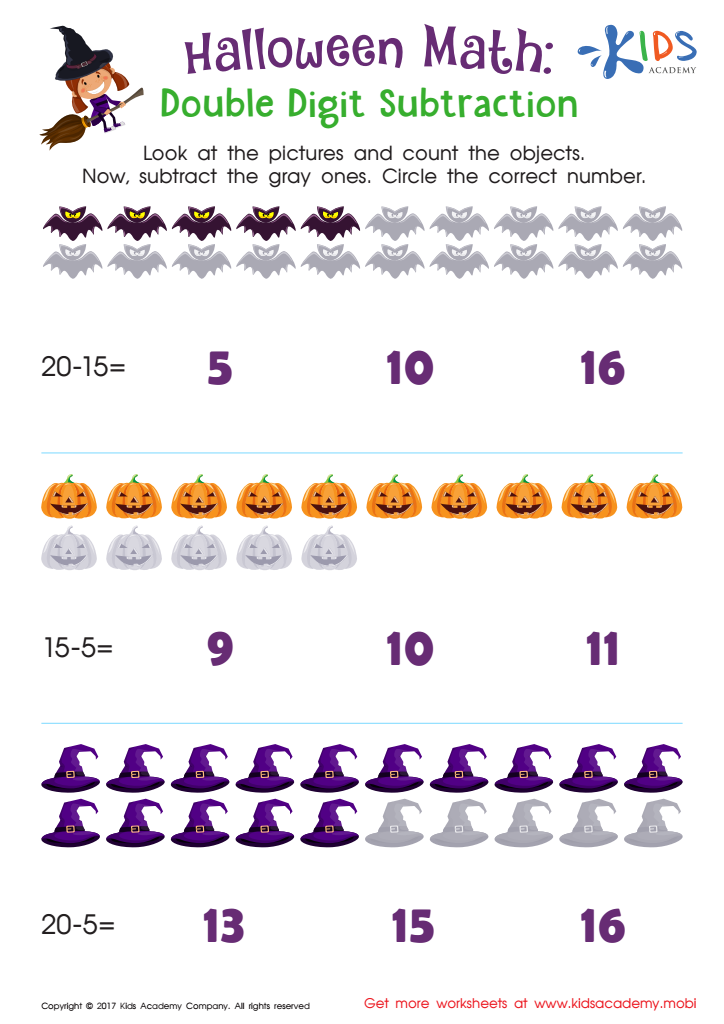
Halloween Math Subtraction Worksheet
 Assign to My Students
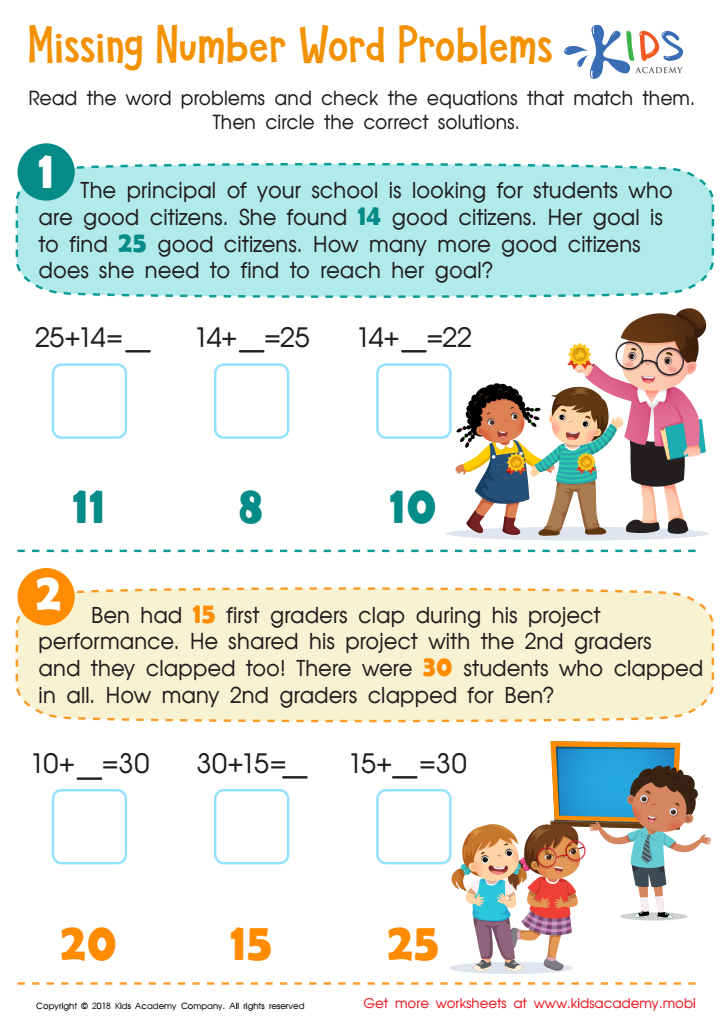
Missing Number Word Problems Worksheet
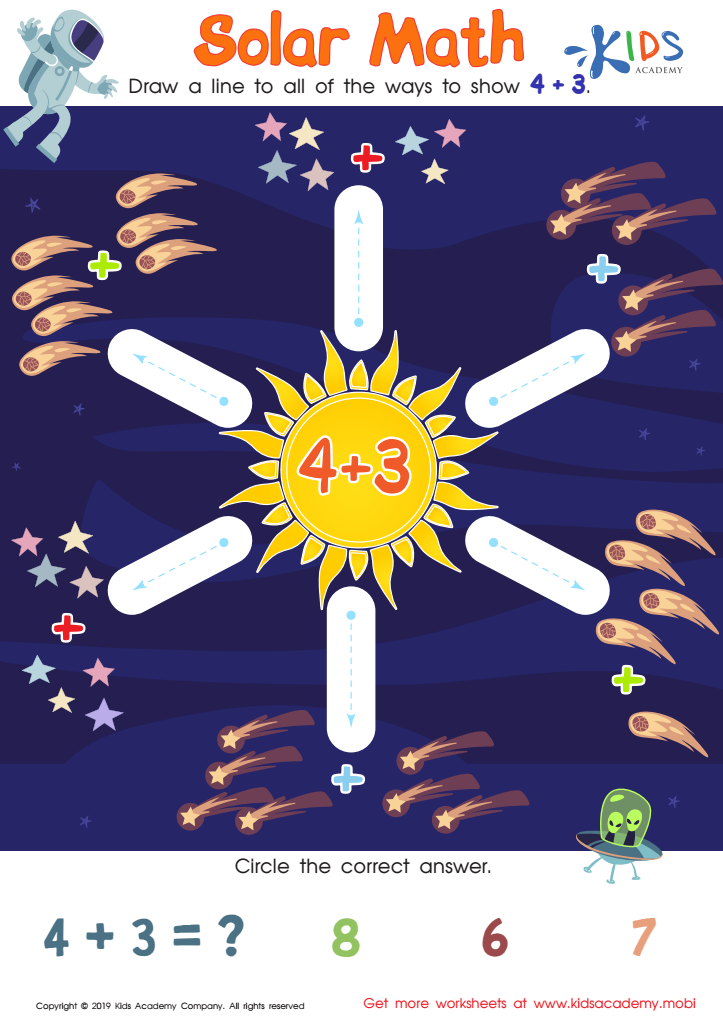
Solar Math Worksheet
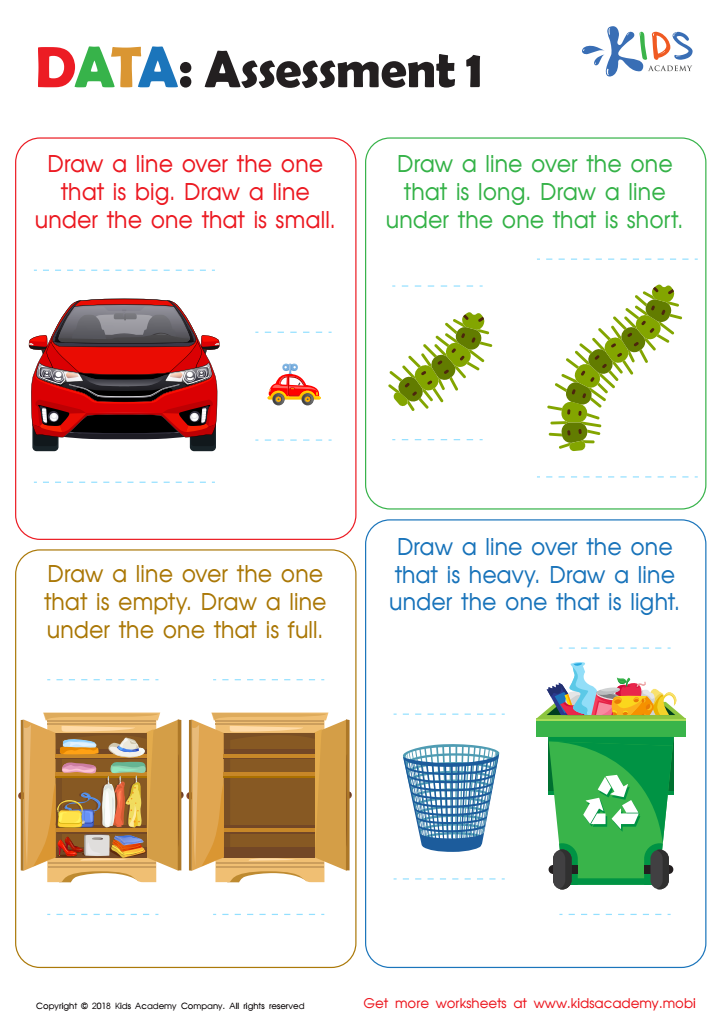
Data: Assessment 1 Worksheet




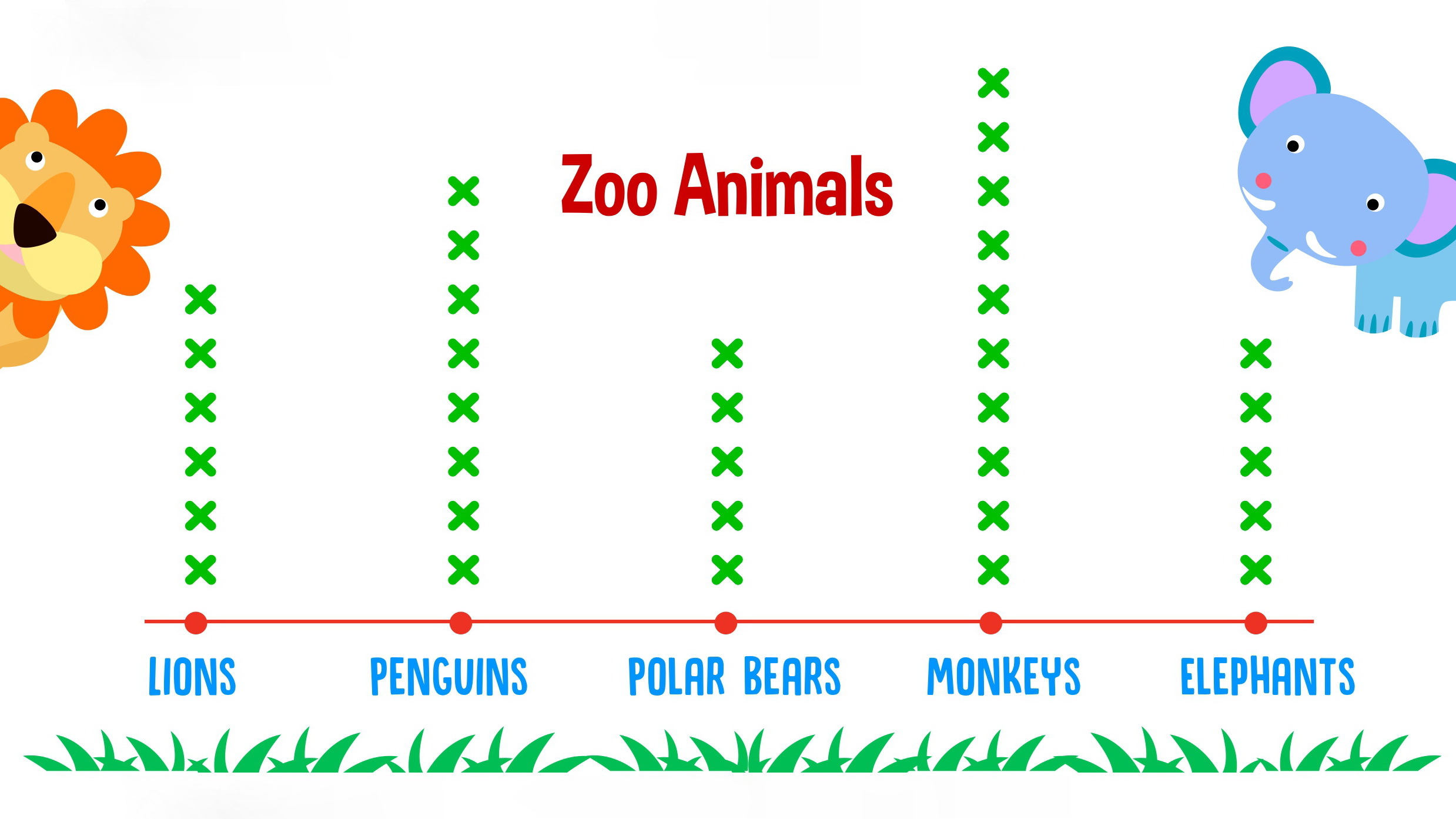


Mathematical problem-solving in early childhood, particularly for ages 3-5, serves as a cornerstone for cognitive development and lays the groundwork for future academic achievement. At this tender age, children's brains are remarkably receptive to new information. Engaging them in basic mathematical problem-solving activities not only enhances their numerical and spatial understanding but also hones critical thinking and reasoning skills.
When parents or teachers introduce mathematical concepts early, they offer children opportunities to develop a positive attitude towards math, which can stave off future anxieties related to the subject. Simple tasks like sorting shapes, identifying patterns, or counting objects in a playful, engaging manner can make learning both enjoyable and educational.
Moreover, early math skills are strongly correlated with later success in school. Studies show that children who enter kindergarten with a solid foundation in math are more likely to excel not just in math, but also in reading.
Additionally, mathematical problem-solving encourages perseverance, attention to detail, and the ability to approach problems from various angles. These problem-solving skills are invaluable, extending beyond mathematics to everyday life. Therefore, both parents and teachers have a vested interest in nurturing a child's early mathematical development, recognizing its far-reaching impacts on overall educational and personal growth.








