Money addition skills Worksheets for Ages 3-5
3 filtered results
-
From - To
Introduce your little ones to the world of money and math with our specially designed Money Addition Skills Worksheets for Ages 3-5. These fun, colorful printables help preschoolers and kindergarteners grasp the concept of addition using coins and bills. By engaging in hands-on practice, children will develop early financial literacy and improve their counting and problem-solving abilities. Our age-appropriate worksheets are perfect for at-home learning or classroom use, ensuring kids gain confidence and foundational skills through interactive and educational exercises. Cultivate a love for learning with our appealing and easy-to-understand resources.
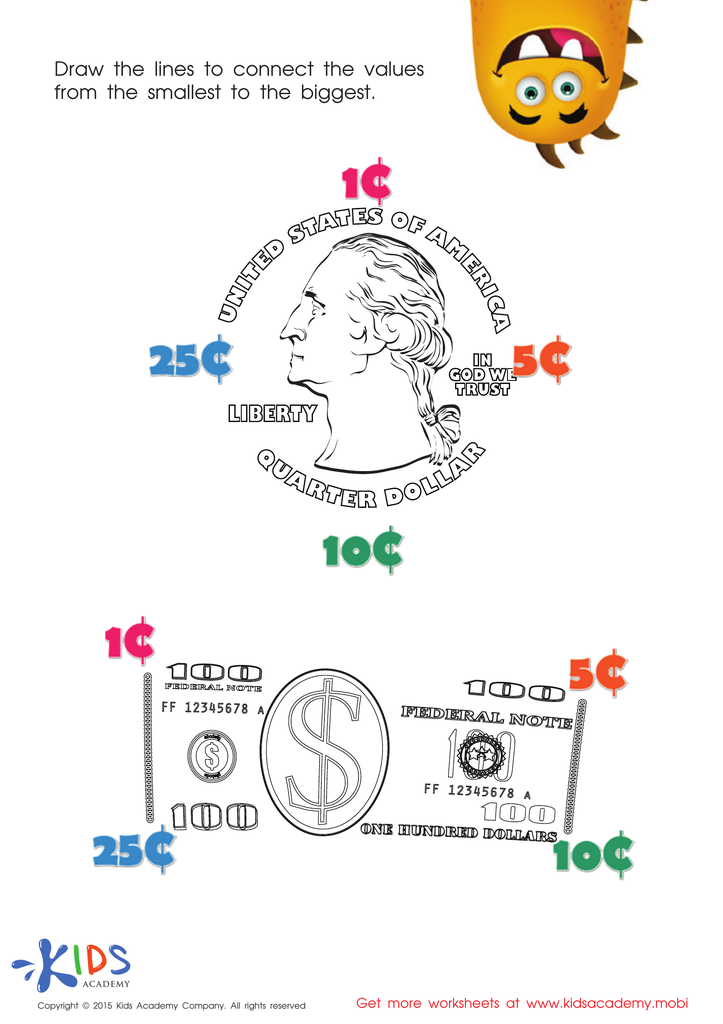
Connecting the Values Money Worksheet
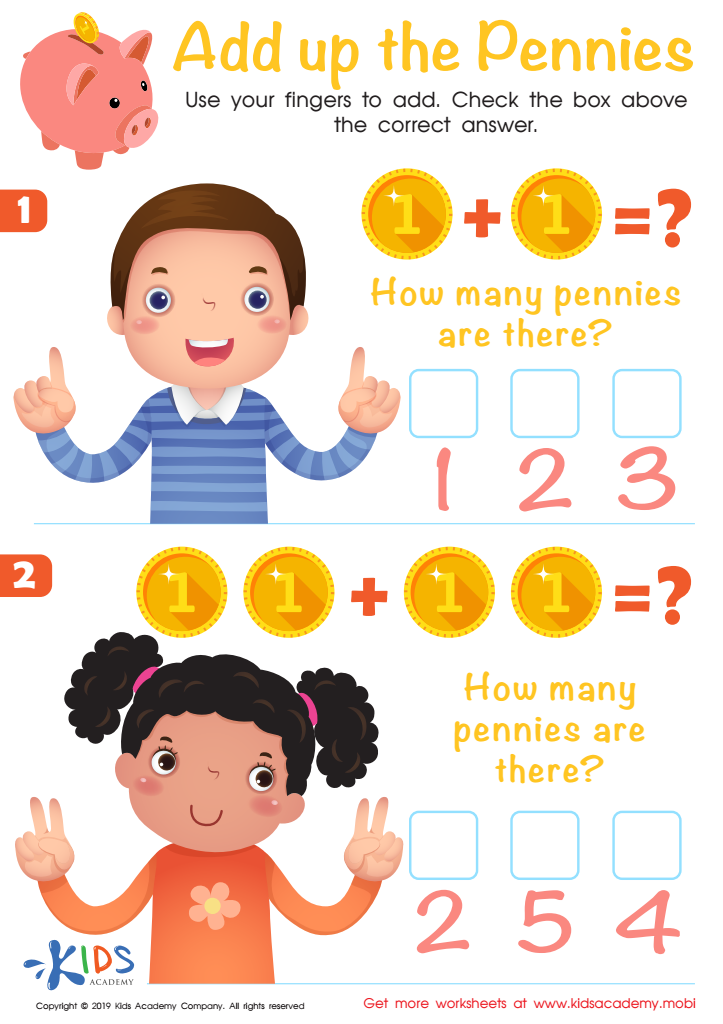
Add up the Pennies Worksheet
 Assign to My Students
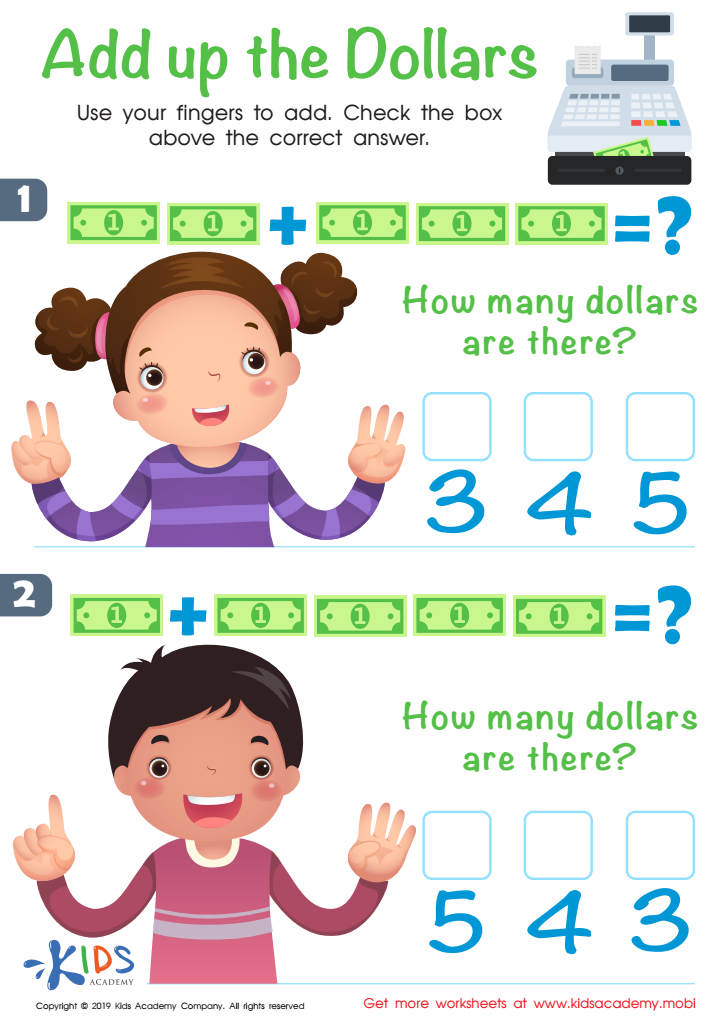
Add up the Dollars Worksheet








Parents and teachers should care about developing money addition skills in children aged 3-5 because this foundational knowledge sets the stage for essential life skills and future academic success. Introducing young children to basic concepts of money and addition helps them understand the value of different coins and bills, which in turn fosters number recognition and counting abilities.
At this age, children’s brains are highly receptive to new concepts. By integrating money addition into everyday activities, such as play shopping or saving a small allowance, children start associating arithmetic with real-life applications. This concrete understanding of math concepts can build their confidence and interest in more complex mathematical problems later on.
Additionally, early exposure to money management teaches children about financial responsibility from a young age. They learn that saving, spending, and making wise decisions with money are key life skills. Such early lessons can mitigate potential future issues related to financial literacy.
Moreover, engaging in money addition activities enhances cognitive functions such as problem-solving, logical thinking, and memory. It provides an interactive, hands-on approach to learning that is both fun and educational, securing a well-rounded developmental trajectory. Therefore, fostering these skills early on is paramount for laying a structured foundation for both academic and real-world challenges.








