
Nature appreciation Worksheets for Ages 3-5
6 filtered results
Difficulty Level
Grade
Age
-
From - To
Subject
Activity
Standards
Nurture a love for nature with our engaging Nature Appreciation Worksheets designed for ages 3-5! At Kids Academy, our printable worksheets spark curiosity and foster a connection with the environment in young learners. These activities include identifying plants and animals, coloring natural scenes, and learning about weather patterns, all tailored to build foundational learning skills in a fun and interactive way. Encourage your child's curiosity and cognitive development while instilling a lifelong appreciation for the natural world. Ideal for home or classroom use, our Nature Appreciation Worksheets make learning about nature enjoyable and informative. Explore our collections today!
Favorites
With answer key
Interactive
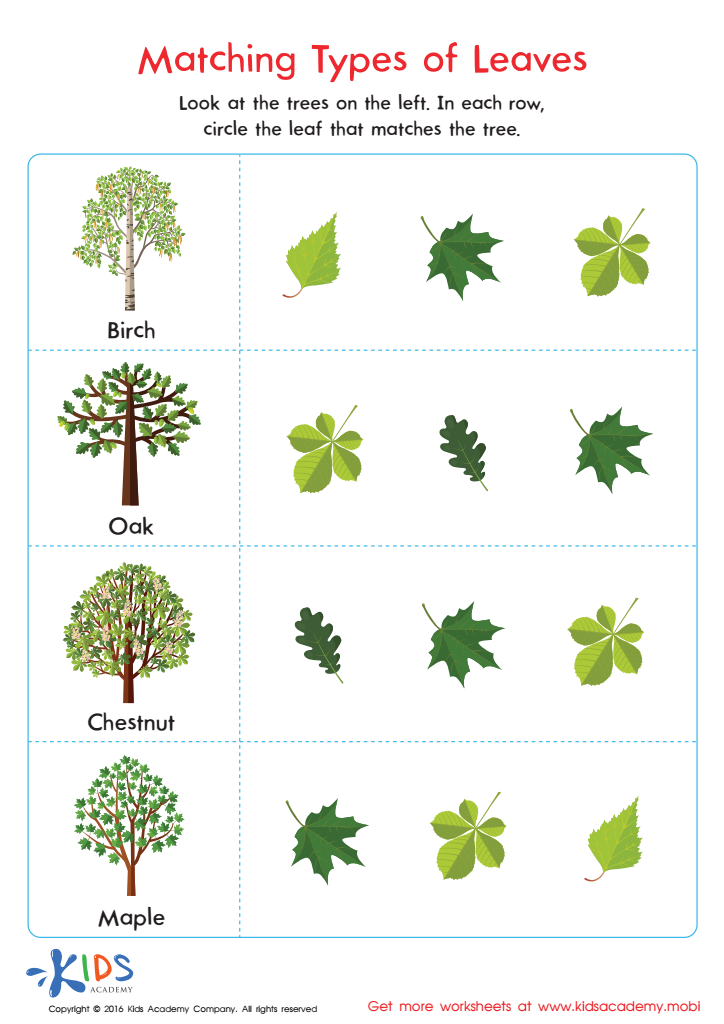
Matching Types of Leaves Printable
Trees are beautiful and essential to life. Show your child the joy of learning about them with this leaf worksheet. It teaches tree identification and encourages observing nature. Expand the learning with additional activities about trees!
 Assign to My Students
Matching Types of Leaves Printable
Worksheet
Join Kids Academy for Free
Who is primarily going to use this learning content?






.jpg)
Encouraging nature appreciation in children aged 3-5 is fundamentally important because it lays the groundwork for lifelong environmental stewardship, curiosity, and well-being. During these formative years, children explore their surroundings with a sense of wonder and boundless enthusiasm. Experiencing nature boosts their curiosity and sensory development, providing rich, hands-on learning opportunities that can't be replicated indoors.
Getting young children outside to explore green spaces, observe animals, and learn about plants can help them develop a strong emotional connection to the natural world. This connection is pivotal for fostering a sense of empathy and responsibility towards environmental preservation as they grow older. Simple activities, like watching birds, inspecting leaves, or digging in the soil, can significantly enhance their motor skills, attention span, and overall physical health.
Moreover, nature appreciation supports their emotional and psychological development. Regular interaction with the outdoors can reduce stress, promote creativity, and provide them with joyful and educational experiences that limit screen time. They will better understand the concepts of seasons, weather, and ecosystems, which form foundational knowledge for future scientific learning.
Parents and teachers have the unique opportunity to instill a love and respect for nature during these early years. Nurturing this appreciation can lead to environmentally conscious individuals who prioritize the health and sustainability of our planet.








