Phonics understanding Worksheets for Ages 3-5
3 filtered results
-
From - To
Boost your child's early reading skills with our Phonics Understanding Worksheets for Ages 3-5. Designed to make learning fun, these engaging worksheets introduce young learners to essential phonics concepts through vibrant images, simple exercises, and playful activities. Our printable resources cover letter sounds, blending, and word recognition, fostering a strong phonemic foundation. Ideal for preschoolers and kindergarteners, these worksheets enhance your child's language development and readiness for reading. Start their literacy journey today with Phonics Understanding Worksheets, promoting both learning and enjoyment in your child's early years.
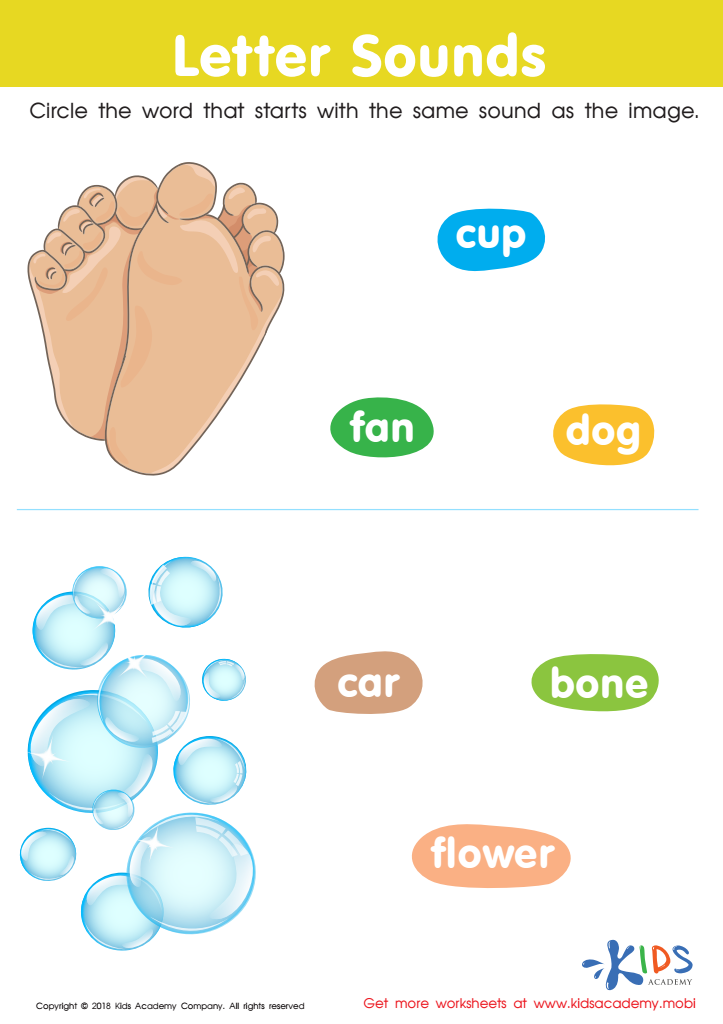
letter sounds Worksheet
 Assign to My Students
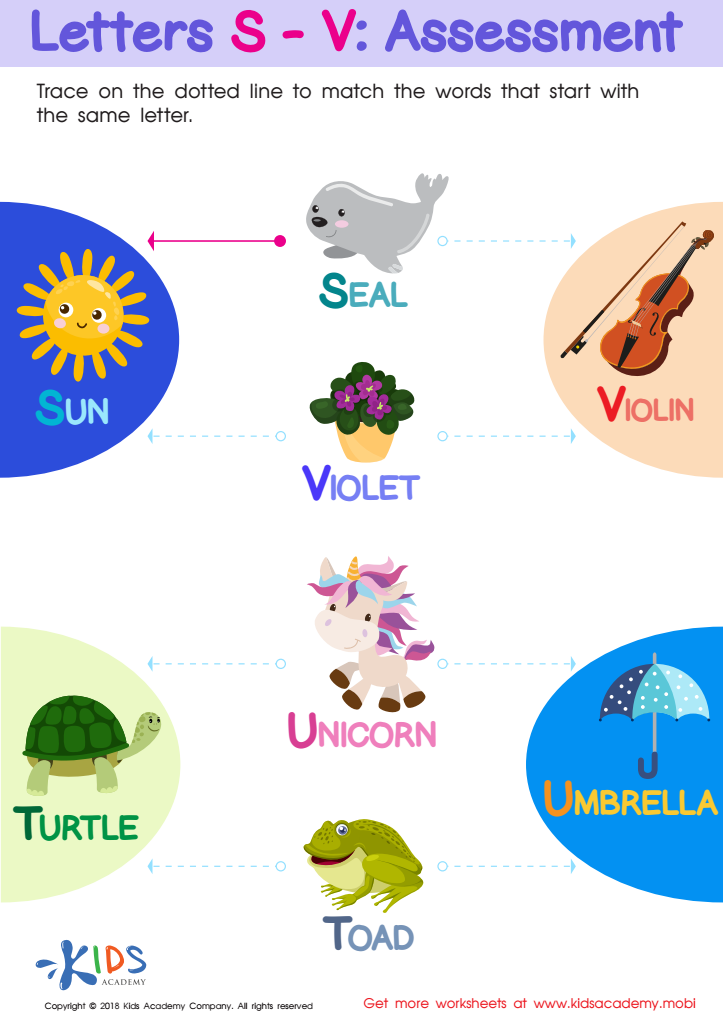
Letters S - V Tracing Worksheet
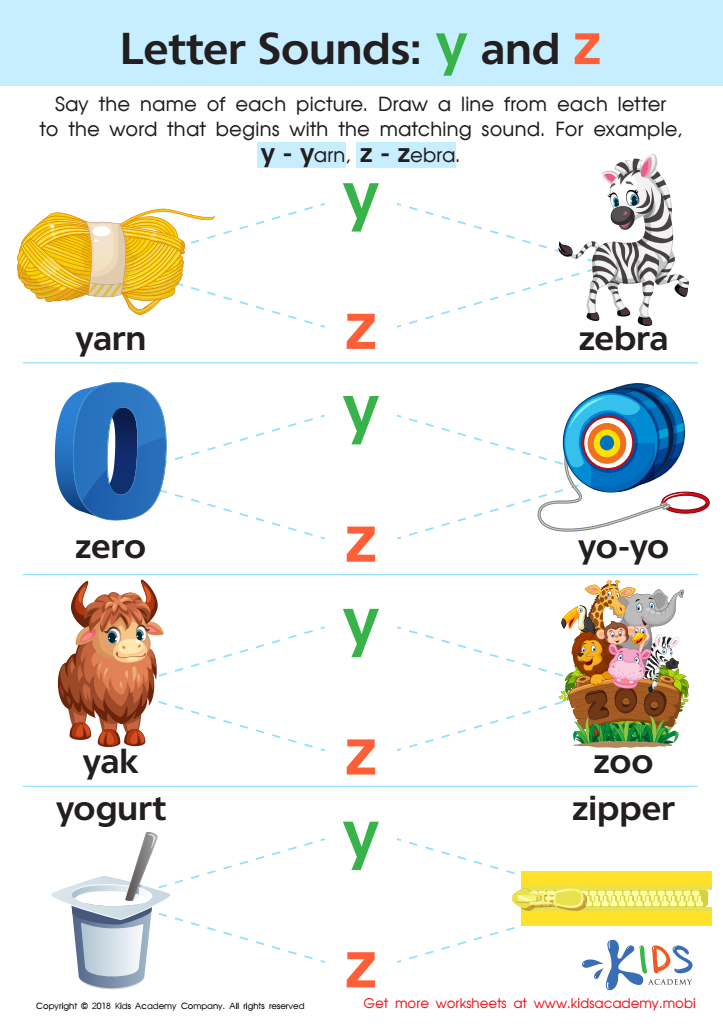
Letter Y and Z Sounds Worksheet







Phonics is a crucial foundational skill for children ages 3-5 as it lays the groundwork for successful reading and writing. During these formative years, children's brains are highly receptive to learning language and decoding the sounds that constitute words. Phonics teaches children the relationships between letters and sounds, allowing them to decode new words independently, which is a key component in developing reading fluency.
For parents and teachers, fostering a strong understanding of phonics helps promote literacy in young learners. Children who grasp phonics early are generally more confident and proficient readers, which supports their overall academic success. Early phonics comprehension can also prevent future reading difficulties and frustration, enabling children to enjoy reading rather than view it as a challenge.
Moreover, phonics helps improve spelling skills by familiarizing children with the patterns and structures of words. This understanding is essential for effective written communication, a critical skill in both educational contexts and daily life. Phonics instruction typically involves engaging activities like singing, rhyming, and letter games, making learning enjoyable and effective for young children.
In essence, ensuring that children between ages 3-5 have a solid phonics foundation empowers them with the tools needed for reading and writing, setting a positive trajectory for their future learning experiences.








