Recognize shapes Worksheets for Ages 3-5
4 filtered results
-
From - To
Explore our engaging "Recognize Shapes Worksheets for Ages 3-5," designed to help young learners identify and understand basic shapes through fun and interactive activities. These worksheets feature colorful illustrations and age-appropriate exercises, making learning about circles, squares, triangles, and more exciting! Perfect for preschoolers, our resources promote essential skills in shape recognition, visual discrimination, and hand-eye coordination. Each worksheet encourages creativity and critical thinking, providing a solid foundation for early learning. Whether used in the classroom or at home, these worksheets are an excellent tool to stimulate curiosity and foster a love for shapes in your little ones. Start exploring today!
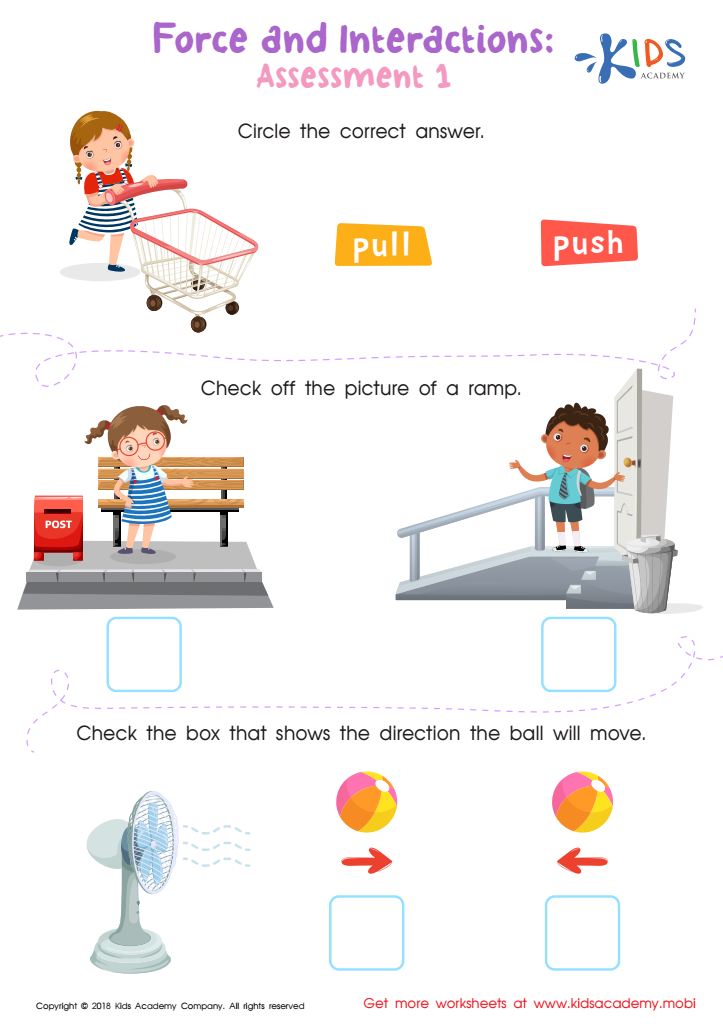
Force and Interactions: Assessment 1 Worksheet
 Assign to My Students
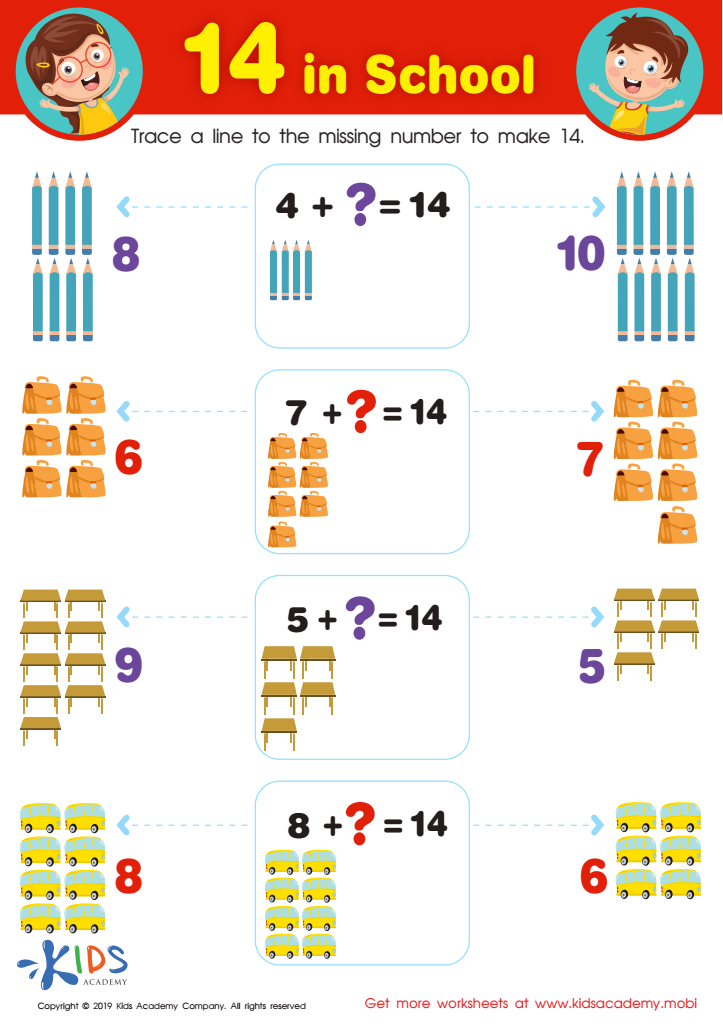
14 in School Worksheet








Recognizing shapes is a foundational skill for early childhood development that plays a crucial role in fostering cognitive, motor, and social abilities in children aged 3-5. Parents and teachers should care about shape recognition because it lays the groundwork for more advanced mathematics, problem-solving skills, and spatial awareness. Understanding basic shapes—such as circles, squares, and triangles—enhances a child's ability to categorize and comprehend the world around them.
Shape recognition also aids in developing fine motor skills, as children engage in activities such as drawing shapes, cutting out shapes, or assembling shape puzzles. These activities encourage hand-eye coordination and improve dexterity, which are essential for later skills like writing and navigating daily tasks.
Furthermore, recognizing shapes can advance language development, as parents and teachers introduce new vocabulary related to shapes and spatial relationships, promoting effective communication skills. Engaging with shape-related activities also fosters social skills through collaborative play, where children learn to share to create structures with shape blocks or participate in group challenges.
Overall, emphasizing shape recognition in early childhood education aligns with holistic development, preparing children for future learning and real-world experiences. Your involvement can set the stage for lifelong learning and success.








