Sentence completion Worksheets for Ages 3-5
4 filtered results
-
From - To
Enhance early literacy skills with our engaging sentence completion worksheets designed for children ages 3-5! These fun and interactive worksheets target essential language development, encouraging young learners to practice vocabulary, sentence structure, and critical thinking. Each activity features vibrant illustrations and age-appropriate prompts, making learning enjoyable and effective. By completing sentences, kids will not only improve their reading comprehension but also boost creativity and expression. Our resources are perfect for both classroom settings and home learning environments. Support your child's journey in becoming a confident communicator with our thoughtfully crafted sentence completion worksheets today!
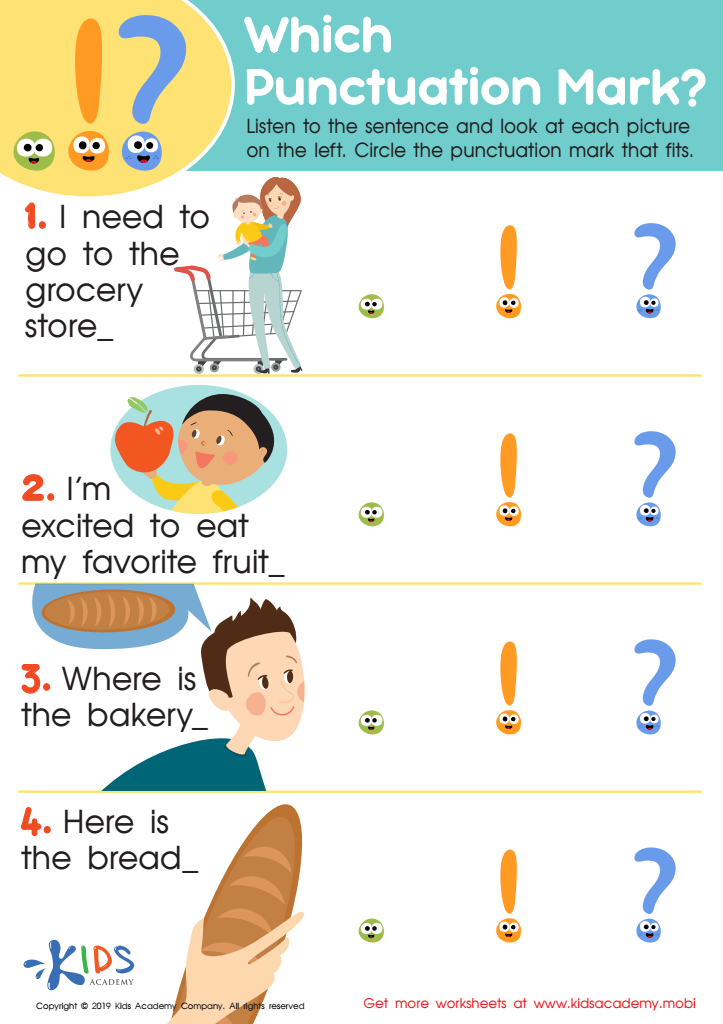
Which Punctuation Mark Worksheet
 Assign to My Students
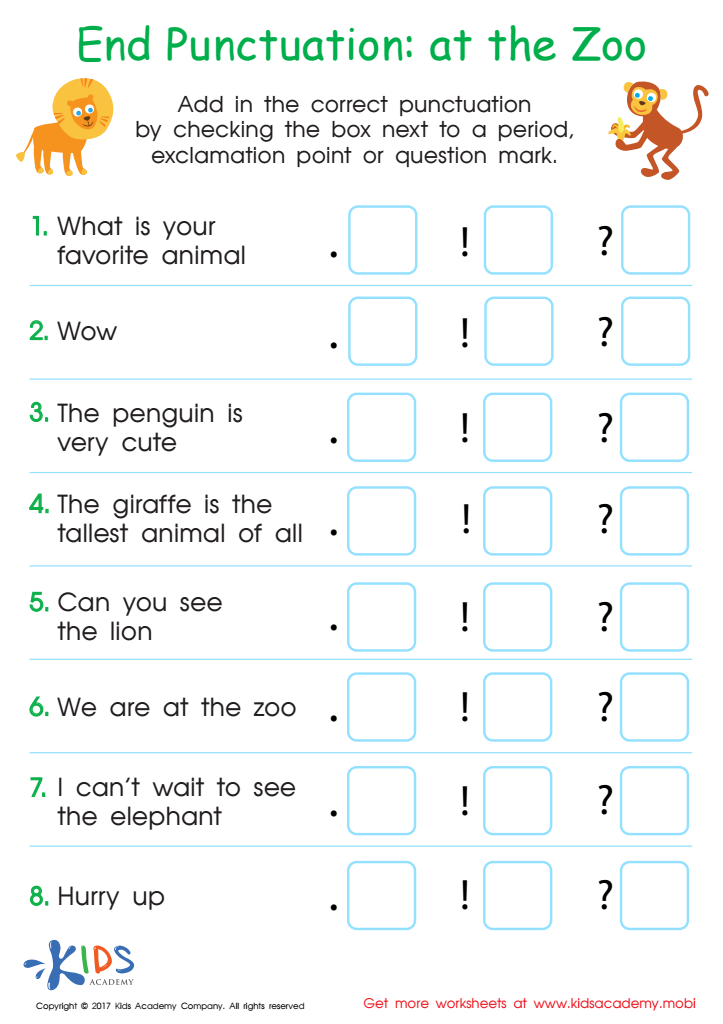
End Punctuation: At the Zoo Worksheet
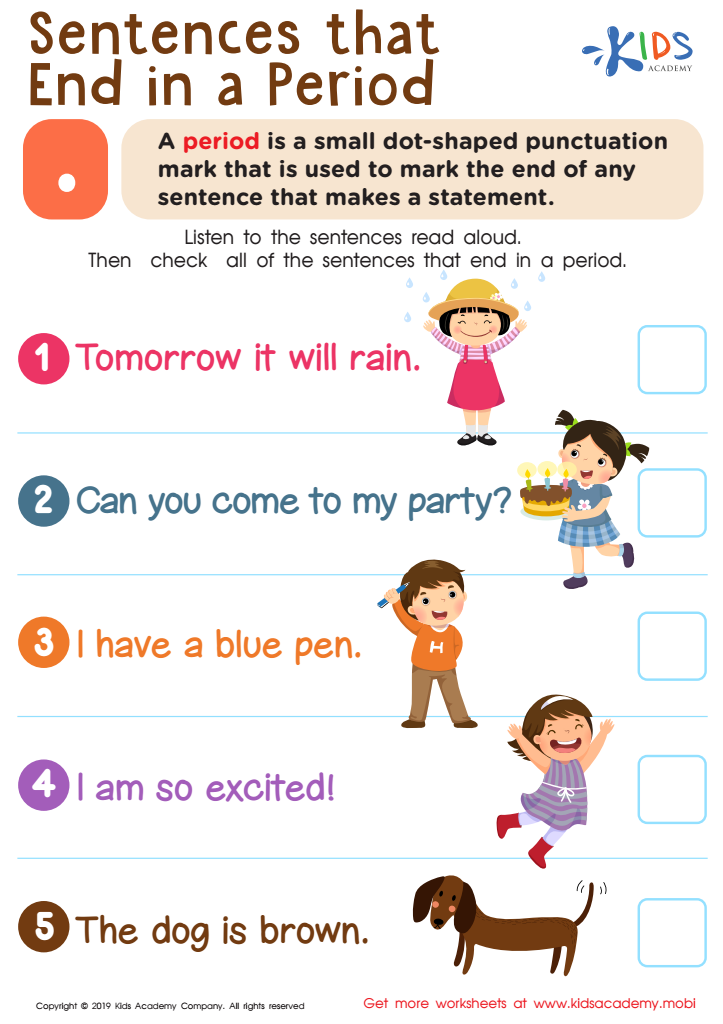
Sentences That End in a Period Worksheet
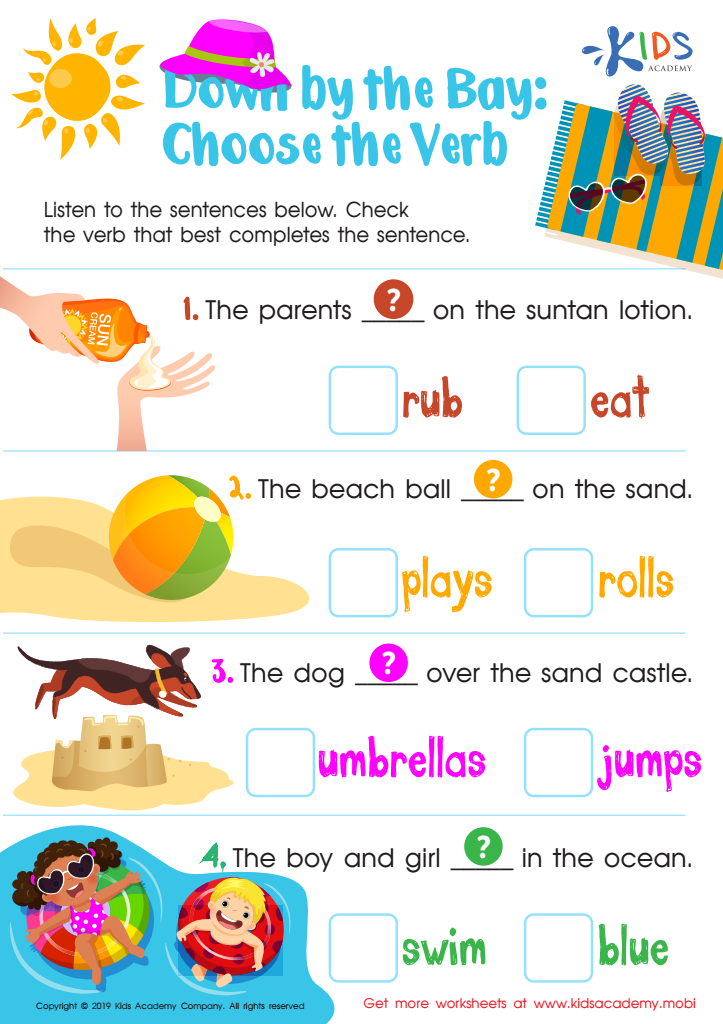
Down by the Bay: Choose the Verb Worksheet







Sentence completion activities for children aged 3 to 5 are vital for early literacy development and language skills. At this tender age, children are rapidly expanding their vocabulary and cognitive abilities. Engaging in sentence completion tasks helps them understand sentence structure and encourages critical thinking, as they learn to predict what makes sense in context.
Additionally, these activities boost a child’s confidence in spoken and written language. Completing sentences allows young learners to experiment with language, discover new words, and express their thoughts creatively. By nurturing these skills, parents and teachers are preparing children for more complex reading and writing tasks they will encounter in later years.
Participating in sentence completion activities can be a fun and interactive way for parents and teachers to bond with children. It encourages dialogue, enhances listening skills, and reinforces the correlation between spoken and written language. Furthermore, it provides opportunities for assessment, helping caregivers identify areas where a child may need additional support. Overall, sentence completion is a foundational exercise that fosters a love of language, bolsters literacy skills, and sets children on the path to academic success as they grow. Ignoring these opportunities means potentially missing critical development milestones in a child’s early education journey.








