Sound Association Worksheets for Ages 3-5 - Page 2
27 filtered results
-
From - To
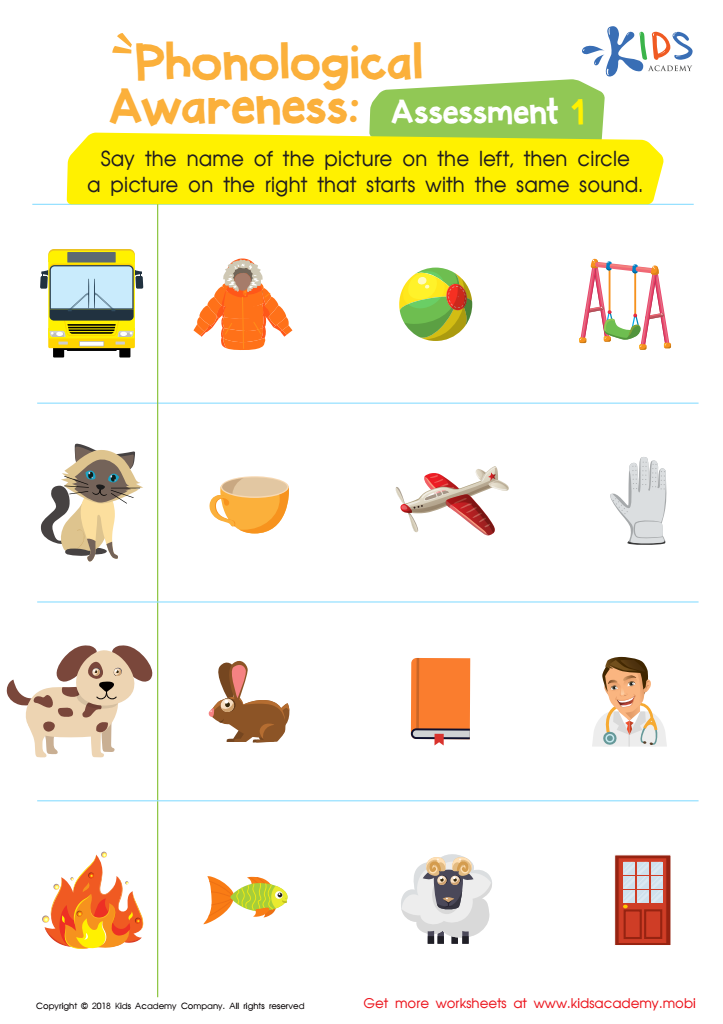
Phonological Awareness: Assessment 1 Worksheet
 Assign to My Students
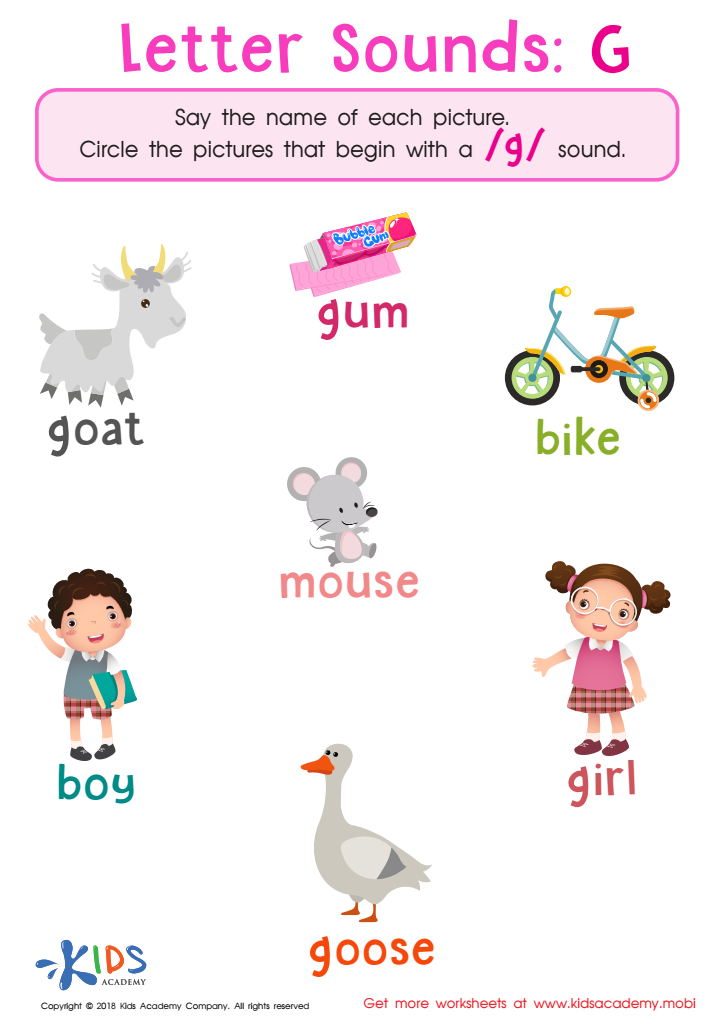
Letter G Sounds Worksheet
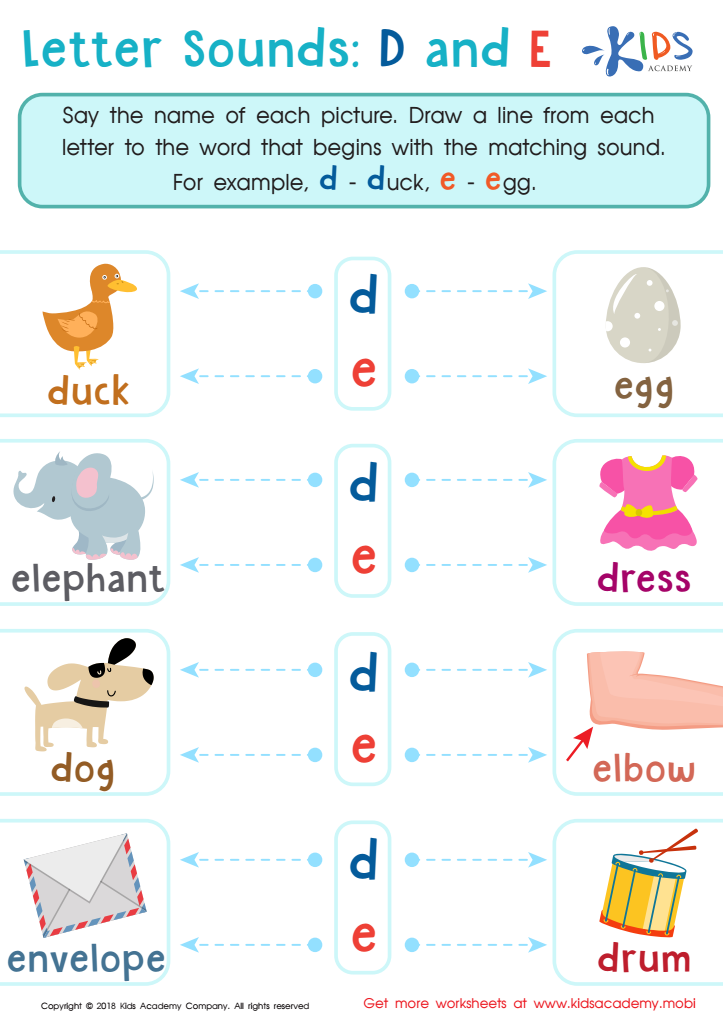
Letter D and E Sounds Worksheet






Sound association is critical for children ages 3-5 because it forms the foundational skills necessary for reading and writing. During this formative period, kids are rapidly developing their language and cognitive abilities. Sound association involves linking sounds to letters and words, which is a pivotal milestone in phonemic awareness—the understanding that words are composed of smaller sound units.
This skill helps children decode words during reading and spell words when writing. For instance, recognizing that the letter 'B' makes the 'buh' sound is critical for sounding out and understanding words like "ball" or "bat." Without these basic skills, children are likely to struggle as they progress through their education.
Furthermore, sound association contributes to a child’s vocabulary growth and listening comprehension. Activities that reinforce sound association, such as rhymes, songs, and phonics games, make learning enjoyable and engaging for young minds. This positive experience can foster a lifelong love of reading and learning.
Parents and teachers should prioritize sound association to ensure that children enter kindergarten with a strong literacy foundation. Early mastery of these skills can boost a child's confidence and set them up for academic success, ultimately influencing their educational trajectory and future opportunities.








