
Sound identification Worksheets for Ages 3-5
5 filtered results
Difficulty Level
Grade
Age
-
From - To
Subject
Activity
Standards
Boost your child's early literacy skills with our Sound Identification Worksheets for Ages 3-5. Perfectly designed for preschoolers and kindergartners, these engaging worksheets help young learners recognize and differentiate various sounds. Featuring fun activities like matching, coloring, and tracing, they turn learning into an adventure. Whether at home or in the classroom, these printable worksheets provide a hands-on way for children to develop phonemic awareness, a crucial foundation for reading success. Equip your little one with the tools to excel in early education by exploring our expertly crafted sound identification worksheets today!
Favorites
With answer key
Interactive
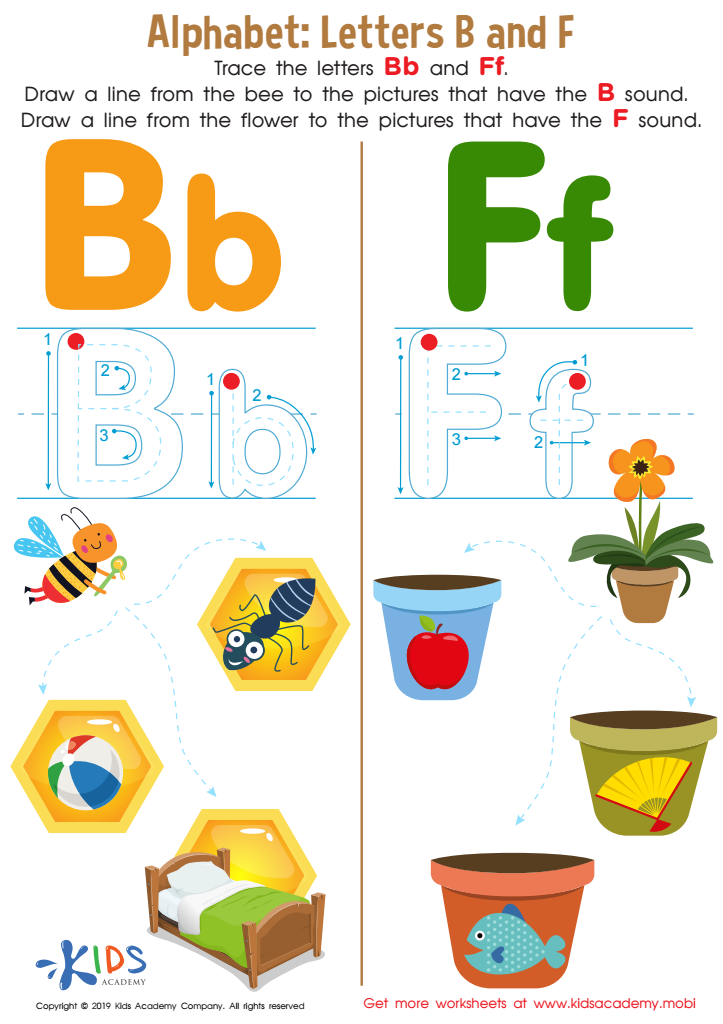
Letters B and F Tracing Worksheet
Does your kid know the letters B and F? This tracing sheet helps them practice by tracing each letter, then drawing a line from a bee and a flower to related words. Recognizing words with pictures develops a great skill, and students will master it in no time!
 Assign to My Students
Letters B and F Tracing Worksheet
Worksheet
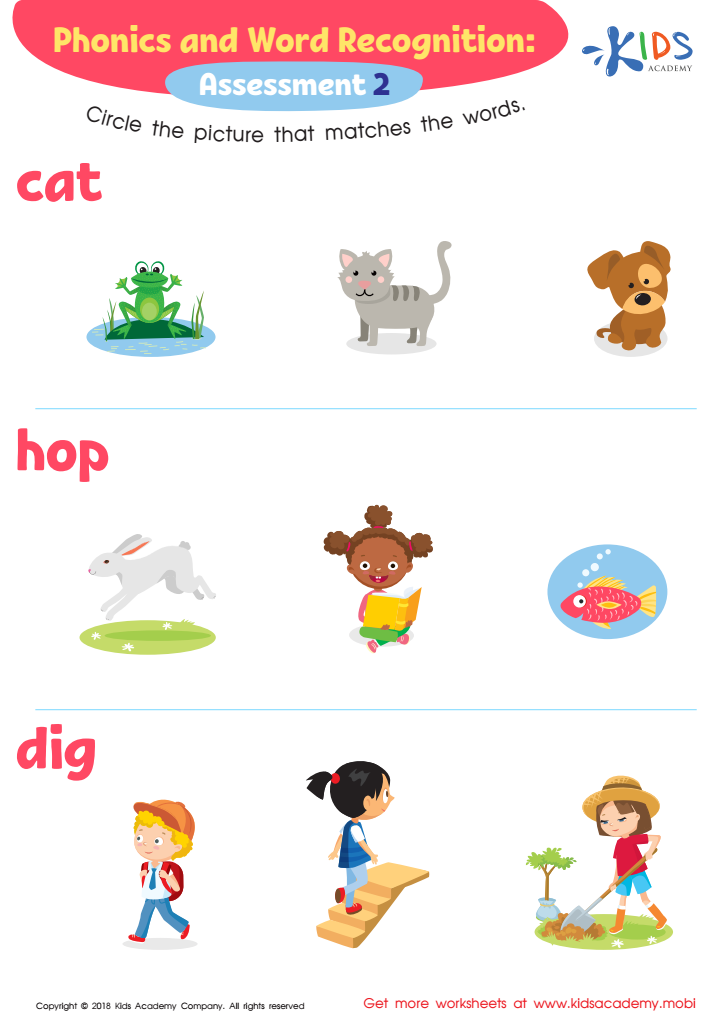
Phonological Awareness: Assessment 2 ELA Worksheet
This free worksheet assesses your emerging reader's ability to decode and match closed-syllable high-frequency words to the appropriate picture. The pictures are cheery and easy to identify, so your child will have fun and find success with decoding and matching.
Phonological Awareness: Assessment 2 ELA Worksheet
Worksheet
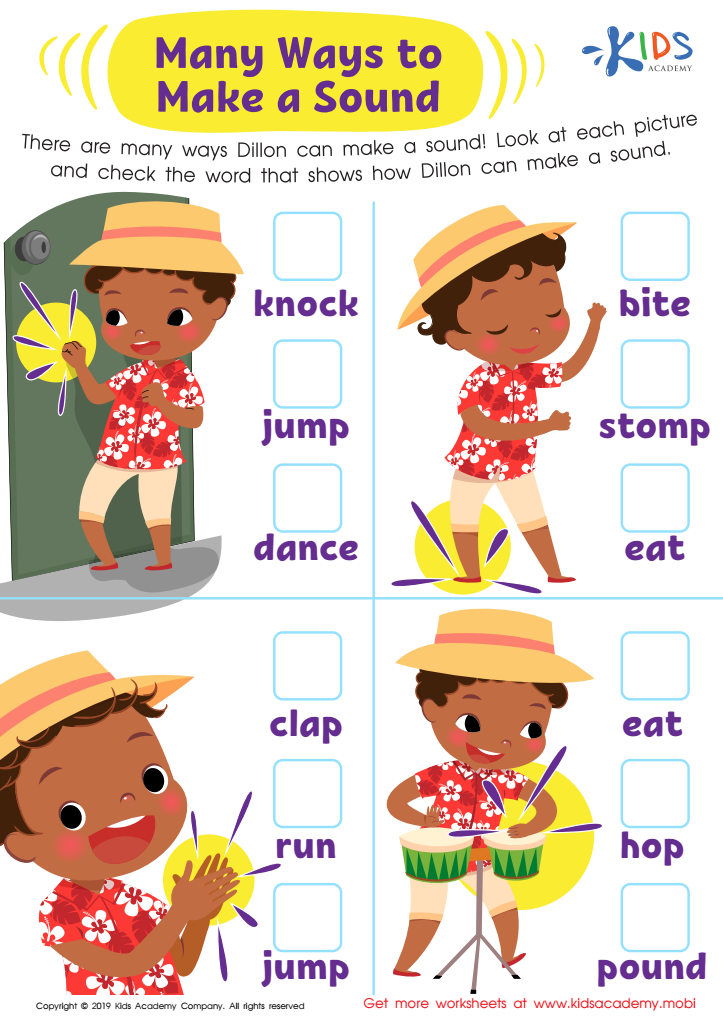
Many Ways to Make a Sound Worksheet
This interactive worksheet encourages creativity and imagination as kids use picture clues to match sound words. It helps them identify the sound methodology and build fine motor skills. Plus, with learning through play, they'll develop stronger vocabularies without even knowing it!
Many Ways to Make a Sound Worksheet
Worksheet
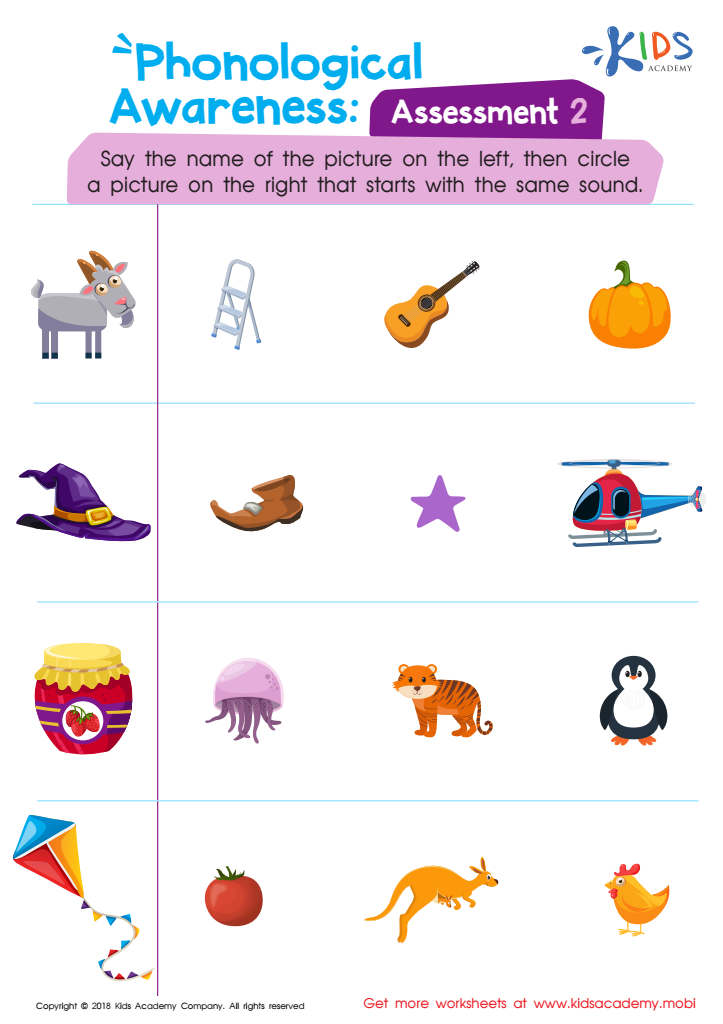
Phonological Awareness: Assessment 2 Worksheet
Test your child’s phonological awareness and reading readiness with this charming worksheet! Perfect for K-1, it assesses if they can name a picture aloud, listening for the starting sound and matching it to another word. Watch as they think deeply and listen to the sounds as they name each picture. Determine if your child is ready to sound out words or needs more phonics practice.
Phonological Awareness: Assessment 2 Worksheet
Worksheet
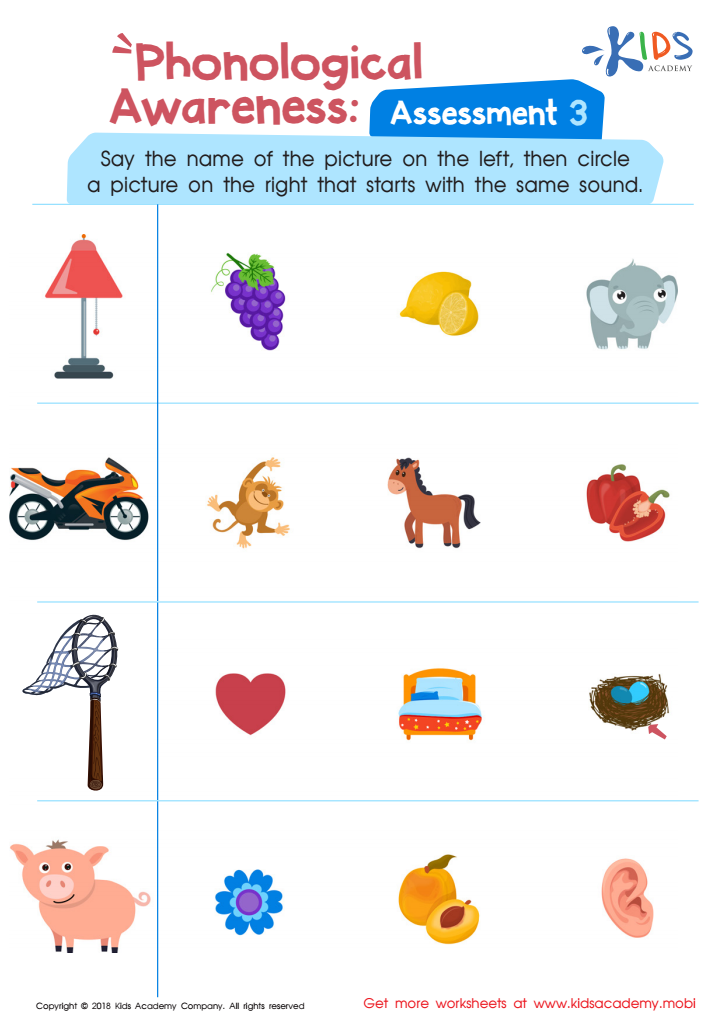
Phonological Awareness: Assessment 3 Worksheet
Test kids' reading readiness with a phonological awareness worksheet! With this PDF exercise, encourage children to name each picture aloud and match left to right. Help them learn to recognize word sounds at the start, middle and end of words. They'll be sure to remember that lamp doesn't sound like elephant!
Phonological Awareness: Assessment 3 Worksheet
Worksheet
Join Kids Academy for Free
Who is primarily going to use this learning content?






Sound identification is critical for children ages 3-5 because it forms the foundation for effective communication and literacy skills. During these formative years, children's brains are highly receptive to learning new skills, including phonemic awareness—the ability to hear and manipulate individual sounds in words. Understanding and identifying sounds pave the way for reading and writing proficiency, which are essential for academic success.
When parents and teachers focus on sound identification, they help children develop critical listening and speaking skills. These skills are necessary for accurately pronouncing words, building a robust vocabulary, and understanding language nuances. Early sound identification also aids in recognizing letter-sound relationships, a vital step in decoding words during reading.
Moreover, strengthening these skills can boost a child's confidence, making them more eager to participate in classroom activities and social interactions. Children who struggle with sound identification may face challenges in reading and spelling, potentially leading to future academic difficulties and lower self-esteem.
In a world where strong communication skills are indispensable, dedicating attention to sound identification in early childhood sets a sturdy foundation for lifelong learning. By prioritizing this skill, parents and teachers can equip children with the essential tools needed for effective communication and academic achievement.








