Sound-letter correlation Worksheets for Ages 3-5
4 filtered results
-
From - To
Unlock the world of literacy for young learners with our Sound-Letter Correlation Worksheets designed for ages 3-5. These engaging and educational printables from Kids Academy expertly blend fun with foundational phonics, helping children to understand the relationship between sounds and letters. Perfect for preschoolers, each worksheet features colorful illustrations, interactive activities, and captivating exercises. By combining play with practice, our worksheets encourage early reading skills, enhance letter recognition, and foster a love for learning. Give your child a head start on their literacy journey with these expertly crafted resources that make learning both enjoyable and effective.
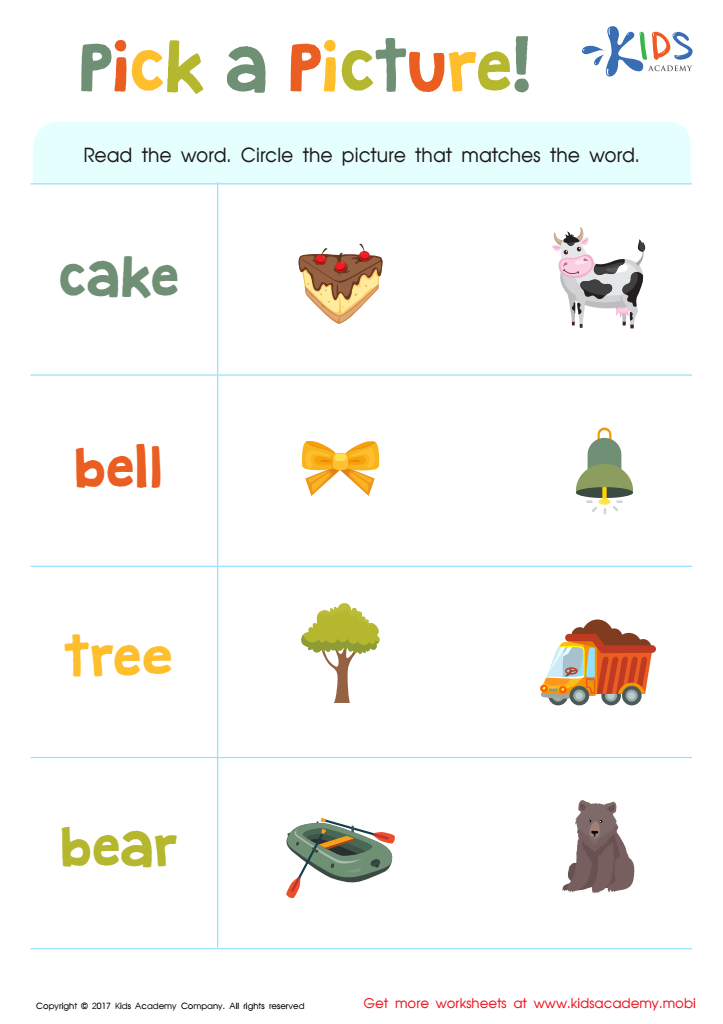
Pick a Picture Word Recognition Worksheet
 Assign to My Students
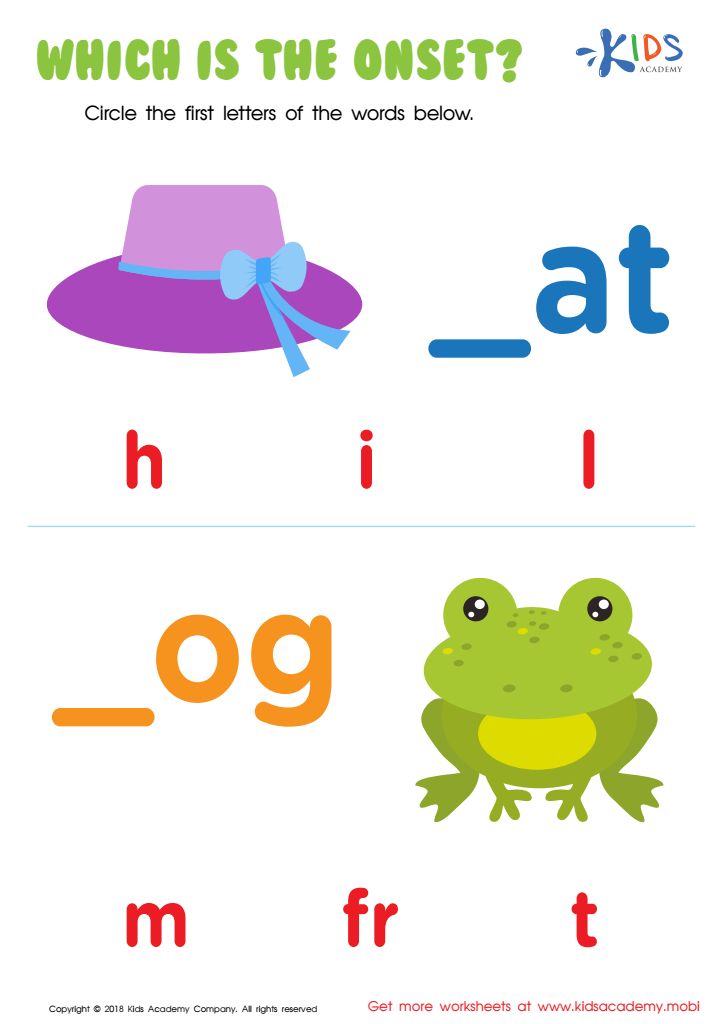
Which Is the Onset? Worksheet
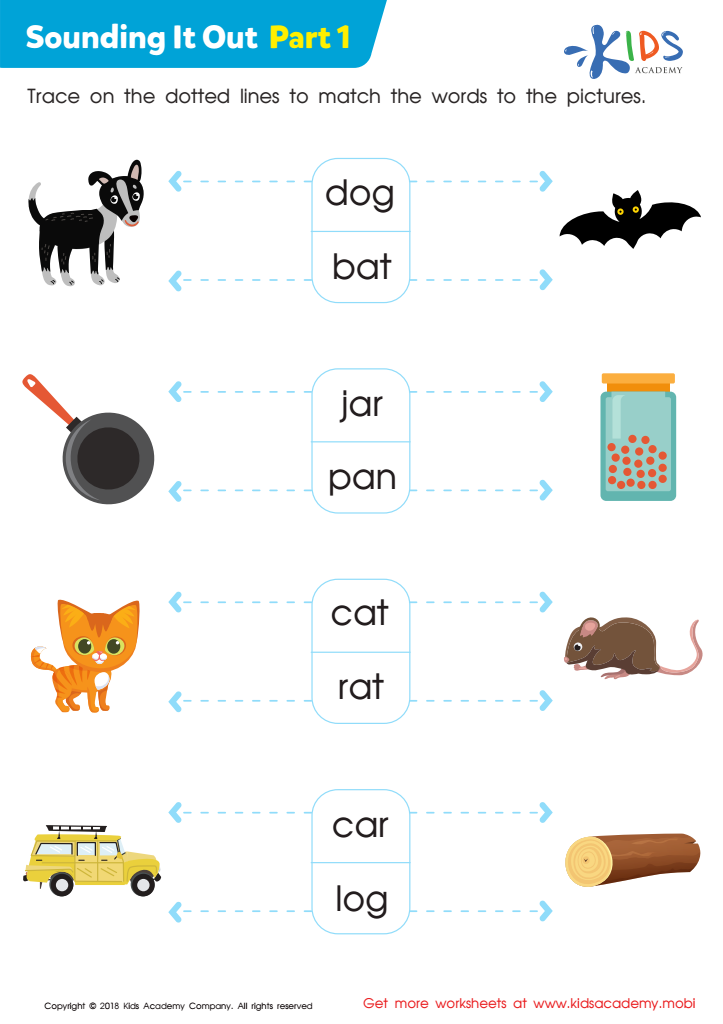
Sounding it Out: Part 1 Worksheet
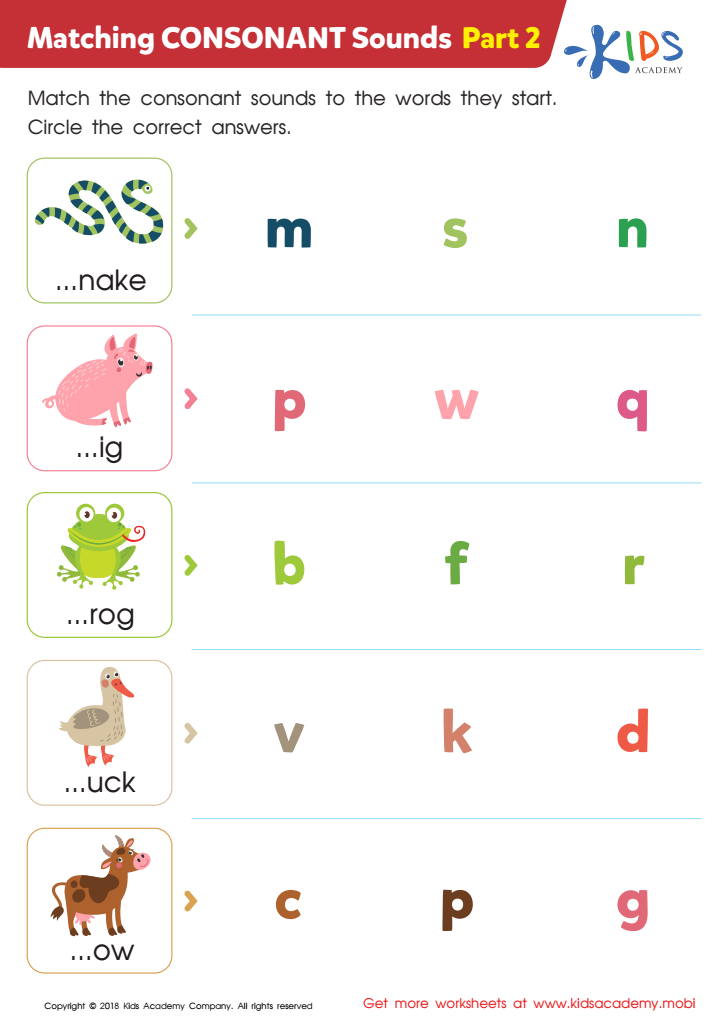
Matching Consonant Sounds: Part 2 Worksheet






.jpg)

Sound-letter correlation, also known as phonemic or phonological awareness, is fundamental for early childhood literacy, particularly for ages 3-5. By understanding the connection between sounds (phonemes) and corresponding letters (graphemes), children develop essential reading skills. This foundational knowledge allows them to decode words, promoting smoother and more confident reading.
Parents and teachers should prioritize fostering this skill set because it serves as a building block for all future literacy. Children who can match sounds to letters are better equipped to understand that words are made up of individual sounds, which fosters early stages of spelling and writing. Moreover, skill in sound-letter correlation is often predictive of later reading success; kids who struggle in this area are more likely to encounter difficulties with reading fluency and comprehending text as they progress through school.
Additionally, engaging activities that focus on sound-letter relations, like alphabet games, rhyming songs, and interactive story readings, can make learning fun and stimulating, thus maintaining a child’s interest and enthusiasm for reading. By laying this crucial groundwork in these formative years, parents and teachers can significantly impact a child’s academic trajectory, ensuring they have the necessary tools to become proficient and confident readers.








