Subtraction practice Worksheets for Ages 3-5 - Page 3
53 filtered results
-
From - To
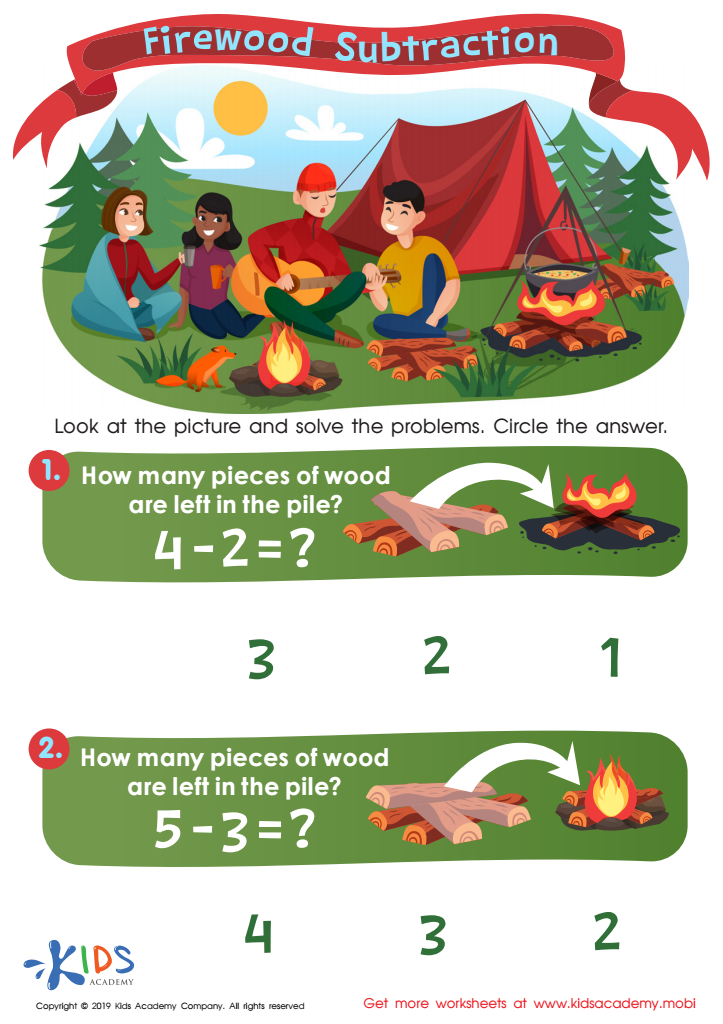
Firewood Subtraction Worksheet
 Assign to My Students
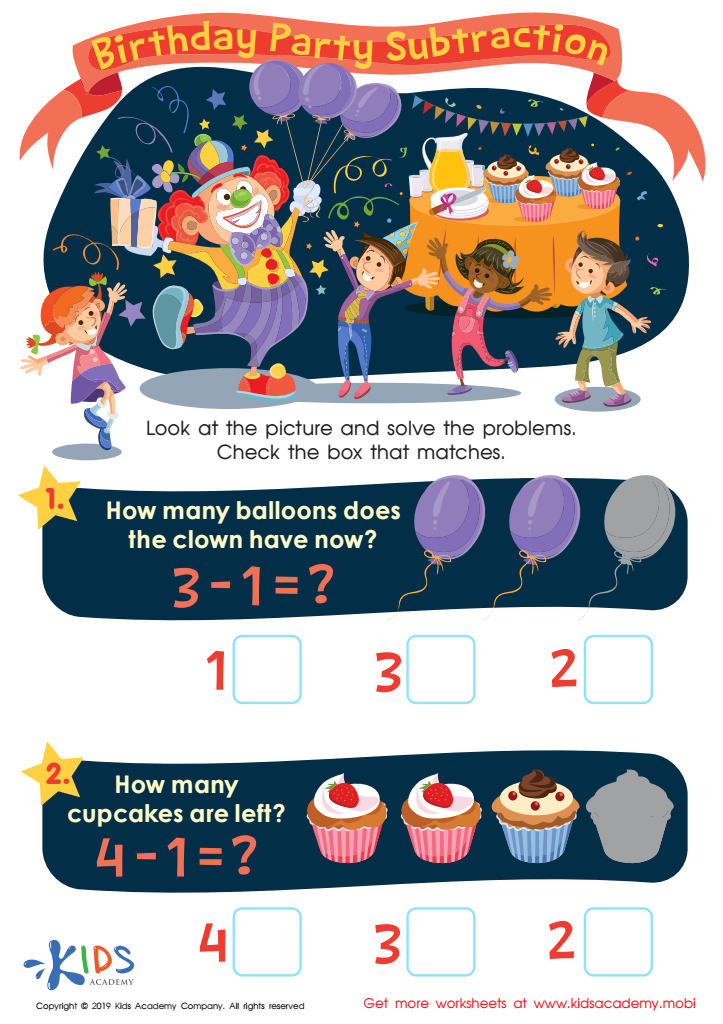
Birthday Party Subtraction Worksheet
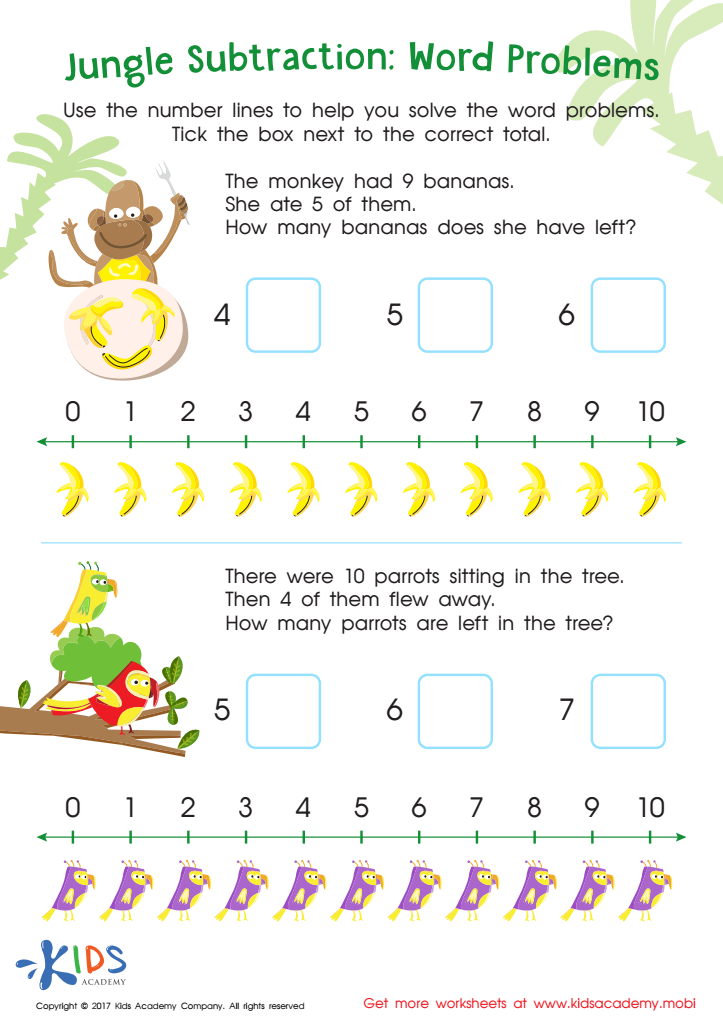
Jungle Subtraction Word Problems Substraction Worksheet
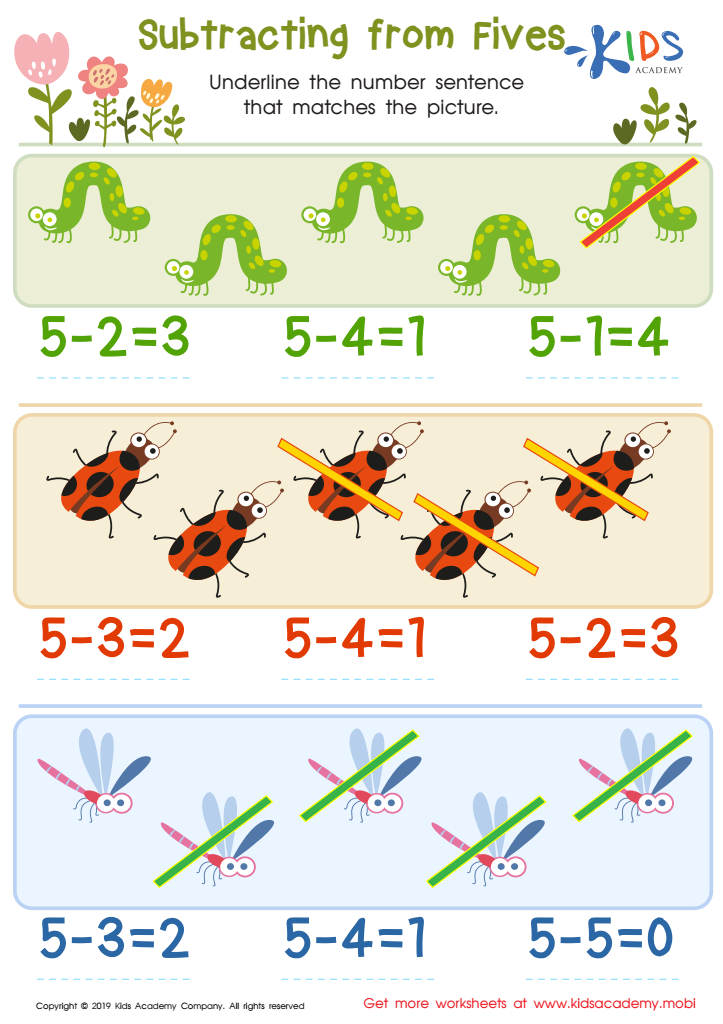
Subtracting From Fives Worksheet








Subtraction practice for children aged 3-5 is vital for a myriad of reasons. At this tender age, young learners are forming the foundation for their mathematical understanding and cognitive development. Introducing subtraction—a fundamental arithmetic operation—helps them grasp essential concepts such as number sense, the idea of 'taking away' or 'less than,' and helps reinforce their counting skills backward which further solidifies their understanding of the number line.
Practicing subtraction also promotes critical thinking and problem-solving abilities. When children engage in simple subtraction queries, they are learning to follow logical steps in a process, thereby fostering their analytical skills. Additionally, these early maths experiences build their confidence and pave the way for future mathematical learning, making more complex topics more approachable as they progress in school.
Social-emotionally, successfully engaging in subtraction tasks can give young learners a sense of achievement and boost their self-esteem. On a broader scale, good early mathematical skills have been linked to later academic success, not just in math, but across the curriculum, as mastering these skills early on can alleviate much anxiety associated with math learning.
Ultimately for both teachers and parents, facilitating subtraction practice helps to prepare children for their future education, ensuring they grasp early concepts robustly and establish a solid groundwork for lifelong learning in math.








