Understanding communities Worksheets for Ages 3-5
3 filtered results
-
From - To
Discover our engaging "Understanding Communities Worksheets" designed for children ages 3-5. These interactive resources introduce young learners to the concept of communities, helping them identify different roles and local places like schools, parks, and shops. Featuring colorful illustrations and age-appropriate activities, these worksheets promote early social awareness and encourage discussions about neighborhood dynamics. Whether at home or in the classroom, our thoughtfully crafted activities support cognitive development and enhance communication skills. Foster a sense of belonging and curiosity in your child while they explore the world around them with our exciting worksheets focused on understanding communities.
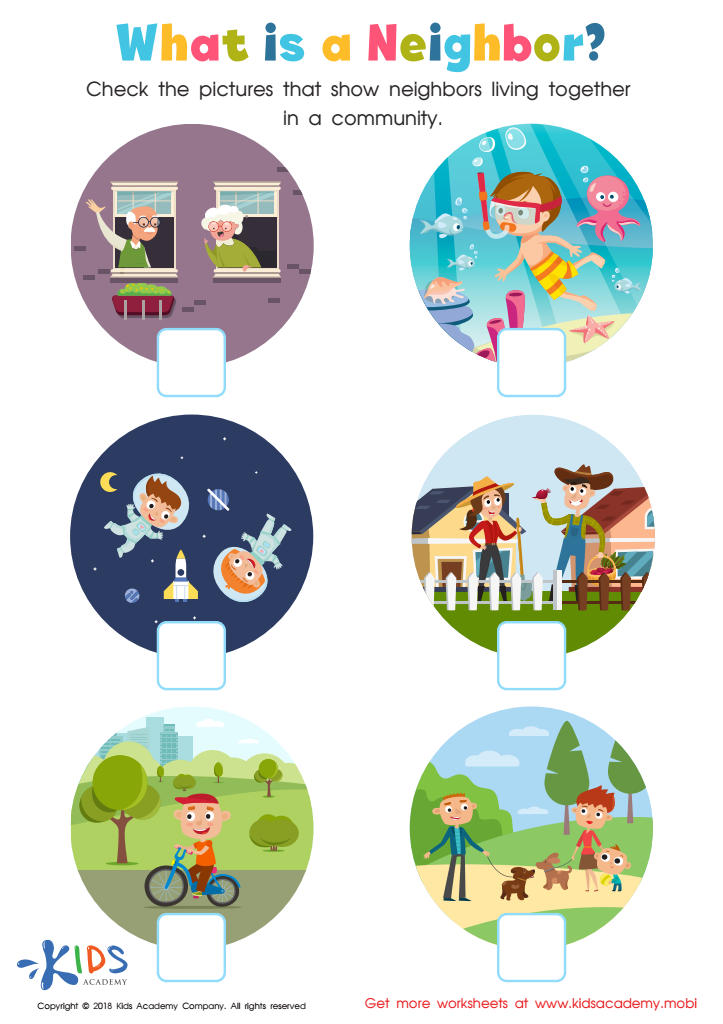
What is a neighbor Worksheet
 Assign to My Students
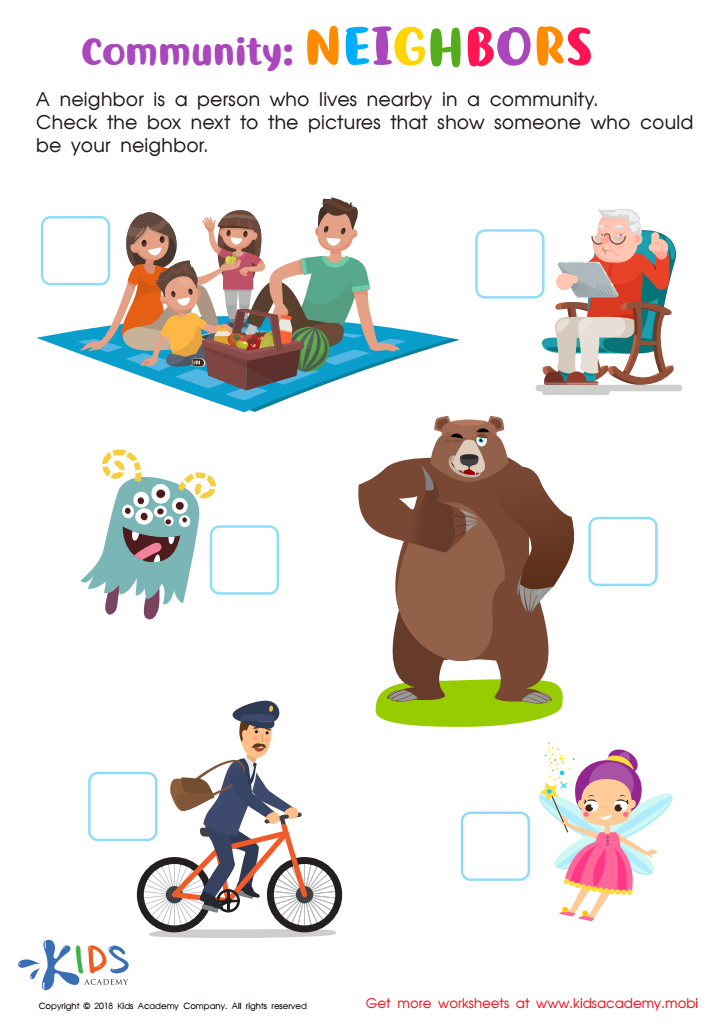
Community: Neighbors Worksheet
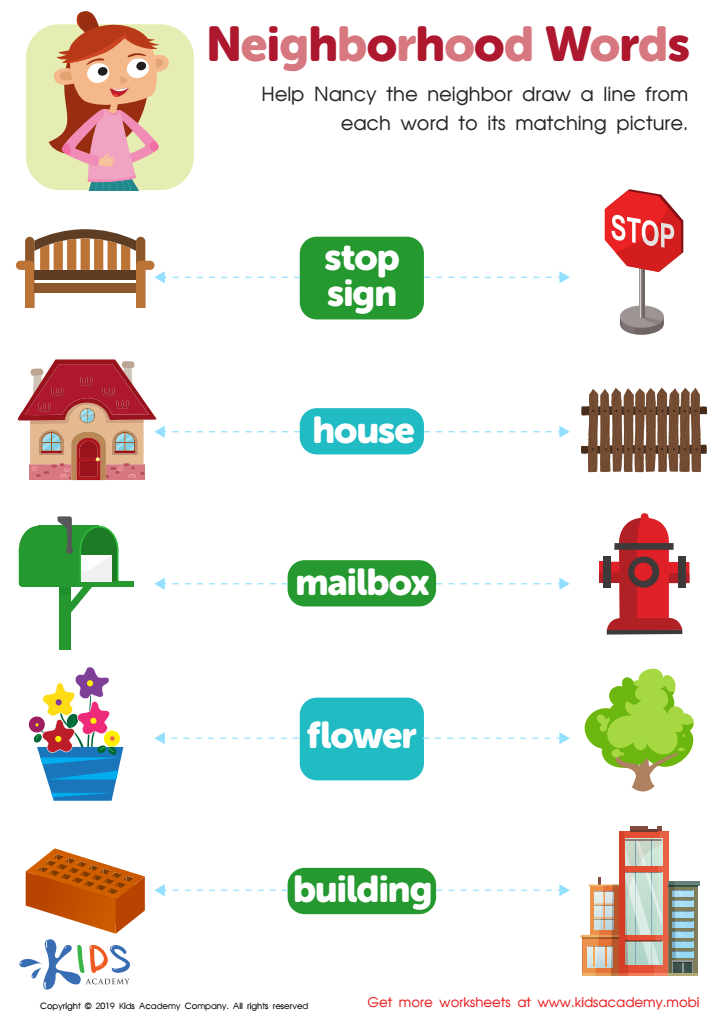
Neighborhood Words Worksheet








Understanding communities is essential for children ages 3-5, as it lays the foundation for their social, emotional, and cognitive development. At this age, children begin to explore their surroundings and form their identities, making it crucial for parents and teachers to nurture an understanding of the communities in which they live.
Firstly, familiarity with the local community helps children develop social skills and empathy. By learning about different people, cultures, and roles within their community, children gain a broader perspective of the world. This exposure builds respect for diversity and encourages inclusive behaviors.
Furthermore, understanding community relationships fosters a sense of belonging and security. When children recognize their connections with family members, neighbors, and local resources, they feel more grounded, which is essential for their emotional health.
Engaging in community activities or discussions about community places strengthens communication skills and cognitive development. As children articulate what they see and experience, they enhance their language abilities.
Lastly, a strong sense of community involvement encourages responsibility and civic awareness, teaching children the importance of being active, informed members of society. For these reasons, parents and teachers should prioritize cultivating an understanding of communities in early childhood education.








