
Understanding patterns Worksheets for Ages 3-5
12 filtered results
Difficulty Level
Grade
Age
-
From - To
Subject
Activity
Standards
Explore our engaging "Understanding Patterns Worksheets" designed for children aged 3-5! These worksheets introduce young learners to the concept of patterns through fun activities that strengthen their recognition and creation skills. With vibrant illustrations and age-appropriate challenges, kids will practice identifying, completing, and making patterns with shapes, colors, and objects. Our worksheets not only enhance cognitive development but also foster essential early math skills in a playful way. Perfect for classroom use or at-home learning, these resources make understanding patterns entertaining and effective. Start nurturing your child's pattern recognition skills today with our thoughtfully crafted worksheets!
Favorites
With answer key
Interactive
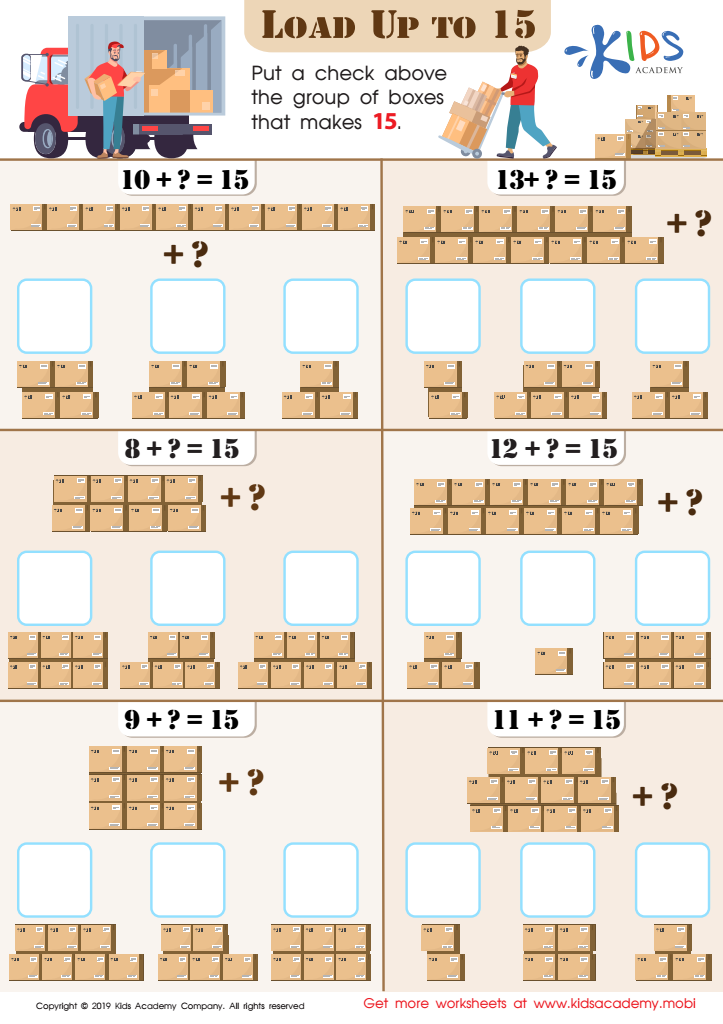
Load up to 15 Worksheet
Your students can practice addition and counting skills with this worksheet. Each equation has 6 boxes to count. Check the group that equals 15 to complete the exercise. Help your kindergartners if they need it.
Load up to 15 Worksheet
Worksheet
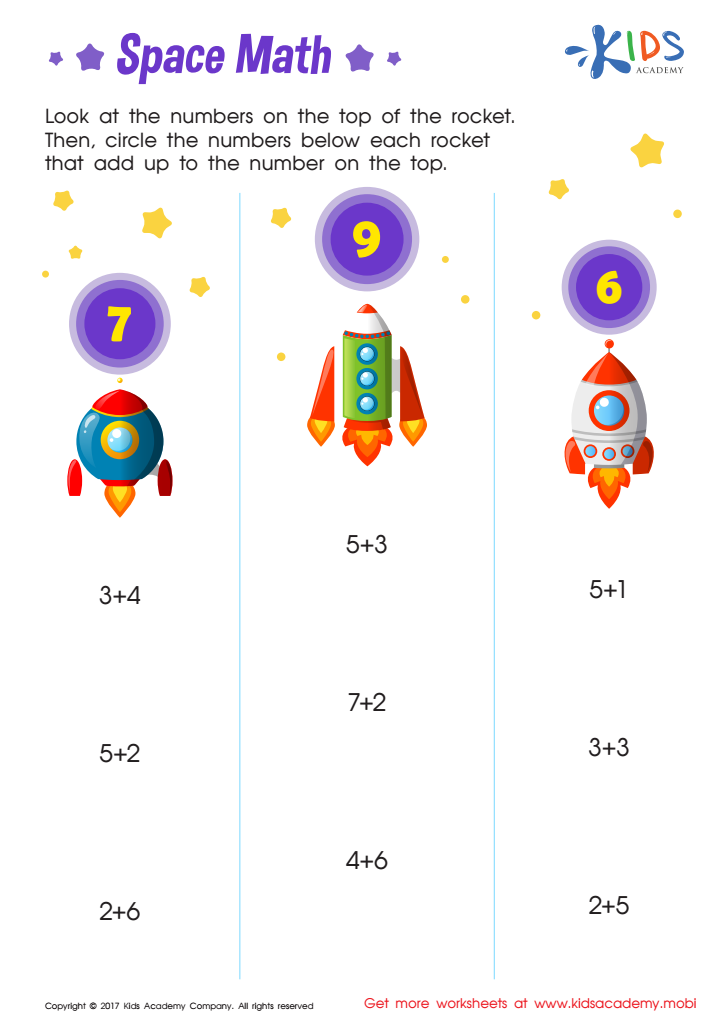
Addition: Space Math Worksheet
Fun and engaging space-themed practice with vivid pictures and matching numbers will make learning more meaningful. Take their math skills out of this galaxy today with Kids Academy!
Addition: Space Math Worksheet
Worksheet
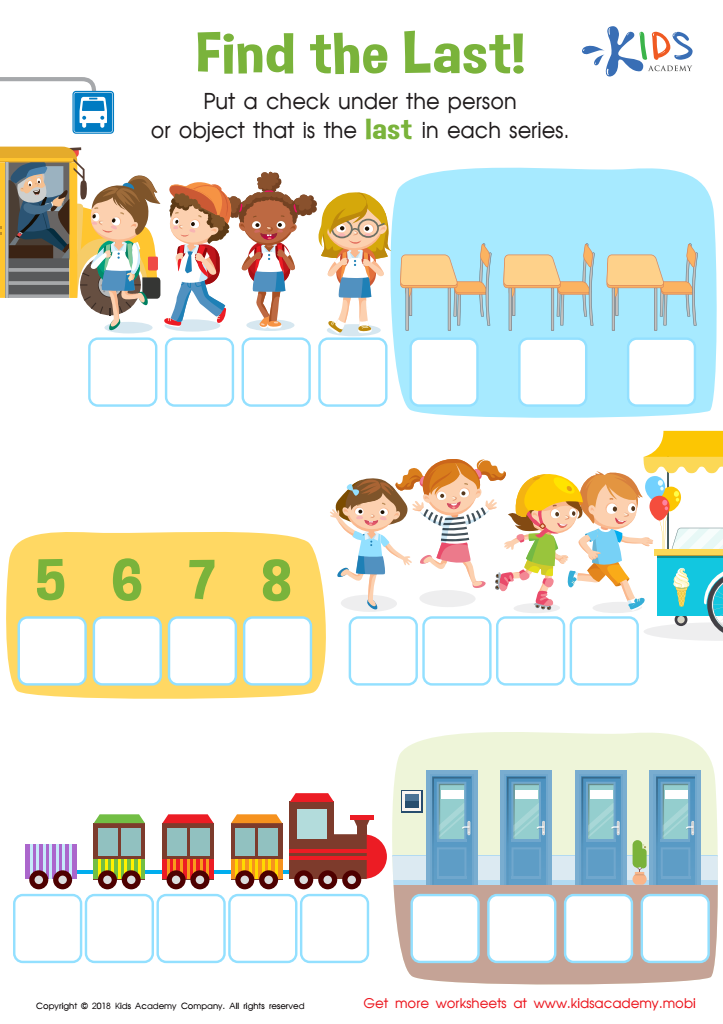
Find the Last! Worksheet
Teach young students about sequence words with this free worksheet. Have them look at sets of people or objects and choose the one that is last. Engage them further by having them describe or act out their day, and what happens last? Enjoy this printout and have fun!
Find the Last! Worksheet
Worksheet
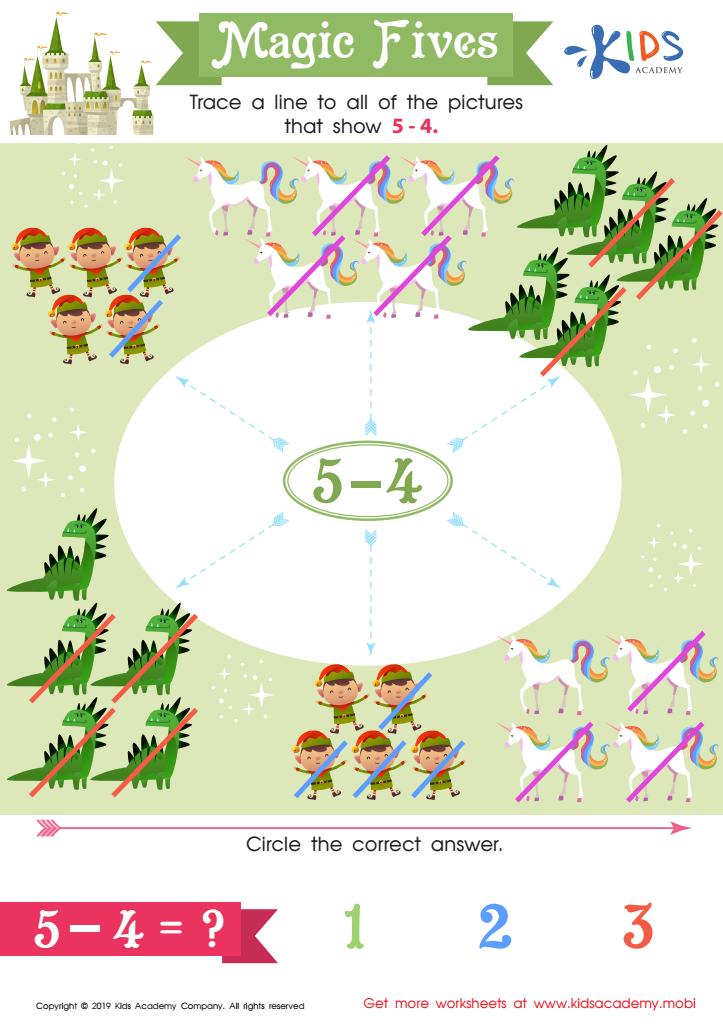
Magic Fives Worksheet
Help your students identify the objects & people in the worksheet. Point to the equation 5 -4 in the center, then get them to count the items and trace a line connecting those that add up to 5 - 4.
Magic Fives Worksheet
Worksheet
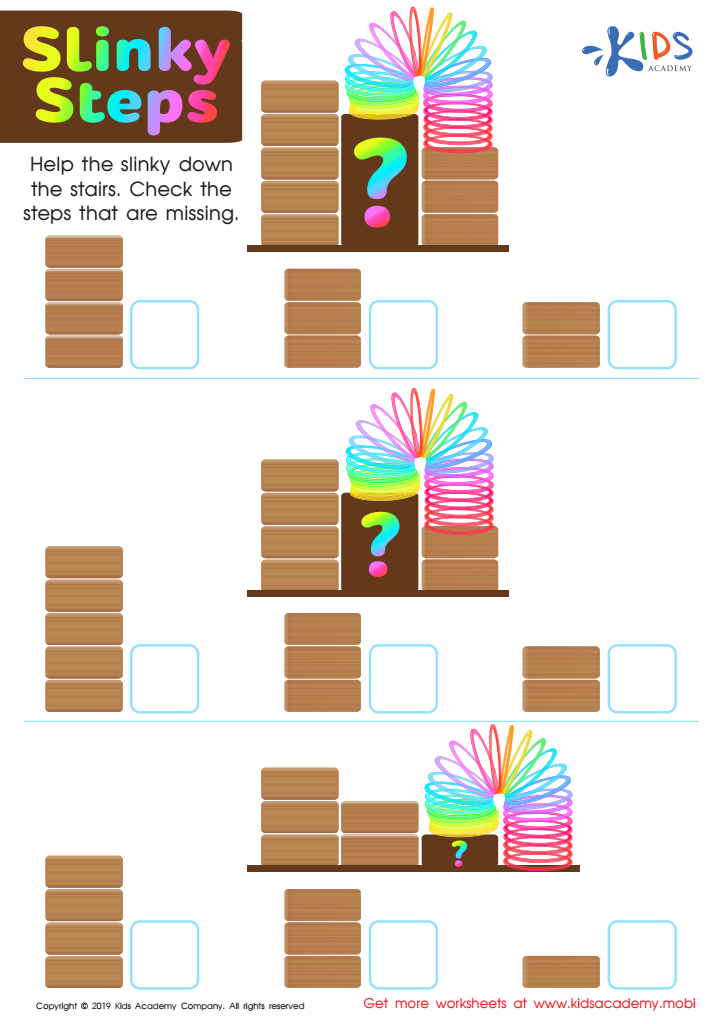
Slinky Steps Worksheet
Help your kids improve their counting and math skills with this fun worksheet! Challenge them to help the slinky make its way down the stairs by selecting and checking the missing steps. Your assistance is key - get the printout and let them practice. It's the best way to becoming better in maths!
Slinky Steps Worksheet
Worksheet
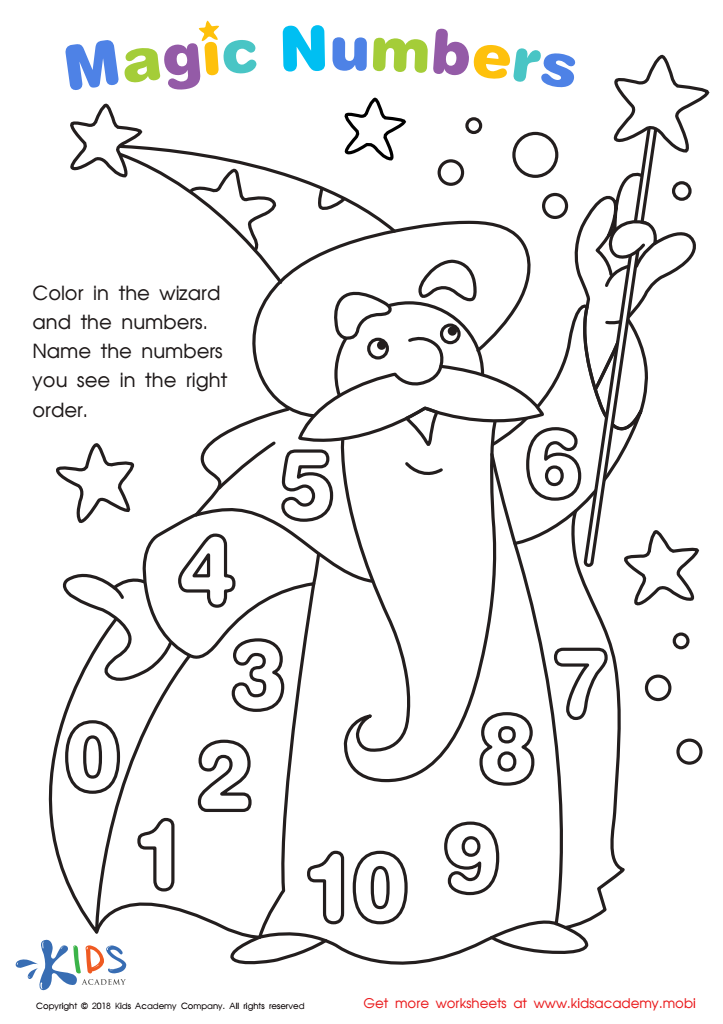
Magic Numbers Worksheet
Does your child have an interest in magic? Here's something they'll love - a coloring sheet featuring a wizard! Ask them to name the numbers from smallest to highest, then let them pick colors to color in the wizard and the numbers. It's sure to excite them!
Download (PDF)
 Assign to My Students
Assign to My Students
Magic Numbers Worksheet
Worksheet
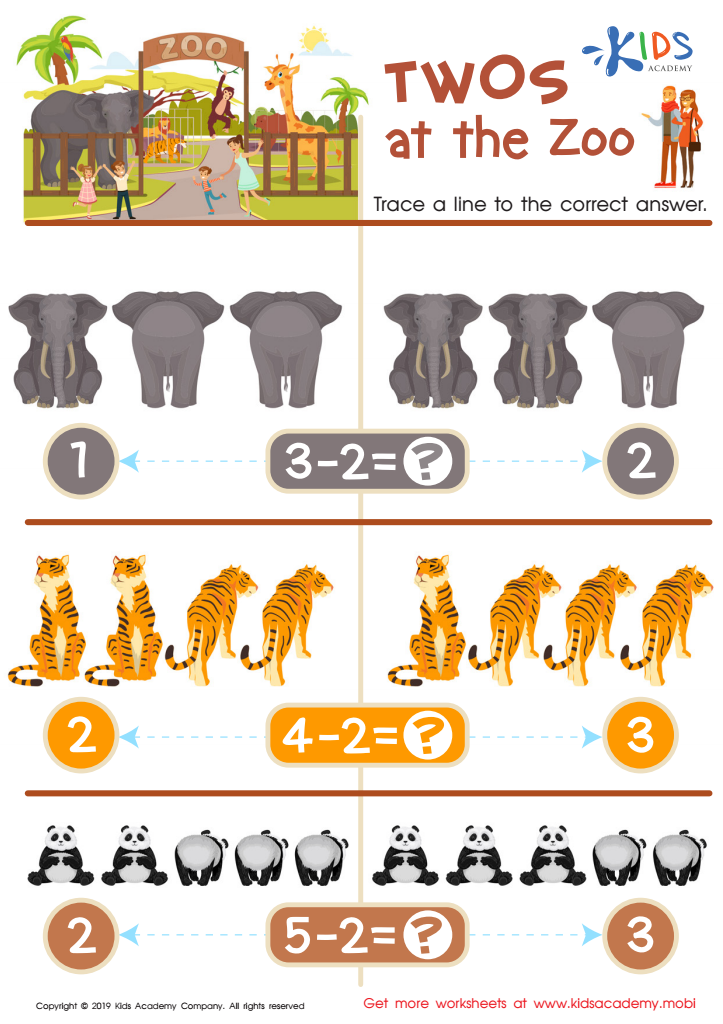
Twos at the Zoo Worksheet
At the zoo, your kids can have fun with animals. Ask them to name their favorite ones and identify them in the printout. Count animals in each group together, then help your kids solve the equations and trace a line to the answer. It's an enjoyable way to combine learning and exploration!
Twos at the Zoo Worksheet
Worksheet
Join Kids Academy for Free
Who is primarily going to use this learning content?


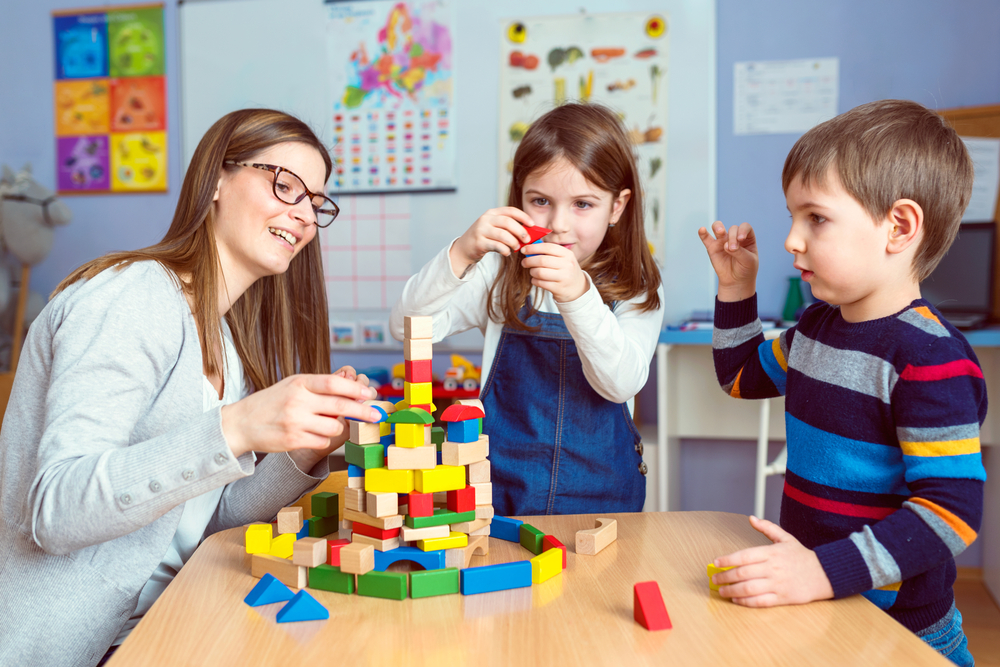





Understanding patterns is crucial for children aged 3-5 as it lays the foundation for foundational math and critical thinking skills. At this tender age, kids are naturally curious and eager to engage with their surroundings; teaching them to recognize and create patterns cultivates their observational skills and helps them make sense of the world.
Recognizing patterns in shapes, colors, and sounds enables children to build cognitive structures that facilitate more complex problem-solving later on. Furthermore, patterns are deeply embedded in everyday life— from nature’s cycles to music’s rhythms—making them relatable and enjoyable subjects for children.
Patterns also bolster language development as caregivers can introduce descriptive vocabulary such as "same," "different," and "sequence" during pattern activities. This helps expand children’s language skills alongside their understanding of mathematics.
By fostering pattern recognition, parents and teachers not only support academic growth but also enhance children’s ability to think logically and critically. Engaging children in pattern-based activities creates opportunities for collaboration and communication, further strengthening their social skills. Ultimately, understanding patterns empowers early learners to explore, interpret, and appreciate the intricate relationships in their world, setting a strong foundation for lifelong learning and curiosity.








