Understanding sizes Worksheets for Ages 3-5
4 filtered results
-
From - To
Discover our engaging "Understanding Sizes Worksheets" tailored for children ages 3-5. These worksheets are designed to help young learners grasp the concept of size through fun and interactive activities. Whether they're comparing big and small objects or sorting items by size, your preschooler will enhance their cognitive skills while having fun! Each worksheet features colorful illustrations and easy-to-follow instructions, making learning a seamless and enjoyable experience for both kids and parents. Perfect for homeschooling or supplemental learning, our resources aim to build foundational skills that pave the way for future success in math and comprehension. Explore our collection today!
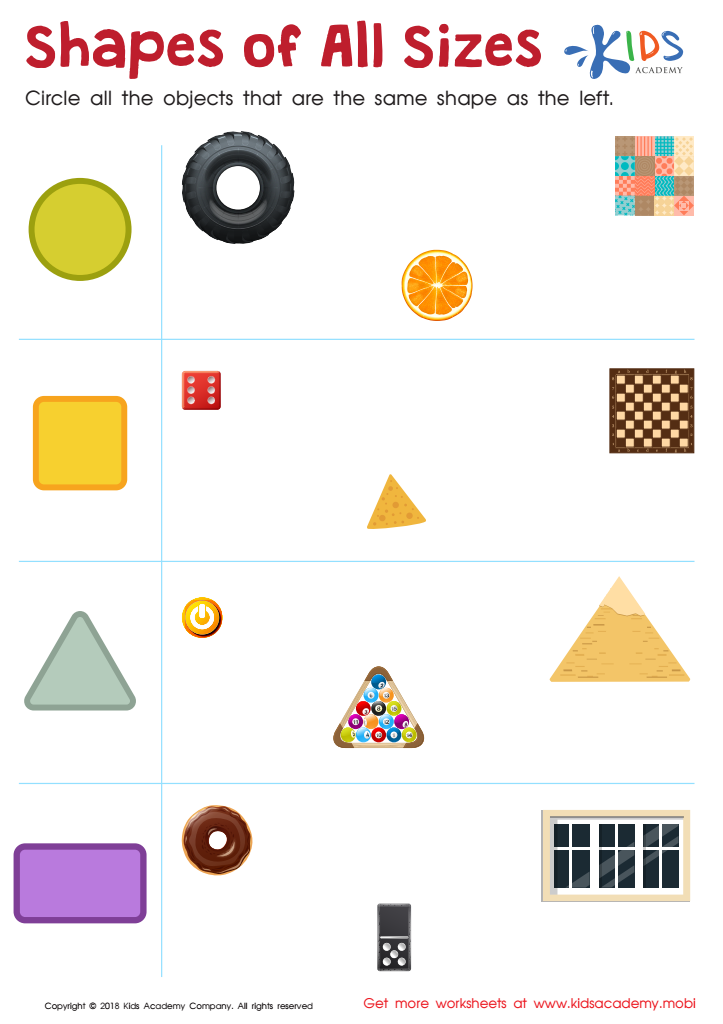
Shapes of All Sizes Worksheet
 Assign to My Students
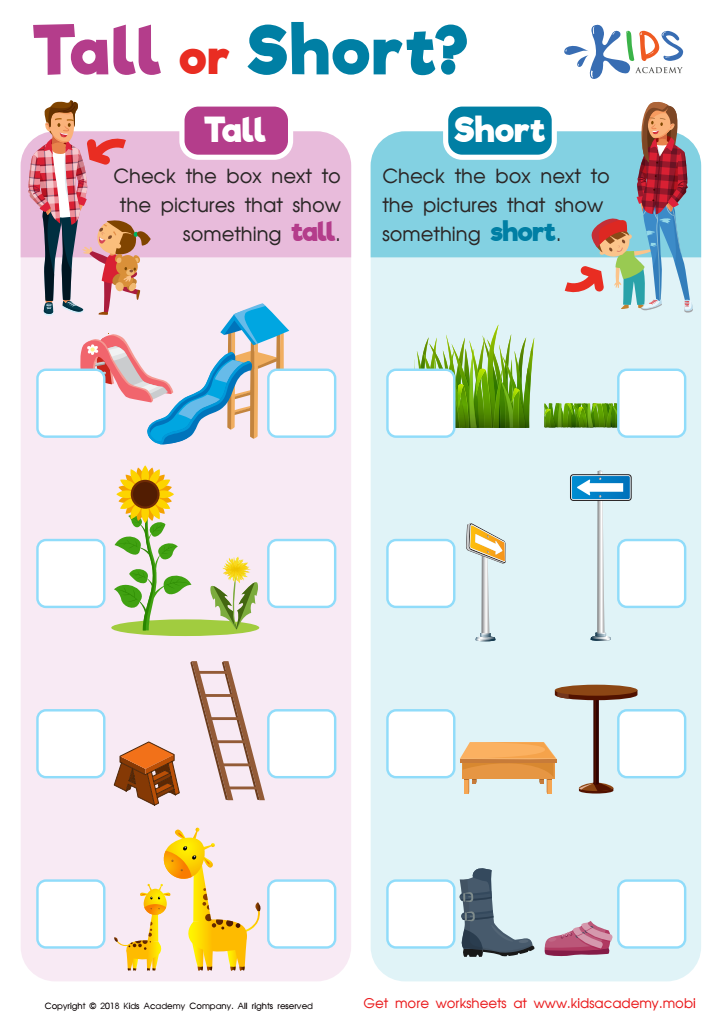
Tall or Short? Worksheet
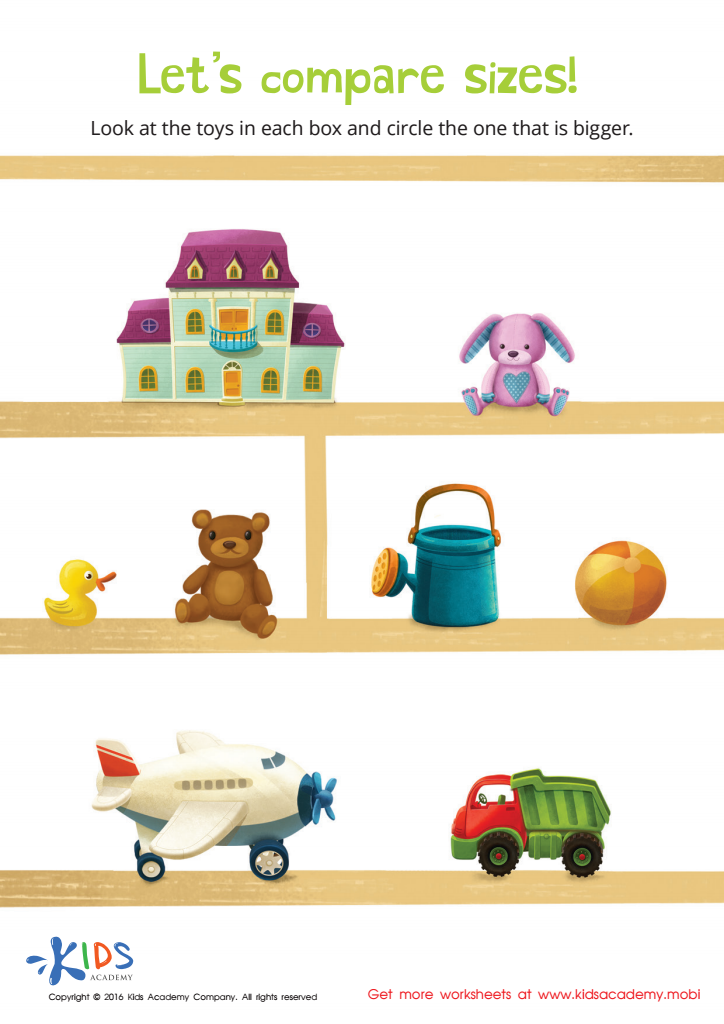
Classifying by Size Sorting Worksheet
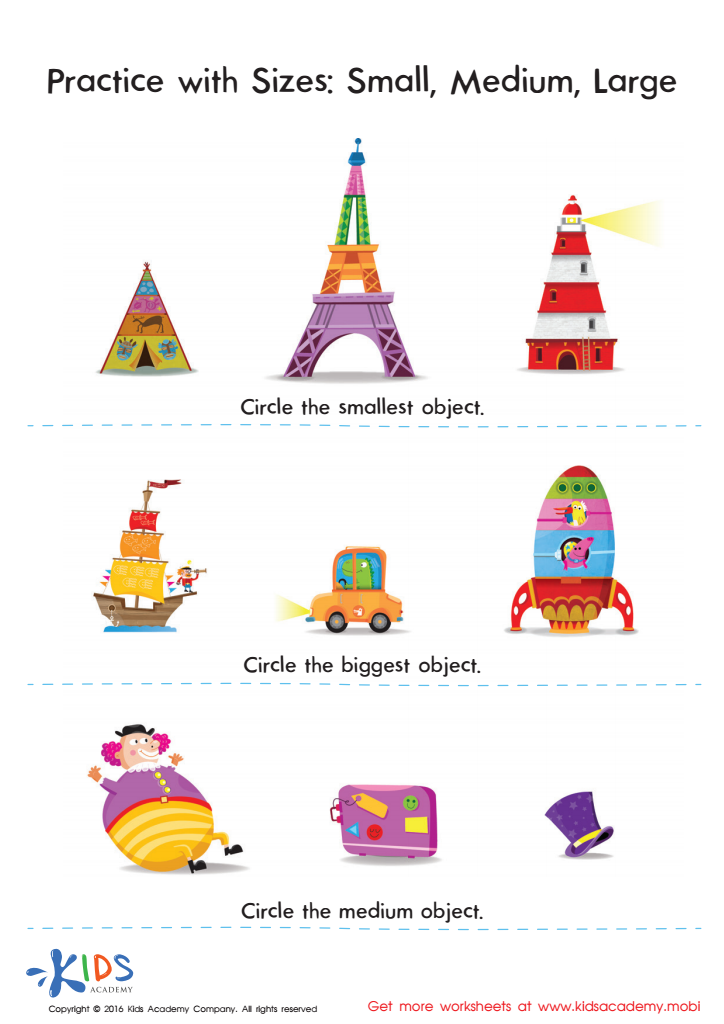





Understanding sizes is fundamental for children ages 3-5, as it lays the groundwork for essential cognitive, linguistic, and social skills. At this early developmental stage, children are naturally curious about the world around them, and recognizing differences in sizes—like big vs. small or tall vs. short—helps harness that curiosity into meaningful learning experiences.
For parents and teachers, fostering an understanding of sizes promotes critical thinking and problem-solving skills. When children engage with various objects, they learn to categorize, sort, and make comparisons, enhancing their analytical abilities. Additionally, discussions around sizes frequently incorporate new vocabulary, which strengthens language development.
Socially, understanding sizes plays into sharing and turn-taking games. Children learn to negotiate space and resources when they recognize size distinctions, promoting teamwork and cooperation. Furthermore, the concept of size has practical application in daily life, from fitting into clothes to using furniture correctly, cultivating independence and self-sufficiency.
Incorporating size-related activities, such as storytelling with size comparisons, sorting toys, or art projects, creates an impactful learning environment. Supporting children’s knowledge about sizes ensures they enter elementary school with a strong foundation in essential skills needed for future academic success and everyday interactions.








