Visualization skills Worksheets for Ages 3-5
3 filtered results
-
From - To
Unlock the power of imagination and cognitive development with our Visualization Skills Worksheets designed for children ages 3-5. These engaging, colorful worksheets are expertly crafted to enhance your child’s ability to form mental images and interpret visual information. Through fun activities and playful exercises, children will sharpen their memory, attention to detail, and critical thinking skills. Perfect for home or classroom use, our worksheets provide a strong foundation for future learning while keeping little ones entertained. Give your child a head start in cognitive development with our carefully designed Visualization Skills Worksheets. Download and watch them thrive!
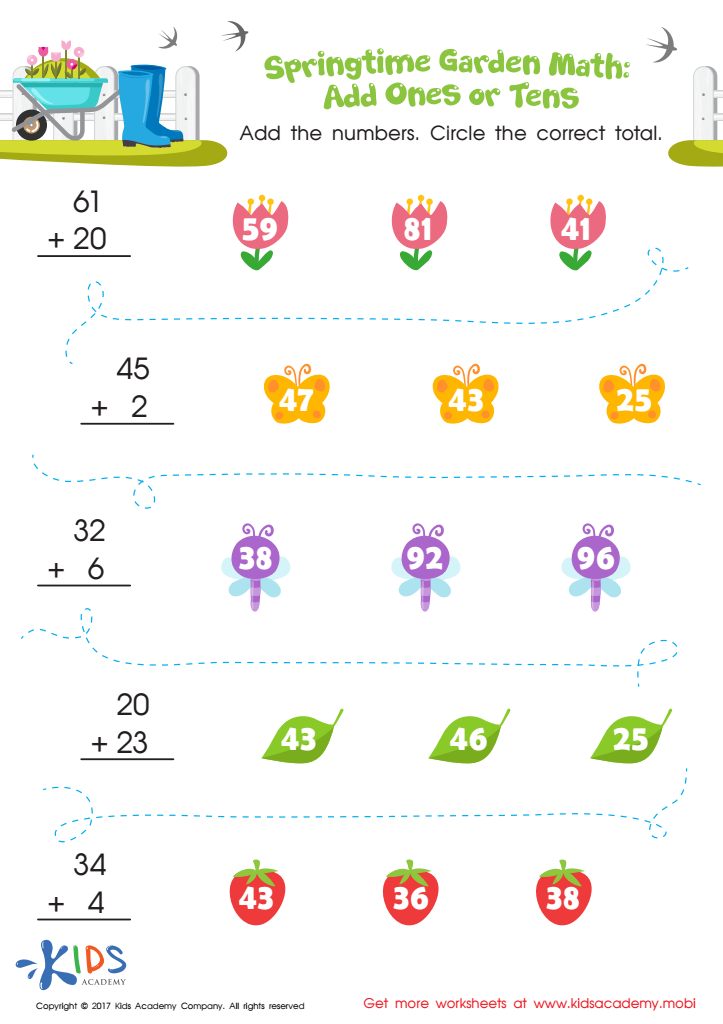
Springtime Garden Math Worksheet
 Assign to My Students







Visualization skills are crucial for young children aged 3-5 as they significantly impact cognitive and emotional development. At this stage, children's brains are incredibly malleable, making it an ideal period to develop the ability to visualize, imagine, and create mental images. Encouraging visualization helps improve memory retention, as children can better recall information if they can picture it in their minds. This is particularly beneficial when learning new words, numbers, or concepts, fostering early literacy and numeracy skills.
Moreover, visualization promotes problem-solving and critical thinking. When children imagine scenarios, they can work through complex problems and explore different solutions creatively. It also enhances their ability to understand abstract concepts, as visualizing makes it easier to grasp ideas that are not immediately tangible.
Emotionally, visualization aids in effective communication and empathy. By picturing scenarios or recalling experiences, children can better express their emotions and understand those of others, which is fundamental in developing social skills and emotional intelligence.
Additionally, visualization makes learning more engaging and fun. Activities like drawing, storytelling, or imaginative play captivate young minds, making the educational process enjoyable. Therefore, parents and teachers should nurture visualization skills to lay a strong foundation for future academic and personal success.








