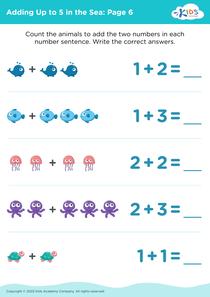
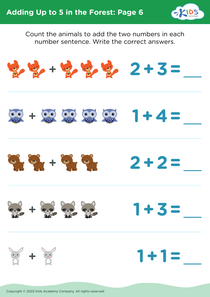
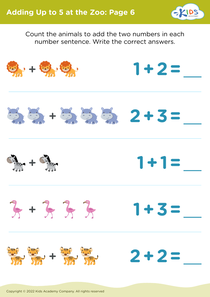
Addition skills Adding on the Farm Worksheets for Ages 3-5
7 filtered results
-
From - To
Nurture your child's mathematical development with our "Addition Skills Adding on the Farm Worksheets" designed for ages 3-5. This engaging series blends basic addition practice with adorable farm-themed imagery, making learning fun and relatable. Your little ones will enjoy counting animals and farm objects to solve simple equations, enhancing their counting and number recognition skills. Perfect for preschoolers and kindergarteners, these worksheets aim to build a strong foundation in math through interactive and visually appealing activities. Download now for a delightful way to reinforce addition techniques and prepare your child for future math success.
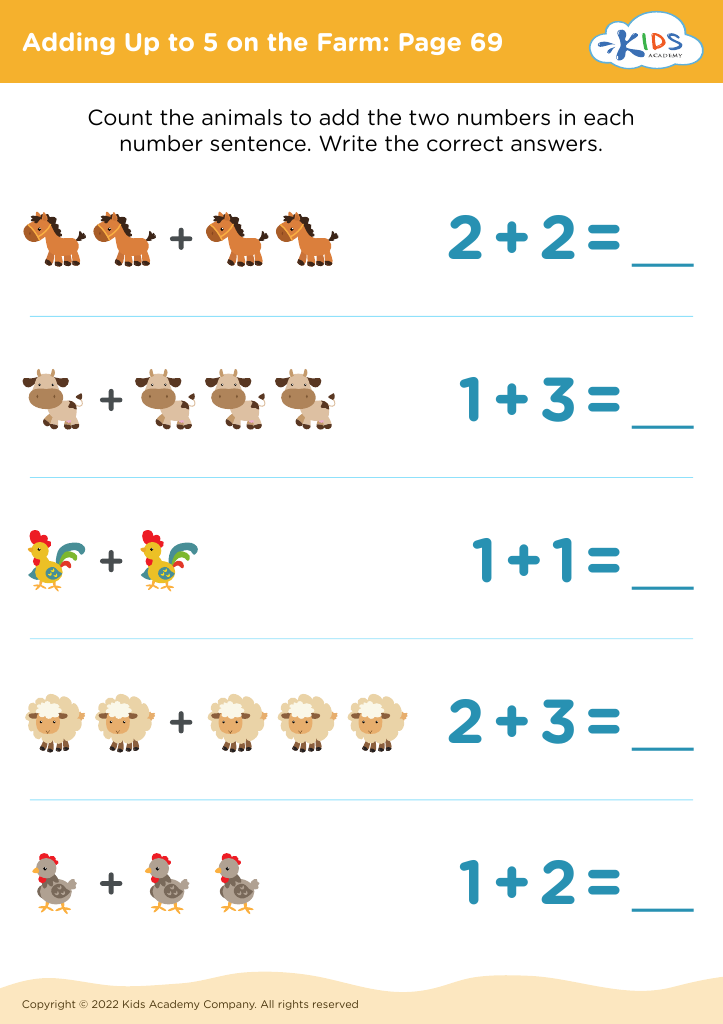
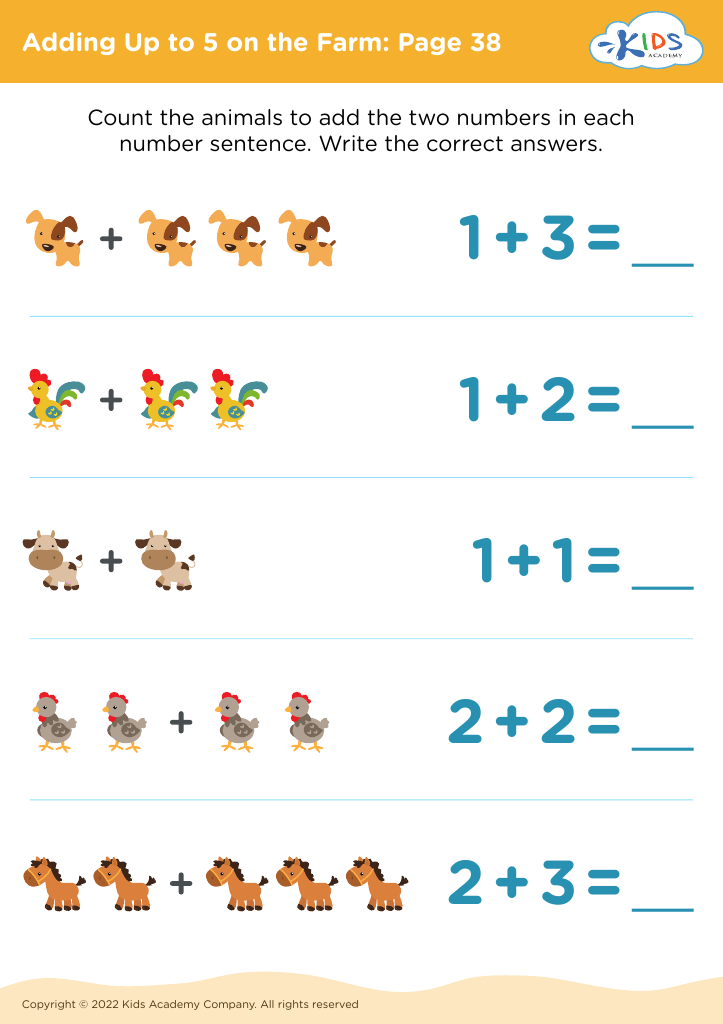
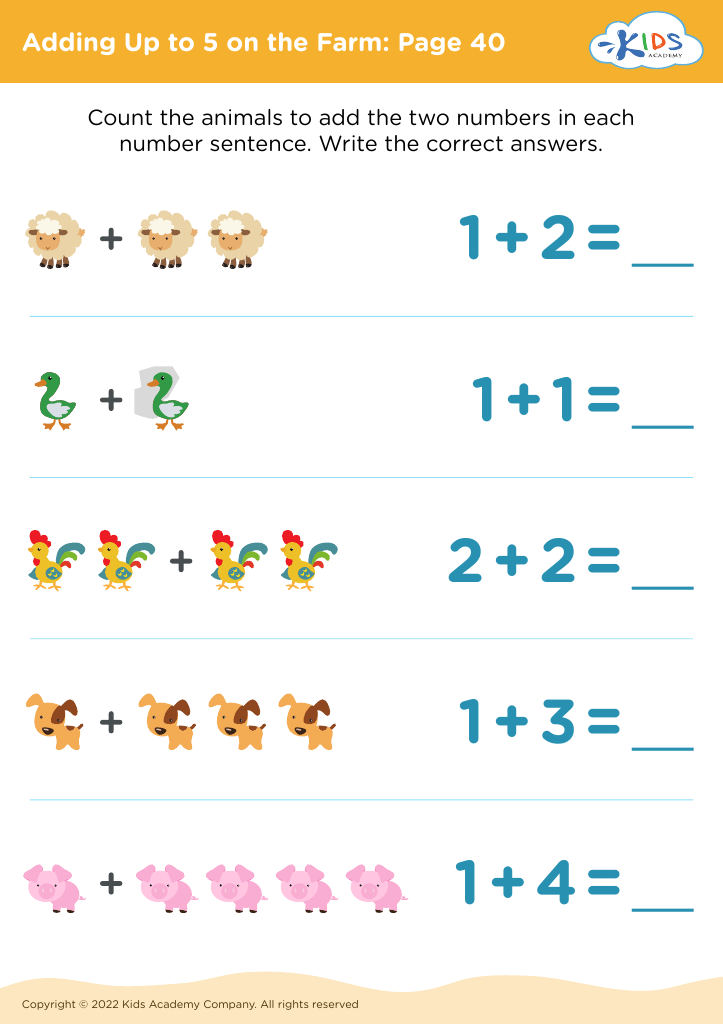
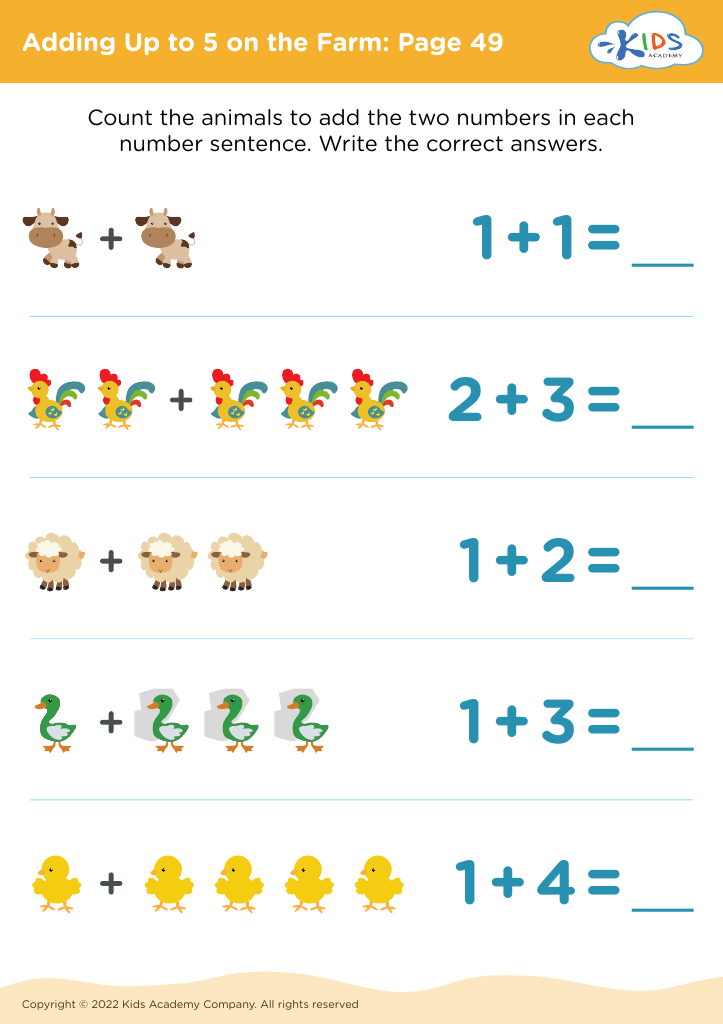
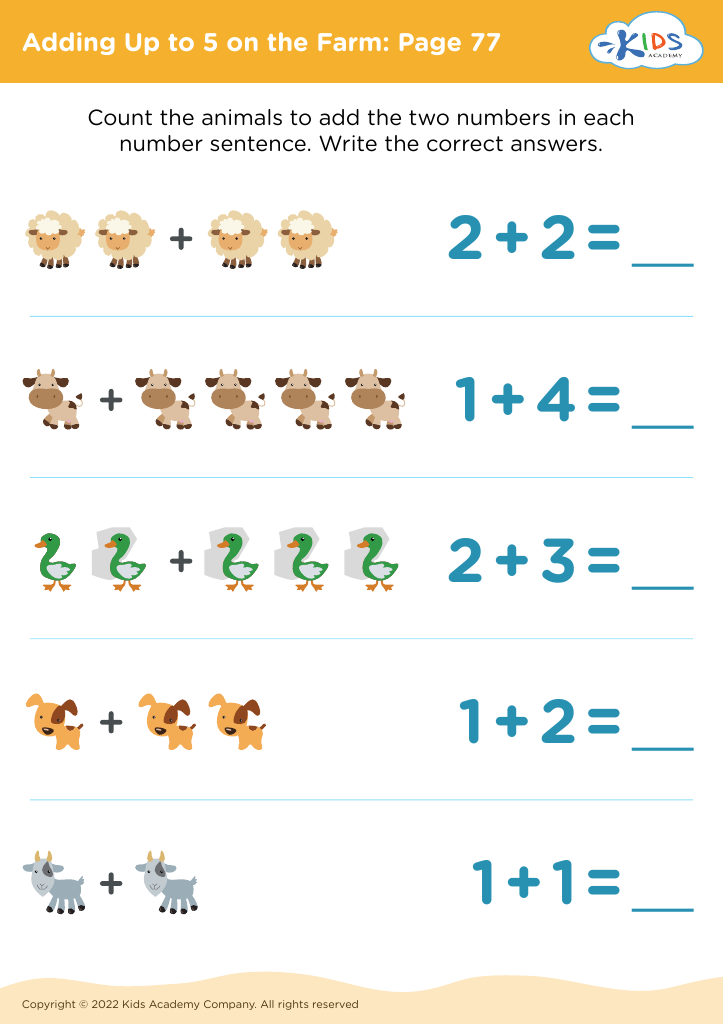
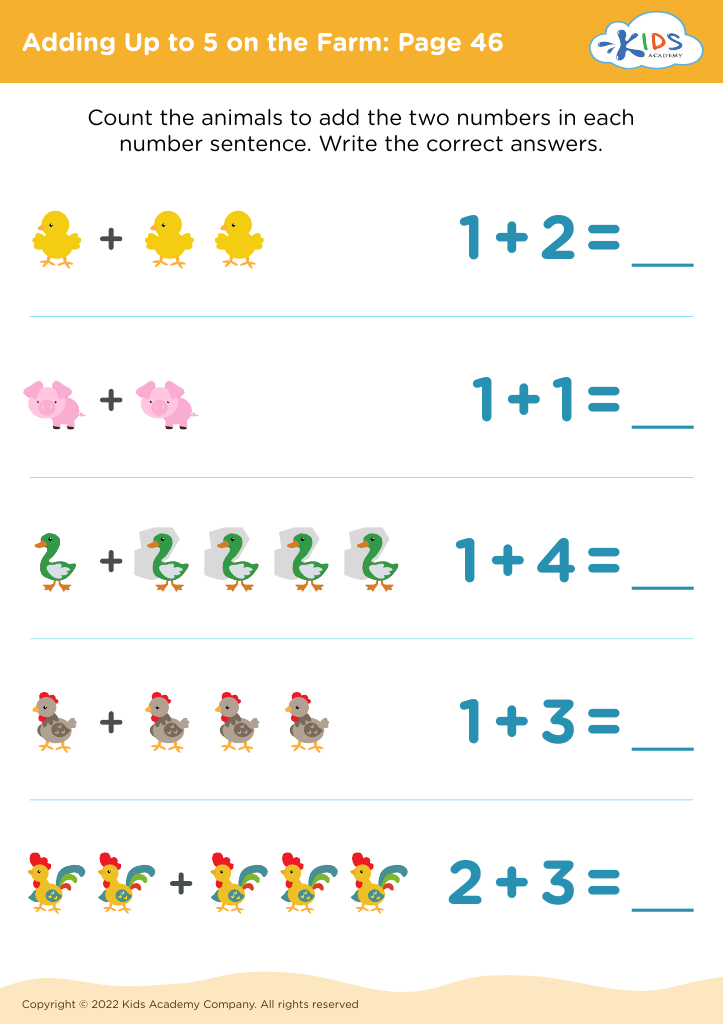
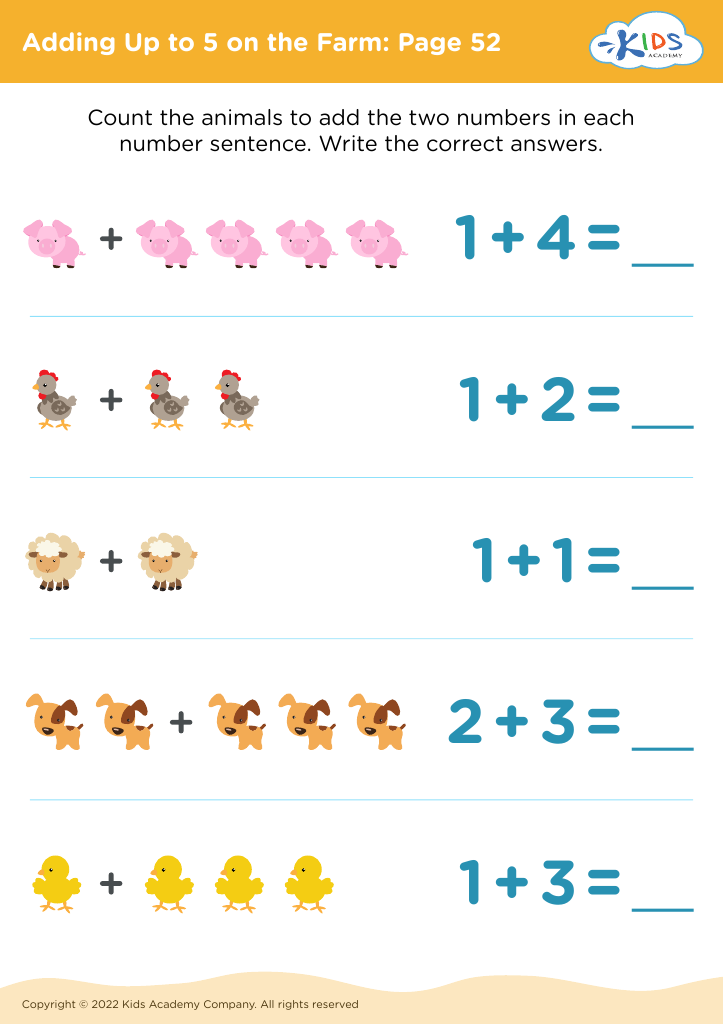



Addition skills are fundamental building blocks for a child's mathematical development, and incorporating themes such as "Adding on the Farm" can be particularly engaging for young learners aged 3-5. Parents and teachers should care about fostering these skills for several key reasons.
First, early exposure to basic math concepts aids cognitive development by enhancing skills such as problem-solving, logical thinking, and pattern recognition. When children learn to add, they build a foundation for understanding more complex mathematical concepts in the future.
Second, using thematic elements like a farm setting makes learning relatable and fun for children. Familiarity with farm animals and objects can help children grasp abstract concepts more concretely. For example, saying "You have 3 cows and you get 2 more cows; how many cows do you have now?" leverages their prior knowledge and interests, making them more likely to understand and retain the information.
Third, integrating addition skills into everyday contexts prepares children for real-life situations where math is applicable. Whether they are counting apples in a basket or adding up toy cars, these scenarios help them see the practical value of math in daily life.
Finally, developing these skills early creates a sense of achievement and confidence in young learners. This positive reinforcement encourages a lifelong love for learning, setting them on a path toward academic success. Encouraging addition through engaging themes like "Adding on the Farm" not only makes learning enjoyable but also instills essential skills for future educational endeavors.