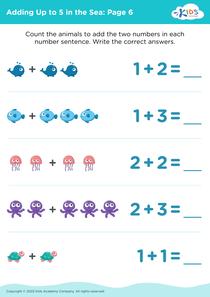
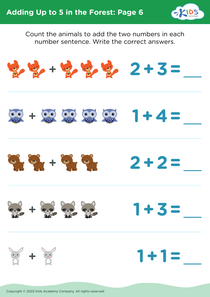
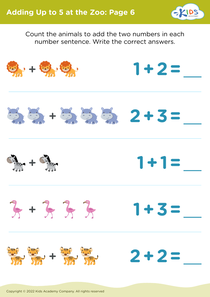
Counting practice Adding on the Farm Worksheets for Ages 3-5 - Page 3
54 filtered results
-
From - To
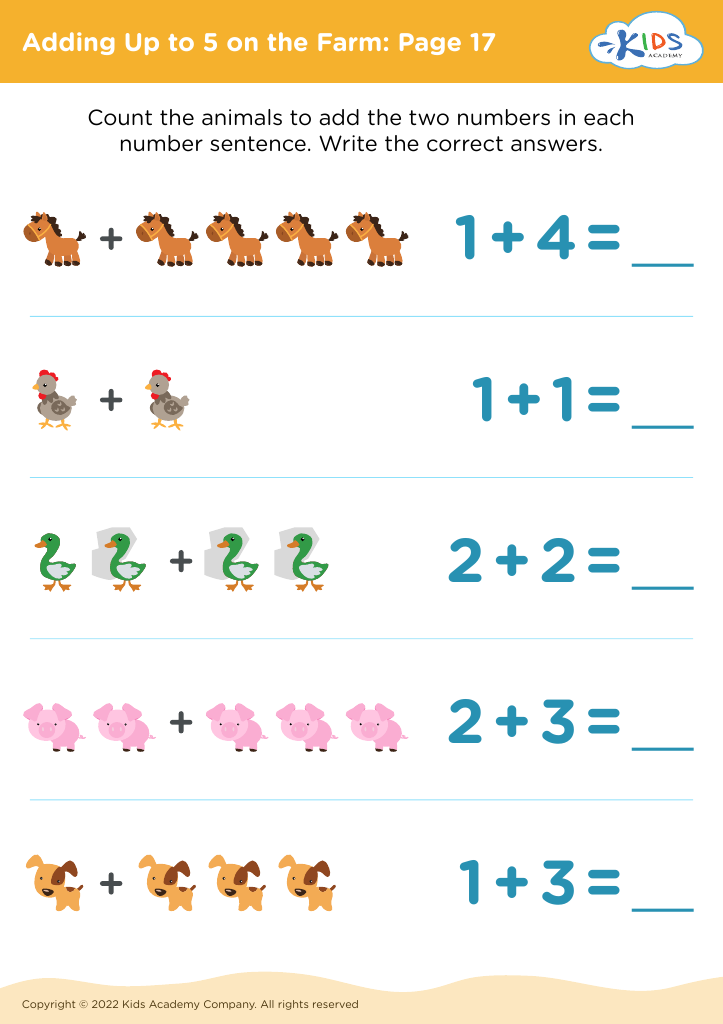
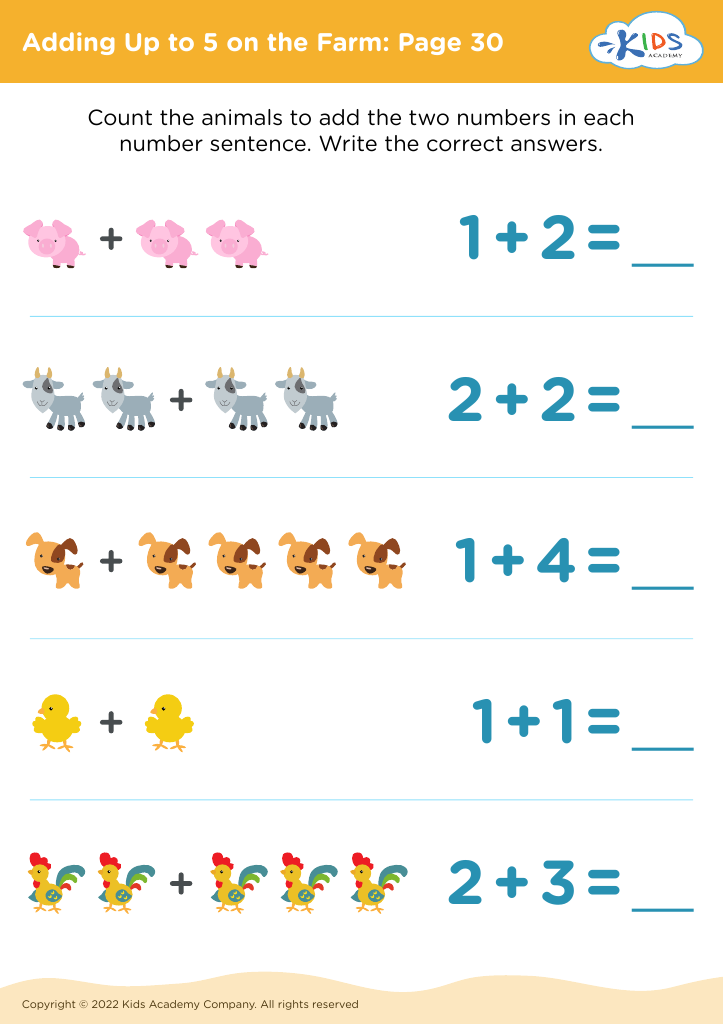
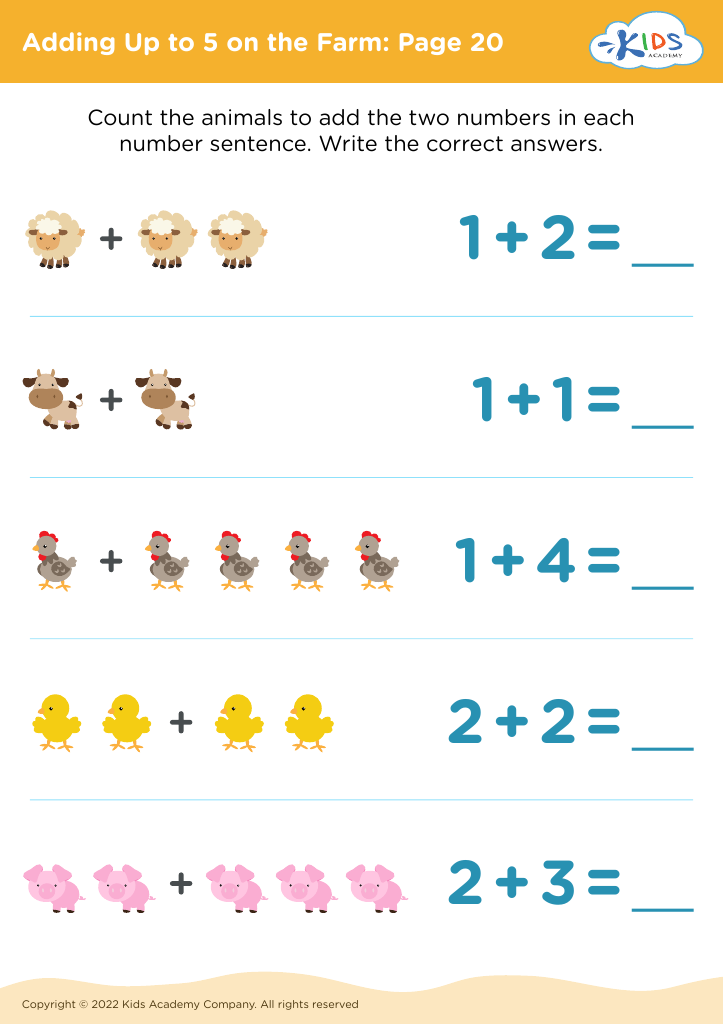
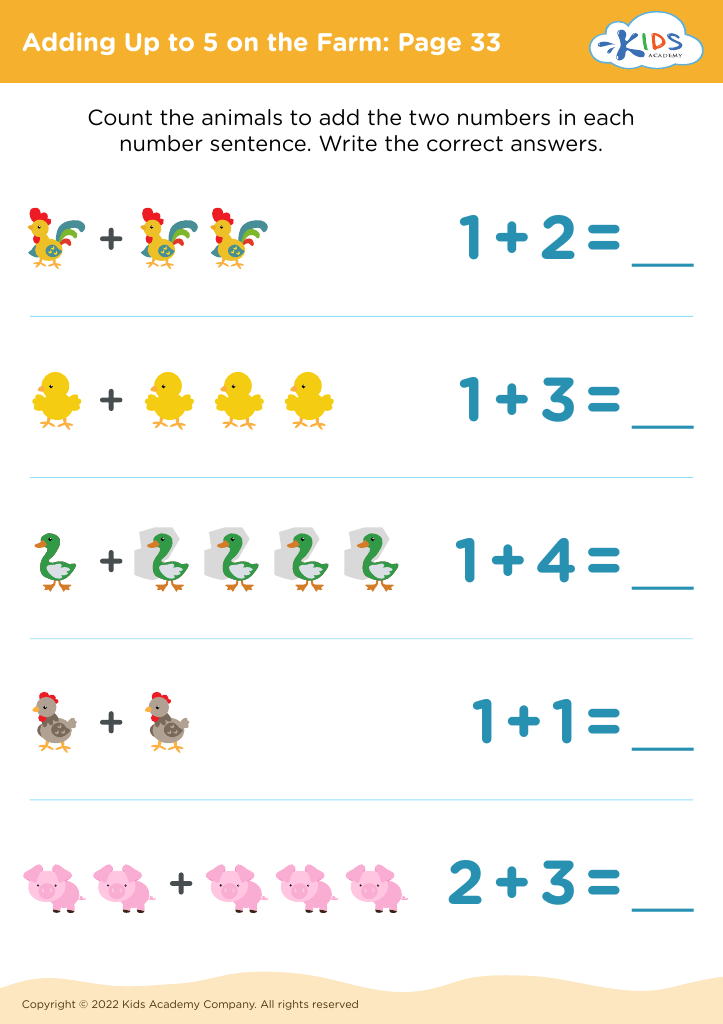
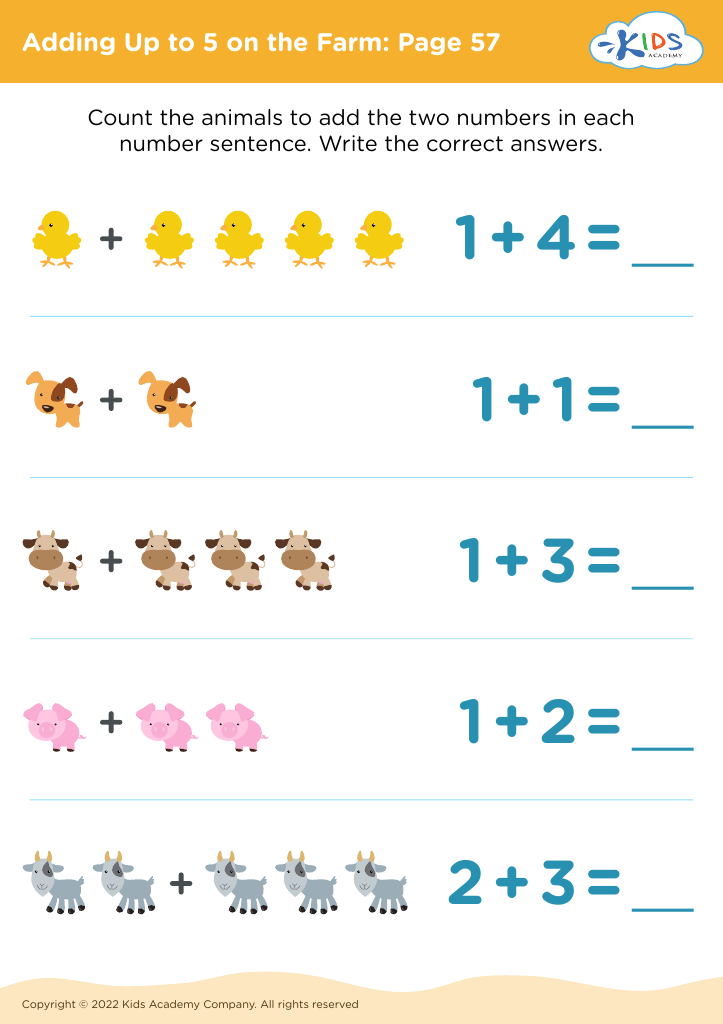
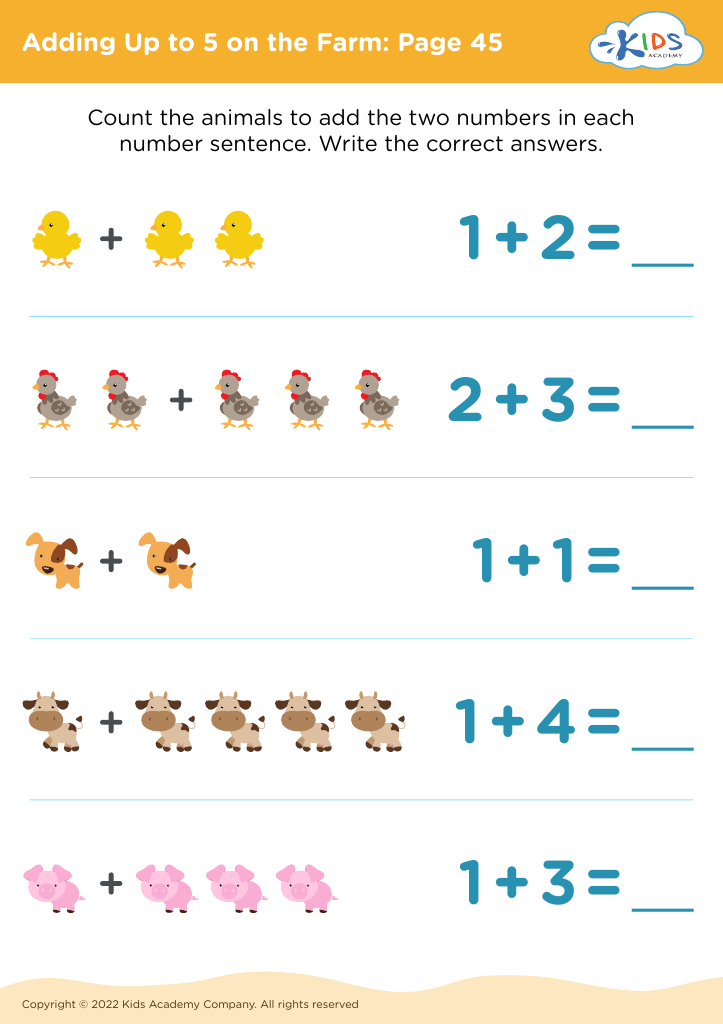



Counting practice is a fundamental skill that lays the groundwork for all future mathematical learning, and "Adding on the Farm" offers a playful and engaging way for young children ages 3-5 to develop this ability. When parents and teachers incorporate this type of activity into daily routines, they provide children with opportunities to enhance their numerical understanding, improve their ability to recognize patterns, and develop essential problem-solving skills.
The farm-themed context of the activity is particularly beneficial for captivating young minds. It transforms learning into an adventure, thereby maintaining children’s interest and motivation. Associating animals and farm objects with numbers helps children make meaningful connections between abstract numerical concepts and the real world, improving their cognitive continuity.
Moreover, early familiarity with counting and basic addition fosters a sense of achievement in children, boosting their confidence and encouraging a positive attitude toward more complex math. These activities can be collaborative, laying the groundwork for social skills like teamwork and communication when conducted in a group setting. Educational experiences like this stimulate developmental milestones critical for early childhood, making it essential for parents and teachers to actively support and participate in such engaging, educational practices.