Basic Arithmetic Adding Up to 5 Worksheets for Ages 3-5 - Page 2
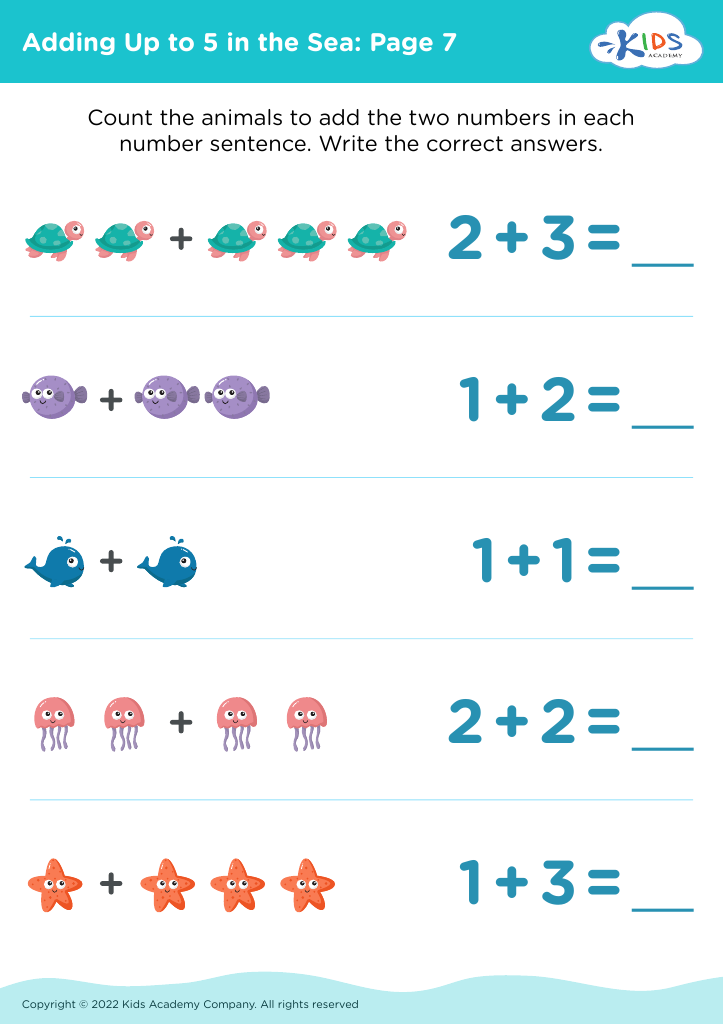
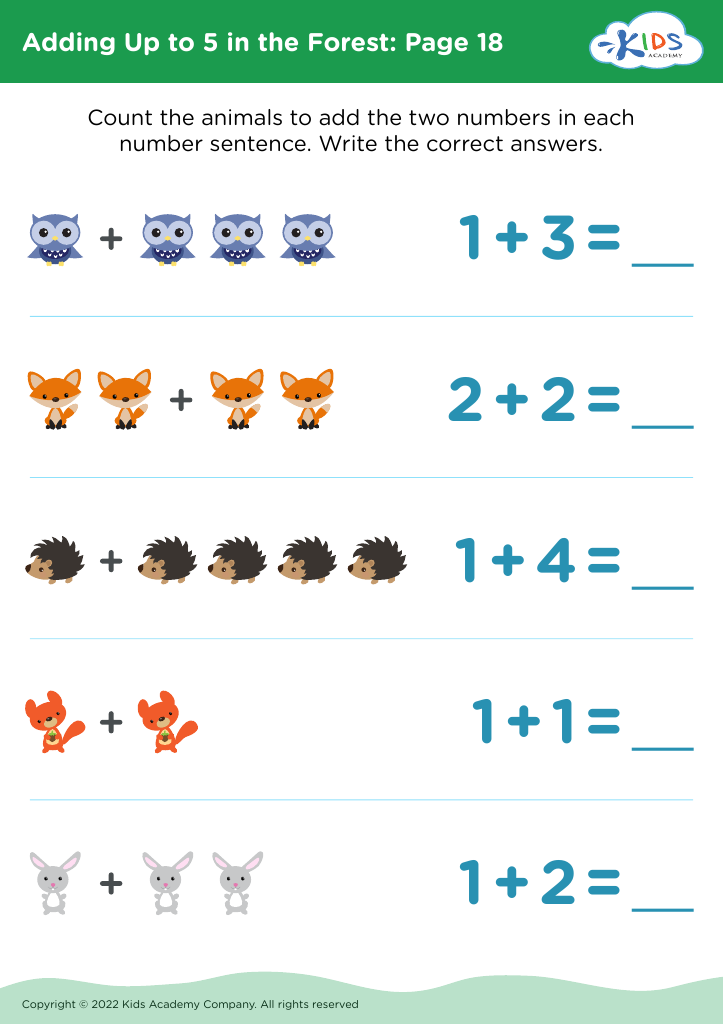
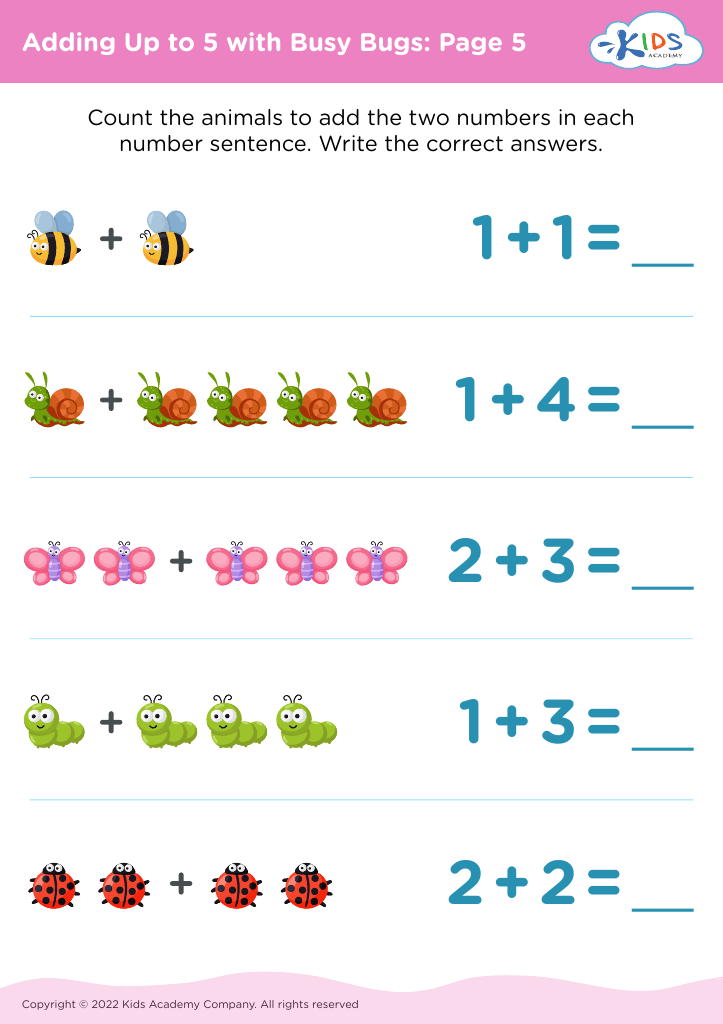
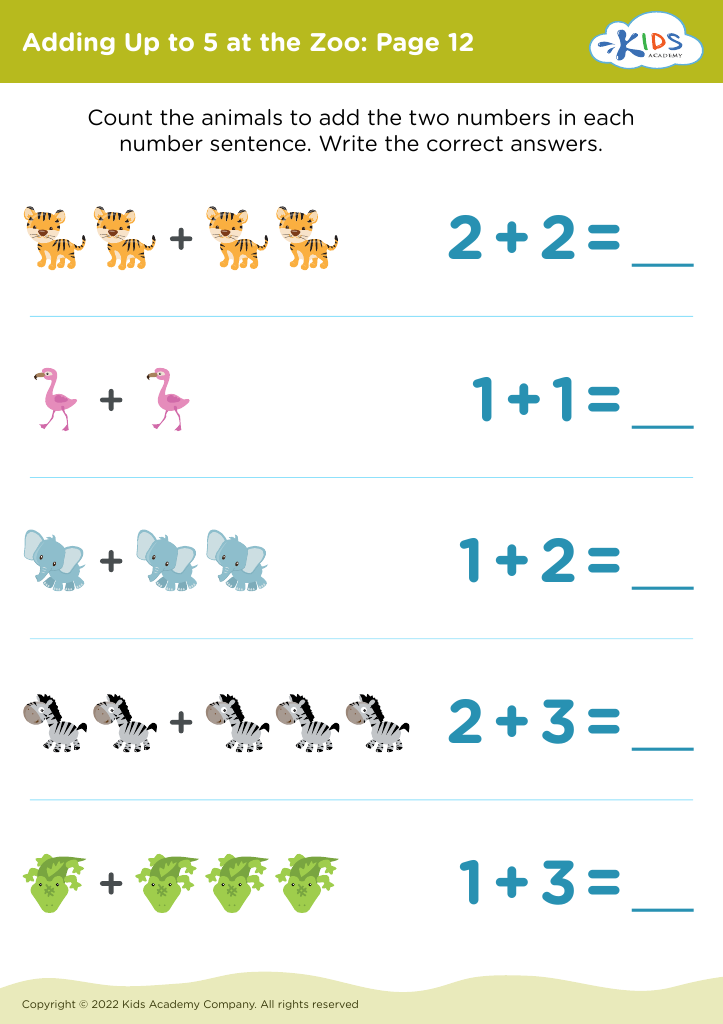
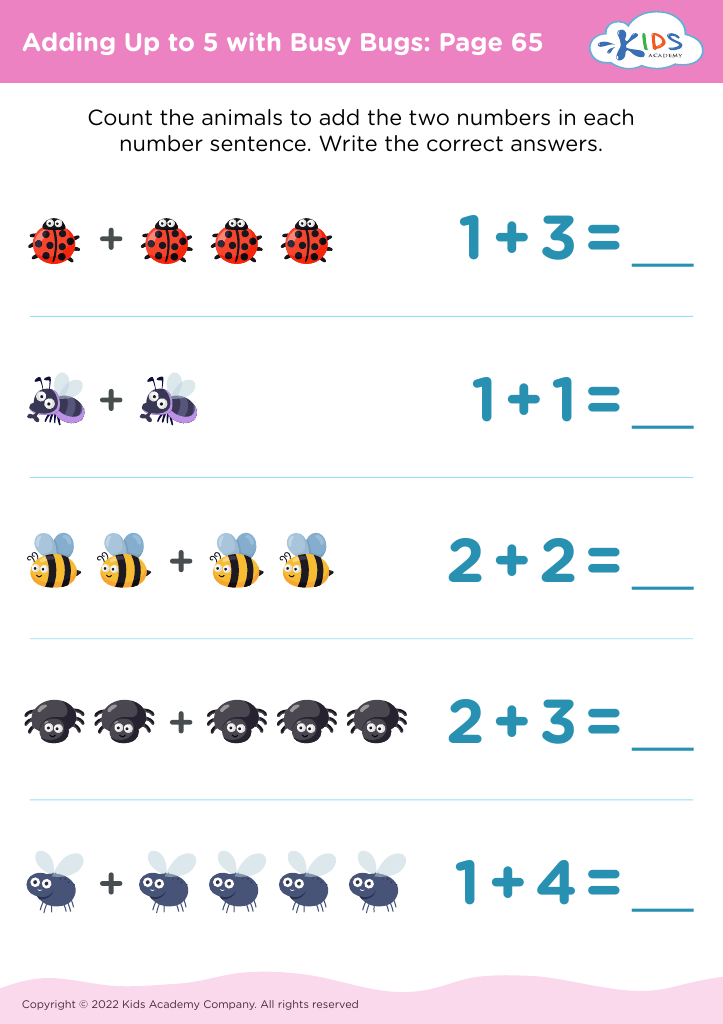
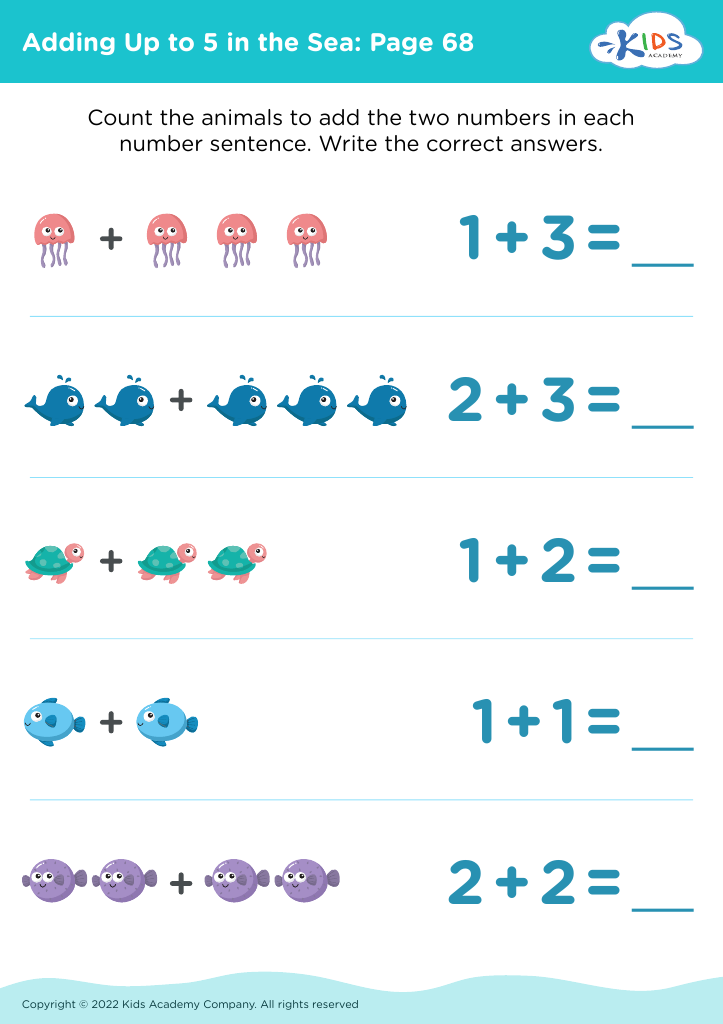
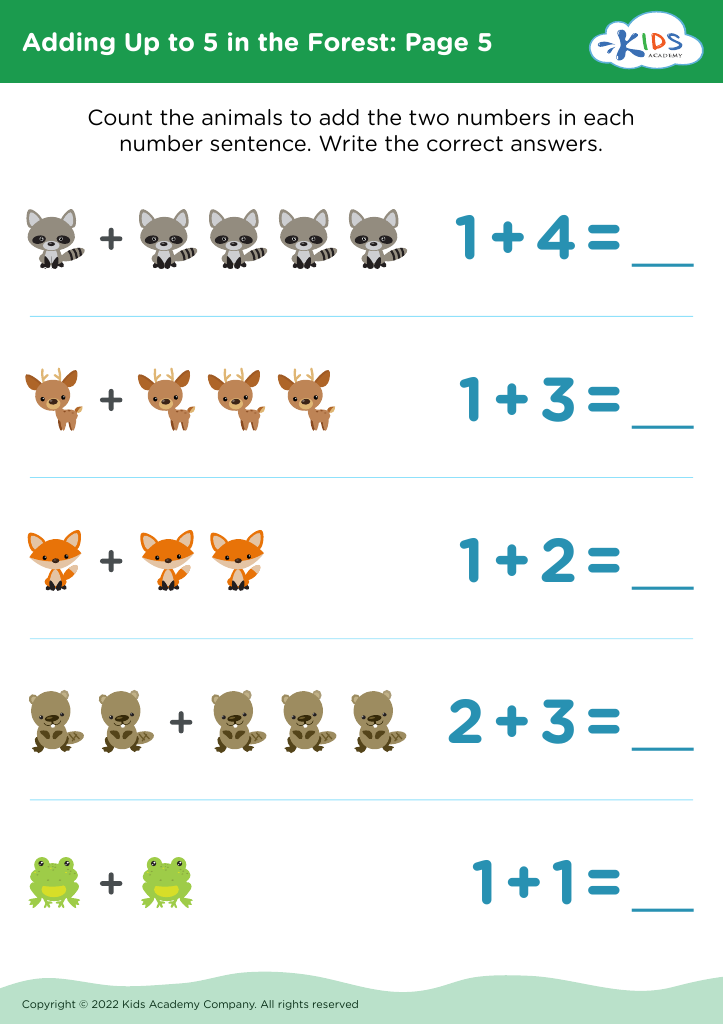
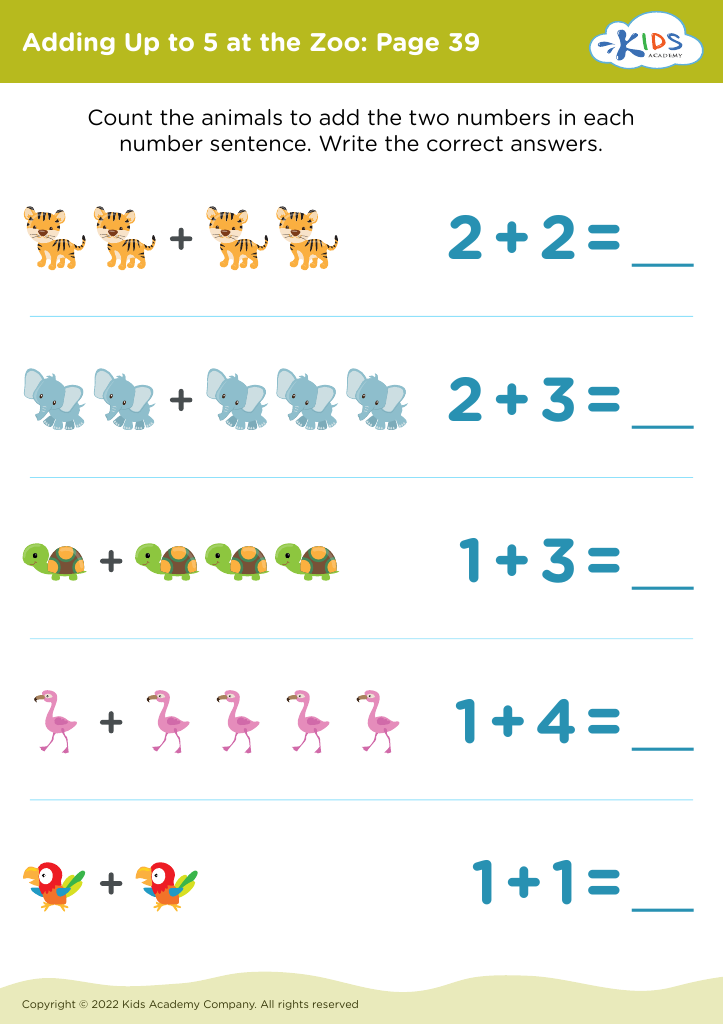
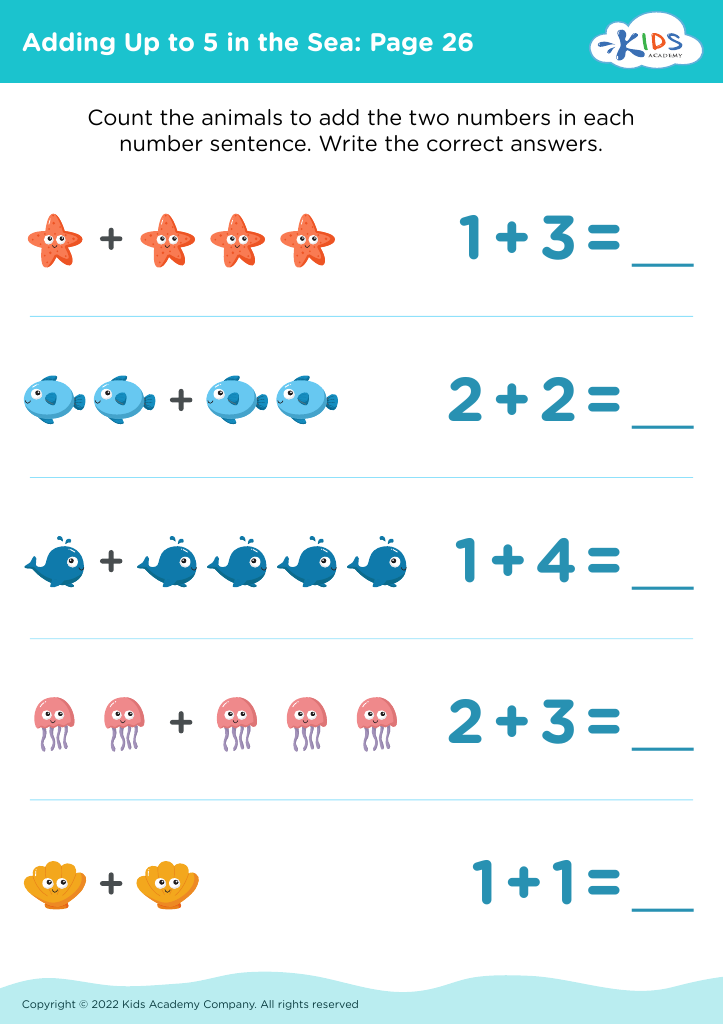
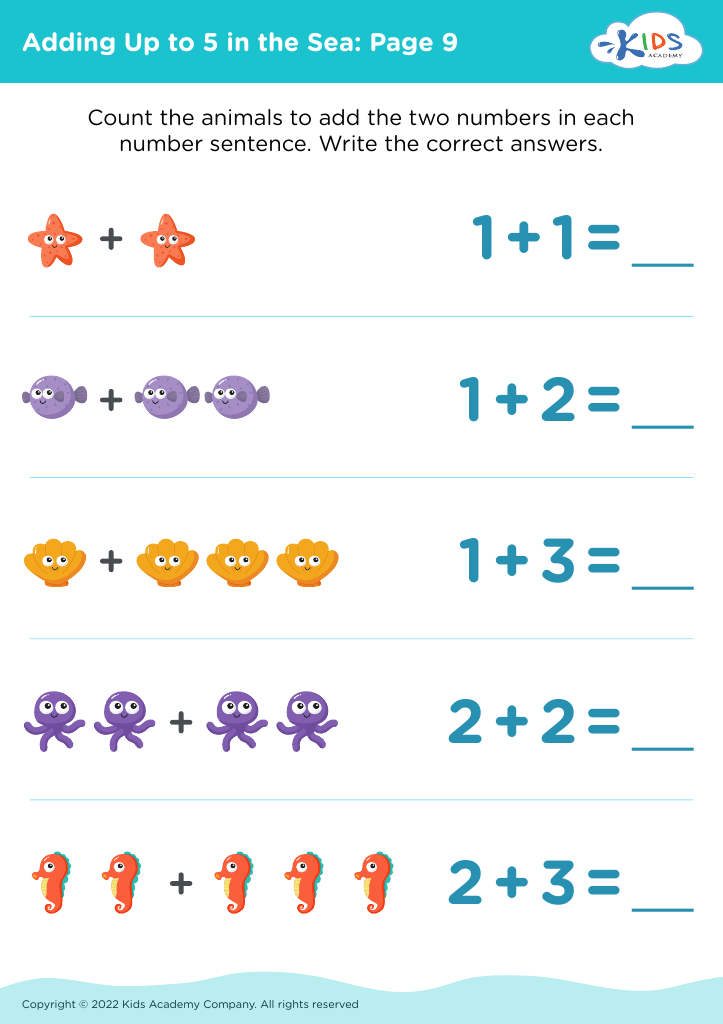








Basic arithmetic, specifically adding up to 5, forms the foundation for essential mathematical skills in young children aged 3-5. During this critical developmental stage, children are naturally curious and developing cognitive abilities, making it an ideal time to introduce concepts like counting and simple addition. Mastering these early math skills enhances not only numerical fluency but also strengthens fundamental problem-solving strategies and critical thinking.
Parents and teachers should prioritize teaching addition up to 5 because it fosters confidence and independence in young learners. When children grasp these concepts, they gain a sense of achievement, motivating them to explore more complex math in the future. This foundational knowledge serves as a building block for more advanced arithmetic operations later on.
Additionally, early math experiences improve overall academic performance. Studies show that children who engage in math-related activities in preschool are more likely to excel in subjects like science and literacy. By instilling a positive attitude towards math through engaging and playful learning, adults can equip children with the skills and confidence they need to thrive in school and beyond. Ultimately, nurturing these early arithmetic skills lays the groundwork for lifelong learning and success in all areas of life.








