Filters

21 filtered results

Clear all filters
Favorites
With answer key
Interactive

21 filtered results

Difficulty Level

Grade


Discover our engaging "Basic Math Skills: Adding Up to 5 Worksheets" designed specifically for children ages 3-5. These printable worksheets provide young learners with essential math practice, helping them develop a strong foundation in addition. Each activity promotes number recognition, counting skills, and basic problem-solving using fun, age-appropriate visuals. As children explore adding numbers together to reach sums of up to 5, they build confidence and mathematical understanding in a playful way. Perfect for home or classroom use, these worksheets make mastering early math skills enjoyable and effective. Encourage your child's learning journey today with our interactive resources!
Check out this FREE Trial Lesson on Adding Up to 5 for age 3-5!

A

Favorites
With answer key
Interactive
  • 3-5
  • Basic Math Skills
  • Adding Up to 5
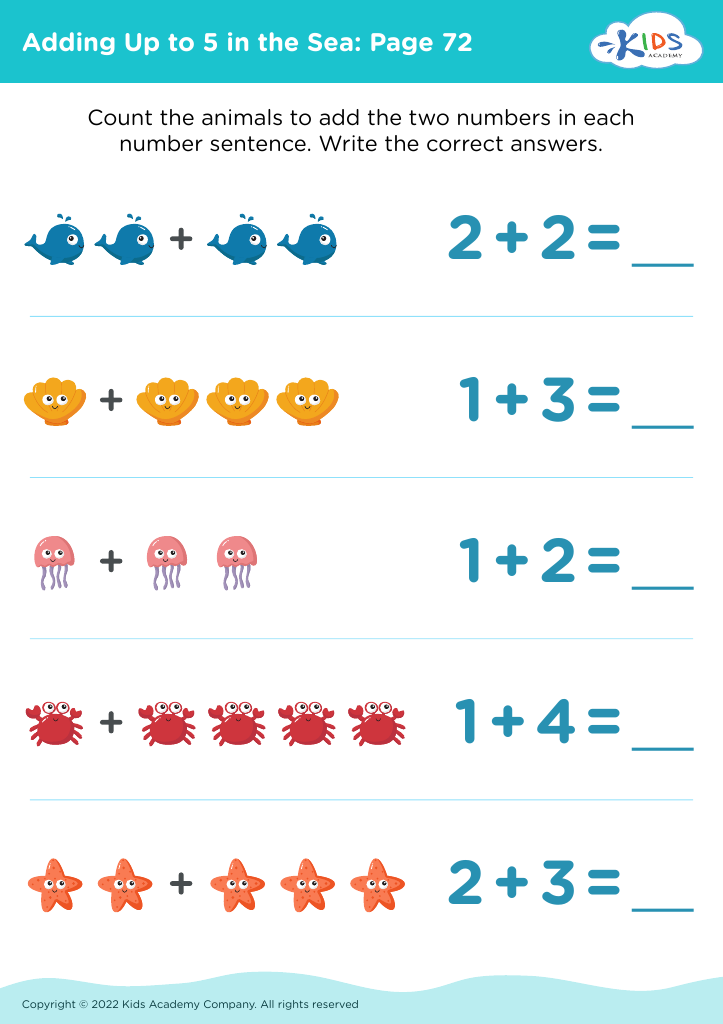
Adding Up to 5 in the Sea: Page 72
Worksheet
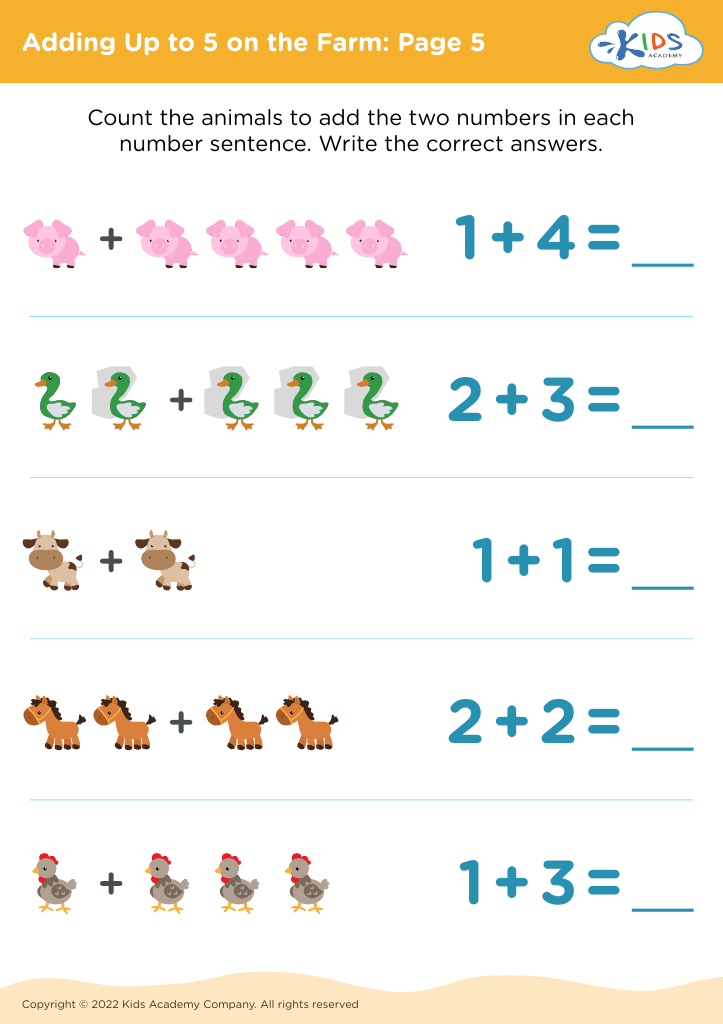
Adding Up to 5 on the Farm: Page 5
Worksheet
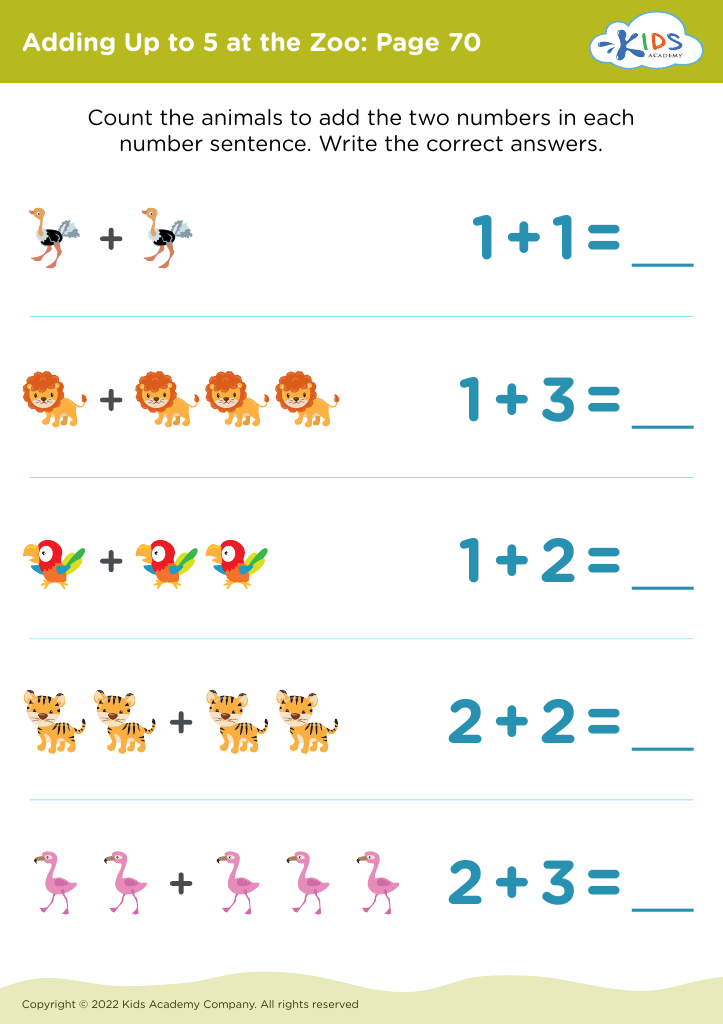
Adding Up to 5 at the Zoo: Page 70
Worksheet
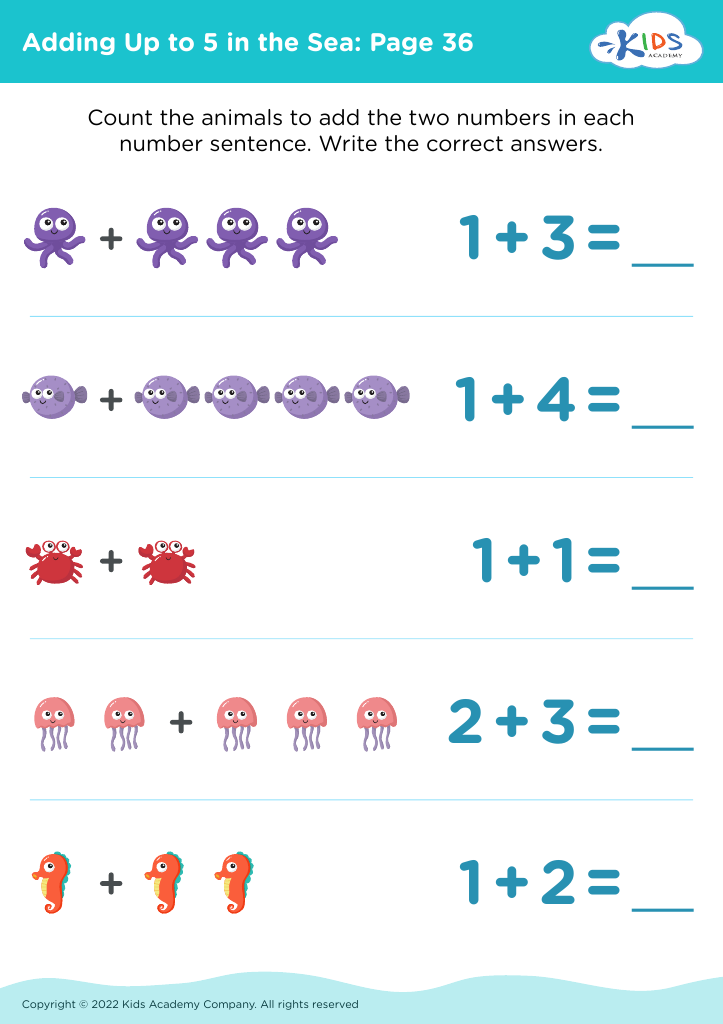
Adding Up to 5 in the Sea: Page 36
Worksheet
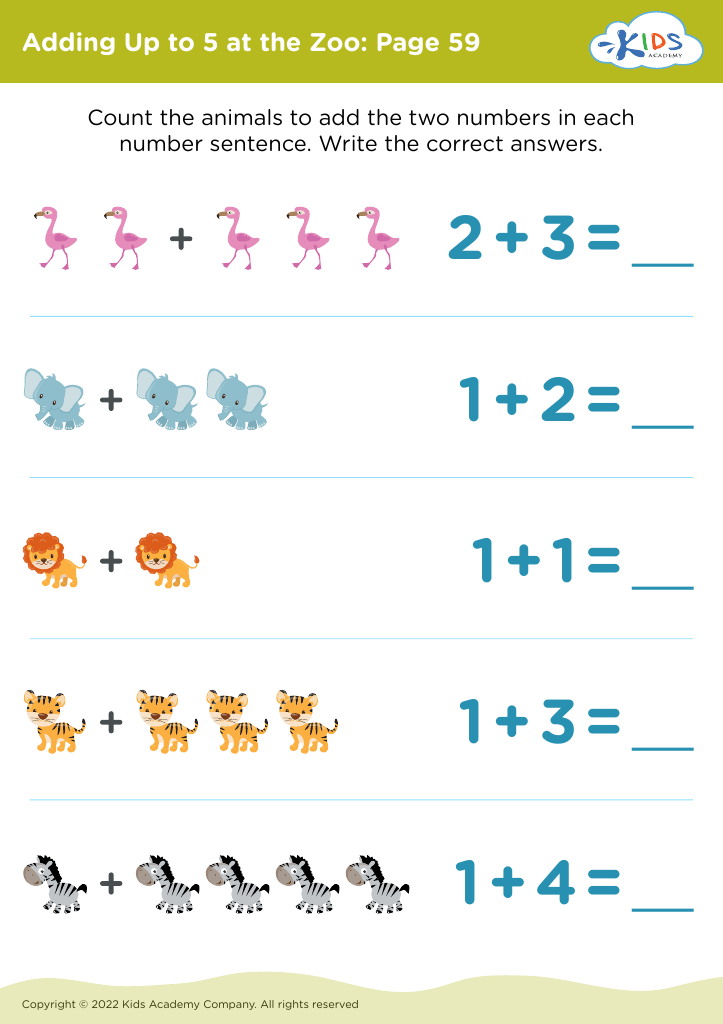
Adding Up to 5 at the Zoo: Page 59
Worksheet
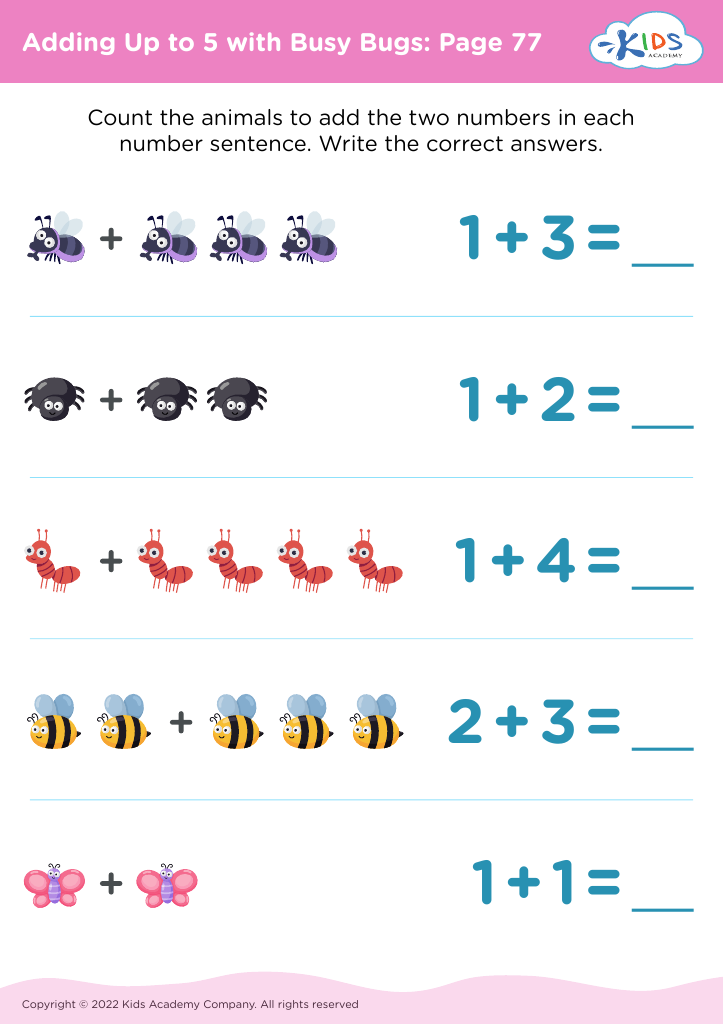
Adding Up to 5 with Busy Bugs: Page 77
Worksheet
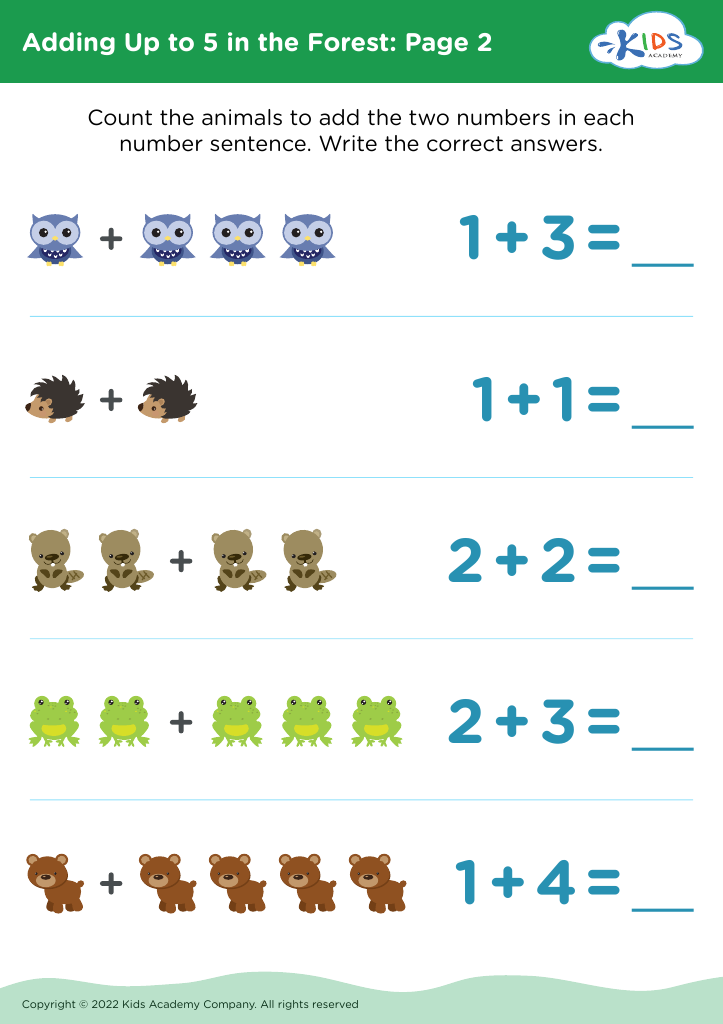
Adding Up to 5 in the Forest: Page 2
Worksheet
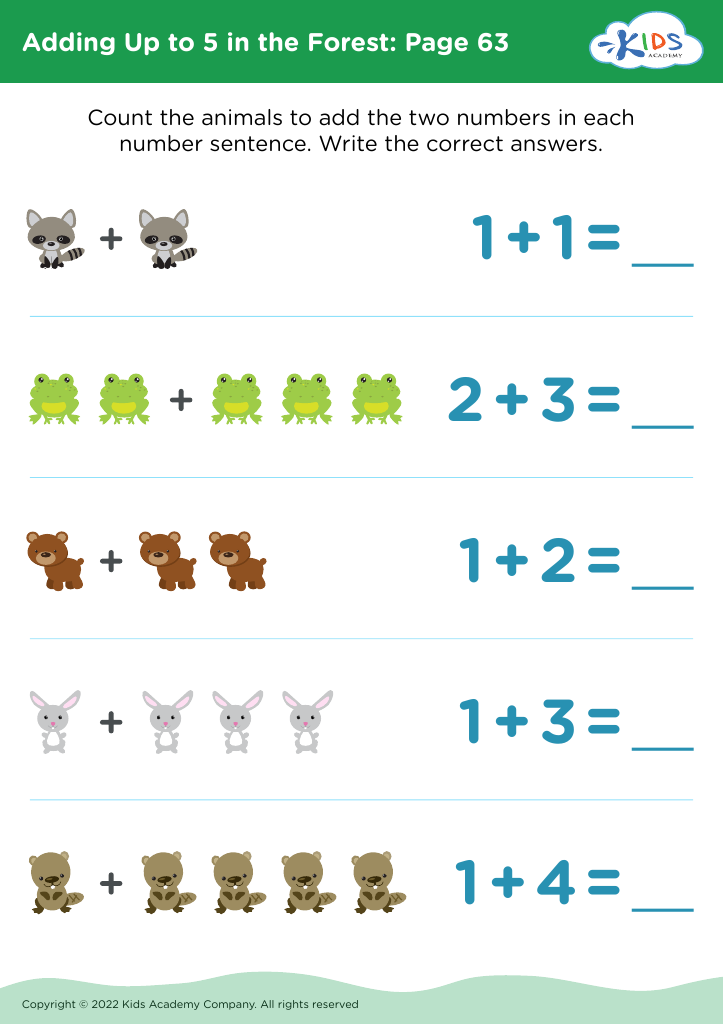
Adding Up to 5 in the Forest: Page 63
Worksheet
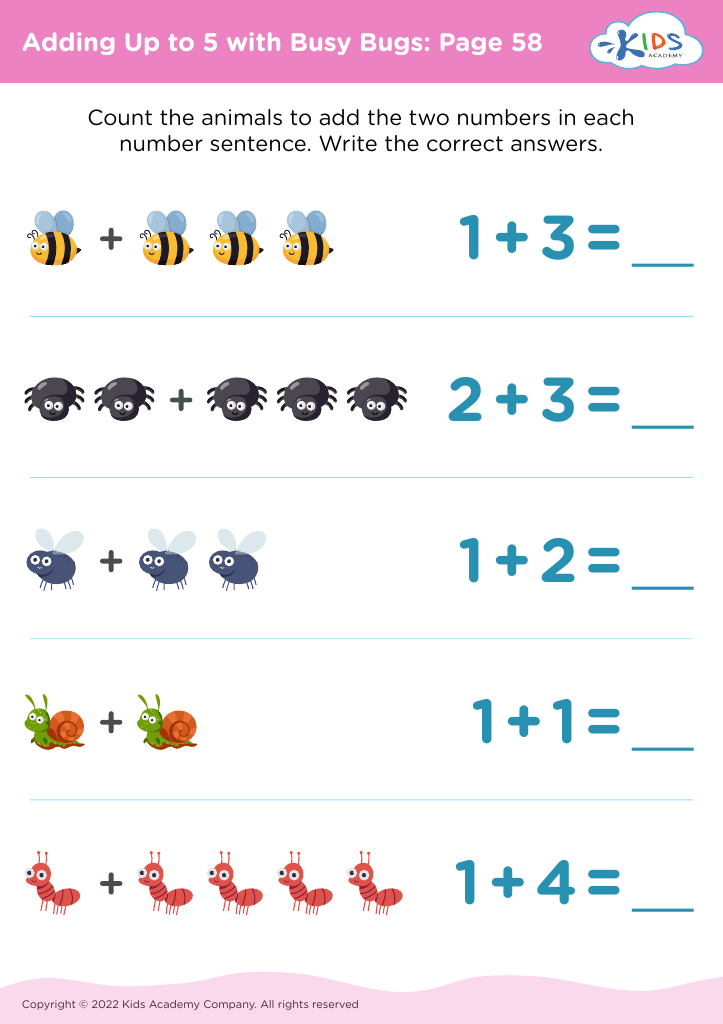
Adding Up to 5 with Busy Bugs: Page 58
Worksheet
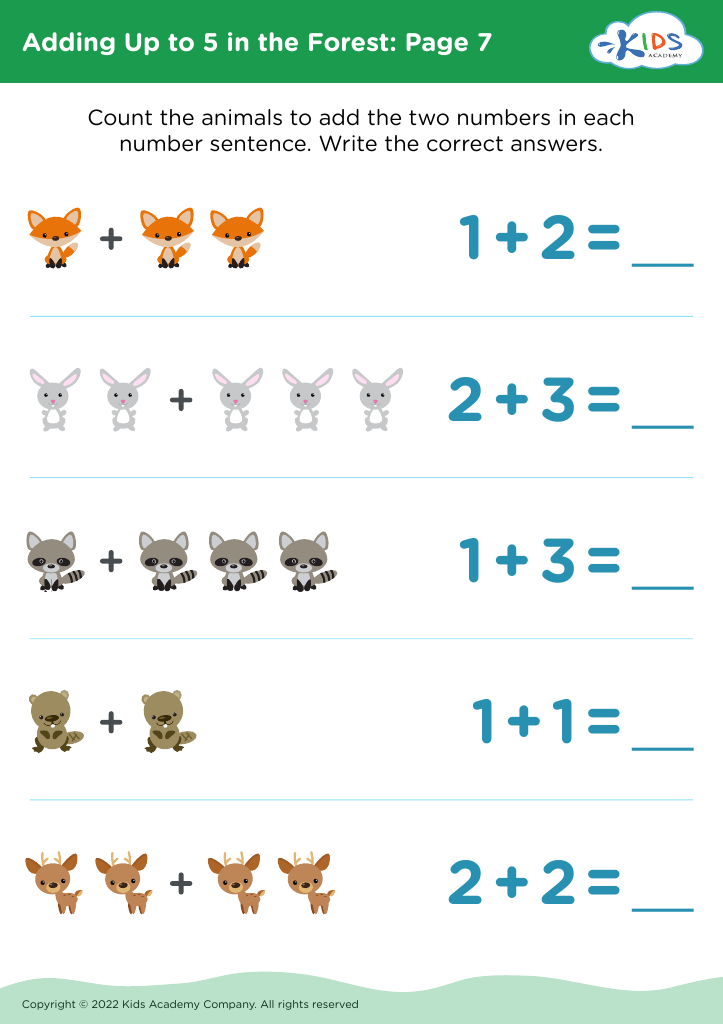
Adding Up to 5 in the Forest: Page 7
Worksheet
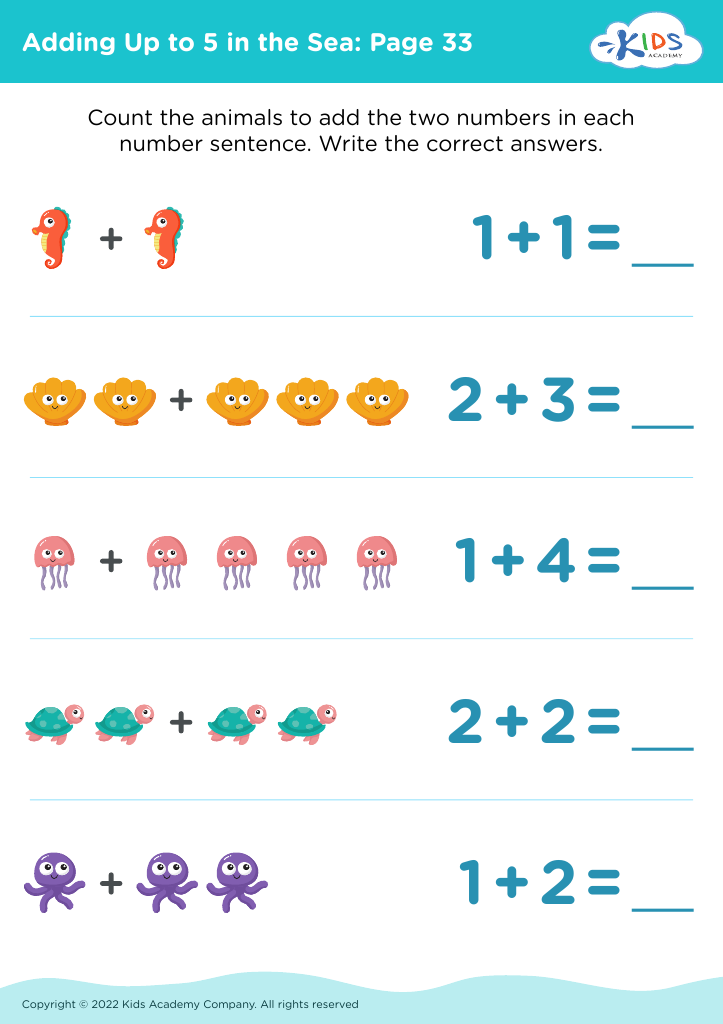
Adding Up to 5 in the Sea: Page 33
Worksheet
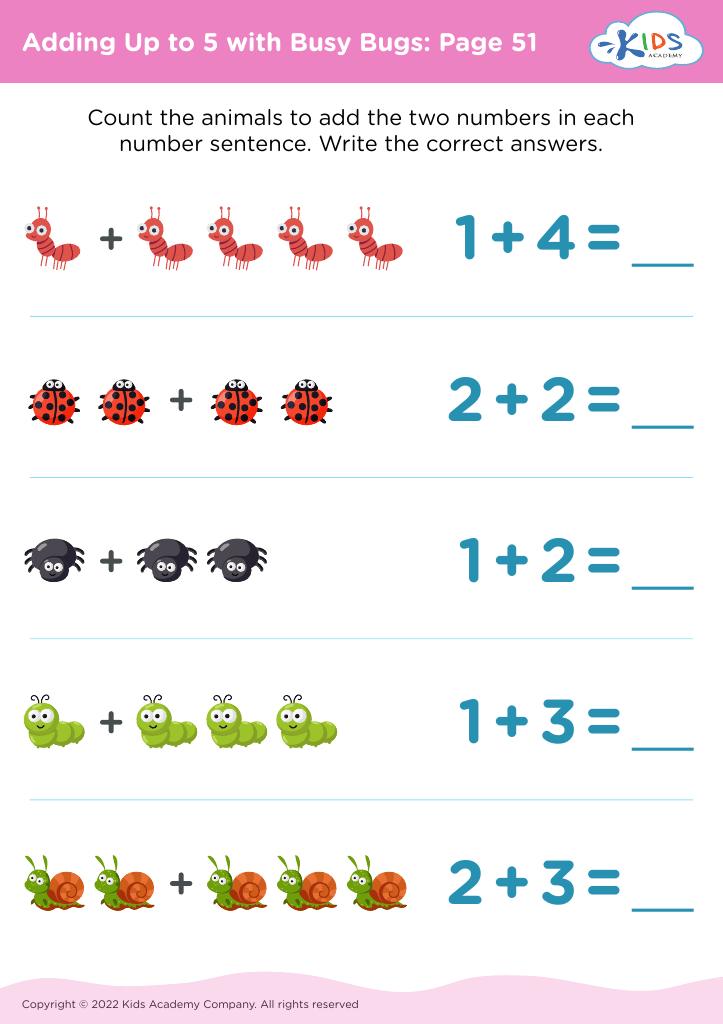
Adding Up to 5 with Busy Bugs: Page 51
Worksheet
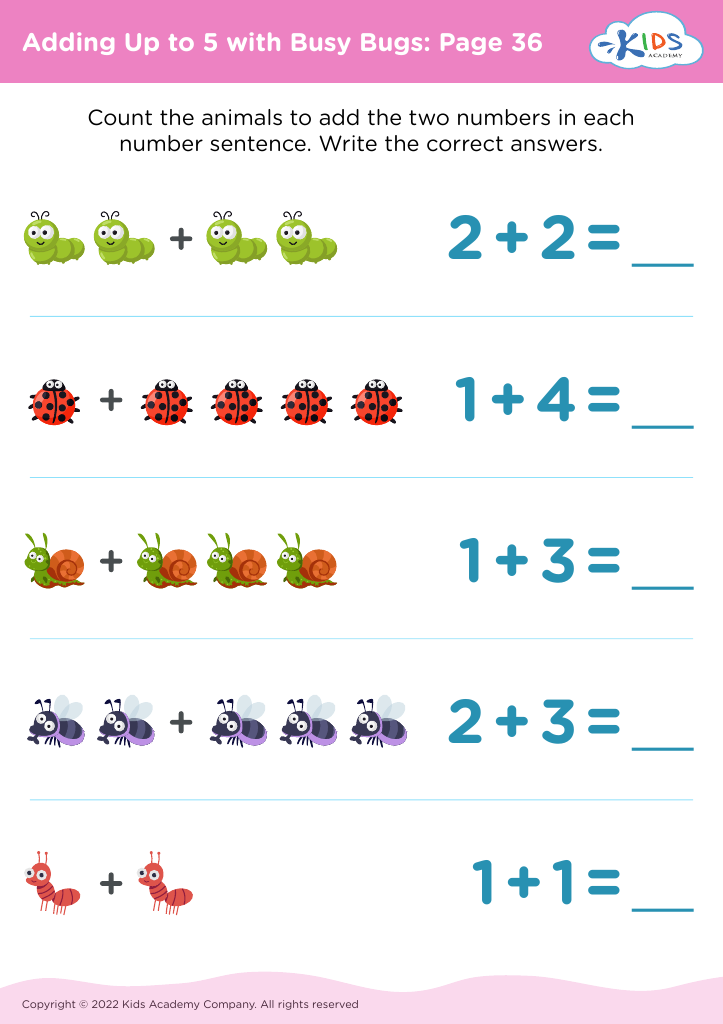
Adding Up to 5 with Busy Bugs: Page 36
Worksheet
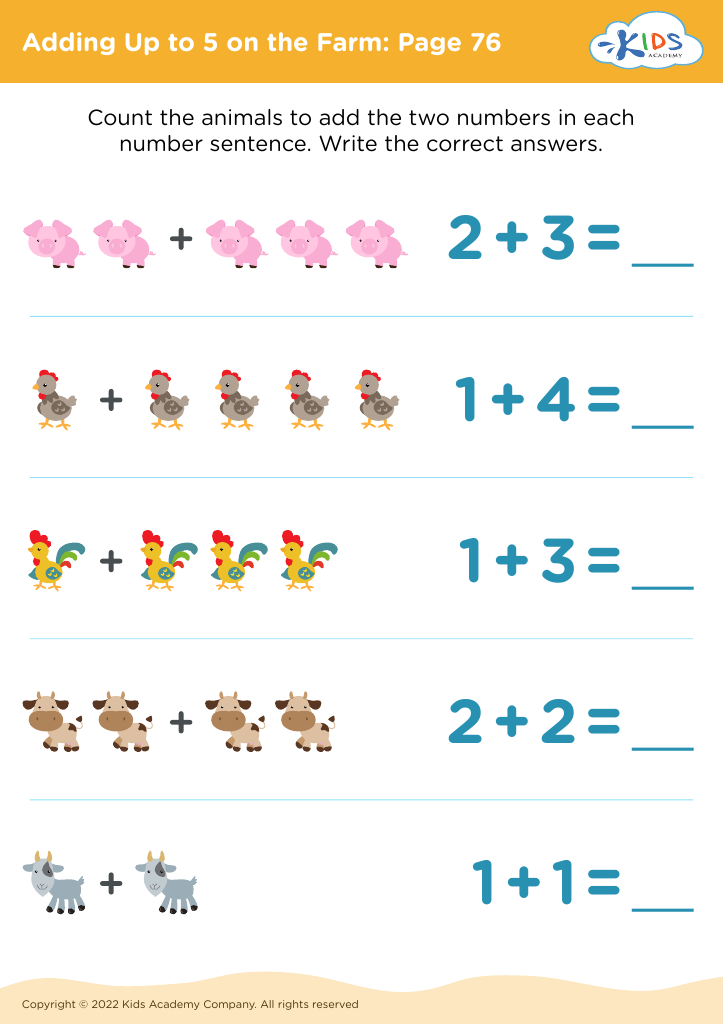
Adding Up to 5 on the Farm: Page 76
Worksheet
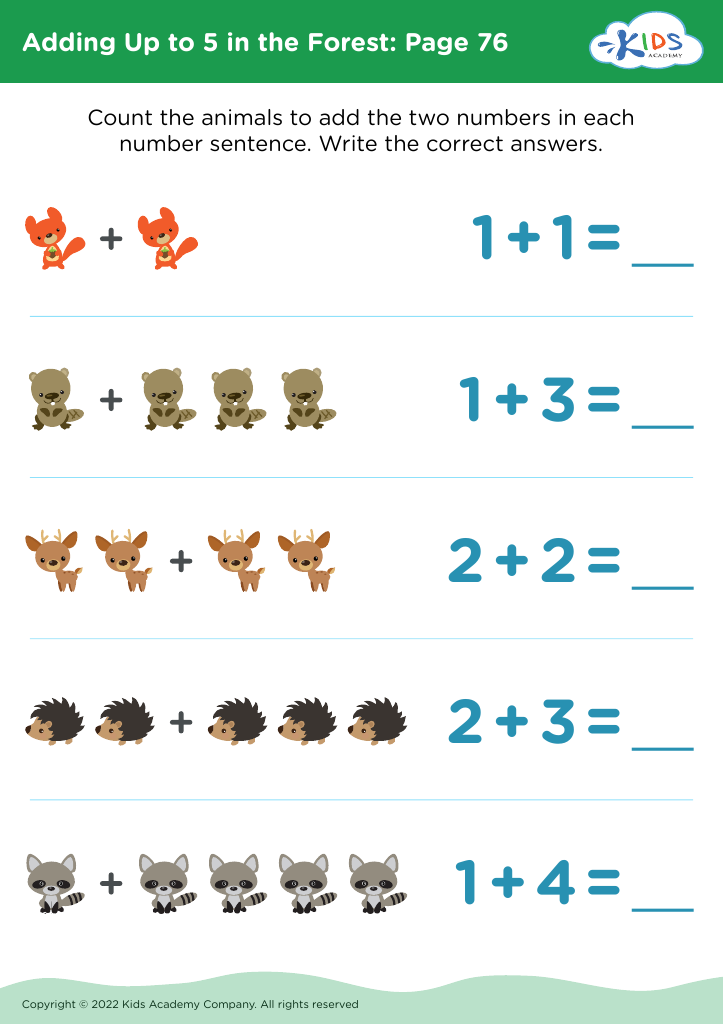
Adding Up to 5 in the Forest: Page 76
Worksheet
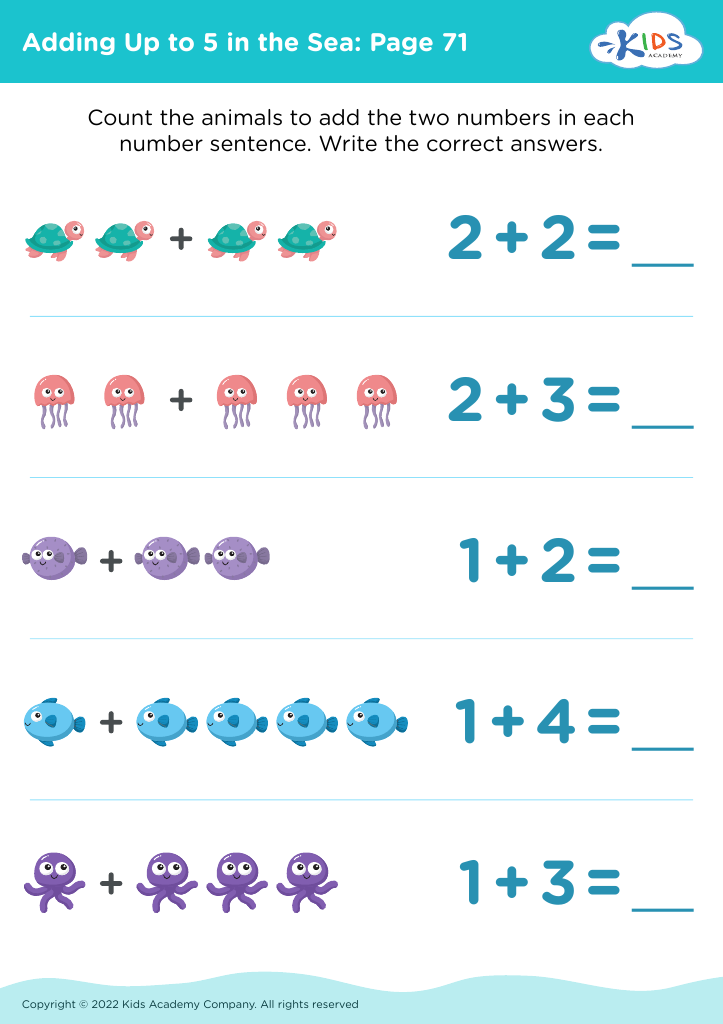
Adding Up to 5 in the Sea: Page 71
Worksheet
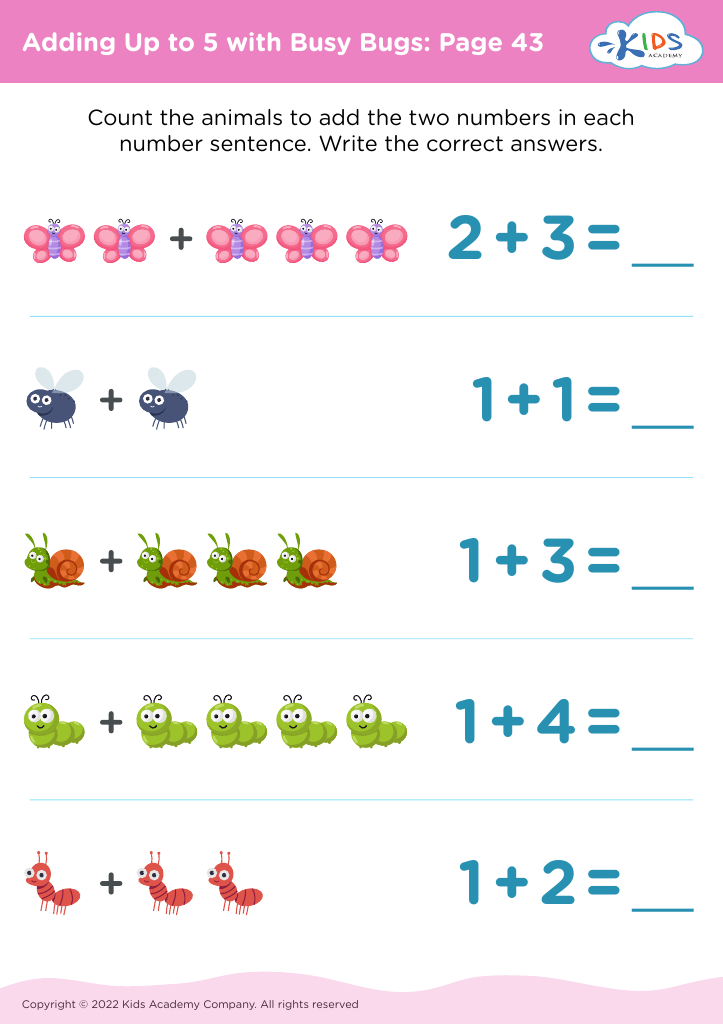
Adding Up to 5 with Busy Bugs: Page 43
Worksheet
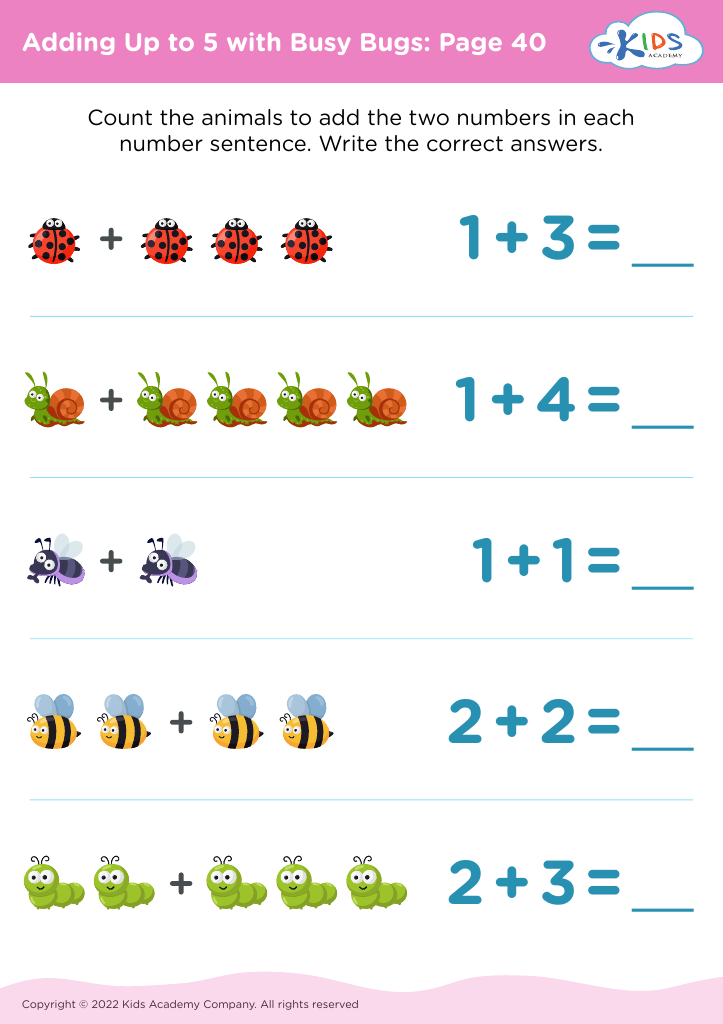
Adding Up to 5 with Busy Bugs: Page 40
Worksheet
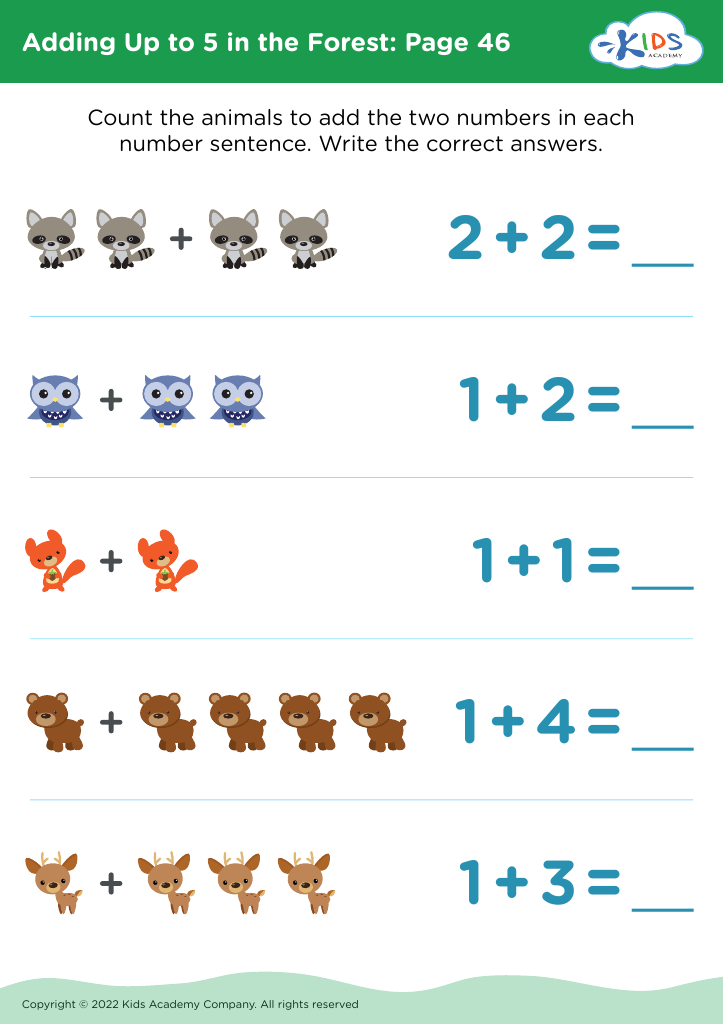
Adding Up to 5 in the Forest: Page 46
Worksheet
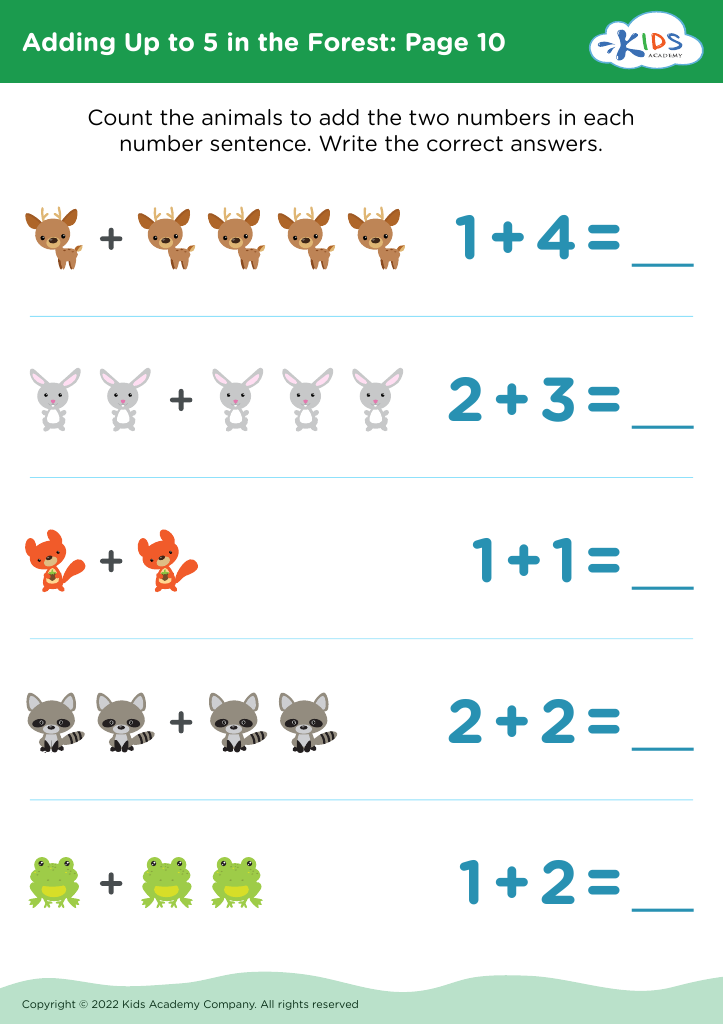
Adding Up to 5 in the Forest: Page 10
Worksheet
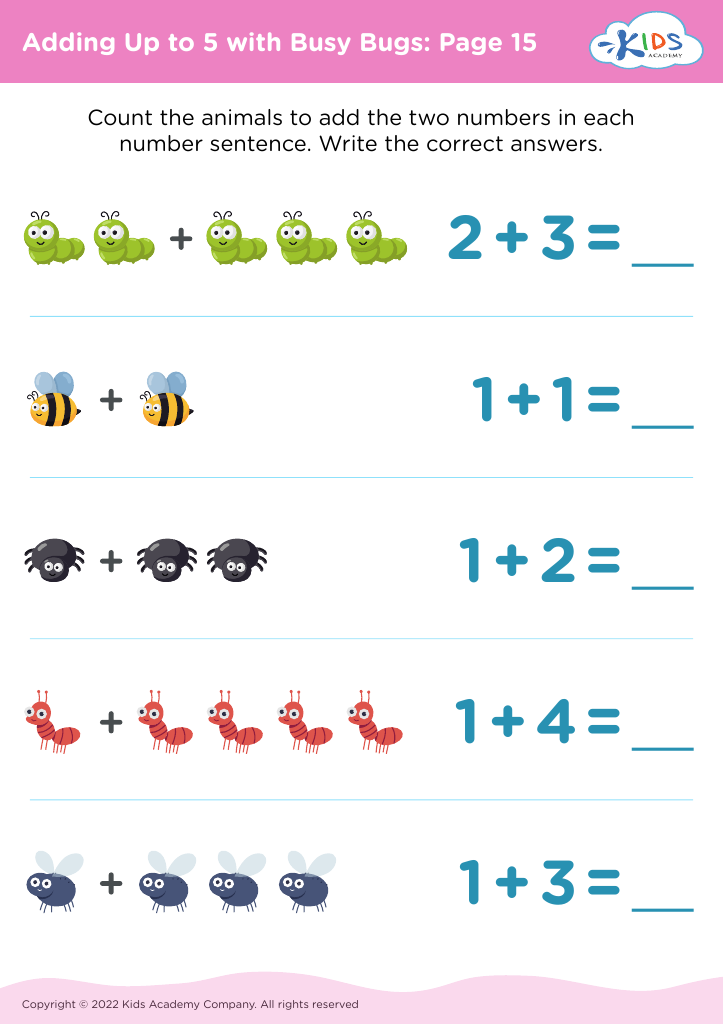
Adding Up to 5 with Busy Bugs: Page 15
Worksheet


Developing basic math skills, particularly the ability to add numbers up to 5, is crucial for children aged 3-5. At this developmental stage, children are like sponges, absorbing information and developing foundational cognitive skills that impact their future learning.

First, introducing simple addition fosters a positive attitude toward math. When children successfully grasp the concept of adding, they gain confidence in their problem-solving abilities, making them more willing to tackle more complex mathematical concepts later on.

Second, these basic skills help enhance other areas of learning. Mathematics encourages logical thinking, pattern recognition, and critical reasoning—skills that are valuable across all subjects. Moreover, early math experiences can improve language skills by helping children learn the vocabulary associated with numbers and operations.

Furthermore, parents and teachers play a vital role in fostering a supportive learning environment. Engaging in counting games or everyday activities, such as cooking or shopping, turns math into a fun, practical experience. This not only strengthens cognitive skills but also reinforces parent-child or teacher-student relationships, making learning a collaborative effort. In summary, nurturing basic math skills at an early age lays a strong foundation for future academic success and lifelong learning.