Hand-eye Coordination Adding Up to 5 Worksheets for Ages 3-5
15 filtered results
-
From - To
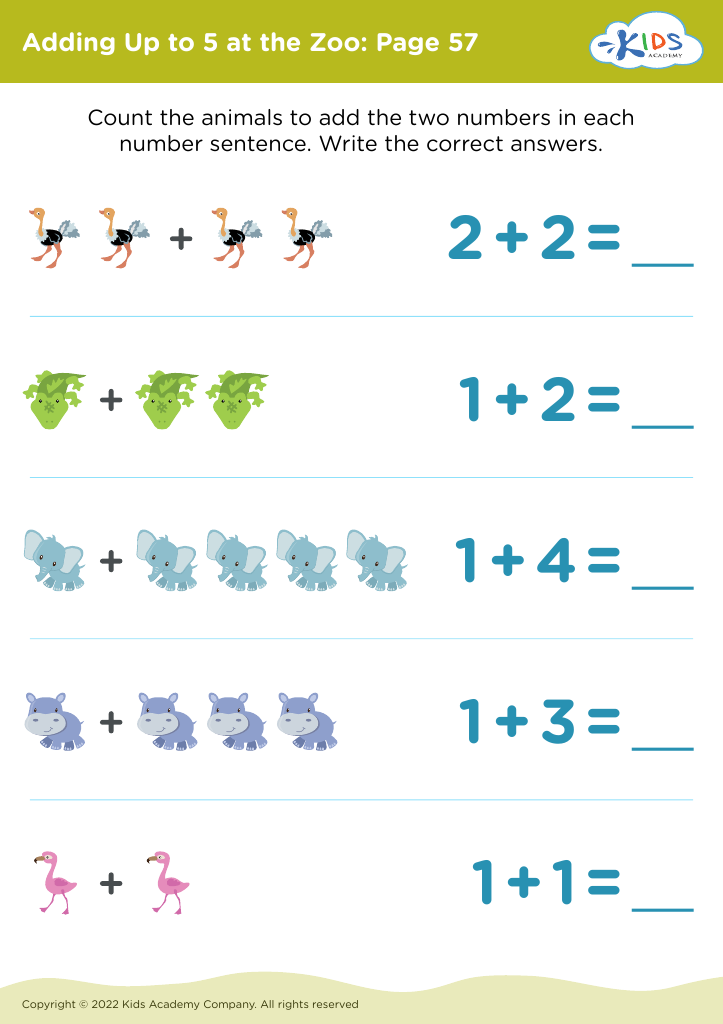
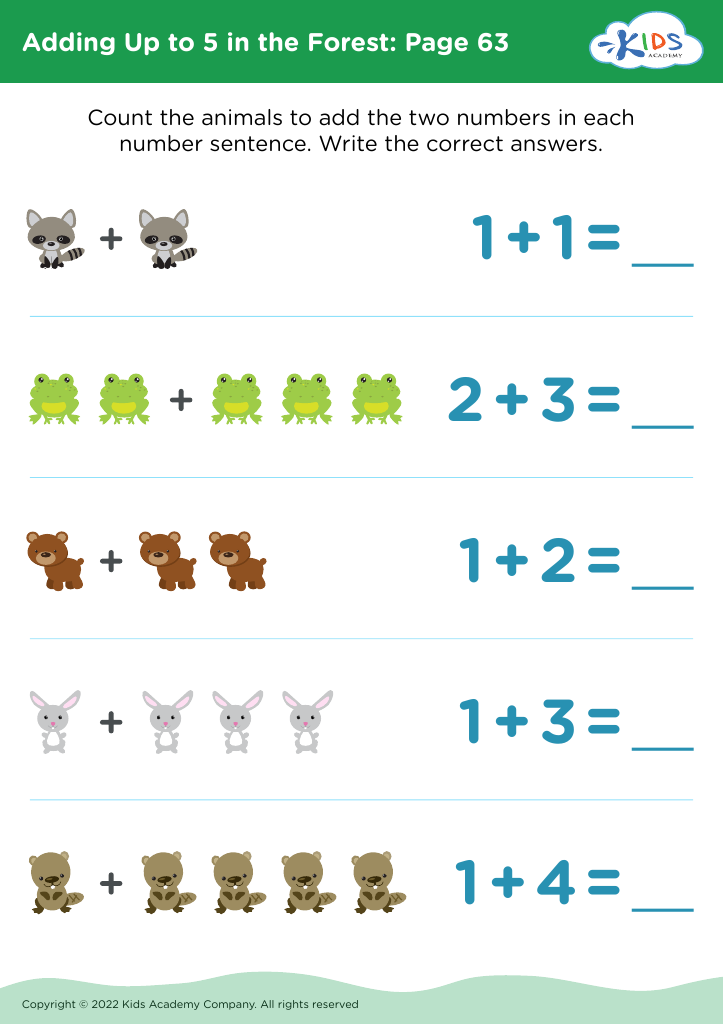
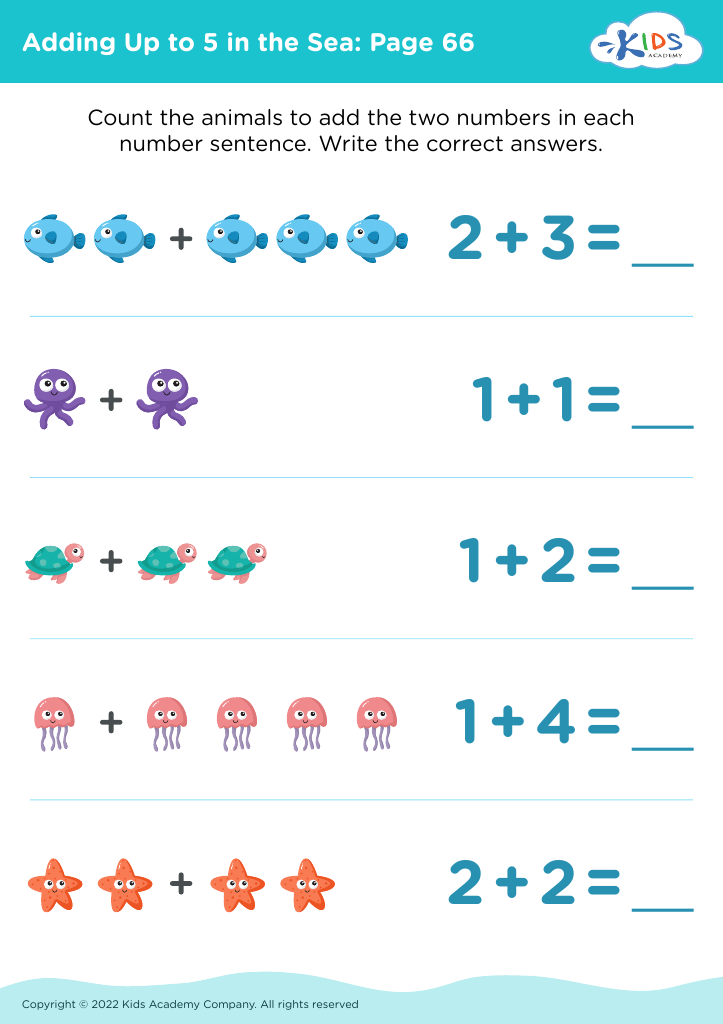
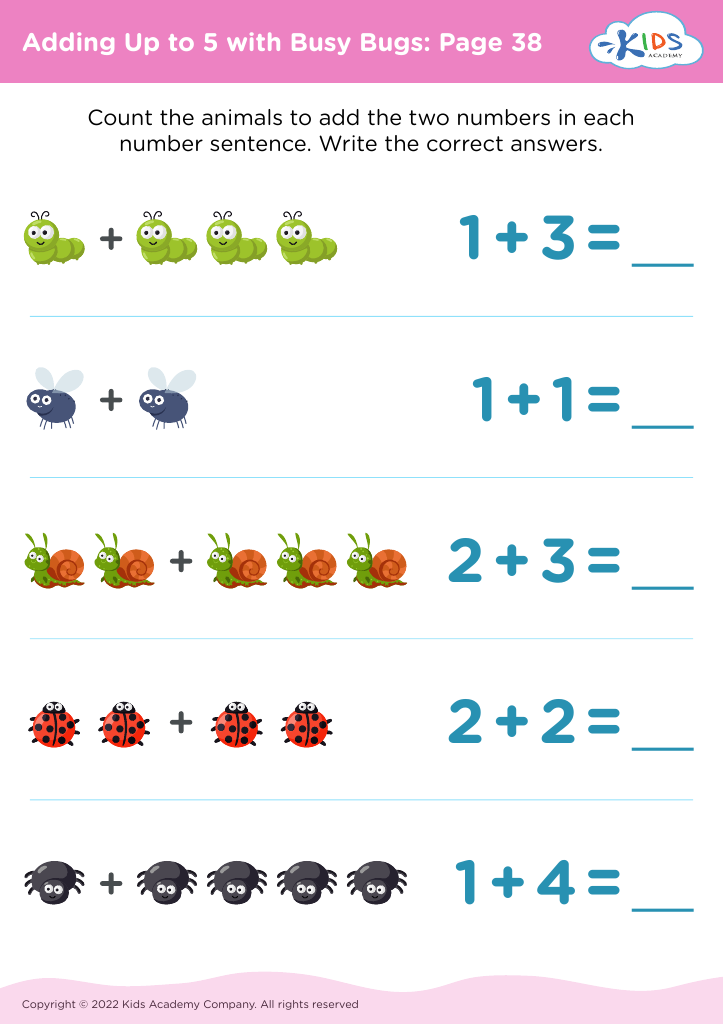
Enhance your child's hand-eye coordination with our engaging "Adding Up to 5 Worksheets" designed for ages 3-5. These interactive worksheets seamlessly integrate math learning with physical activity, encouraging young learners to practice counting while honing their fine motor skills. Each worksheet features vibrant images and simple counting tasks, making learning both fun and effective. As children trace, color, or connect items to solve addition problems, they develop essential coordination skills that are crucial for future academic success. Perfect for at-home learning or classroom activities, these worksheets provide a well-rounded educational experience that builds confidence and foundational math skills for little learners!
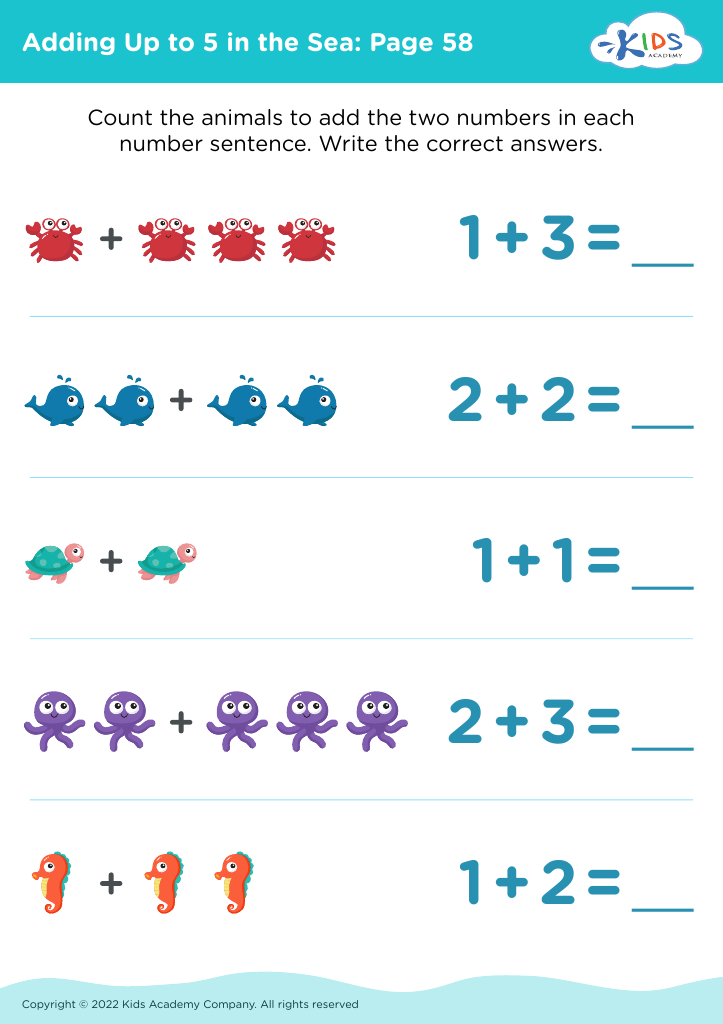
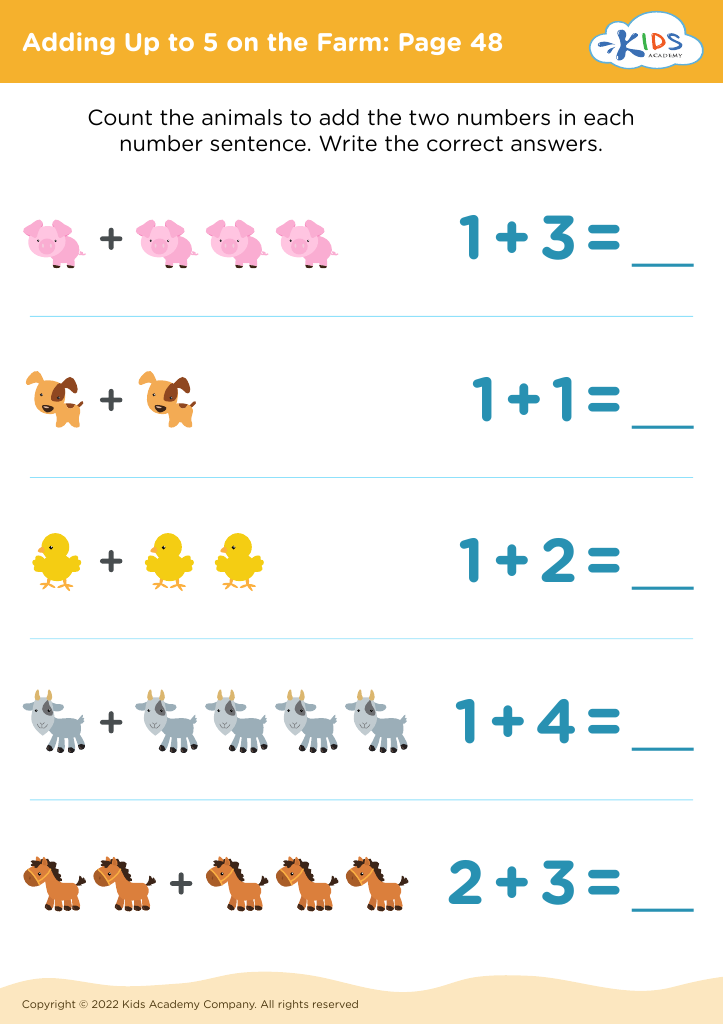
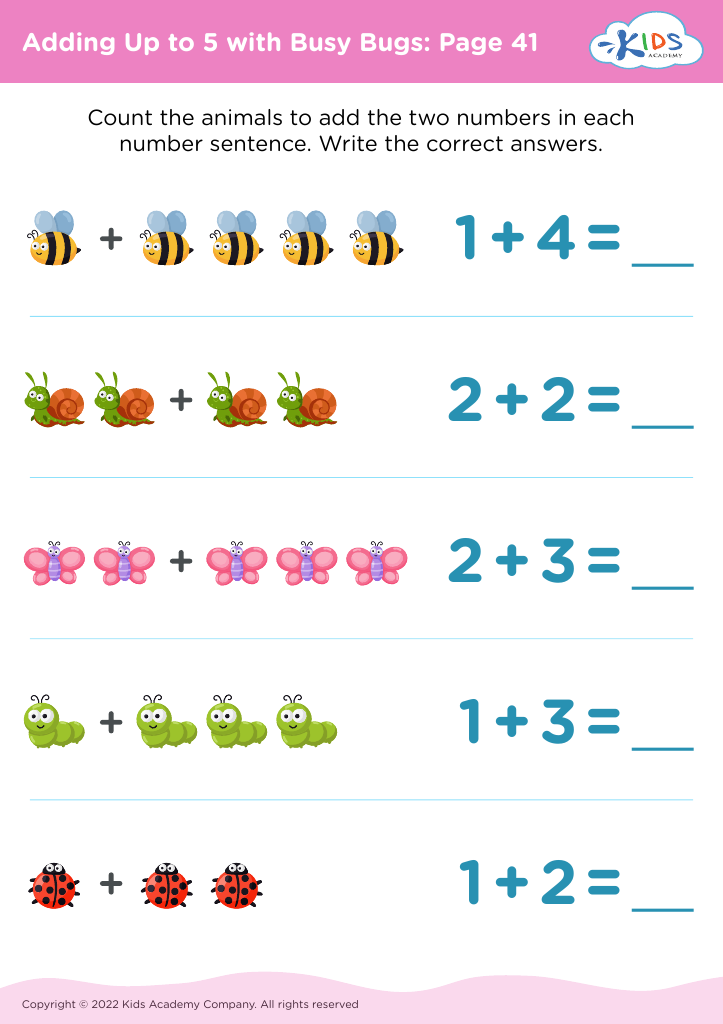
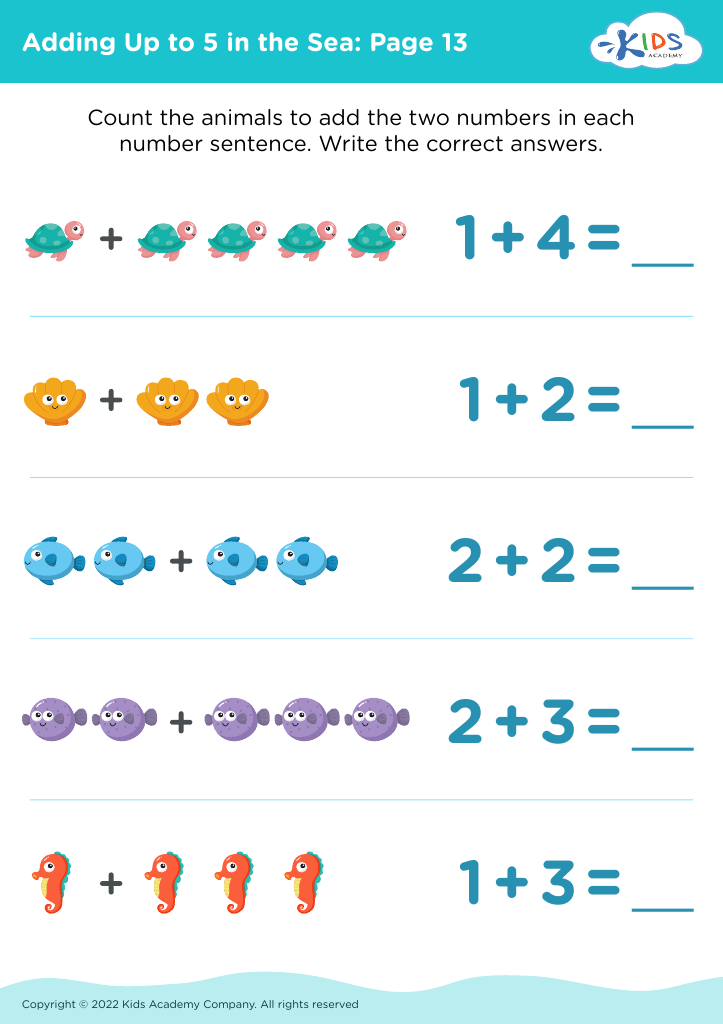
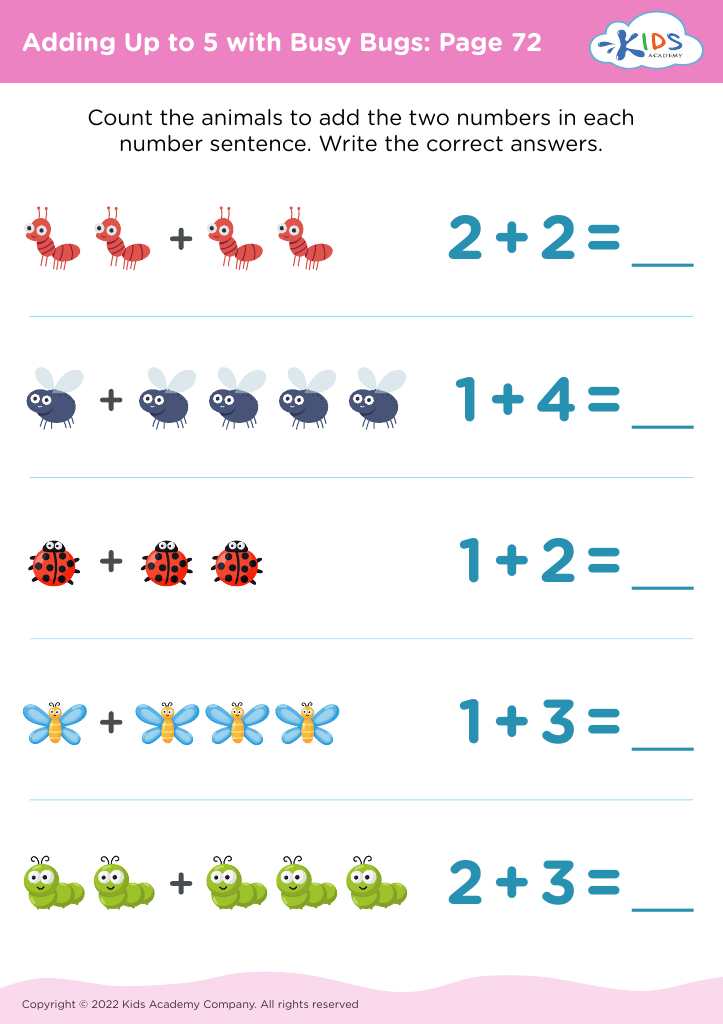
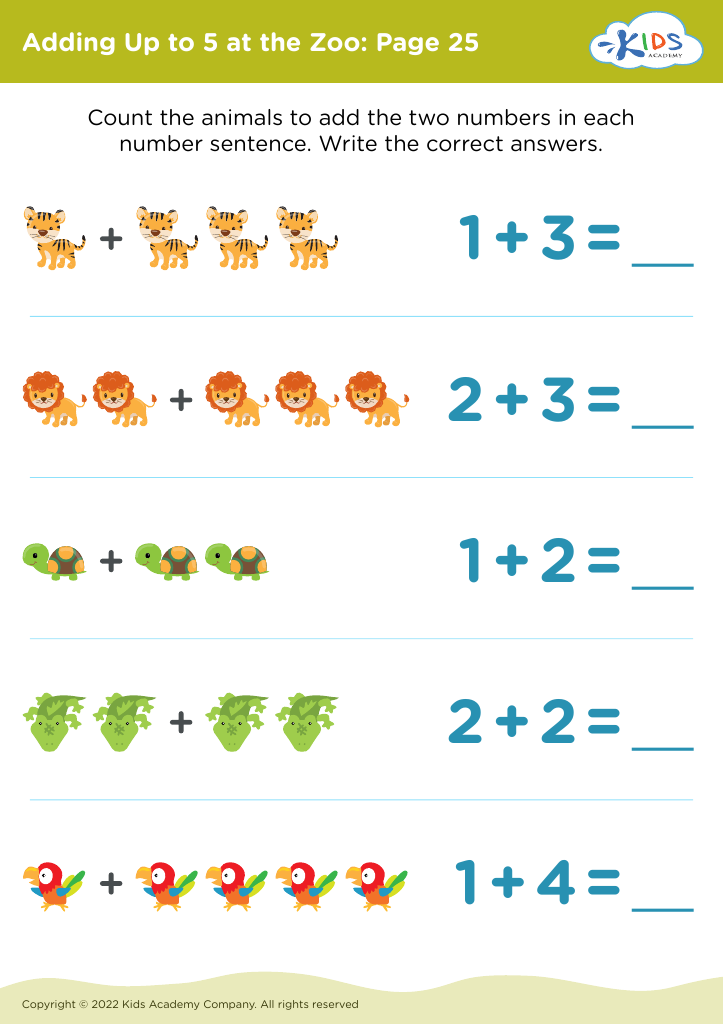
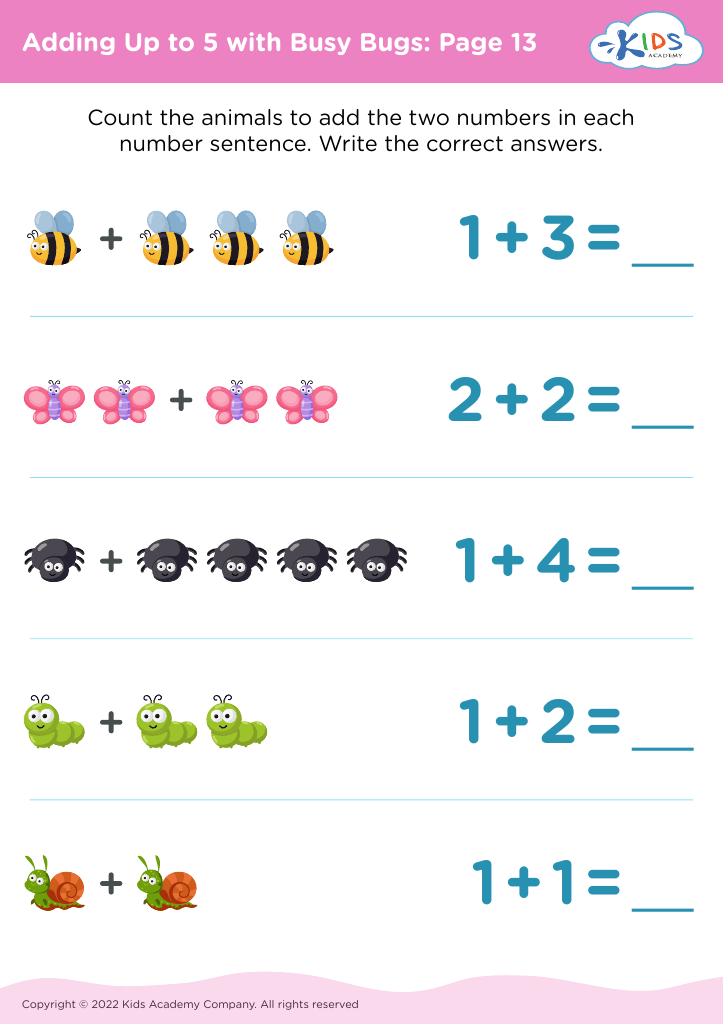
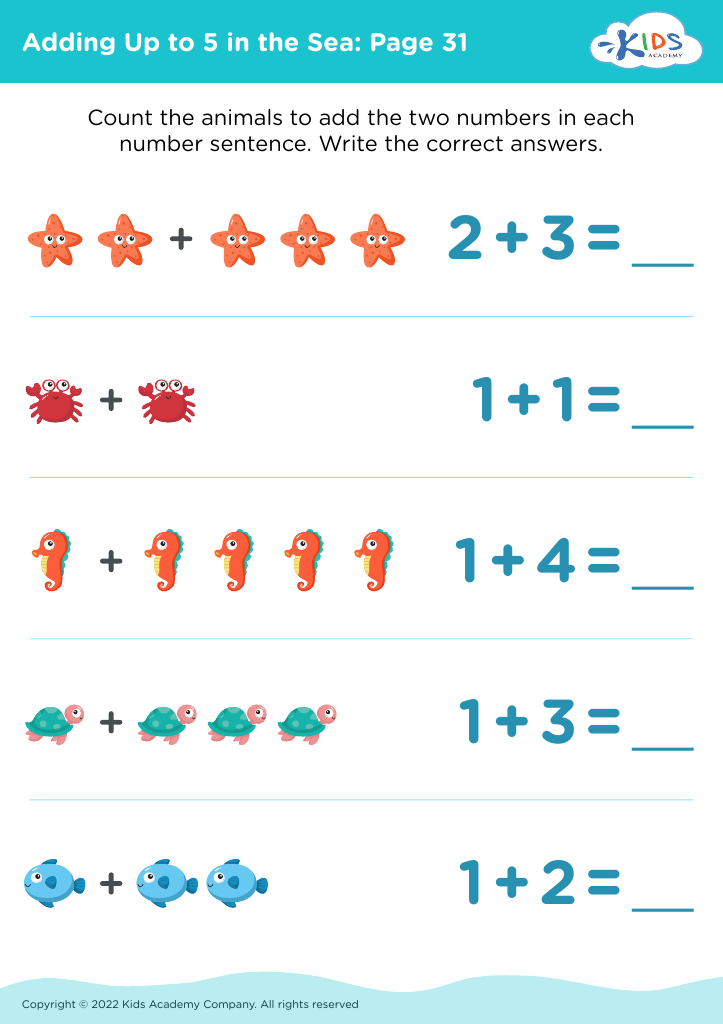
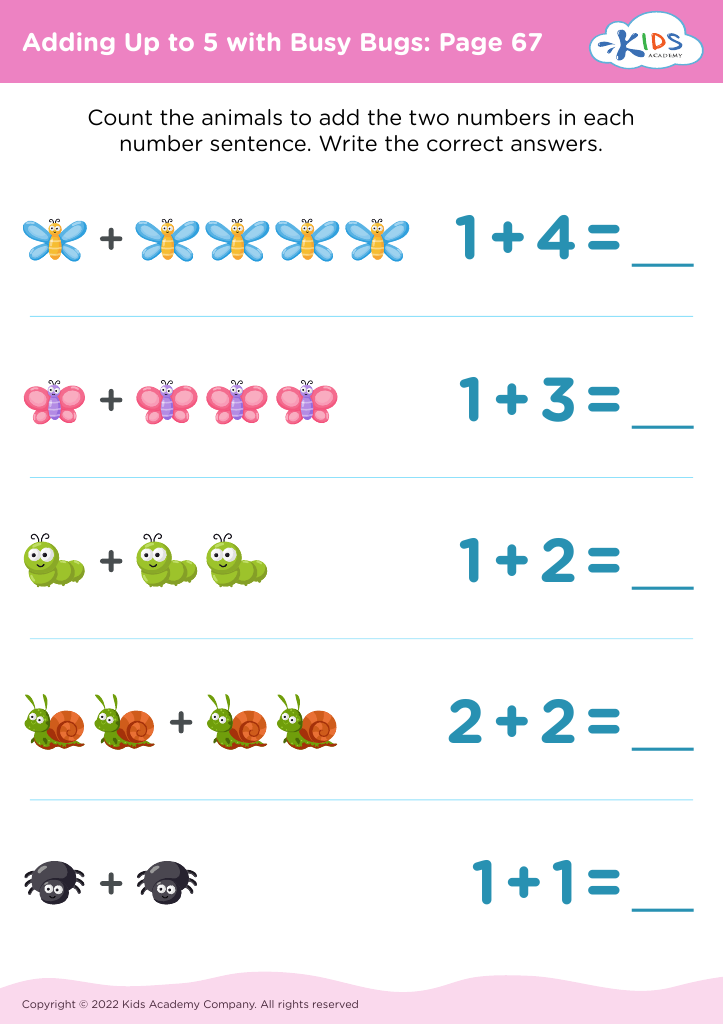
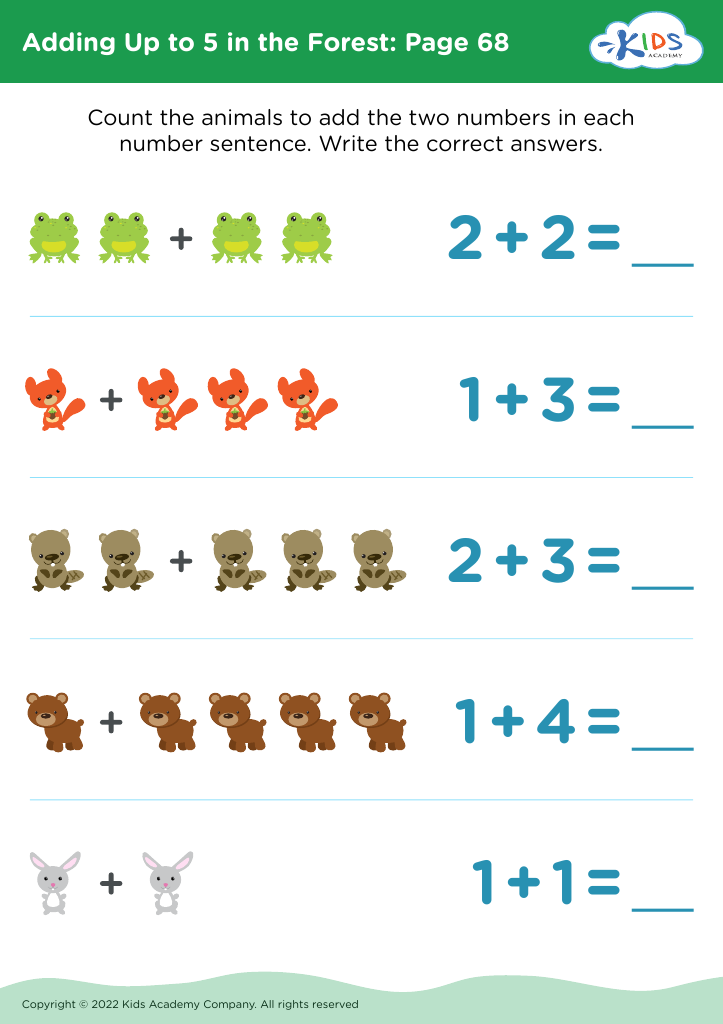
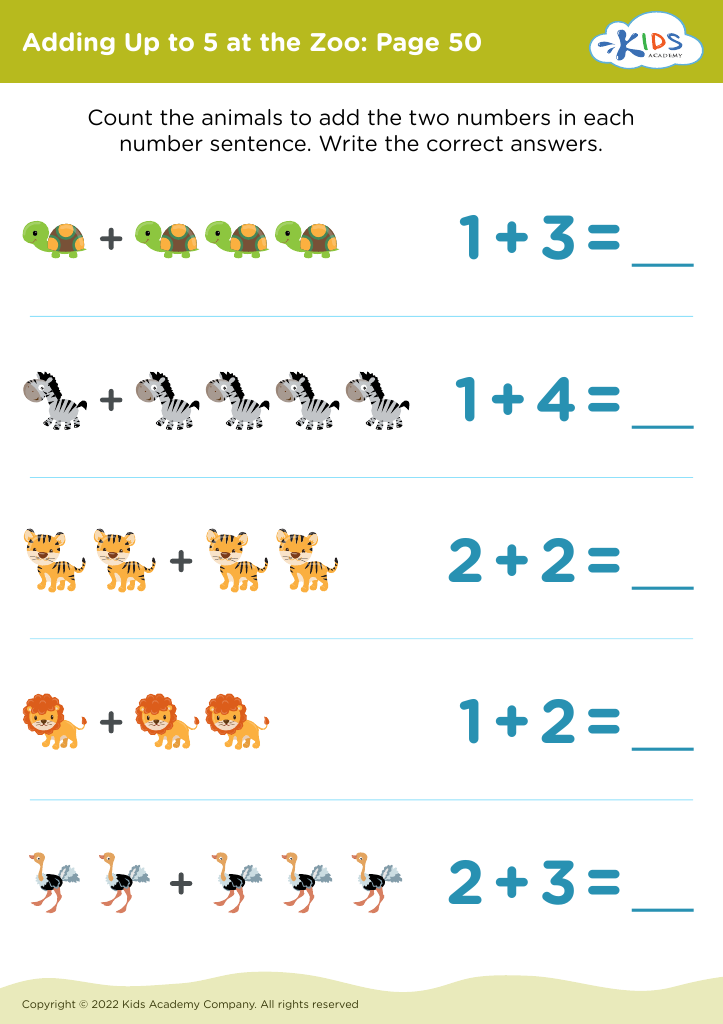








Hand-eye coordination is a crucial developmental skill for children aged 3-5, as it serves as the foundation for various academic and everyday tasks. For young learners, activities that involve hand-eye coordination, such as stacking blocks or playing with beads, can promote fine motor skills and spatial awareness, both of which are essential for early math concepts, including adding up to 5.
Teaching children to add numbers while simultaneously engaging in hand-eye coordination activities enhances their understanding of quantity and number relationships. For instance, counting out five objects during play helps solidify their grasp of basic math while improving their ability to manipulate items with their hands, fostering dexterity.
Moreover, employing engaging methods like games or hands-on activities can make learning more enjoyable, encouraging a positive attitude toward mathematics. Involving parents and teachers in these activities strengthens bonds and reinforces learning through collaboration and support.
In summary, prioritizing hand-eye coordination activities that reinforce basic math skills not only aids cognitive development but also prepares young children for future academic success, fostering confidence and a love for learning as they progress through their early educational journey.








