Nature appreciation Adding Up to 5 Worksheets for Ages 3-5
5 filtered results
-
From - To
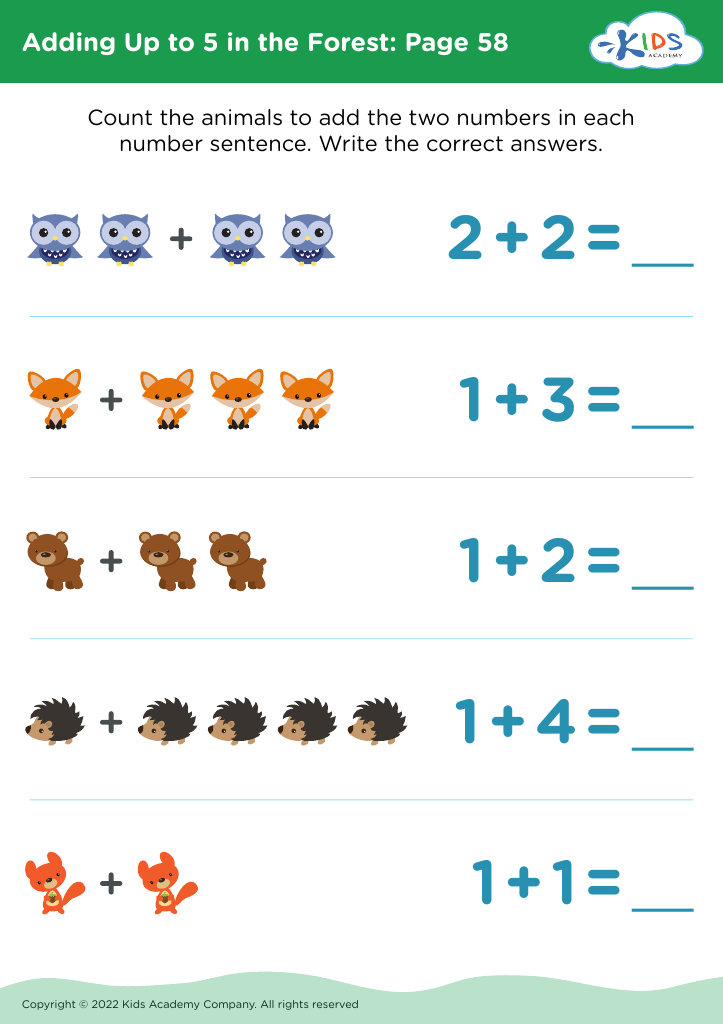
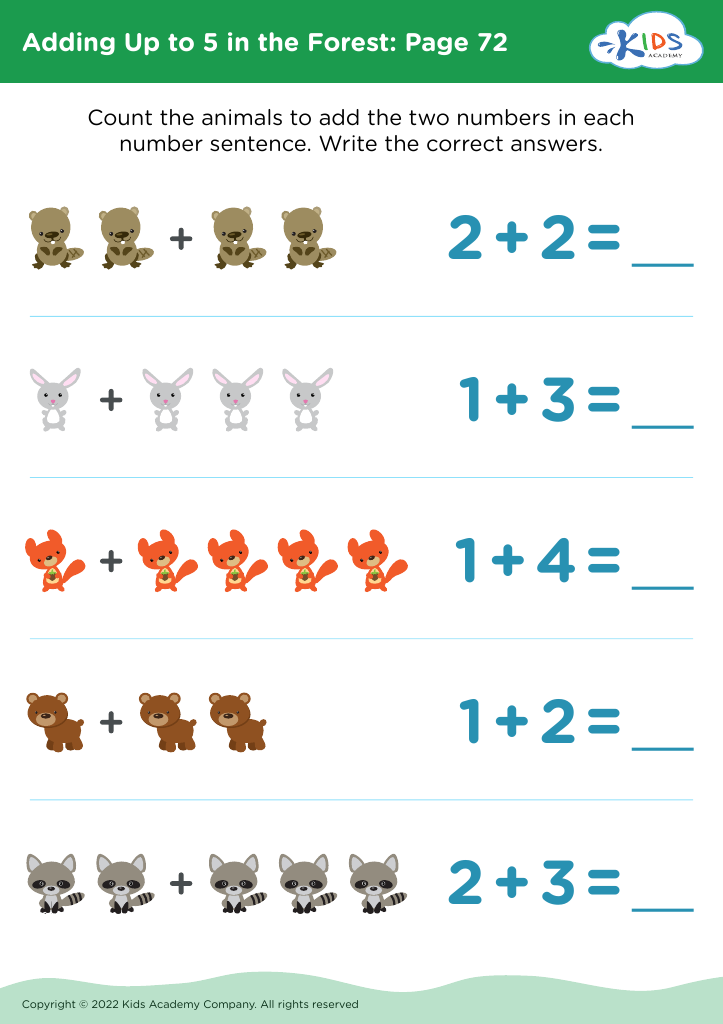
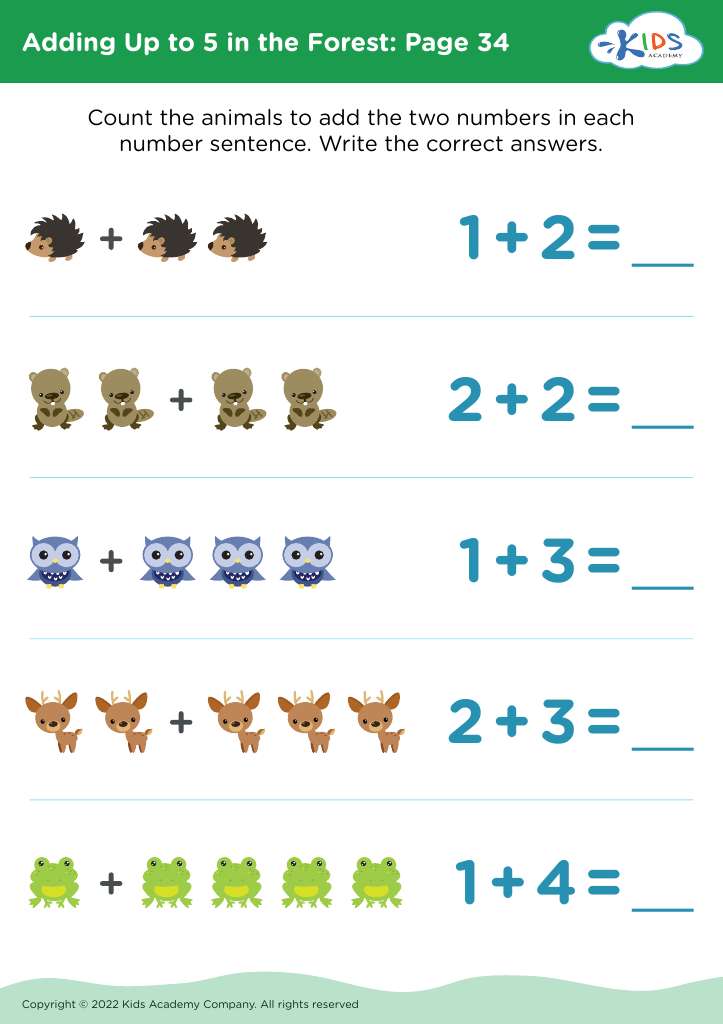
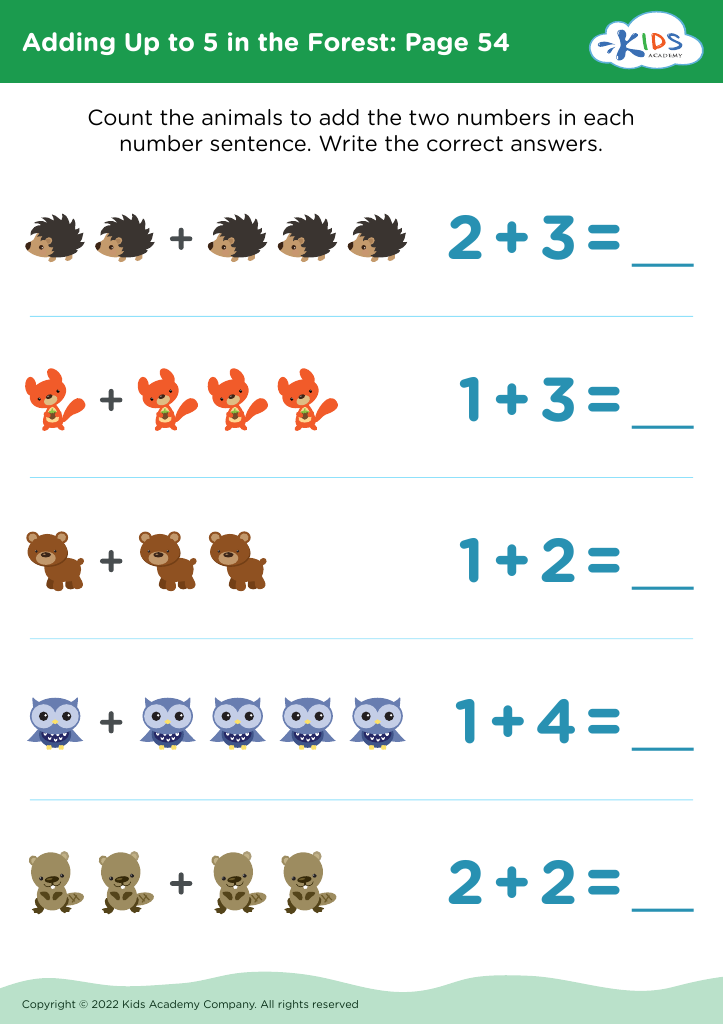
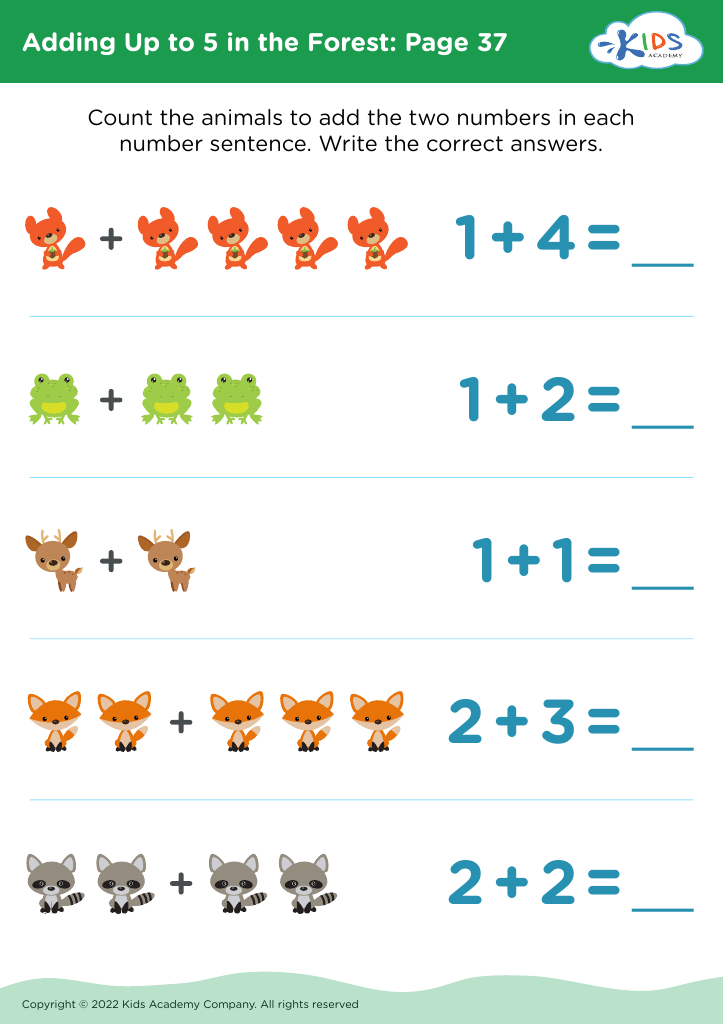
Introduce young learners to the wonders of nature while developing their math skills with our "Nature Appreciation Adding Up to 5 Worksheets." Designed for ages 3-5, these engaging worksheets combine beautiful nature themes with beginner addition exercises. Kids will delight in counting birds, flowers, and other natural elements, making learning fun and immersive. Each activity promotes concentration, critical thinking, and nature appreciation, laying a strong foundation for future math success. Perfect for classroom or home use, these worksheets provide a joyful learning experience that captivates young minds and fosters a love for both math and the natural world.



.jpg)




Nature appreciation for young children, such as activities that combine math and natural elements, offers multiple developmental benefits. By introducing concepts of counting and addition through explorations in nature, children not only learn math but also develop an early appreciation for the environment.
Skills Development: Integrating math with nature enhances cognitive and sensory development. Activities like collecting leaves and counting or adding them up foster problem-solving, pattern recognition, and critical thinking.
Hands-On Experience: Nature serves as a kinetic classroom where abstract math concepts become tangible. Handling real objects like acorns or petals makes counting and adding an engaging, hands-on learning experience.
Environmental Stewardship: Teaching math through nature nurtures a connection to the environment. This early bond can grow into lifelong environmental awareness and stewardship, making children more likely to care for the planet.
Physical Activity: Outdoor mathematical activities encourage physical movement, promoting overall health and well-being during these formative years.
Emotional Well-being: Spending time in nature has been shown to reduce stress and increase happiness, making math learning a joyful activity.
Combining these essential learning fields motivates children, making math fun and meaningful while fostering a generation that respects and cares for their natural surroundings.








