Understanding number value Adding Up to 5 Worksheets for Ages 3-5
3 filtered results
-
From - To
Introducing "Understanding Number Value: Adding Up to 5 Worksheets" for ages 3-5! Designed for curious early learners, these engaging printable worksheets help children grasp fundamental math skills in a fun and interactive way. Each activity guides young minds through the basics of number recognition and counting, enhancing their ability to understand and build numbers up to 5. Vibrant illustrations and playful exercises ensure learning stays enjoyable, while promoting cognitive development and problem-solving skills. Perfect for both at-home practice and classroom use, these worksheets lay a strong math foundation for your little explorer!
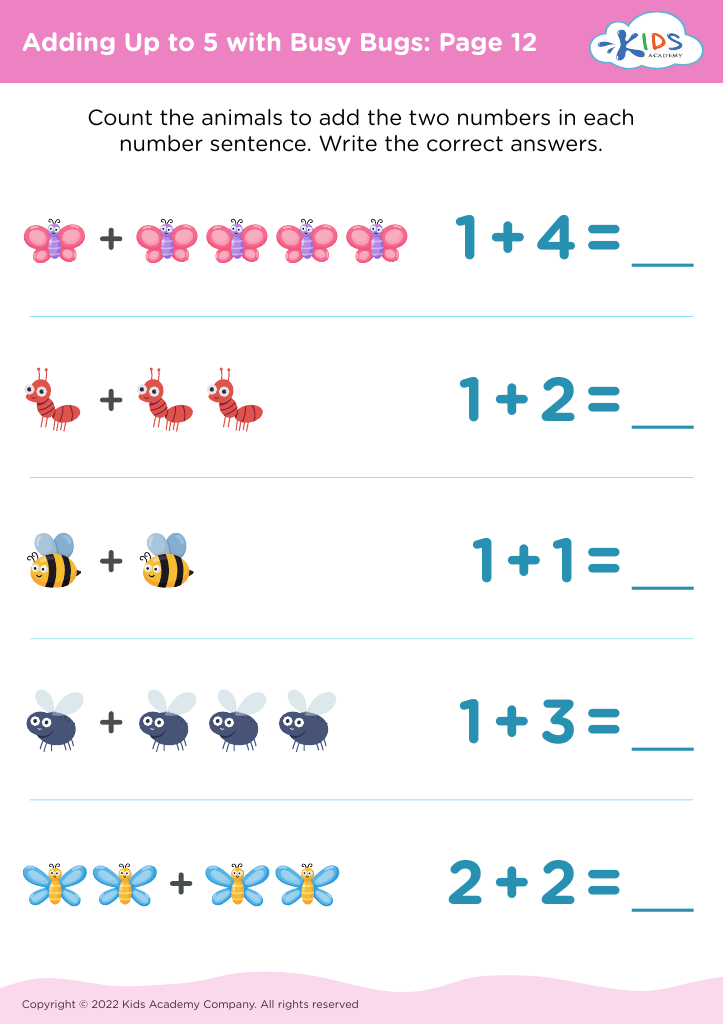
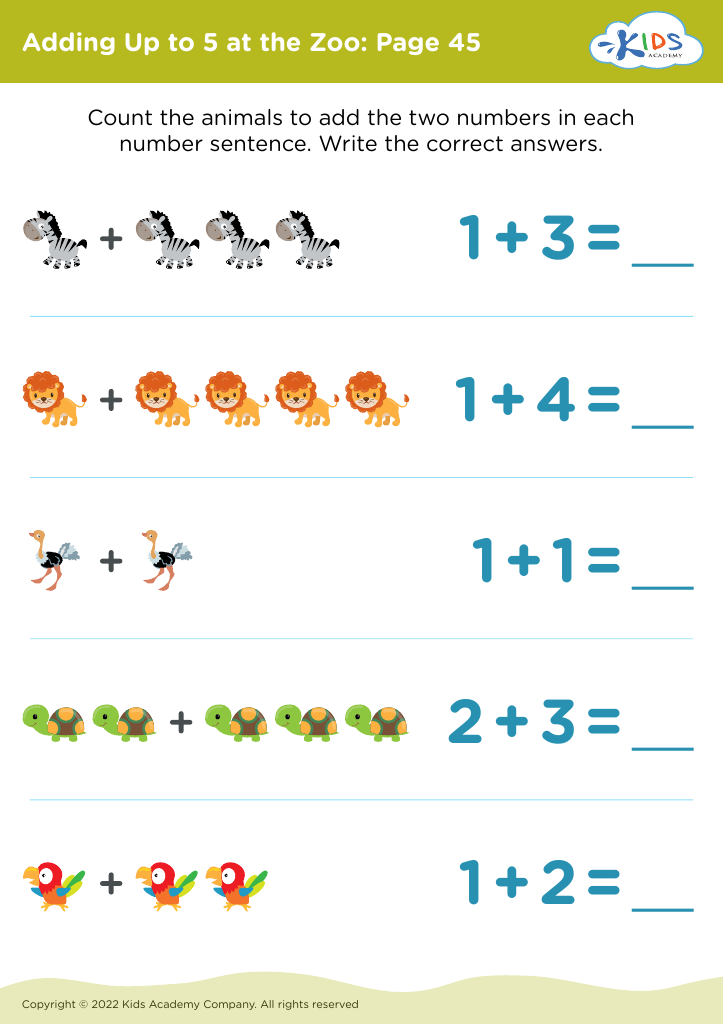
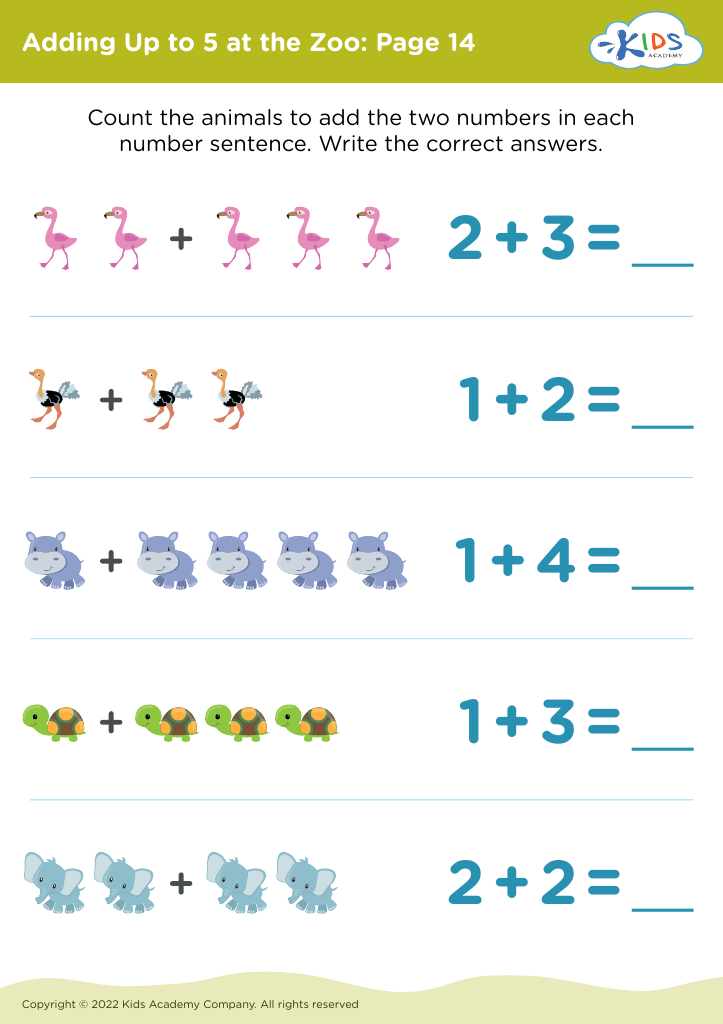








Understanding number value and the basic concept of adding up to 5 is crucial for children ages 3-5 as it builds a strong foundation for future math skills. At this age, children's brains are highly receptive and ready to grasp basic numerical concepts. Learning to add up to 5 helps them develop critical thinking and problem-solving abilities. It allows kids to make sense of numbers in their everyday environment, whether they're counting their toys or figuring out how many cookies they have.
This fundamental understanding also promotes number sense, which is the ability to relate numbers to actual quantities and see numerical relationships. Number sense is crucial for more complex math tasks children will face later on. By engaging children in fun addition activities, parents and teachers help nurture a positive attitude towards math, laying the groundwork for future success in the subject.
Moreover, incorporating games, hands-on activities, and visual aids in teaching helps maintain engagement, making learning enjoyable. Teachers and caregivers can also gauge a child's progress to provide the necessary support. Providing a solid math foundation at a young age sparks curiosity and a lifelong appreciation for learning, not only in math but across various subjects.








