Understanding numbers Adding Up to 5 Worksheets for Ages 3-5
3 filtered results
-
From - To
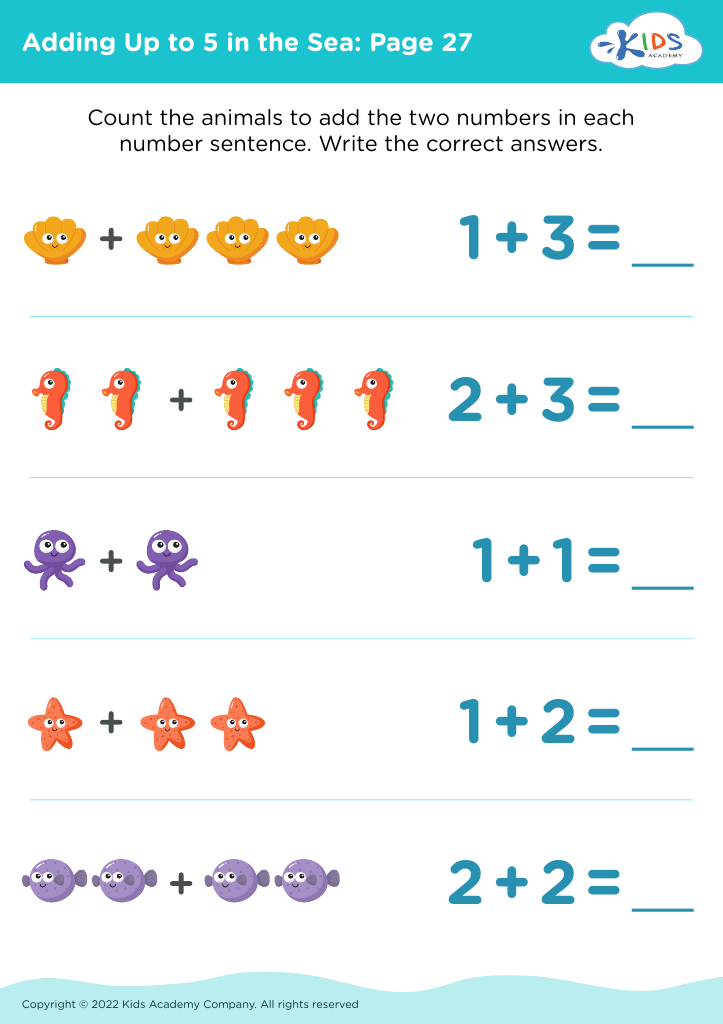
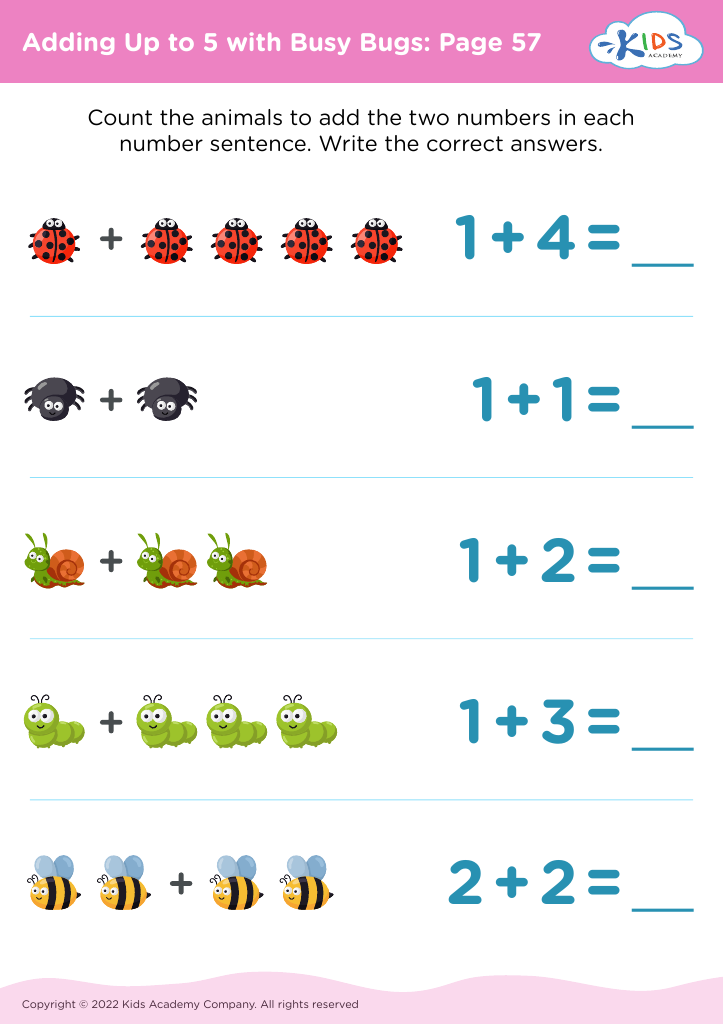
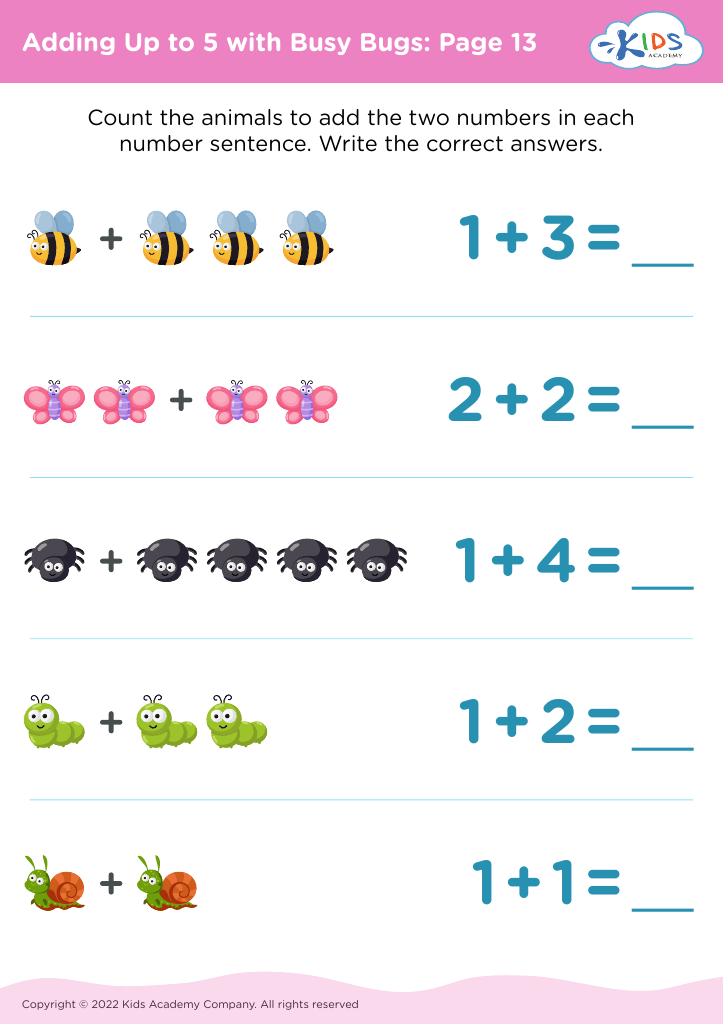
Introduce your child to the world of numbers with our "Understanding Numbers: Adding Up to 5 Worksheets" for ages 3-5. These engaging worksheets are designed to build foundational math skills through fun activities that teach basic addition, visual number recognition, and counting. Perfect for preschoolers and kindergartners, our worksheets use colorful illustrations and interactive elements to make learning enjoyable and effective. Help your little learners grasp the concept of numbers and simple addition in a way that's as exciting as it is educational. Foster a love for math early on with our expertly crafted worksheets.





%20(1).jpg)


Understanding numbers and learning to add up to 5 is crucial for children ages 3 to 5 as it builds foundational math skills necessary for future learning. At this early age, children are developing their cognitive abilities rapidly. Introducing them to numbers and basic addition helps enhance their number sense, which is the ability to understand numbers and their relationships.
When children grasp the concept of numbers adding up to 5, they start to comprehend more advanced mathematical principles such as counting, one-to-one correspondence, and comparing quantities. This knowledge not only boosts their confidence in handling math-related tasks but also lays the groundwork for more complex topics like addition and subtraction, which they will encounter in their subsequent academic years.
Moreover, engaging young children with numbers and addition in a fun and interactive way fosters a positive attitude toward mathematics. This positive exposure during their formative years can mitigate math anxiety and promote a love for learning, which will benefit them throughout their education.
For parents and teachers, integrating number activities into daily routines, such as counting toys, grouping objects, or playing simple math games, ensures that children develop these essential skills naturally and enjoyably. A strong understanding of numbers up to 5 equips children with the critical thinking and problem-solving abilities they need for lifelong learning.








