Understanding Quantities Adding Up to 5 Worksheets for Ages 3-5 - Page 2
36 filtered results
-
From - To
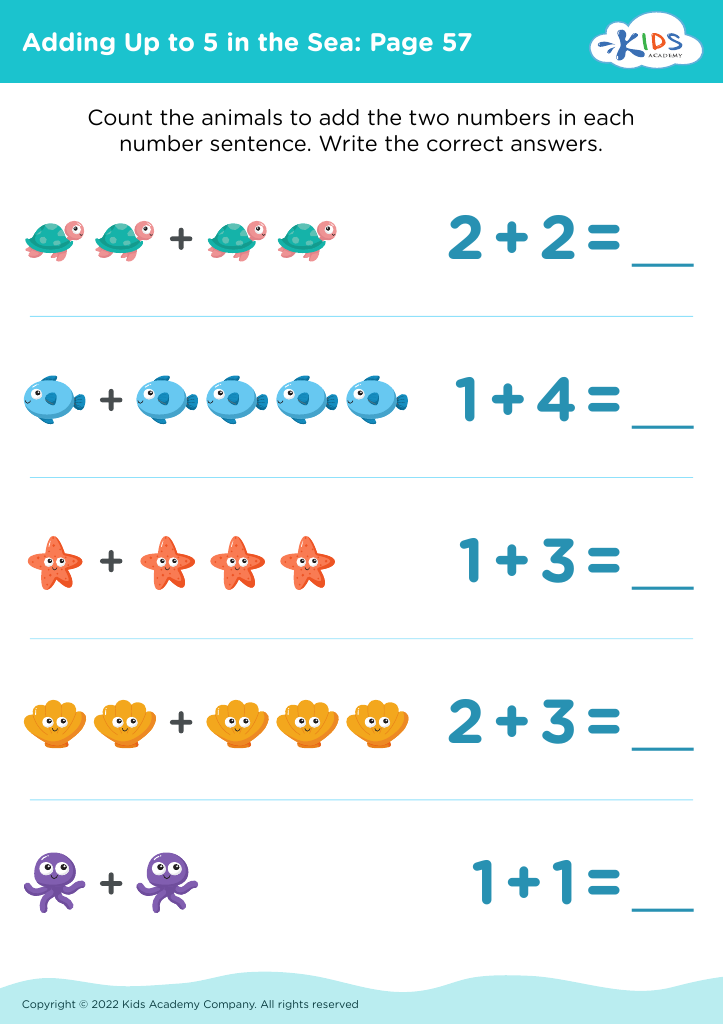
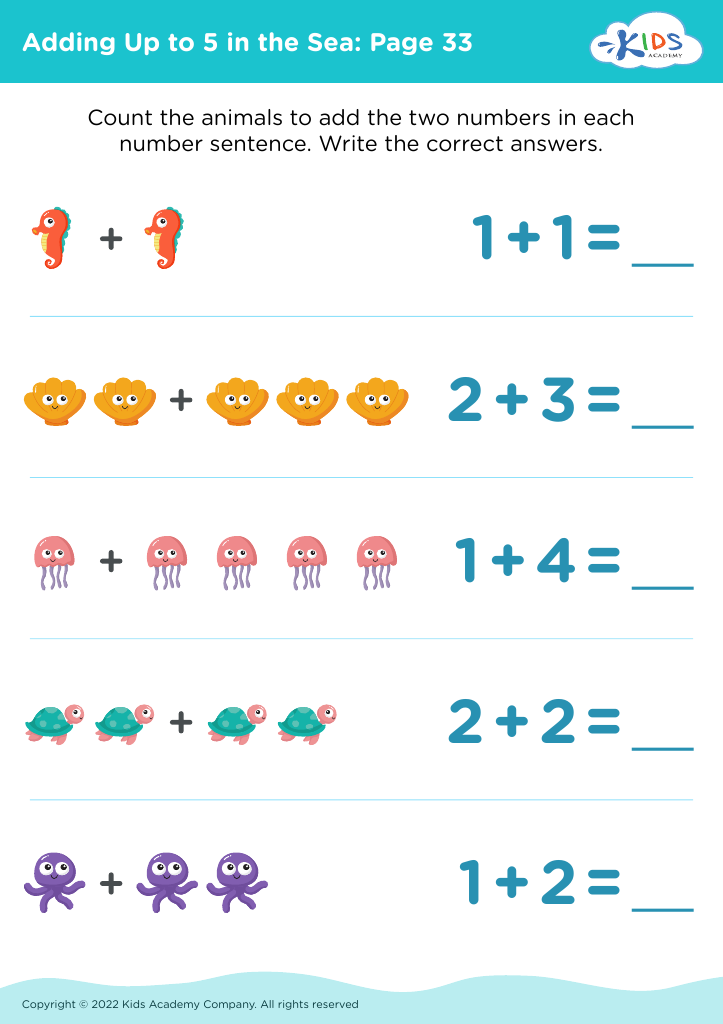
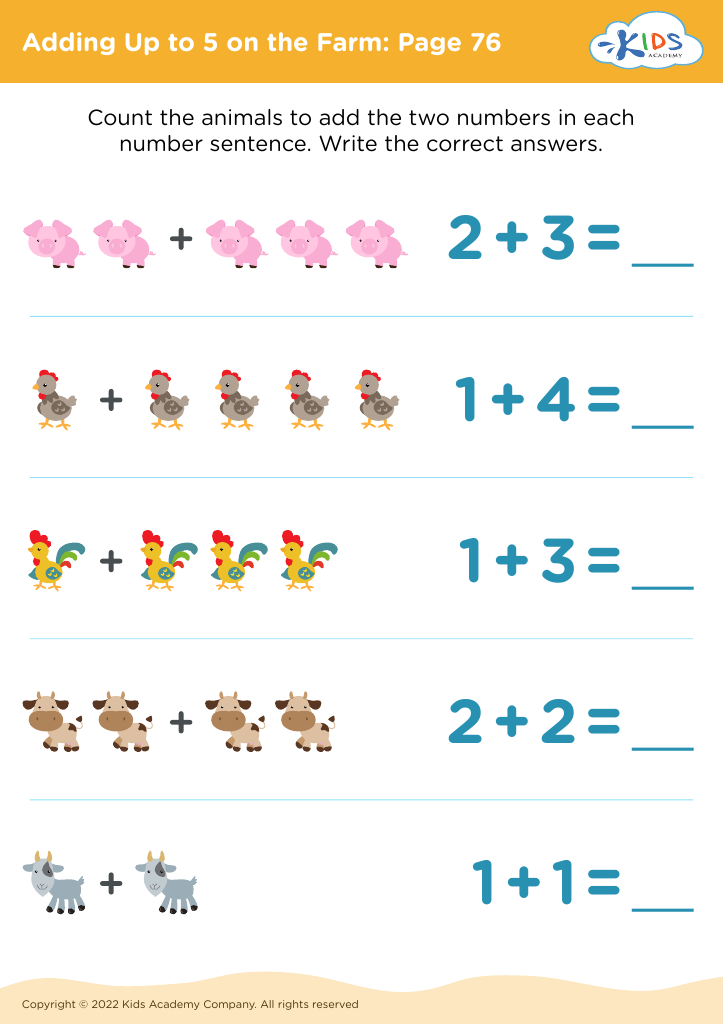
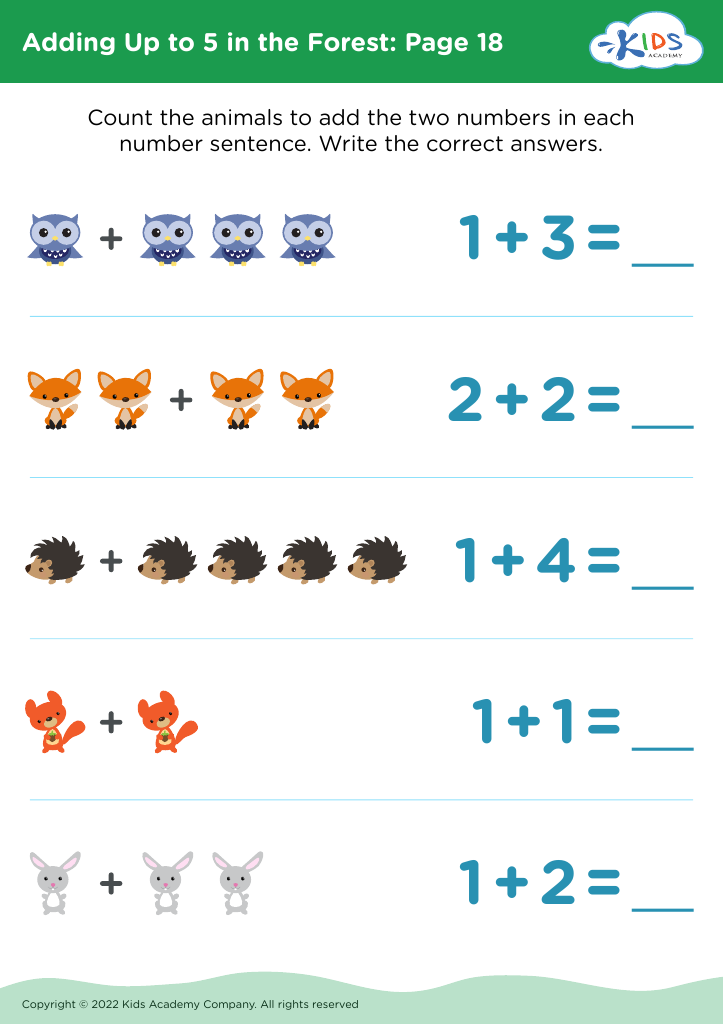
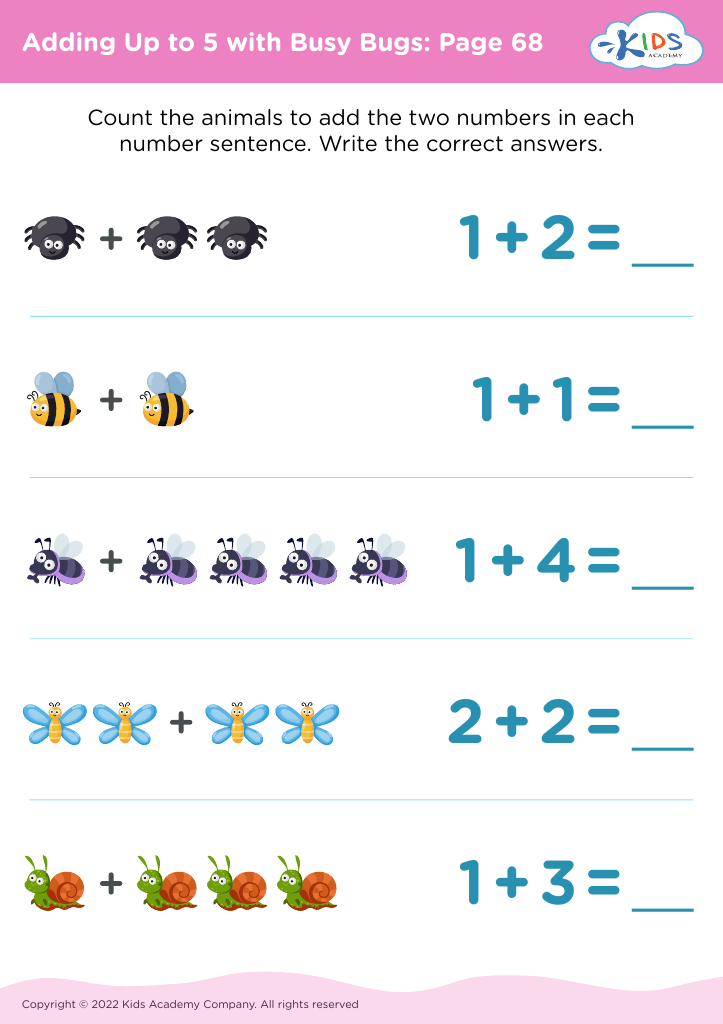
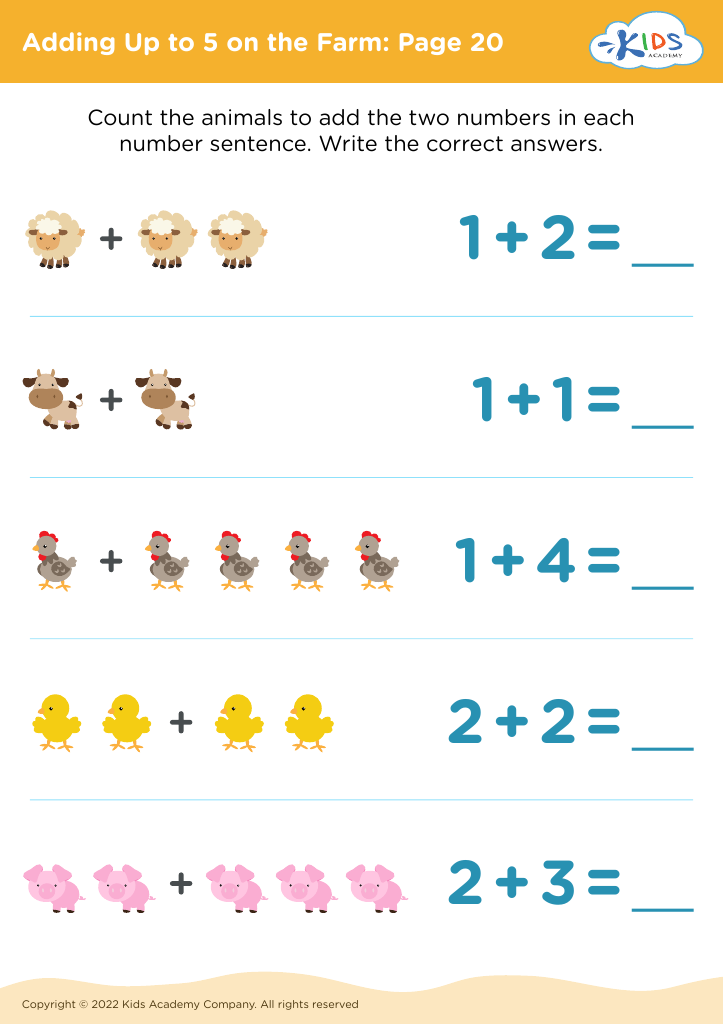
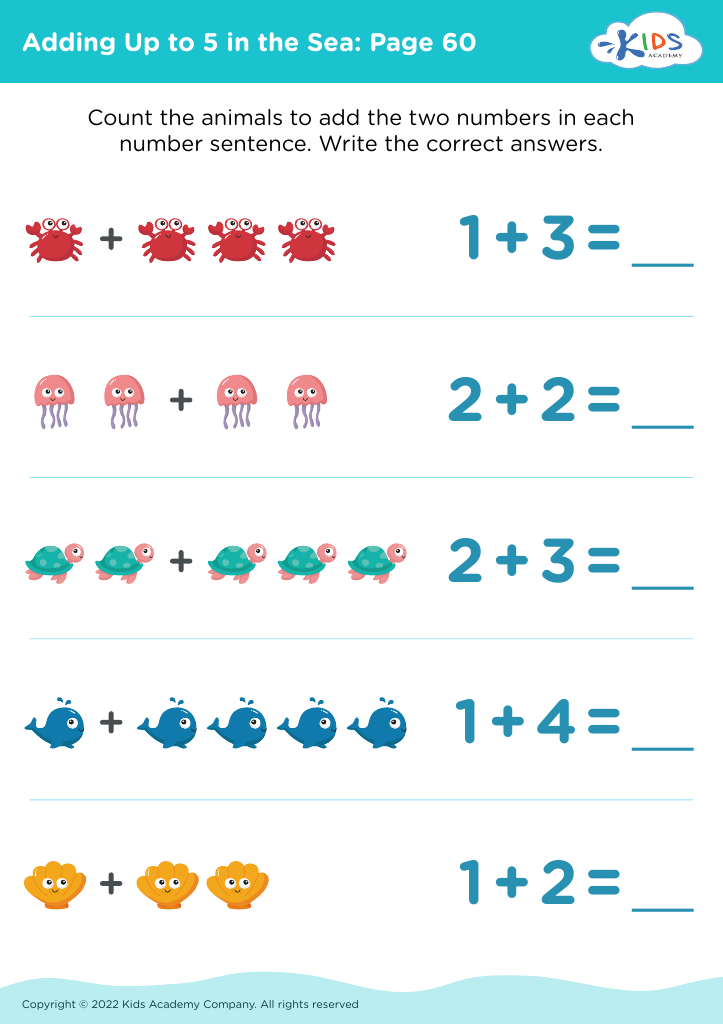
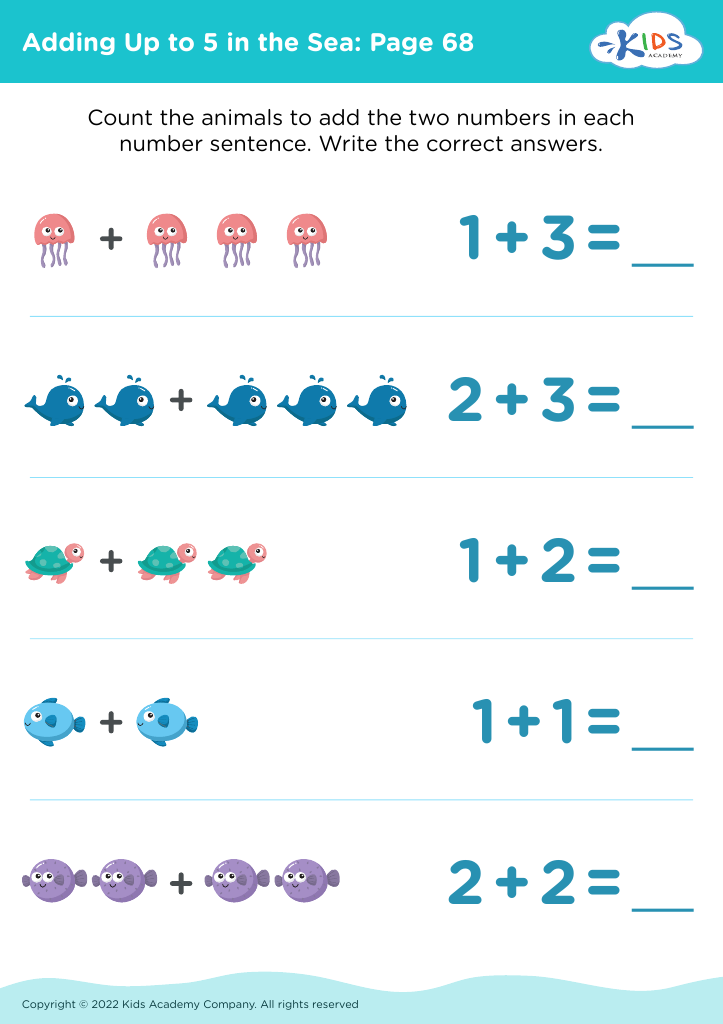
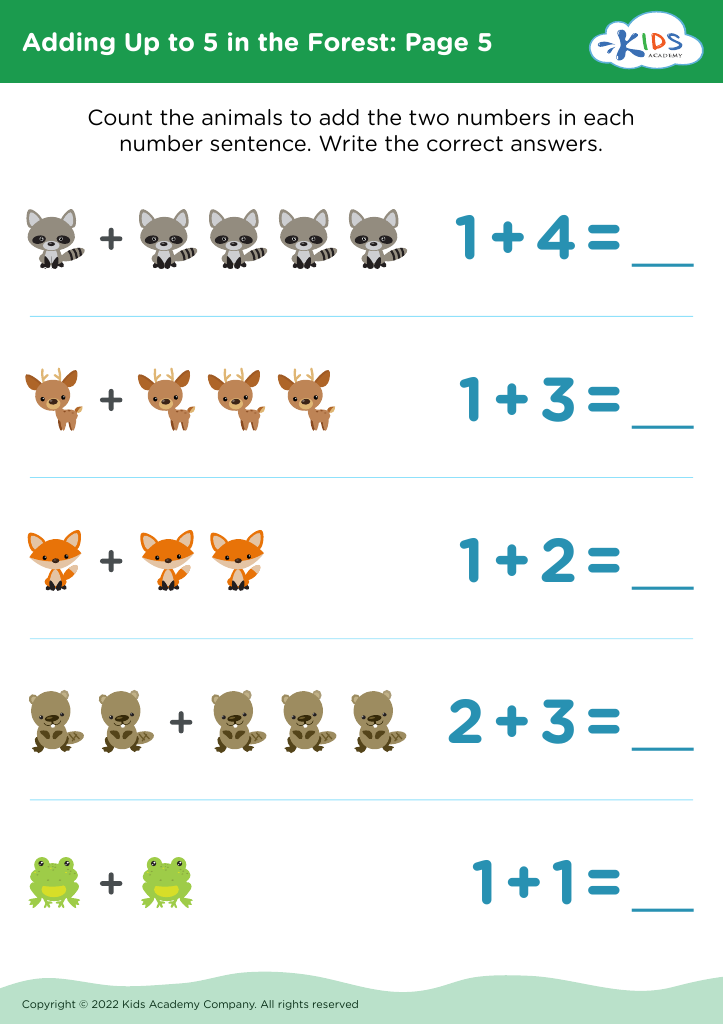
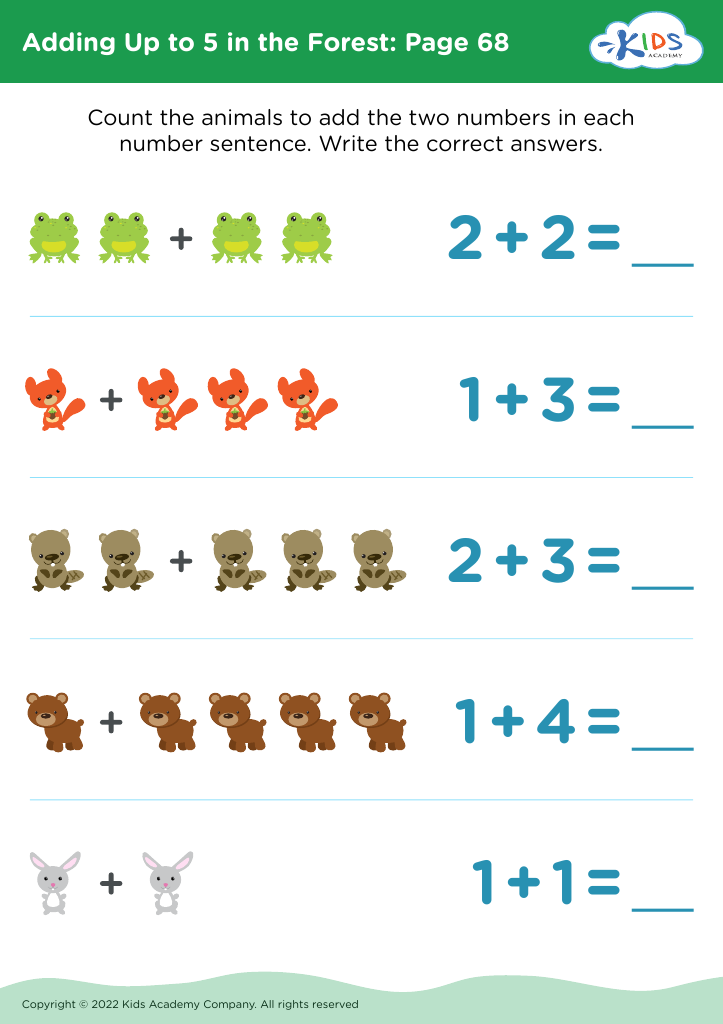
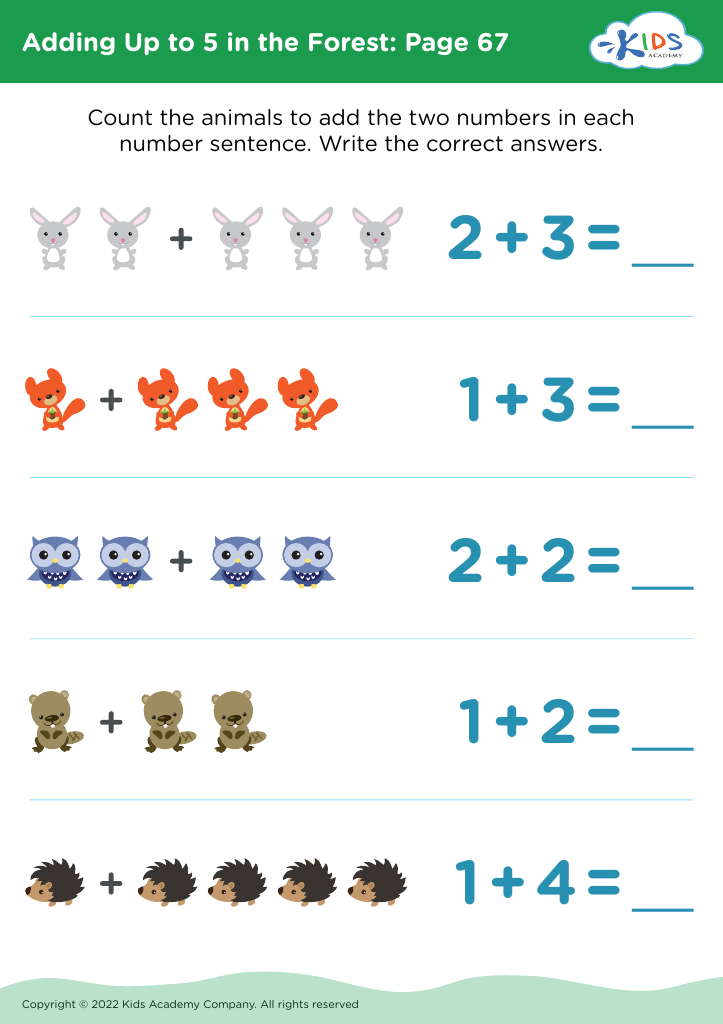
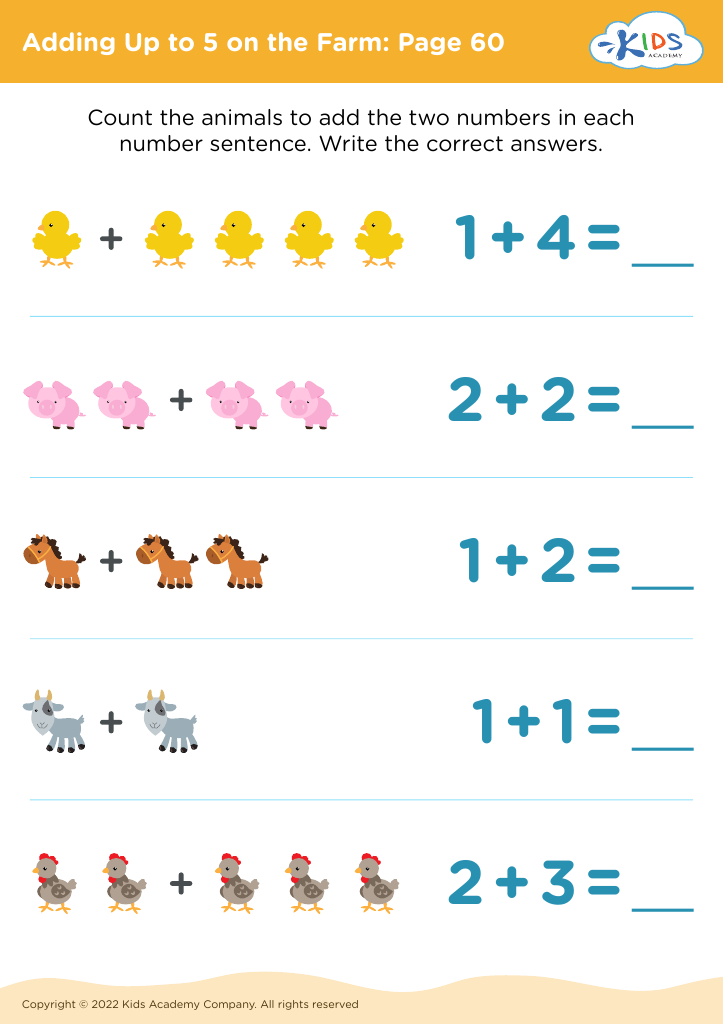








Understanding quantities that add up to 5 is a foundational skill for young children, especially for those aged 3 to 5. At this stage, the ability to grasp basic concepts of numbers sets the groundwork for more advanced mathematical skills. It not only enhances children's numerical literacy but also fosters critical thinking, problem-solving, and reasoning skills.
Caring about this skill is essential for parents and teachers because it empowers children to recognize and manipulate numbers in practical contexts, such as counting toys, sharing snacks, or playing games. When children learn to combine quantities to make 5, they enhance their understanding of addition and subtraction concepts. This early exposure to quantities prepares them for future mathematical challenges and encourages a positive attitude towards math, reducing anxiety often associated with the subject.
Moreover, engaging with numbers in playful and meaningful ways helps to create a rich learning environment. It promotes curiosity and creativity, offering opportunities for children to explore concepts through hands-on experiences. Therefore, both parents and teachers play a critical role in supporting this essential learning stage, strengthening overall cognitive development and laying the foundation for lifelong learning in mathematics and other subjects.








