Visual comprehension Adding Up to 5 Worksheets for Ages 3-5
7 filtered results
-
From - To
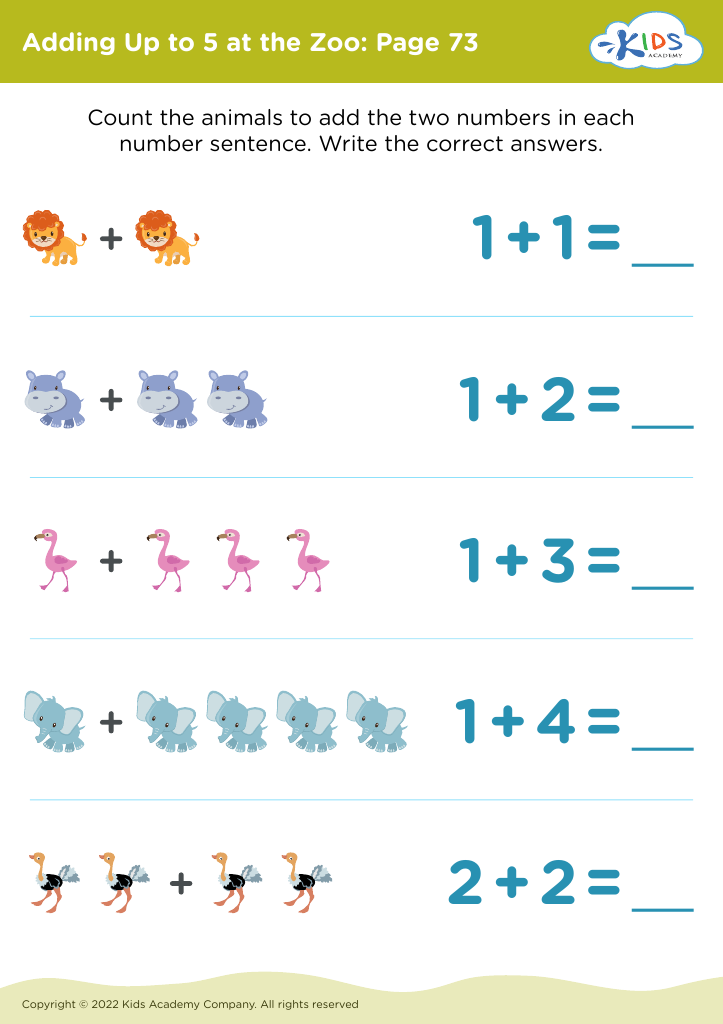
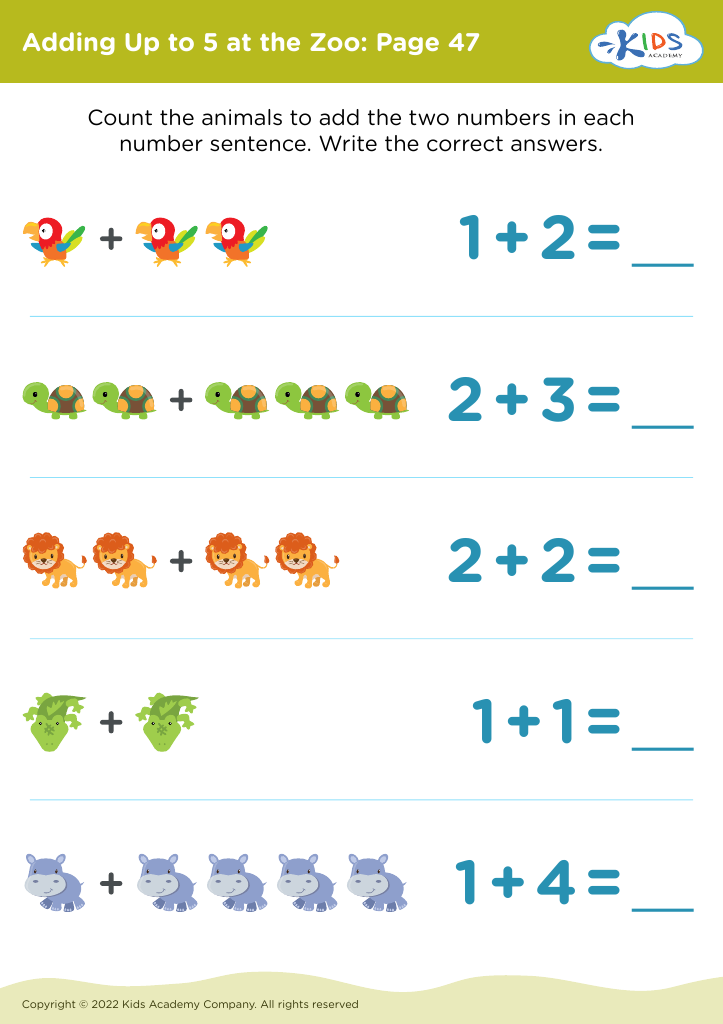
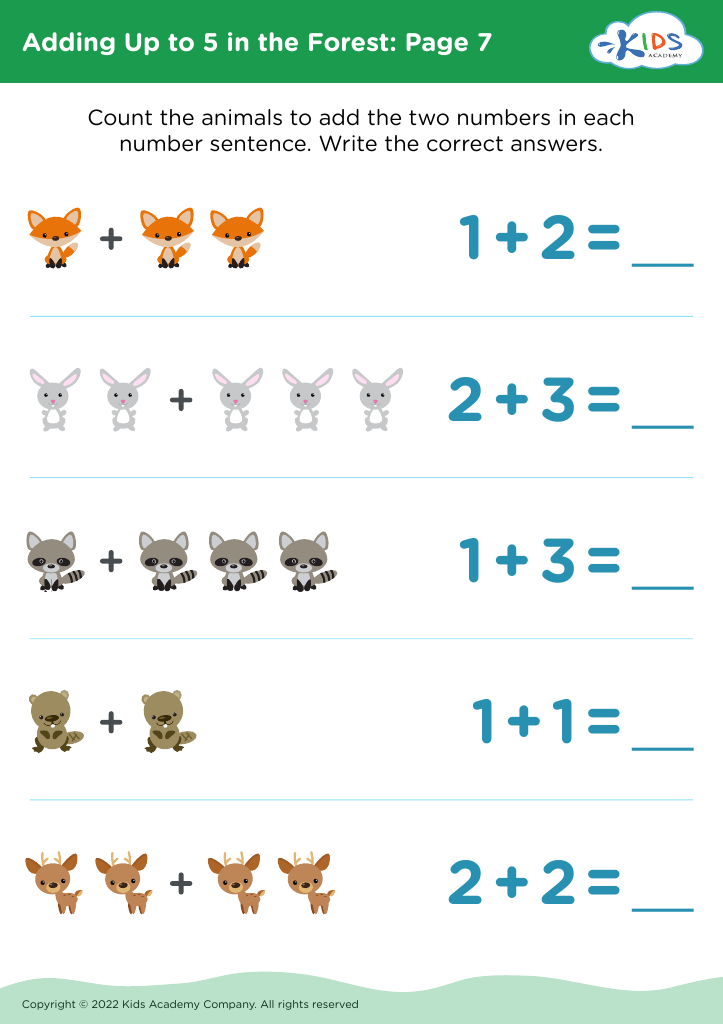
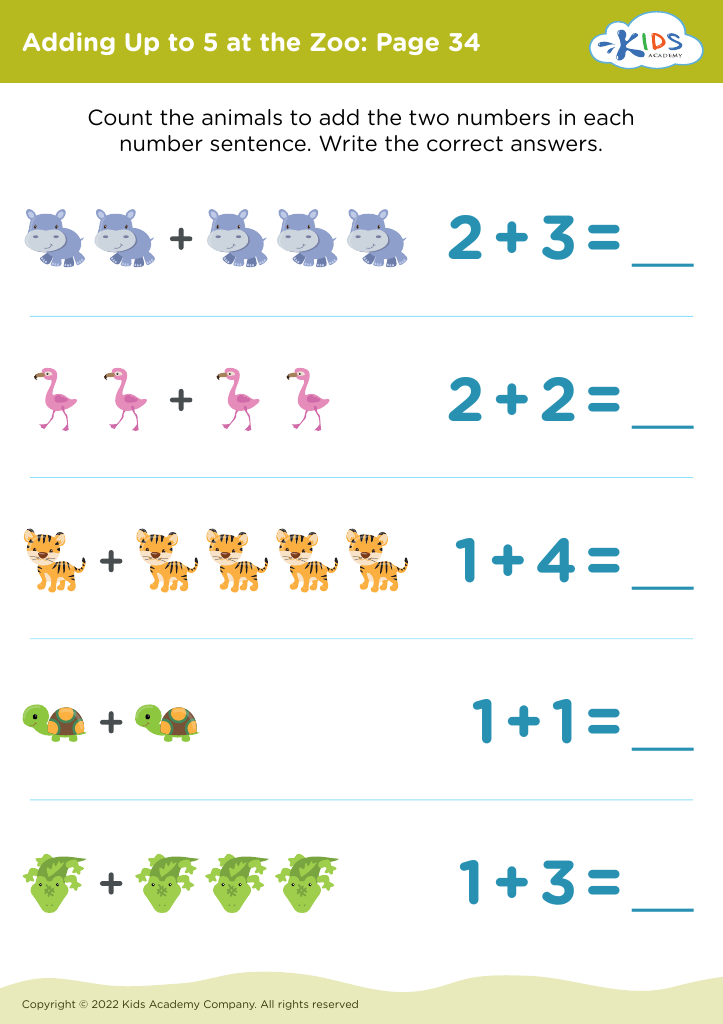
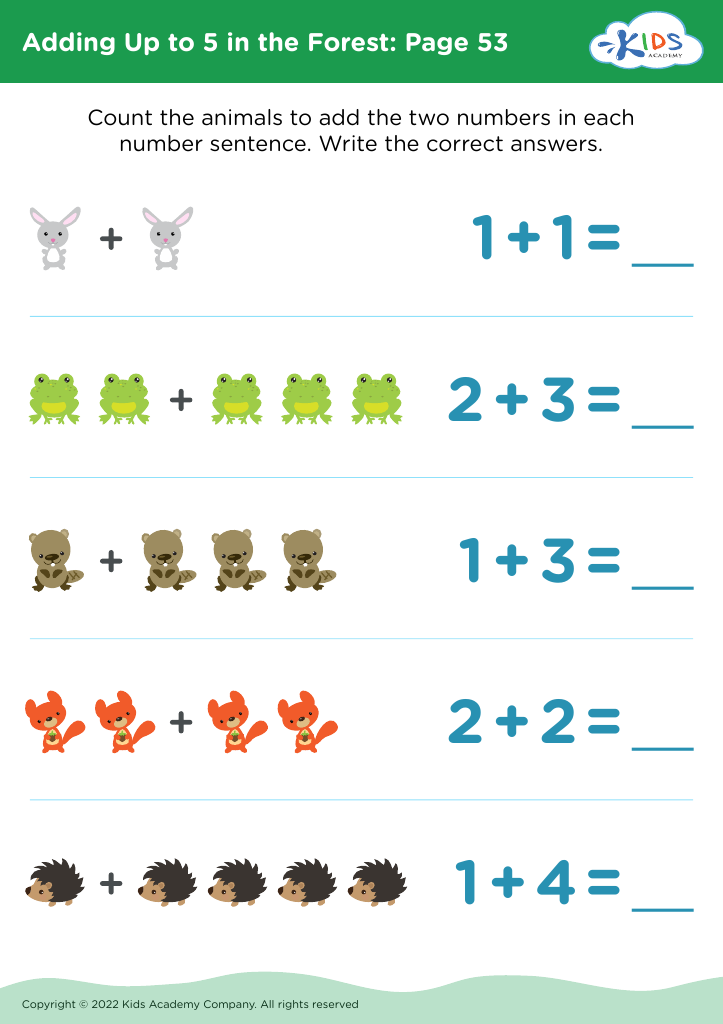
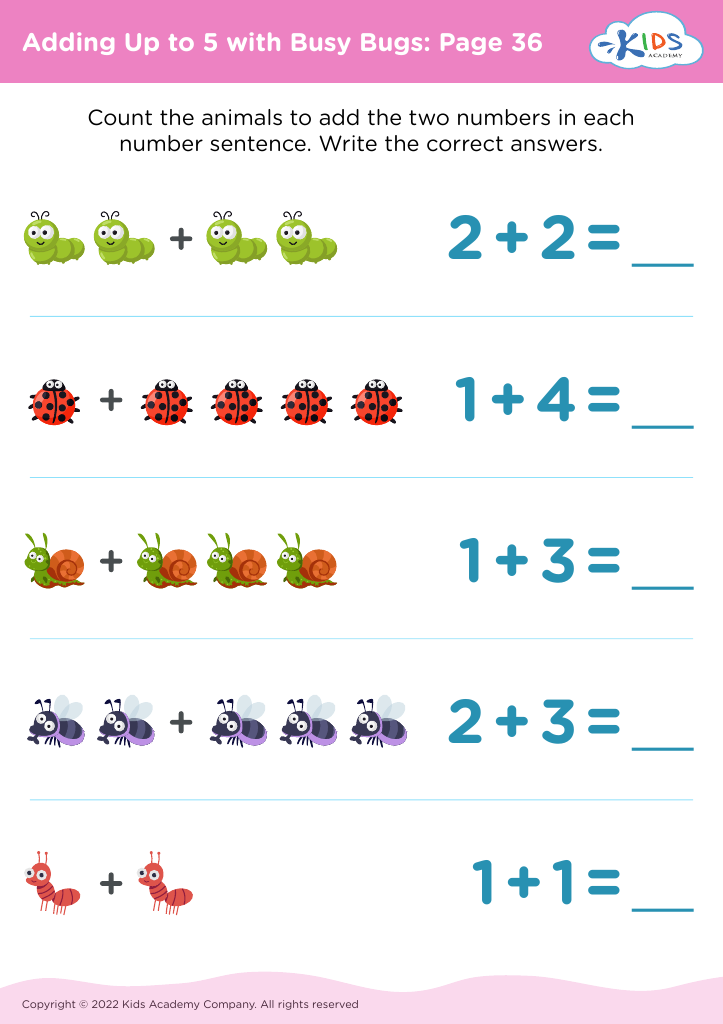
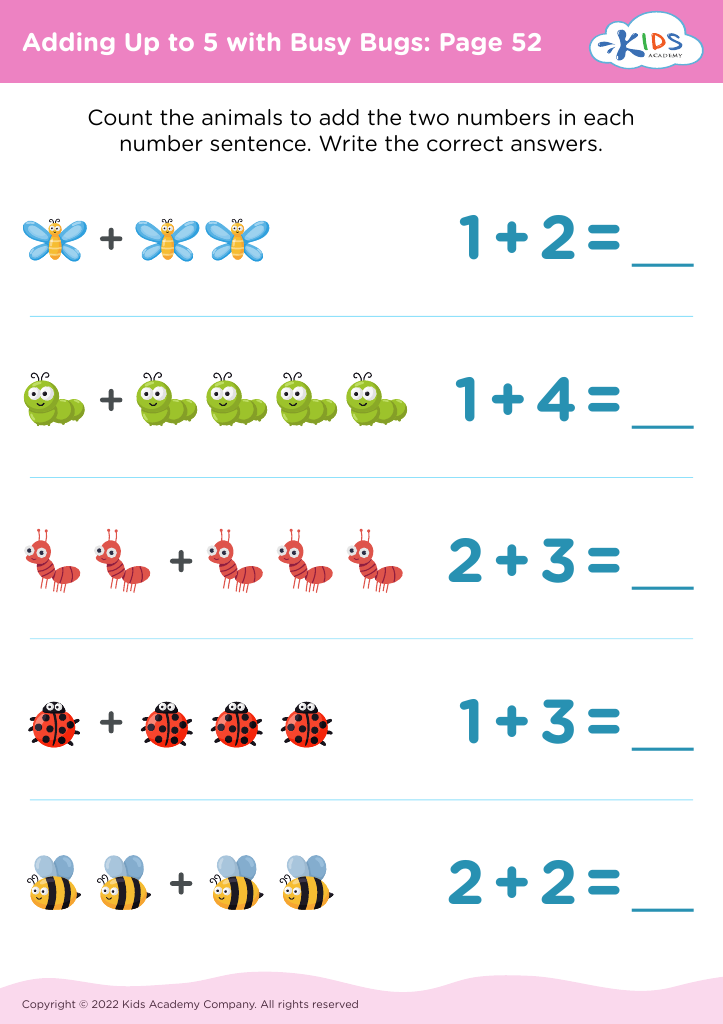
Enhance your child's early math skills with our "Visual Comprehension Adding Up to 5 Worksheets" for ages 3-5. Designed to make learning fun, these worksheets incorporate engaging visuals that help little learners grasp basic addition concepts. Children will identify and count objects, improving their ability to recognize numbers and quantities through colorful images and interactive exercises. These worksheets not only promote mathematical understanding but also develop essential visual comprehension skills. Perfect for parents and educators seeking to enrich children's learning at home or in the classroom, these resources lay a strong foundation for future mathematical success. Download them now for exciting learning!





%20(1).jpg)


Visual comprehension skills are essential for young learners, particularly when it comes to foundational math concepts like adding up to 5. For children aged 3-5, visual comprehension is the ability to interpret and understand visual information, which greatly aids in the grasping of mathematical concepts.
Firstly, visual comprehension enhances children's ability to recognize numbers and quantities, allowing them to connect symbols with actual amounts. This connection lays the groundwork for basic arithmetic skills. Engaging with visual aids like counters, blocks, or pictures can foster interaction and keep young learners motivated.
Moreover, developing visual comprehension fosters critical thinking and problem-solving skills. When children visualize mathematical concepts, they learn to explore different ways to combine or separate quantities, an early precursor to abstract thinking.
For parents and teachers, prioritizing visual comprehension in young children means providing experiences that encourage exploration through hands-on activities, games, and storytelling that incorporate numbers. This investment not only supports early math skills but also builds confidence and curiosity about learning, preparing children for future academic success. In essence, caring about visual comprehension is integral to nurturing a well-rounded, math-savvy child ready to embark on their educational journey.








