Visual Learning Adding Up to 5 Worksheets for Ages 3-5 - Page 4
84 filtered results
-
From - To




.jpg)


%20(1).jpg)
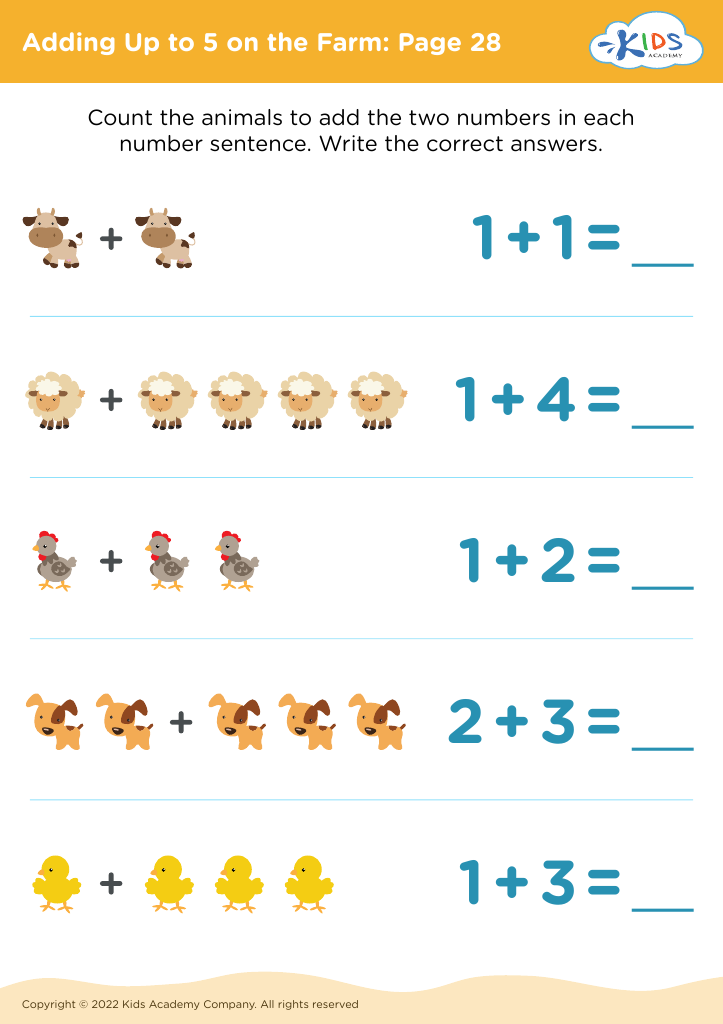
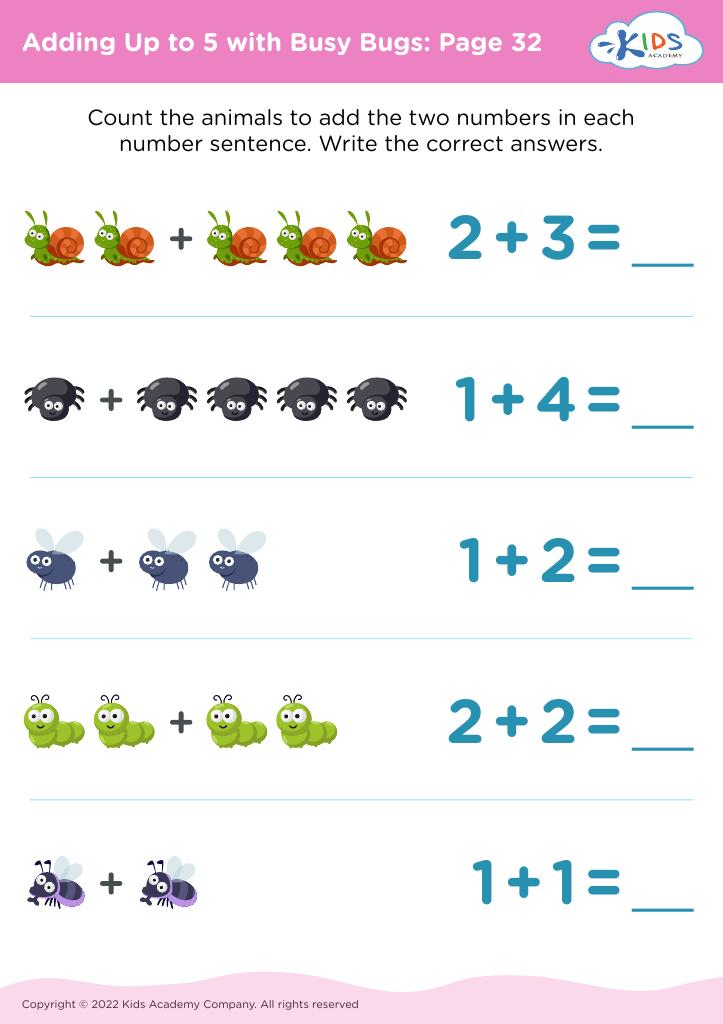
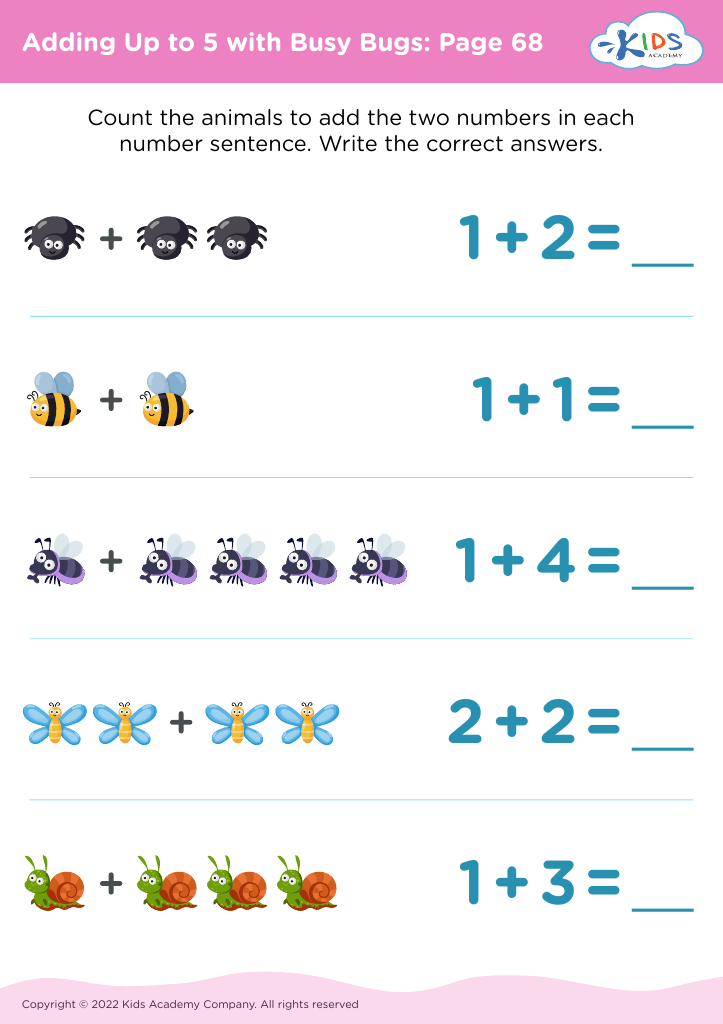
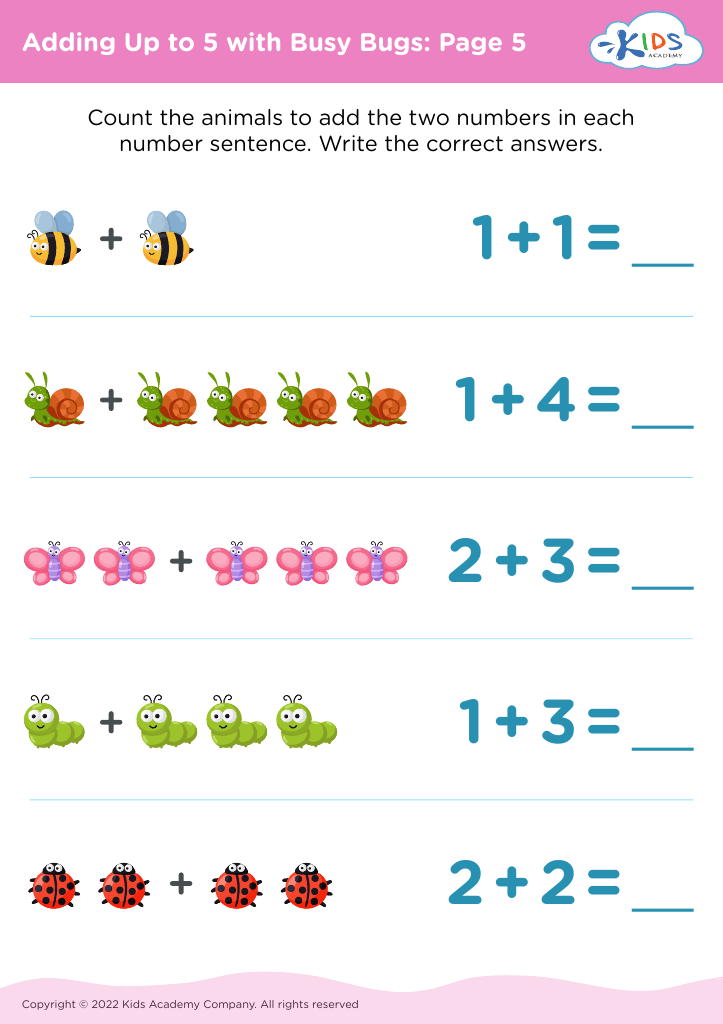
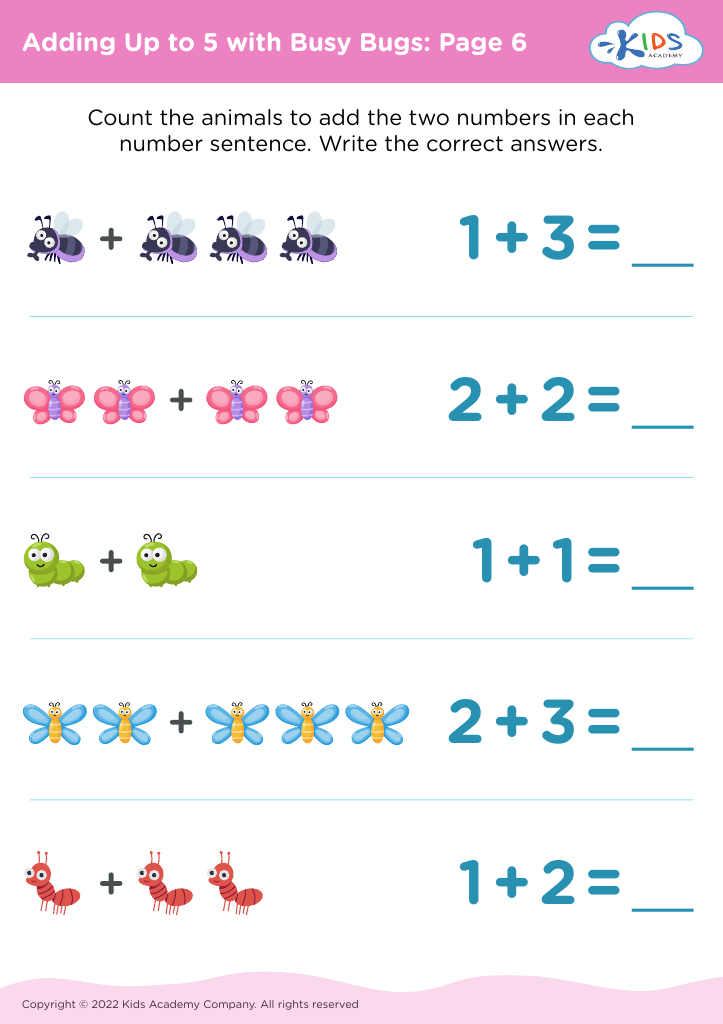
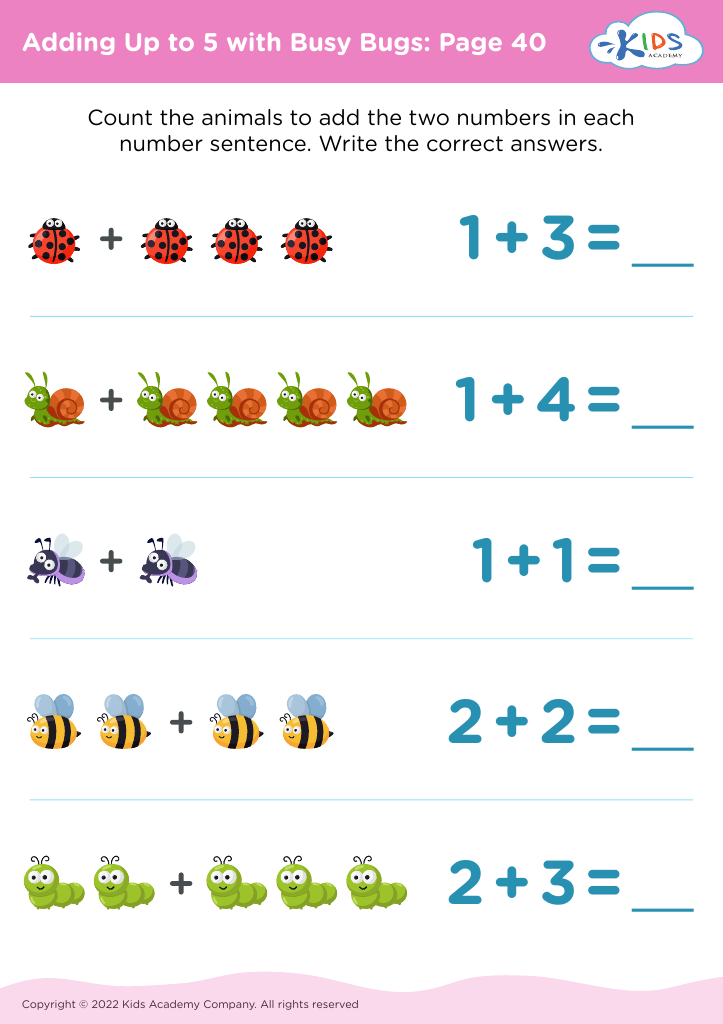
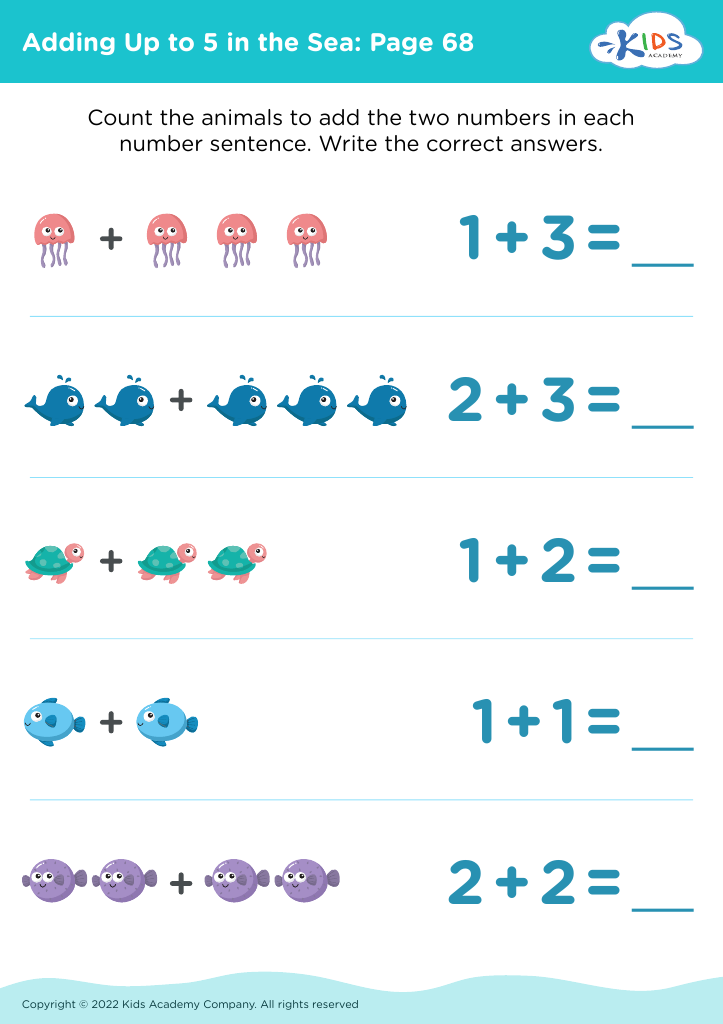
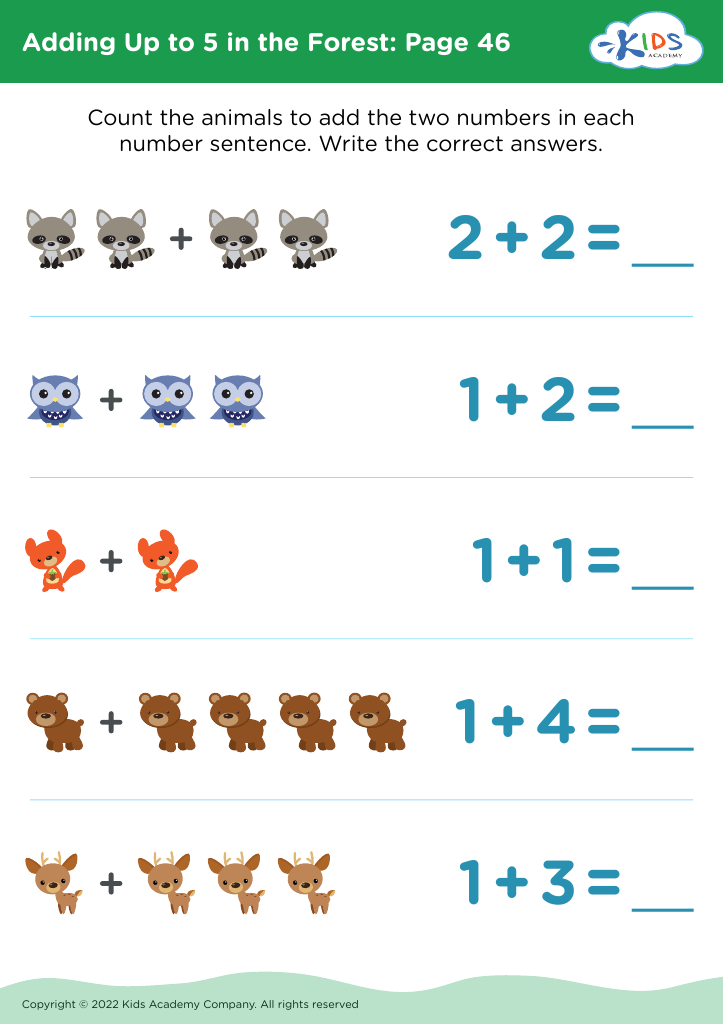
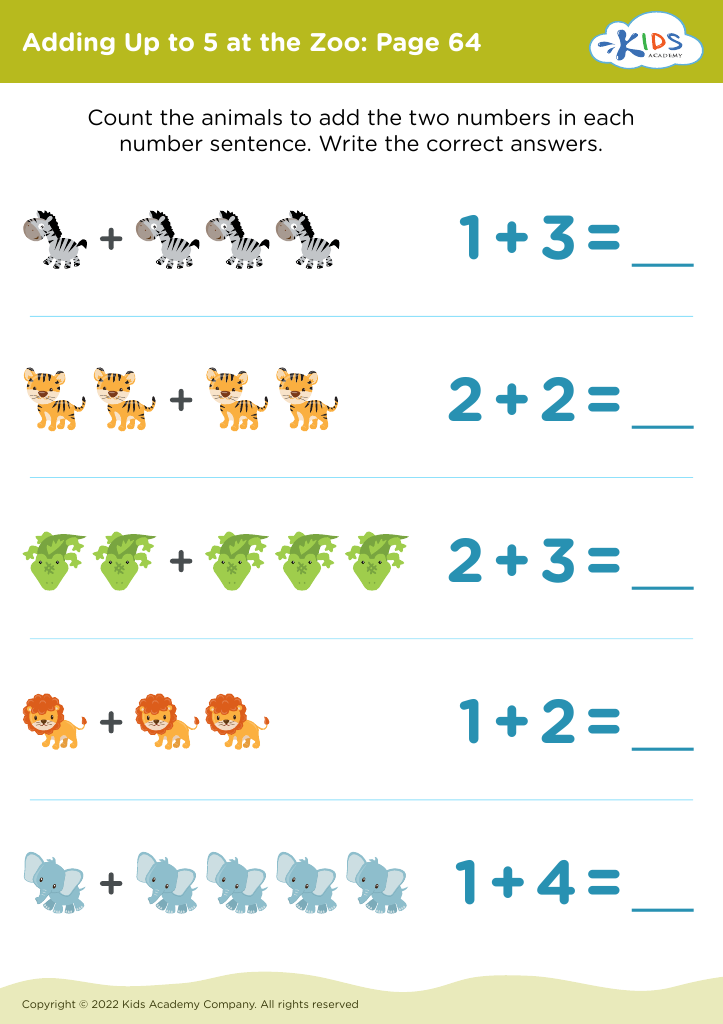
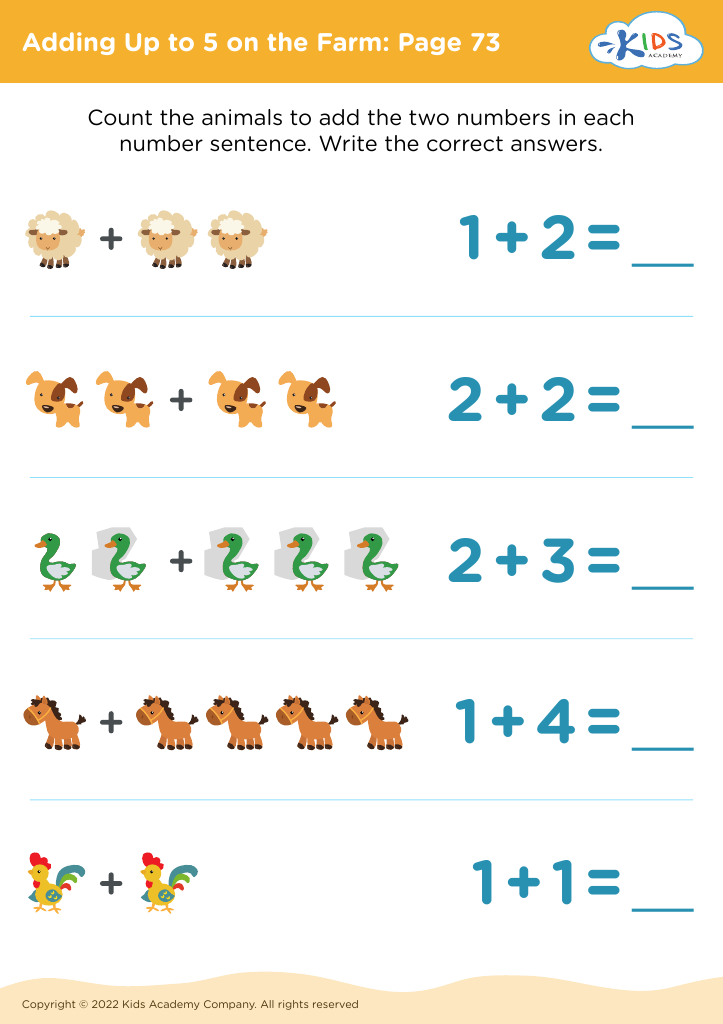
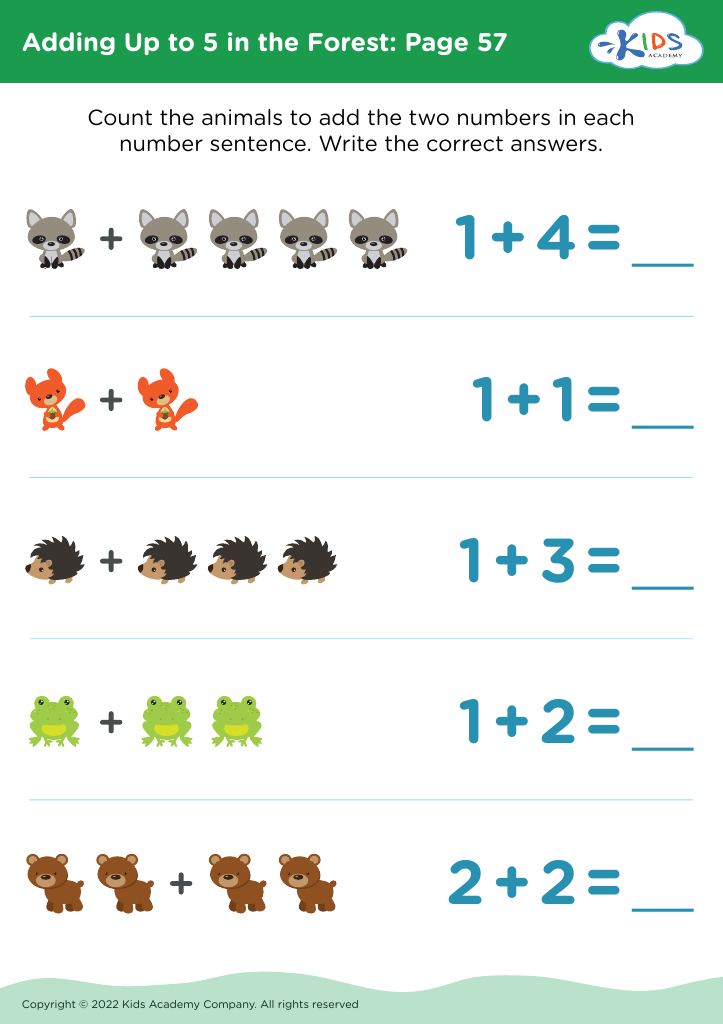
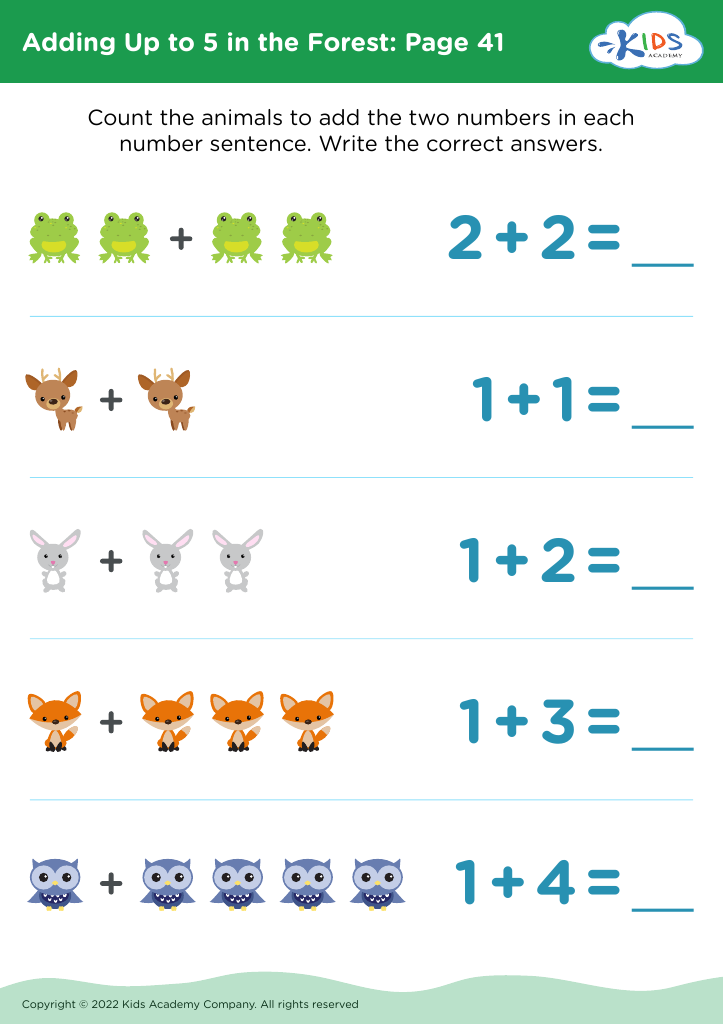
Visual learning is crucial for kids ages 3-5, especially when introducing concepts like adding up to 5. During these formative years, children's brains are highly receptive to visual stimuli. For early math concepts, like addition, using visual tools—such as pictures, counters, or story-based illustrations—helps make abstract ideas more concrete.
When children see visual representations of addition, they can physically count objects and better understand that adding means combining groups to make a larger one. This hands-on approach caters to various learning styles and can make math enjoyable and less intimidating.
Furthermore, early engagement with math sets a positive foundation for future learning. Young children, when encouraged and supported through visual tools, are more likely to develop confidence in their abilities. They learn to recognize patterns, construct meaning, and solve problems more efficiently.
Incorporating visual learning in simple addition also allows parents and teachers to identify and address any learning difficulties early on. Activities like using blocks, drawing pictures, and storytelling not only teach math skills but also support overall cognitive and motor development.
Therefore, fostering visual learning and focusing on adding up to 5 during these early years is an investment in a child's academic future, laying the groundwork for numeracy skills and a lasting love for learning.








