Visual perception improvement Adding Up to 5 Worksheets for Ages 3-5
5 filtered results
-
From - To
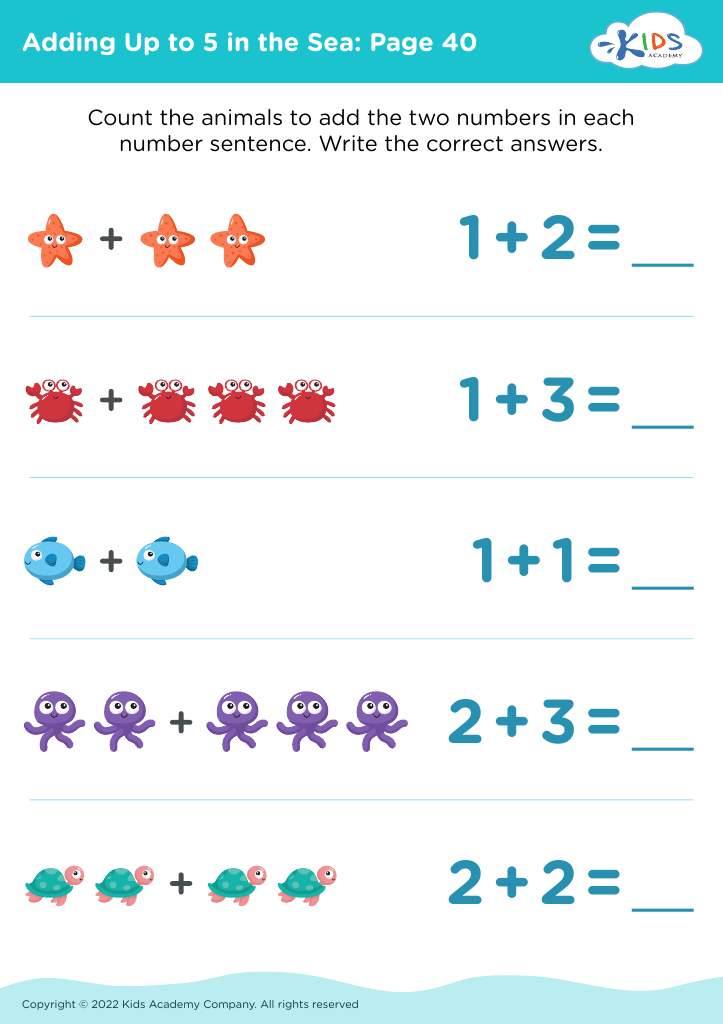
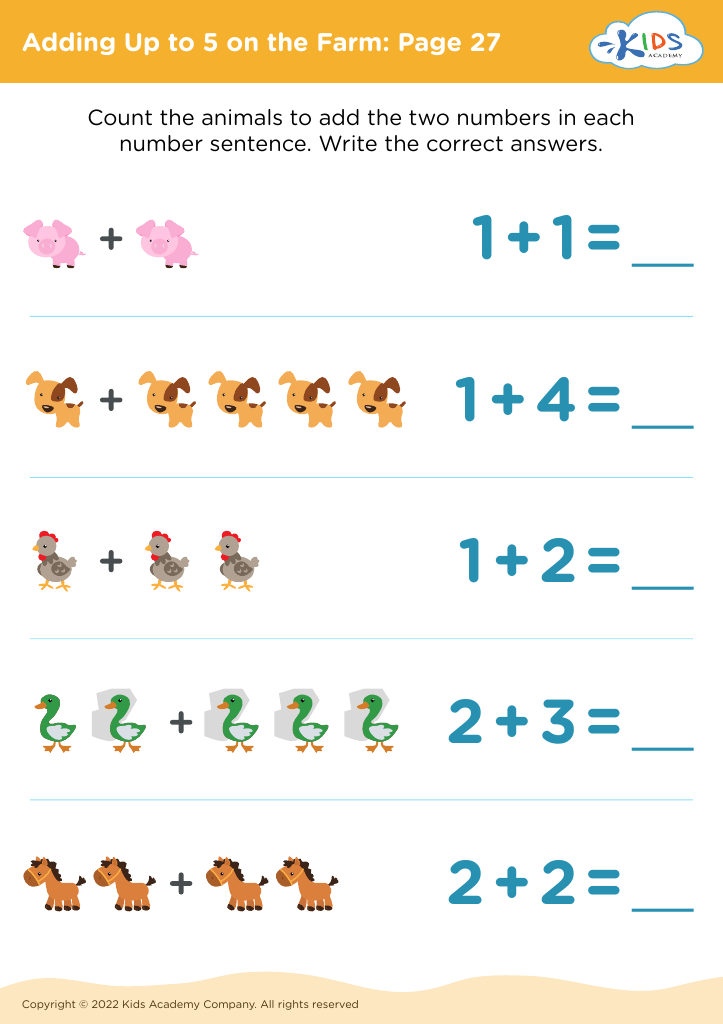
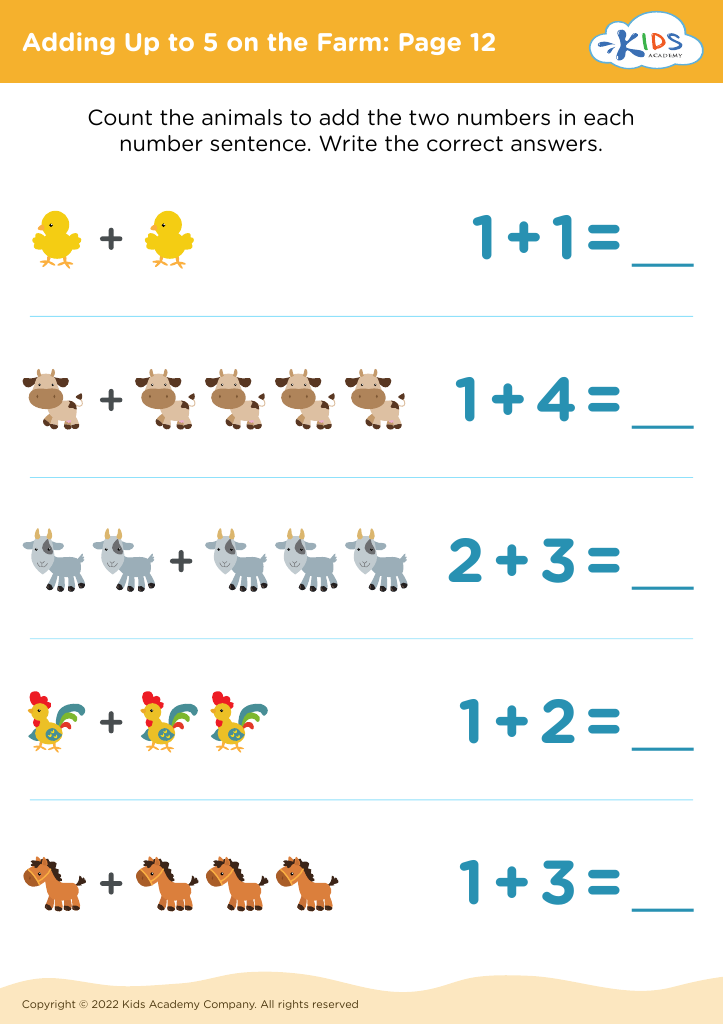
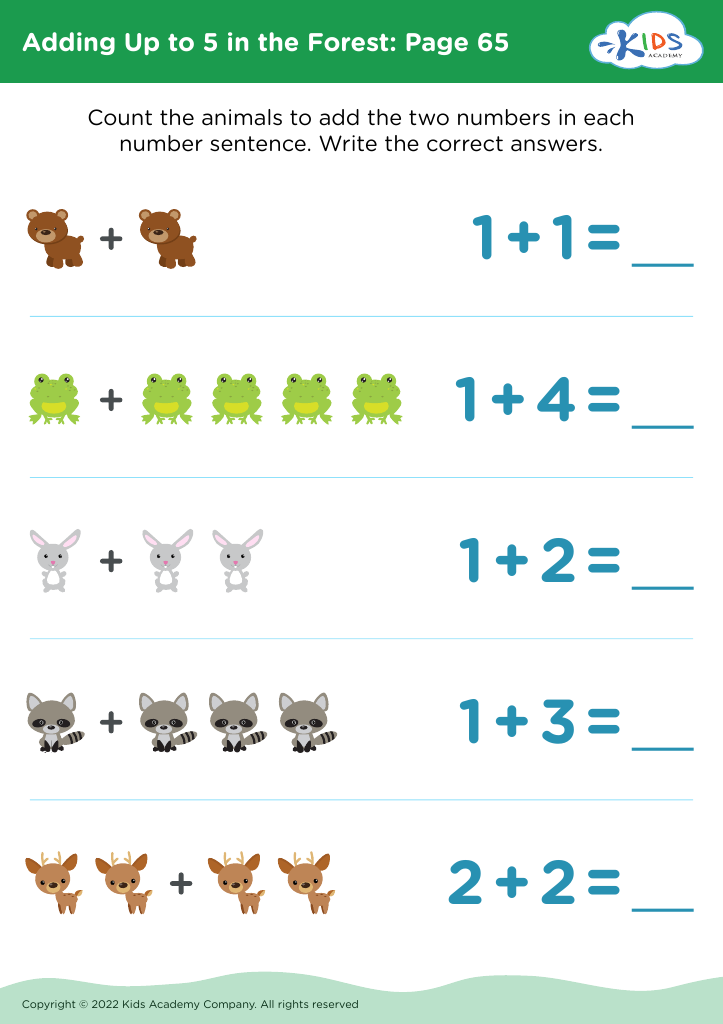
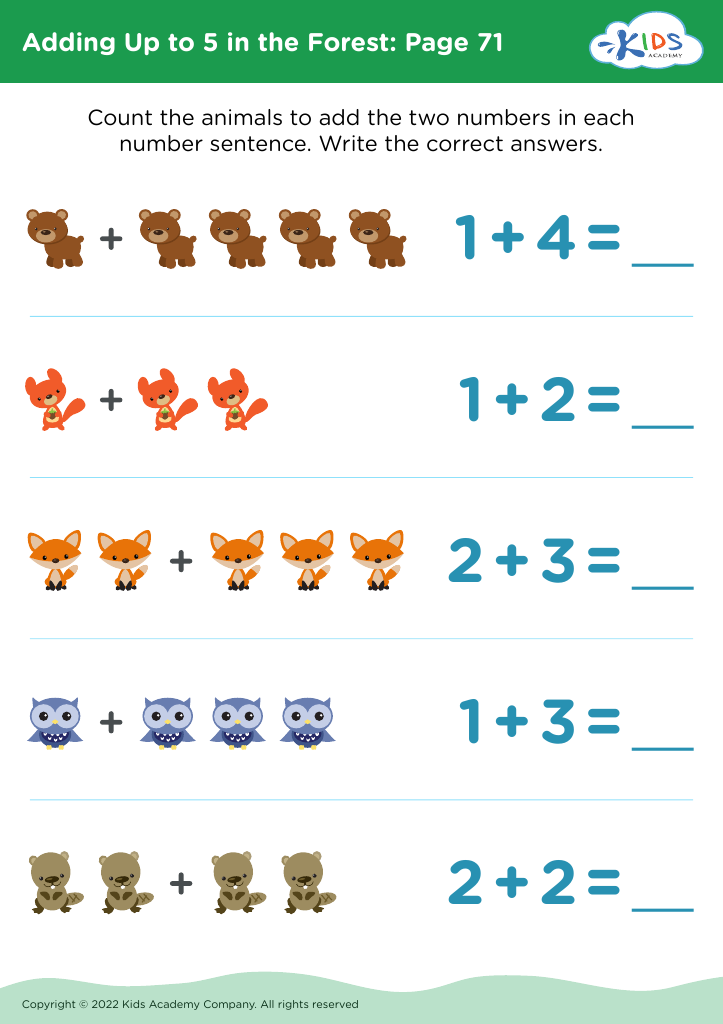
Unlock the potential of your child's visual perception with our "Adding Up to 5 Worksheets" for ages 3-5. These engaging math worksheets are thoughtfully designed to enhance early learning skills, making addition fun and accessible. Perfect for preschoolers, each colorful page offers vibrant illustrations and interactive exercises that sharpen both mathematical abilities and visual coordination. Tailored to improve focus, pattern recognition, and problem-solving skills, these worksheets provide a balanced learning experience, fostering cognitive development in young learners. Ideal for parents and educators aiming to give kids a head start in their academic journey. Explore and download now!







%20(1).jpg)
Visual perception is a crucial skill for young children, especially in early education from ages 3 to 5. Parents and teachers should prioritize improving visual perception because it forms the foundation for many other important skills, including reading, writing, and math. The ability to notice, compare, and understand visual details directly influences a child’s capacity to learn numbers and develop early math skills, such as adding up to 5.
When children improve their visual perception, they become better at identifying shapes, patterns, and the important differences between objects. This skill enhances their ability to visually organize and sequence information, which is essential for understanding number relationships and performing basic arithmetic.
Moreover, strong visual perception skills contribute to a child's overall cognitive development and boost their ability to solve more complex problems later on. Activities that target visual perception improvement, like puzzles and matching games, also engage children's attention and promote better focus and concentration.
Supporting this development at an early age prepares children for more advanced learning as they grow. It ensures that they are building on a strong foundation, enhancing their school readiness and academic success in the long term. Therefore, proactive efforts by parents and teachers in fostering visual perceptual skills are invaluable in a child's early developmental journey.








