Fine motor skills (writing) Adding with Busy Bugs Worksheets for Ages 3-5
5 filtered results
-
From - To
Enhance your preschooler's fine motor skills and early math abilities with our "Adding with Busy Bugs" worksheets tailored for ages 3-5! These engaging printables feature delightful bug-themed activities that make learning fun and interactive. Children practice tracing, writing numbers, and simple addition while improving their pencil control and hand coordination. Each worksheet is thoughtfully designed to seamlessly blend handwriting practice with basic math concepts, ensuring your little one develops solid foundational skills. Perfect for preschool classrooms or at-home learning, these worksheets are an excellent resource for nurturing your child's early educational journey.
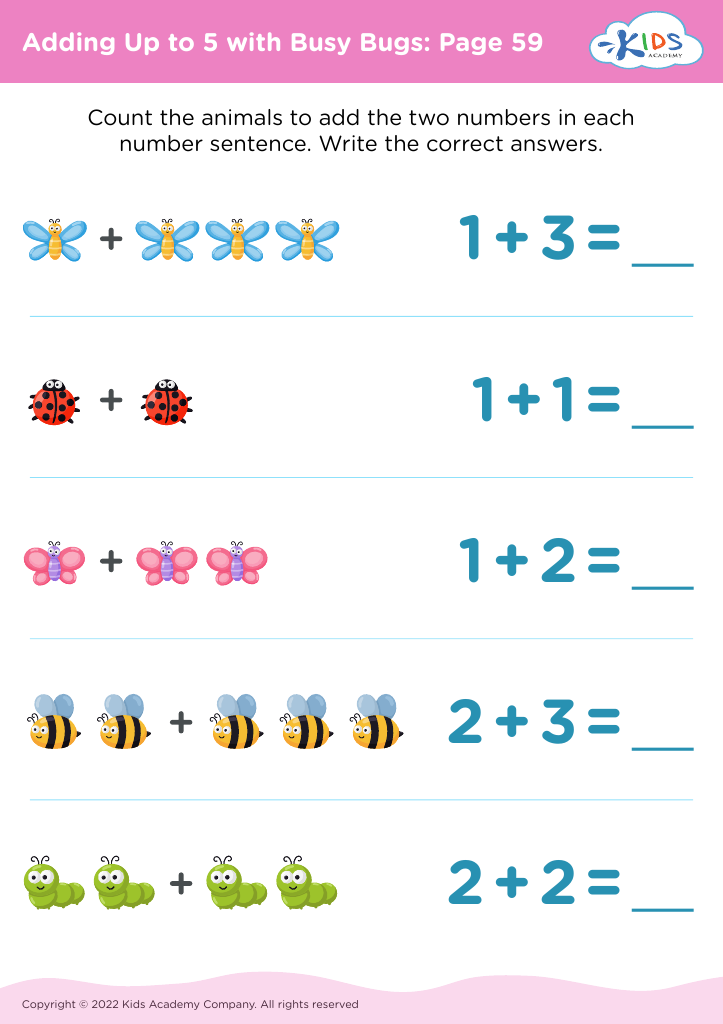
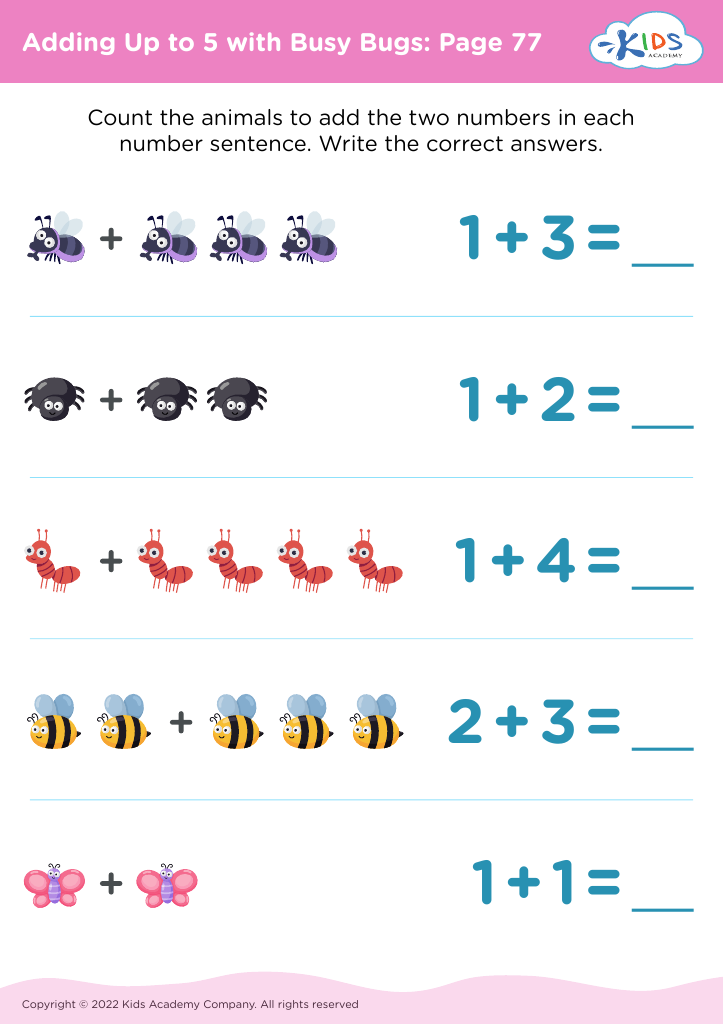
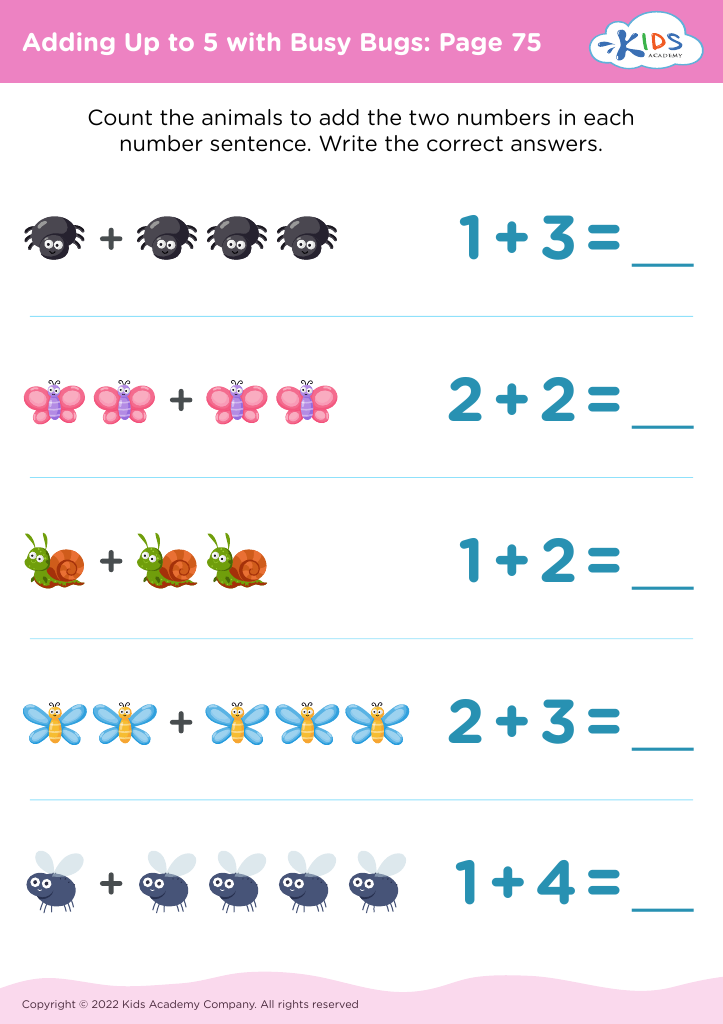
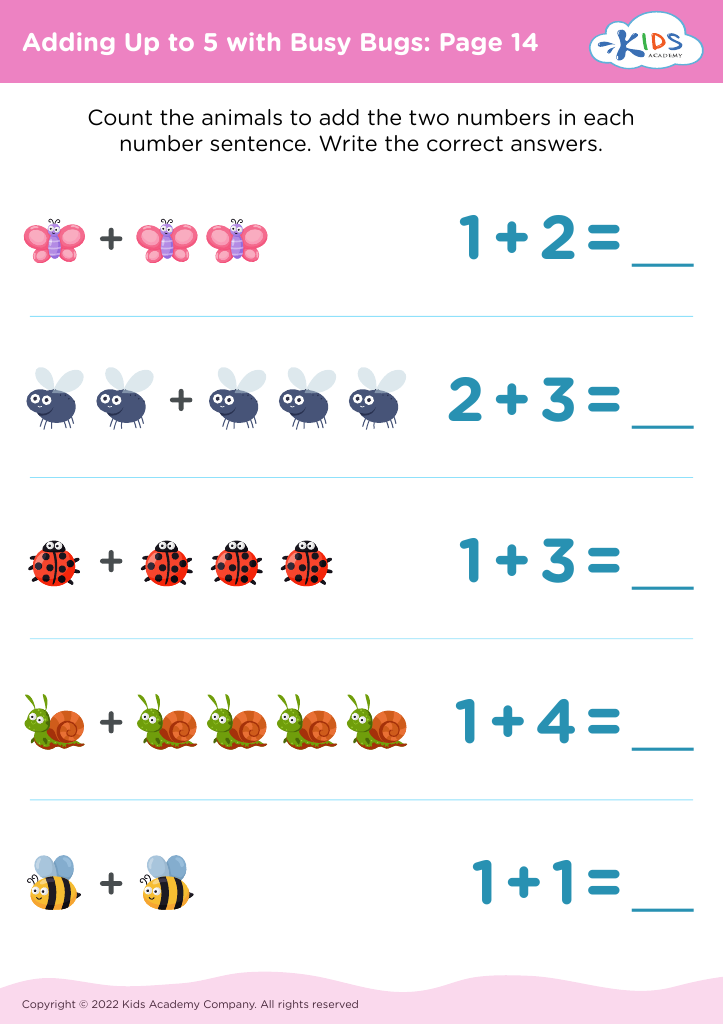
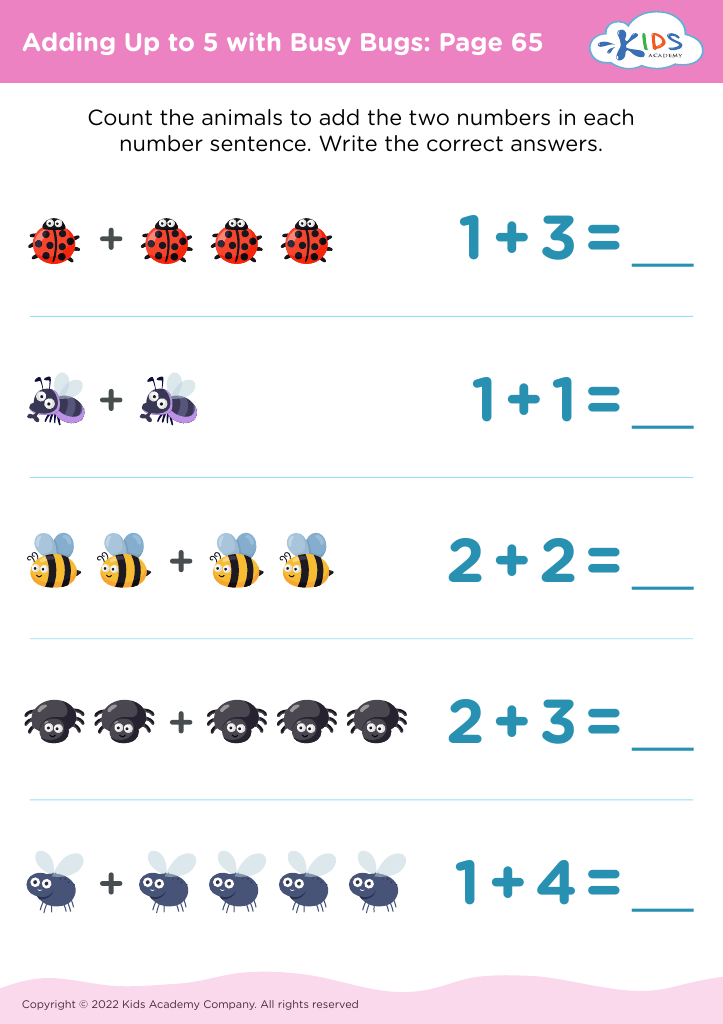



Fine motor skills are critical for the development of young children, specifically those aged 3-5, as they lay the groundwork for future learning and everyday tasks. These skills involve the coordination of small muscle movements in the hands and fingers, which are essential for writing, drawing, dressing, and self-feeding. The "Busy Bugs" approach to learning combines fine motor skill development with early numeracy, making it a powerful educational tool for young learners.
When children use manipulatives like busy bugs to practice adding, they simultaneously engage their fine motor skills by picking up, moving, and arranging the small objects. This dual engagement reinforces the hand-eye coordination needed for tasks such as holding a pencil or using scissors. As children's control over their hand movements improves, so does their ability to form letters and numbers correctly when writing.
Moreover, integrating fine motor tasks with math concepts like counting and adding helps solidify cognitive connections. By making abstract ideas physical and tangible, children more easily grasp early math concepts, setting a strong foundation for future academic success.
Therefore, parents and teachers should care about developing fine motor skills through activities like Busy Bugs because it enhances both fine motor proficiency and essential early math skills, fostering well-rounded growth and preparation for more complex tasks ahead.