Logical Reasoning Addition and Subtraction Word Problems Worksheets for Ages 3-5
5 filtered results
-
From - To
Discover our engaging Logical Reasoning Addition and Subtraction Word Problems Worksheets designed for children aged 3-5. These interactive worksheets promote early math skills by introducing basic addition and subtraction concepts through fun and relatable word problems. Perfect for preschoolers, our carefully crafted activities encourage critical thinking and reasoning abilities while making math enjoyable. As children solve problems, they’ll enhance their comprehension skills and develop a strong foundation for future math success. Our resources are perfect for home or classroom use, ensuring little learners gain confidence in their math abilities and logical reasoning skills. Start nurturing young minds today!
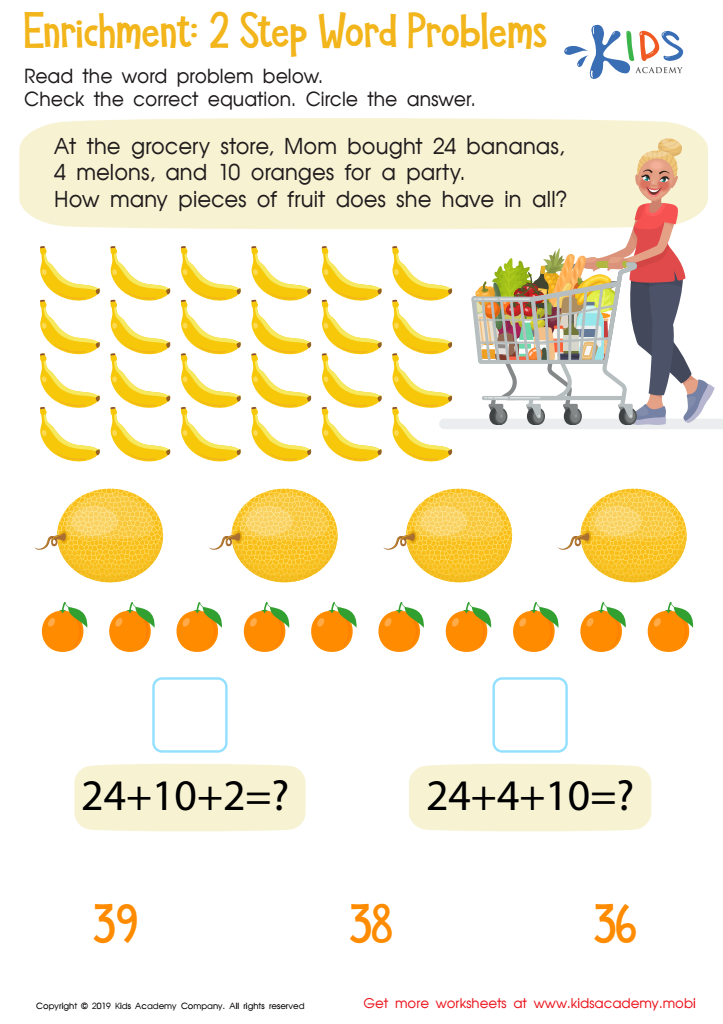
Enrichment -2 Step Word Problems Worksheet
 Assign to My Students
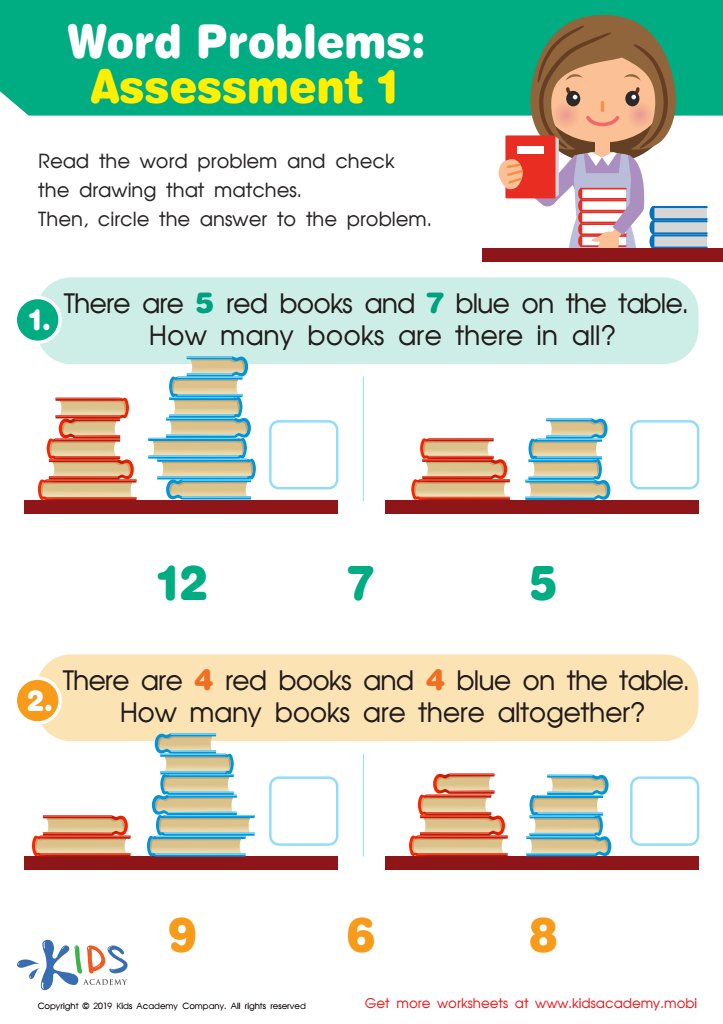
Word Problems: Assessment 1 Worksheet
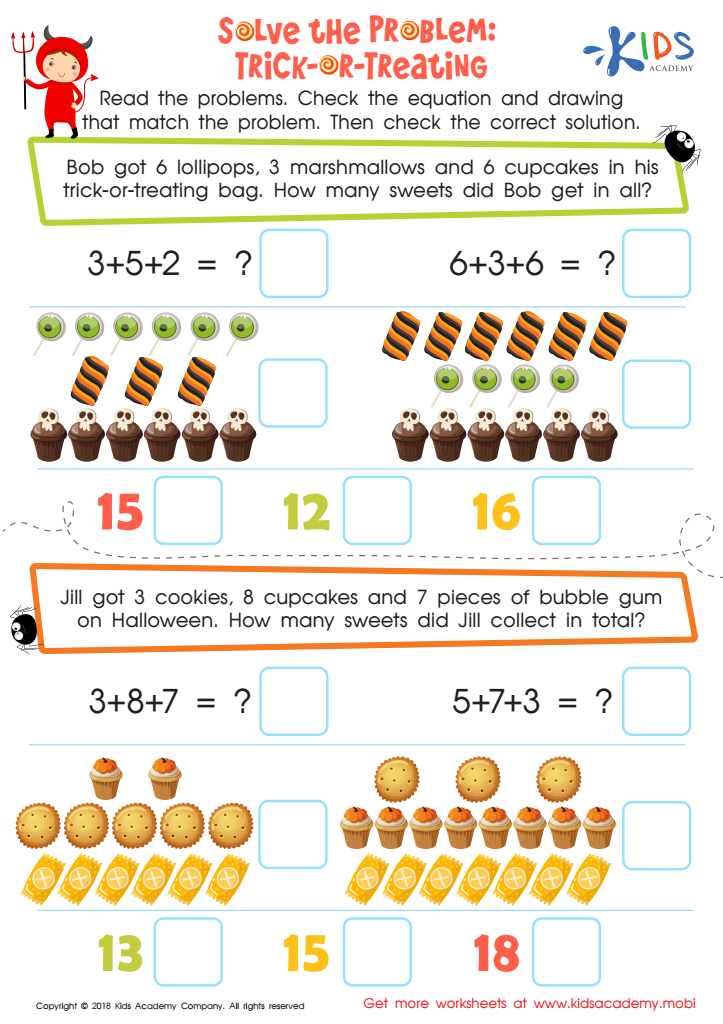
Solve the Problem: Trick–or–treating Worksheet
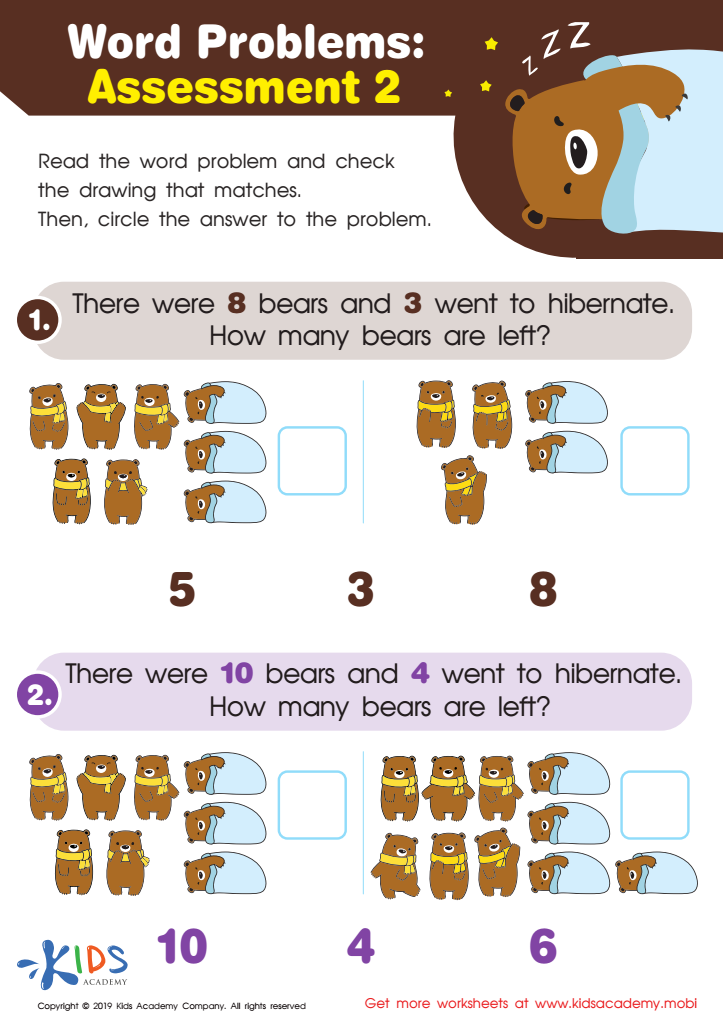
Word Problems: Assessment 2 Worksheet
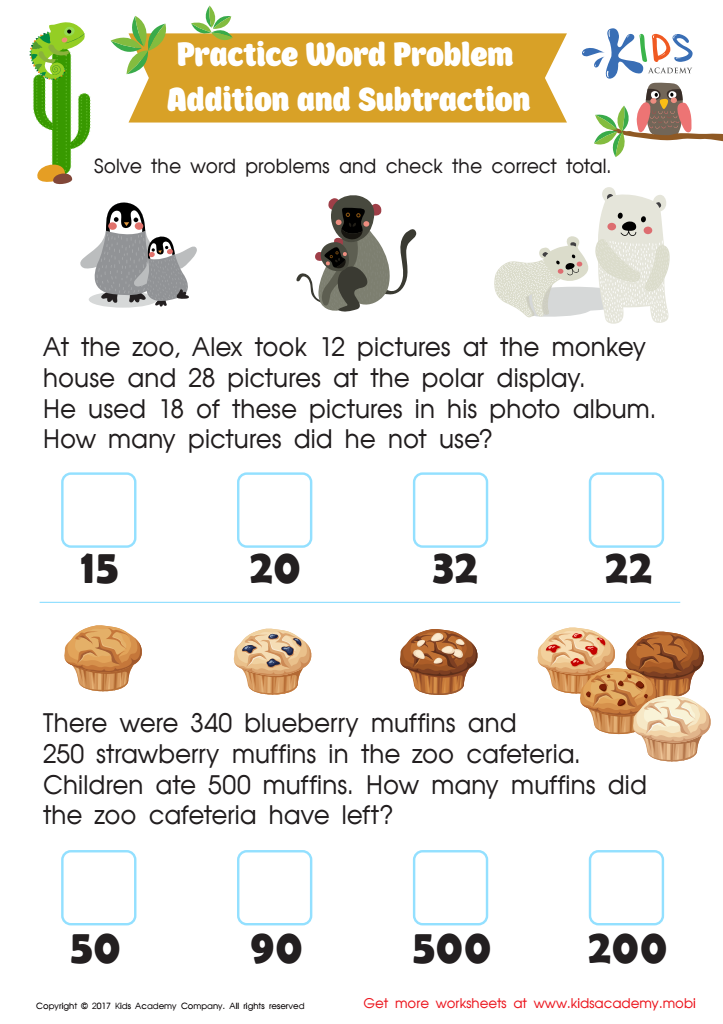
Addition and Subtraction: Word Problems Worksheet








Logical reasoning addition and subtraction word problems are crucial for children aged 3-5 as they lay the foundation for mathematical thinking and problem-solving skills. Engaging with these word problems helps young learners develop critical thinking abilities, which are essential for understanding relationships between numbers and concepts. When children approach problems contextually, using familiar situations, they learn to interpret and analyze information—skills that extend beyond mathematics into everyday decision-making.
Additionally, these activities foster language development as children learn to articulate their thoughts, comprehend problem statements, and explain their reasoning. This exchange between parents, teachers, and children nurtures communication skills and enhances vocabulary.
Furthermore, solving word problems encourages perseverance and resilience. Kids learn that encountering challenges is a natural part of problem-solving, promoting a growth mindset. Involving parents and educators allows them to create a supportive environment, making math feel approachable and enjoyable.
Ultimately, logical reasoning through addition and subtraction word problems meshes numerical fluency with critical thinking, setting the stage for future academic success. Ignoring this stage can hinder children's confidence and competence in mathematics as they progress to more complex concepts in later grades.