Animal identification Addition & Subtraction Worksheets for Ages 3-5 - Page 2
27 filtered results
-
From - To
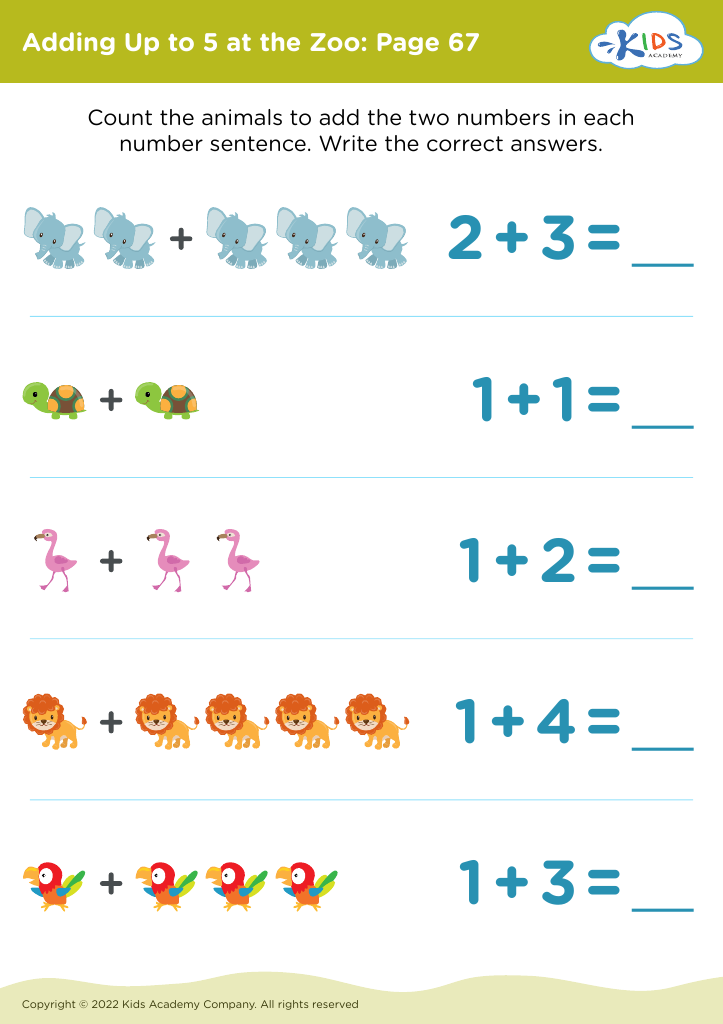
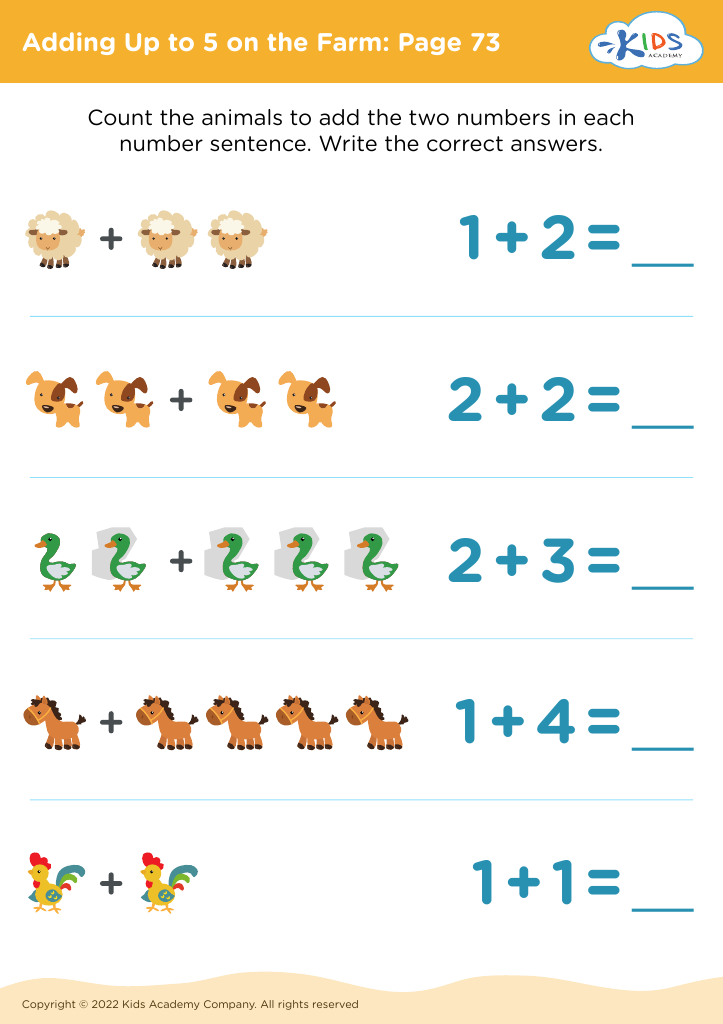
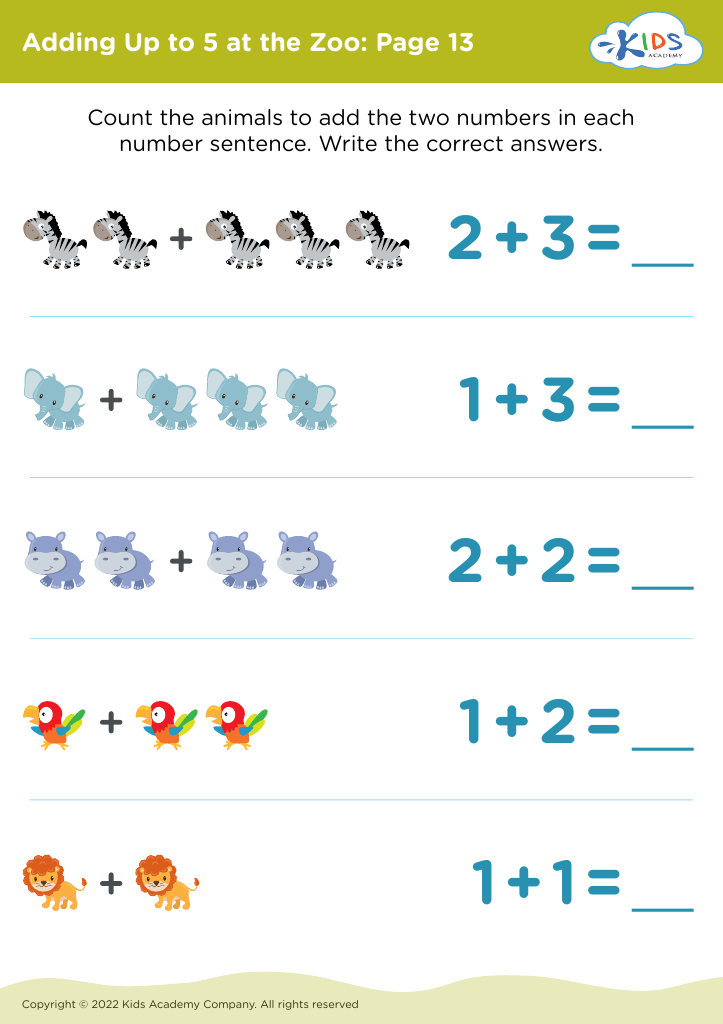








Parents and teachers should care about incorporating activities like animal identification with addition and subtraction for children aged 3-5 because these activities fundamentally support early childhood development. Firstly, engaging children in animal identification helps to build their language skills and vocabulary, fostering cognitive development. Learning the names, sounds, and characteristics of different animals stimulates curiosity and enhances their ability to classify and categorize information.
Moreover, integrating addition and subtraction into these activities promotes foundational numeracy skills, which are crucial for later academic success. Children begin to understand numbers, quantities, and relationships between objects through such interactive, concrete experiences. For example, if a child identifies three zebras and four lions, then counts them together, they're learning early addition in a fun, context-based way.
These tasks also support fine motor skills and hand-eye coordination as children handle pictures or toys. Plus, these activities often encourage cooperative play, enhancing social skills and emotional development as kids share and discuss among peers or with adults.
In essence, by combining animal identification with basic math problems, parents and teachers provide an enriching, multidimensional learning experience that fosters holistic growth—intellectually, socially, and emotionally—setting a strong foundation for future educational endeavors.








